
Cloud infrastructure provider DigitalOcean is quietly bringing an end to its longstanding Open Source Credits program, leaving maintainers of various independent software projects scrambling to reassess their hosting budgets and future sustainability.
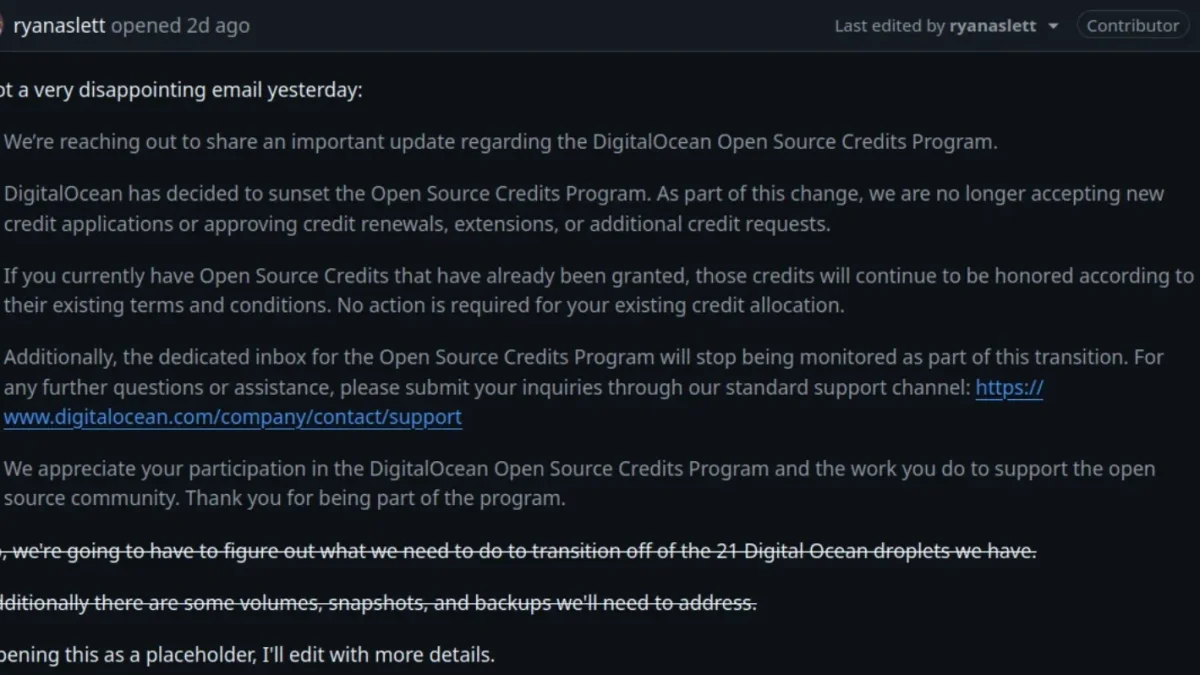
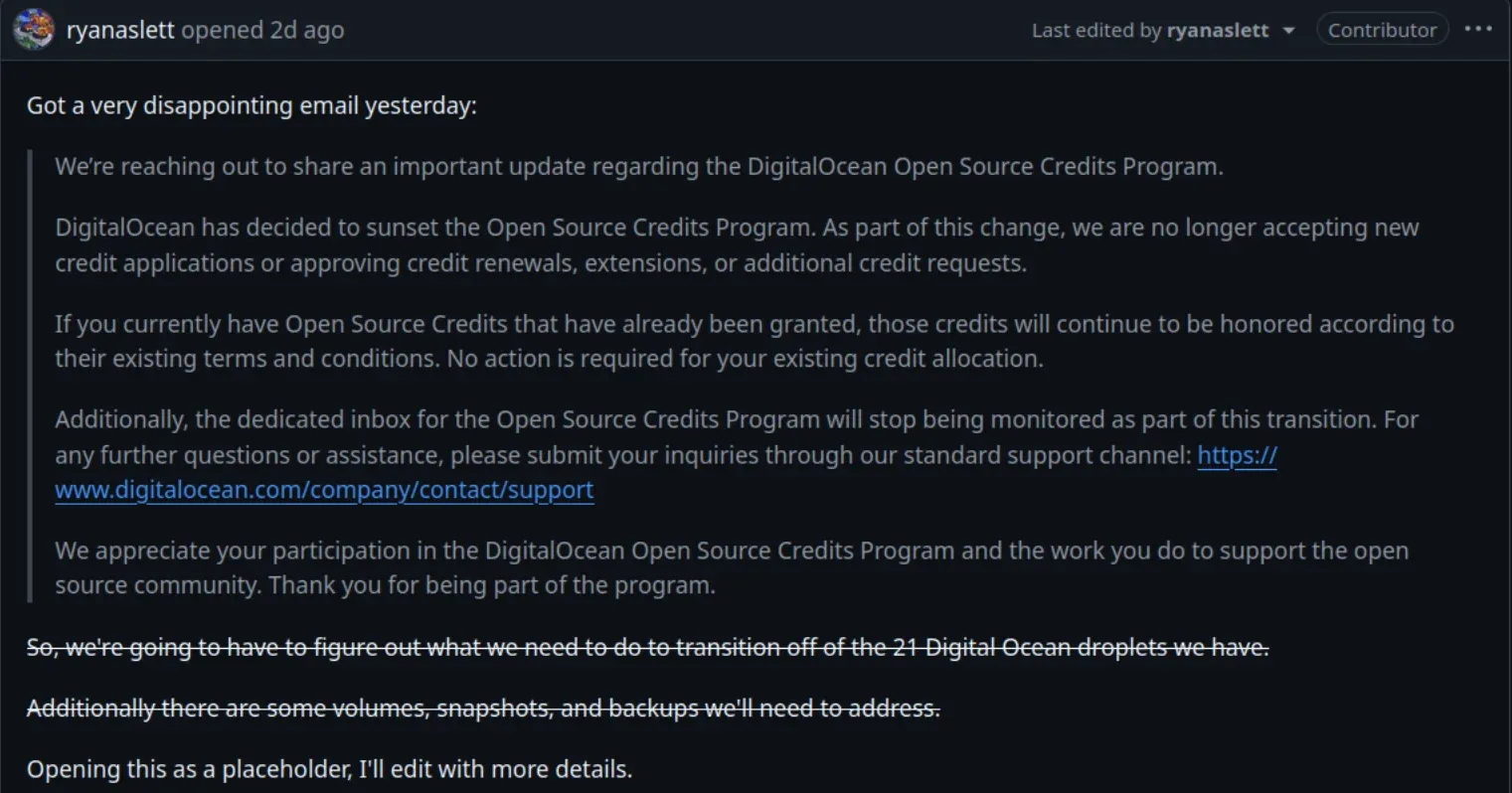
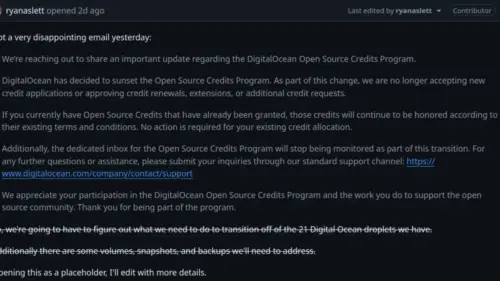
The policy shift came to light when maintainers of the Node.js project received an unexpected email notification from DigitalOcean announcing the sunsetting of the initiative. Initially treated as speculation within developer circles, the closure has since been confirmed by multiple other open-source maintainers who have received identical notifications regarding the termination of the credit scheme.
Under the terms of the wind-down, DigitalOcean is no longer accepting new credit applications, nor is it approving credit renewals, extensions, or additional funding requests for existing participants. Projects currently enrolled in the program must make do with whatever remaining credits have already been issued. Once those balances are exhausted, maintainers will face the choice of paying out of pocket for their infrastructure or migrating their workloads to alternative cloud service providers. Furthermore, the dedicated communication channel—[email protected]—is reportedly no longer being monitored, effectively shutting the door on future community support through this avenue.

Understanding the Open Source Credits Program
For years, DigitalOcean positioned itself as a reliable ally to the developer community through its Open Source Credits program. Under this scheme, approved open-source projects were granted cloud credits designed to absorb the financial shock of hosting and infrastructure overhead.
The utility of these grants was substantial for many projects. For instance, the Node.js project heavily relied on DigitalOcean infrastructure to power its critical build operations, encompassing virtual servers, storage clusters, snapshots, and routine backups. In exchange for the free or subsidized hosting, projects typically displayed DigitalOcean branding, links, and acknowledgments on their websites, README files, and documentation portals.
This symbiotic relationship served as a powerful marketing engine for the cloud provider. Thousands of developers encountered DigitalOcean’s platform for the first time through these community projects. Some eventually converted into paying individual customers, while others advocated for the adoption of DigitalOcean services within their professional workplaces, creating a reliable pipeline of enterprise and grassroots adoption.

A Quiet Exit Strategy and Prior Community Cuts
Notably, the termination of the Open Source Credits program has been executed without any formal announcements published on DigitalOcean’s official blog or corporate social media channels. Instead, the news trickled out organically through developer forums.
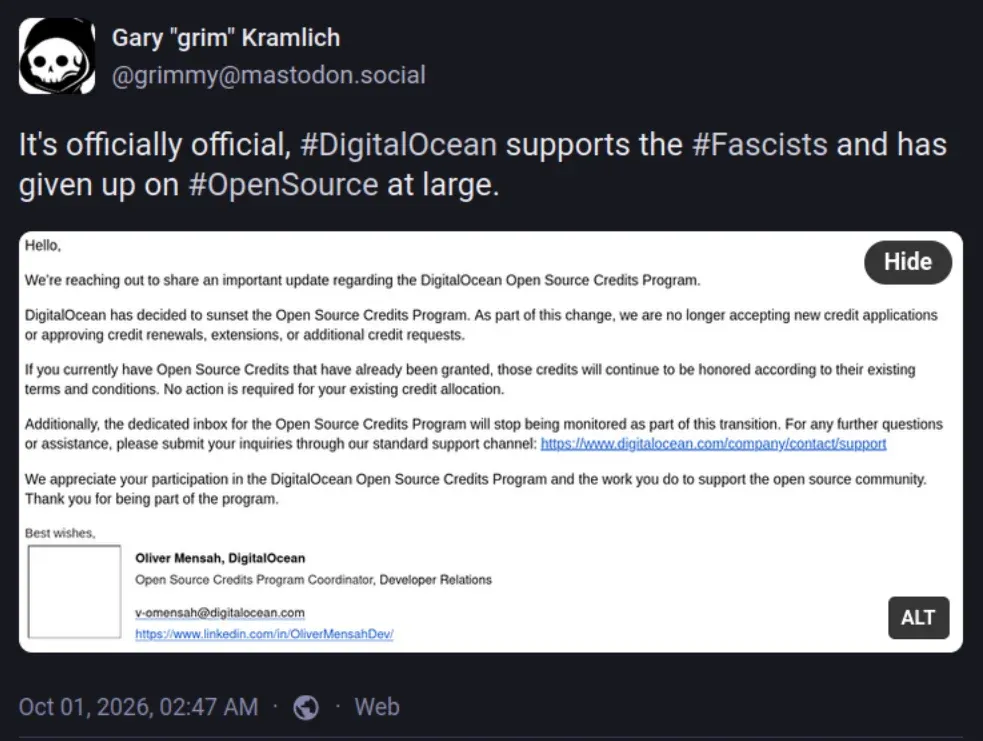
The issue first gained traction via a GitHub discussion thread where Node.js maintainers reviewed the wind-down notice. Similar community anxieties surfaced on platforms like Reddit and Mastodon. Gray, the lead developer of the Pidgin messenger project, shared details of the closure notice on Mastodon, underscoring the widespread impact on older or less commercially backed software.
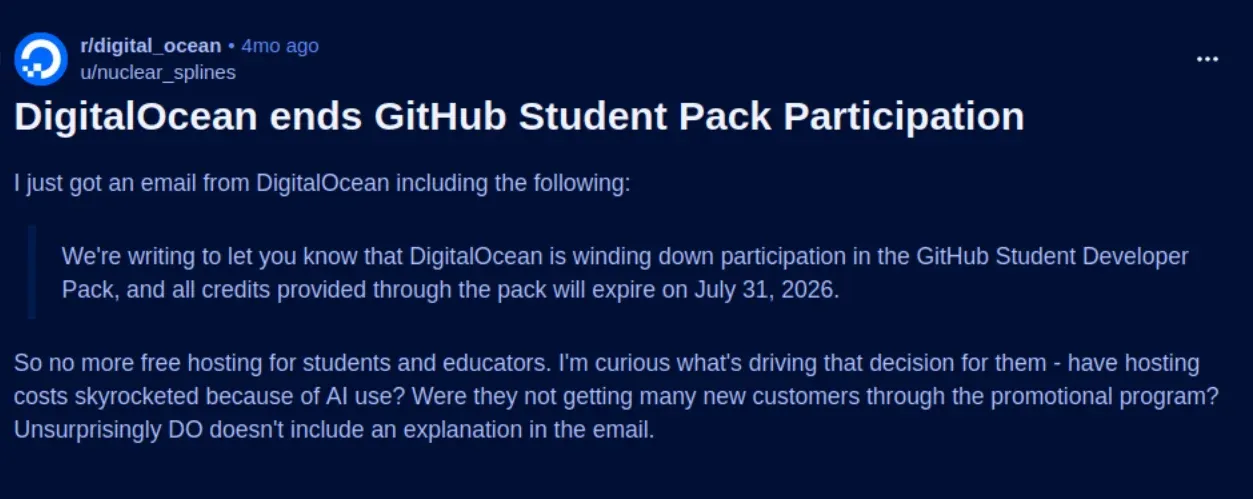
This quiet withdrawal follows a similar pattern observed earlier in the year regarding educational resources. Student developers attempting to redeem standard GitHub Student Developer Pack credits found that DigitalOcean had quietly removed its participation from the offering. Just like the open-source credits, the student pack adjustments arrived without formal public clarification, leaving users to piece together policy changes through community threads and support inquiries. While DigitalOcean continues to offer a standard promotional credit for new individual users, the systematic rolling back of community-facing programs has raised eyebrows across the tech sector.
The Node.js Exception and Corporate Reengagement
The unfolding situation with Node.js highlighted the immediate leverage large-scale projects still hold, as well as the sensitivity of cloud providers to negative publicity.
Upon reviewing the shutdown notice within their GitHub build repository, Node.js maintainers immediately began formulating an exit strategy. This transition discussion swiftly expanded into concrete steps to purge DigitalOcean branding from the project’s homepage, README files, and partner directories.
Faced with the prospect of losing one of its most prominent open-source associations—particularly while competitors like Vercel maintained visible placement—DigitalOcean quickly intervened. Representatives reached out to the maintainers, opening discussions regarding a potential "version 2.0" of the program tailored for more selective project partnerships. Promptly following this olive branch, the Node.js GitHub issue was renamed from a transition plan to a renewed partnership discussion.
Broader Financial Context and Industry Shifts
The timing of the program’s closure has puzzled many observers, particularly given DigitalOcean’s ongoing financial commitments elsewhere in the tech ecosystem. Just weeks prior to the credit cancellations, the infrastructure provider made headlines by donating $3 million to the Omacom Foundation, the governing body behind Omarchy Linux, joining the organization as a founding corporate patron.
While the substantial donation to Omarchy Linux demonstrates that corporate outreach budgets have not vanished entirely, it suggests a strategic pivot in how infrastructure providers allocate their community funds. Industry analysts point to a broader cultural shift regarding open-source software within the enterprise sector.
During the late 1990s and throughout the 2000s, open-source software became a dominant industry force, with corporations eager to align themselves with community-driven initiatives to earn goodwill and leverage collaborative engineering. However, the rise of modern artificial intelligence has altered corporate priorities. With AI systems increasingly capable of generating software, drafting documentation, and handling tasks traditionally managed by human developers, some corporations view legacy open-source projects through a different lens. While foundational technologies that underpin AI workflows—such as Python and Node.js—retain robust corporate backing, smaller, end-user-facing utilities and legacy projects risk being sidelined.
The Outlook for Impacted Maintainers
While high-profile projects like Node.js managed to secure renewed support after signaling an exit, smaller independent open-source projects face a much bleaker reality.
Many maintainers are already grappling with burnout, dealing with an influx of automated bug reports and pull requests. Absorbing sudden cloud infrastructure costs adds an unsustainable financial burden to volunteer-driven initiatives. Gary Kramlich of Pidgin noted that his team had not received active credits from DigitalOcean for over a year, forcing them to self-fund operations while urgently evaluating alternative sponsored hosting options and scaling back services.
As major infrastructure providers recalibrate their community engagement strategies, the open-source ecosystem faces renewed uncertainty regarding long-term sustainability, leaving maintainers hoping that newer platforms will step forward to fill the void.


Leave a Reply