
The landscape of online retail is undergoing a quiet yet profound transformation as artificial intelligence cements its role at the core of digital marketing strategies. Across platforms ranging from independent storefronts to major enterprise systems, merchants are increasingly turning to advanced algorithms to analyze customer behavior, optimize advertising campaigns, and personalize the shopping journey. Far from being a futuristic novelty, AI has emerged as an indispensable operational engine designed to help online stores attract shoppers, increase sales, and foster long-term customer loyalty.

According to recent industry analysis published on October 15, 2026, modern ecommerce marketing relies heavily on sophisticated data processing. AI systems continuously comb through massive volumes of consumer metrics, tracking how individuals browse, purchase, and react to promotional messaging. By identifying subtle patterns within this data, automated tools can dynamically recommend relevant products, streamline advertising spend, generate initial drafts of marketing content, and flag early warning signs when shoppers begin to lose interest.
Industry experts emphasize that the most successful implementations of AI begin with a focused approach. Retailers are advised to apply automated tools to a single marketing task at a time, ensuring that the underlying data sources are reliable and that the resulting outputs are rigorously measured. Human oversight remains a critical component of this evolution; unchecked automation or reliance on faulty data can quickly result in inaccurate product descriptions, irrelevant recommendations, and wasted advertising budgets.

What is AI in Ecommerce Marketing?
In the current digital commerce ecosystem, artificial intelligence encompasses a broad suite of technologies, including product recommendation engines, ad optimization platforms, automated content generators, and conversational shopping assistants. These systems function by analyzing historical data to predict buying preferences, generate promotional materials in real time, and answer complex consumer inquiries without direct human intervention.
For example, a boutique home decor retailer might leverage browsing history to suggest complementary items, automatically generate multiple iterations of an advertisement for a newly released collection, or identify a dip in purchasing frequency among specific customer cohorts. In this dynamic, the artificial intelligence handles pattern recognition and repetitive execution, while human marketers establish overarching strategic goals and decide when and how to act on algorithmic insights.

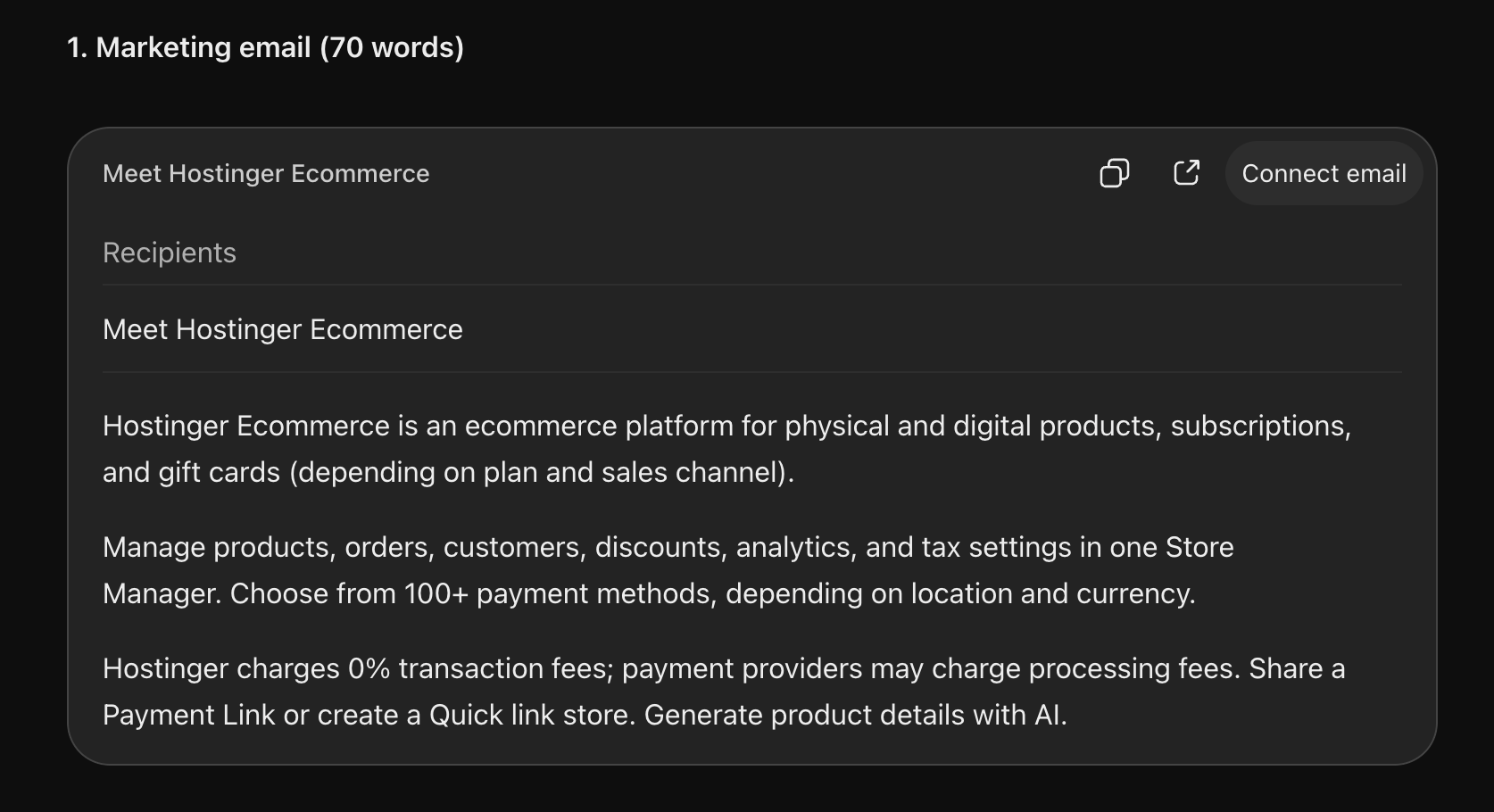
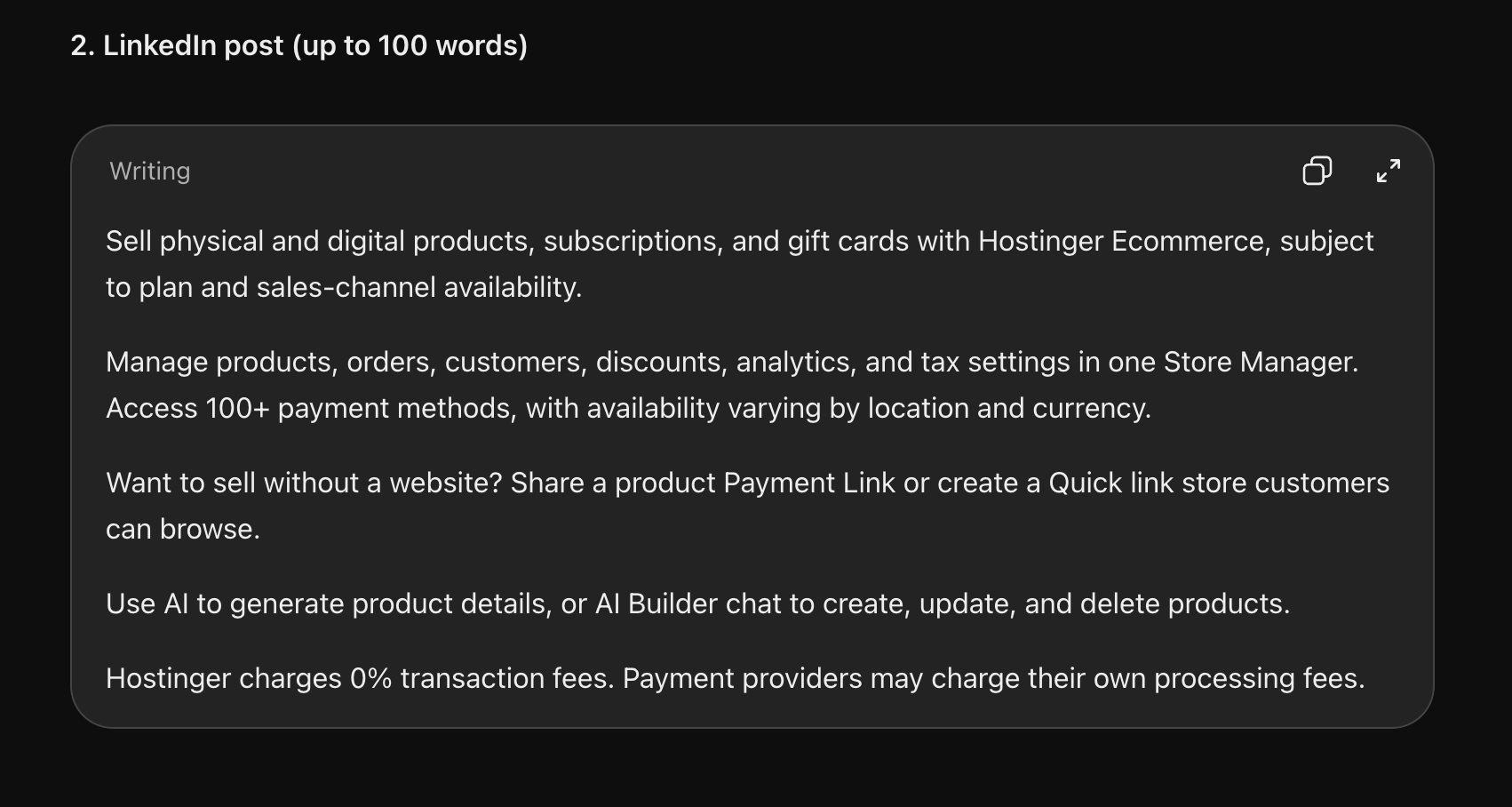
Online stores utilizing prominent infrastructure and platform tools—such as Hostinger Ecommerce, Shopify, and WooCommerce—frequently integrate these capabilities into their daily operations, though the availability of specific features varies depending on the platform’s native tools and external integrations.
Core Applications in Modern Retail Marketing
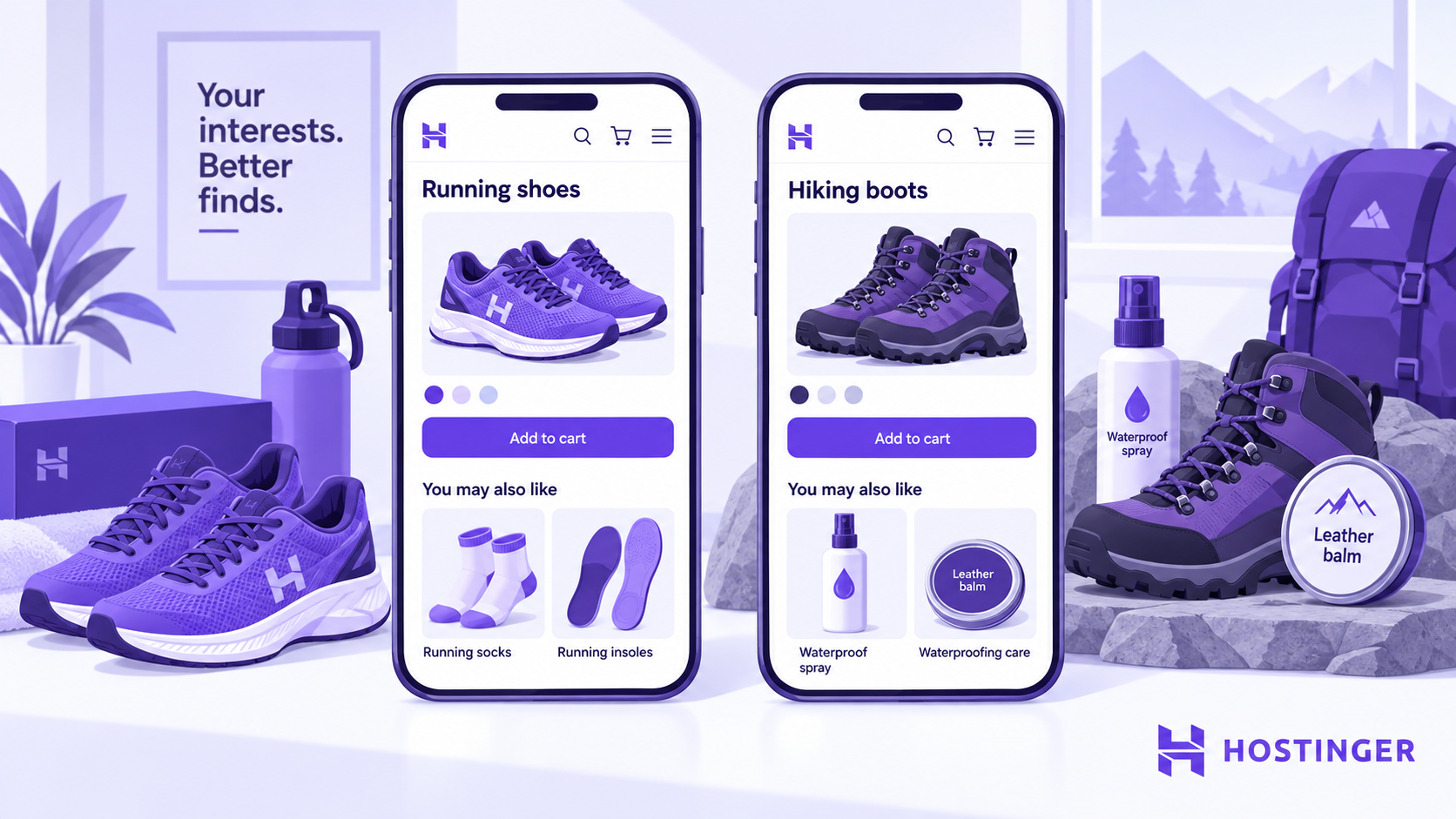
Retailers are systematically deploying artificial intelligence across several critical operational pillars, beginning with the personalization of product recommendations. By evaluating real-time browsing paths, active cart contents, and historical purchase data, online storefronts can display items precisely tailored to an individual shopper’s preferences. For instance, a customer viewing a pair of running shoes might simultaneously be shown specialized athletic socks or supportive insoles, while an individual browsing heavy-duty hiking boots will instead be directed toward weatherproofing treatments and specialized care kits.
Industry research highlights the profound commercial impact of these personalized touchpoints. Data indicates that when shoppers actively engage with tailored product recommendations, those suggestions can account for up to 31% of total ecommerce revenue. Merchants typically monitor conversion rates, average order values, and repeat purchase frequencies to gauge the real-time effectiveness of these algorithmic suggestions.
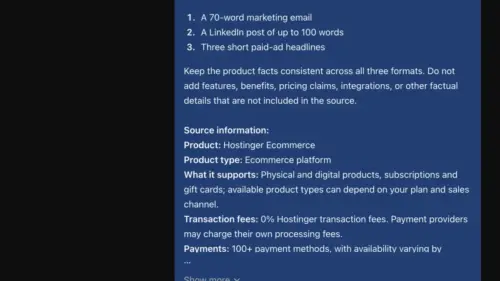
Beyond recommendations, artificial intelligence has fundamentally altered how marketing teams create and adapt promotional content. Content generation tools allow professionals to input verified source materials—such as a new skincare product’s specific ingredients, core benefits, and intended demographic—alongside established brand guidelines. The system then rapidly drafts comprehensive product descriptions, ad copy variations, email subject lines, and social media captions.
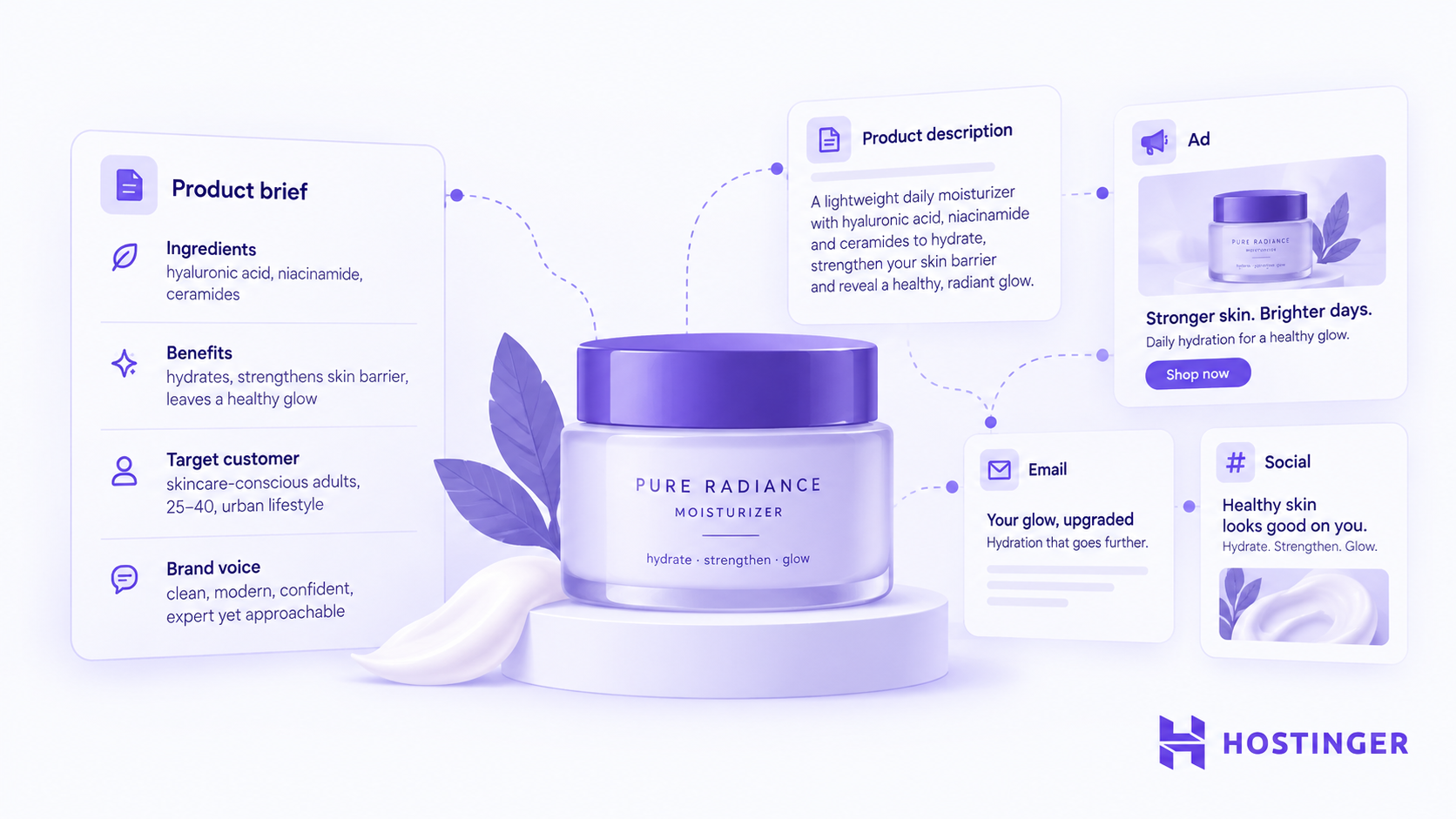
Recent marketing statistics illustrate the widespread adoption of these methods, showing that a significant majority of professionals utilize AI to draft initial content, while a substantial portion relies on it for structural optimization. This capability enables brands to take a single approved source document and seamlessly adapt it across multiple channels, drastically reducing the manual labor traditionally required for cross-platform campaigns. However, industry veterans continually stress that AI-generated text must be treated strictly as a draft. Factual claims regarding pricing, ingredients, performance metrics, and guarantees must always be manually verified before publication to protect consumer trust.
Optimizing Paid Advertising and Audience Segmentation
Paid acquisition channels have also experienced a paradigm shift through automated optimization. Modern advertising platforms allow merchants to input product catalogs, creative assets, daily budgets, and overarching sales targets, leaving the underlying system to dynamically adjust audience targeting, ad placements, and bidding strategies. Tools such as Google Performance Max and Meta’s Advantage+ frameworks continuously test diverse combinations of images and headlines, shifting financial resources toward the highest-performing configurations in real time. While the platform manages the tactical delivery, human marketers retain control over foundational parameters such as creative direction, promotional pricing, and the overall marketing budget.
Concurrently, artificial intelligence has revolutionized customer segmentation. Rather than relying on static demographic categories, AI-driven systems group consumers based on fluid behavioral patterns, including recent purchases, site engagement, and browsing intensity. A coffee merchant, for example, might automatically categorize consumers who have placed multiple orders but remained inactive for a specific timeframe, enabling the deployment of targeted re-engagement campaigns tailored specifically to that cohort’s behavioral history.
Enhancing Communications and Conversational Interfaces
Email and SMS marketing strategies have likewise grown more sophisticated through predictive timing and message customization. By analyzing individual purchasing cycles—such as recognizing that one pet-food customer reorders strictly every four weeks while another requires six—automated systems can dispatch reorder reminders precisely when a purchase is statistically most likely to occur. While foundational workflows handle the initial triggers, AI refines the messaging, timing, and product selection for each recipient.
At the same time, conversational artificial intelligence is redefining customer service and discovery. Unlike traditional rule-based chatbots designed exclusively for order tracking, advanced shopping assistants allow consumers to articulate complex needs in natural, everyday language. A shopper searching for outerwear can specify exact criteria—such as a lightweight, waterproof hiking jacket under a specific price point—and receive a curated comparison of suitable options, significantly reducing the friction traditionally associated with navigating multi-layered filters.
Mitigating Risk and Preventing Customer Churn
Perhaps one of the most critical advancements in AI marketing is its ability to predict customer churn and reinforce retention strategies. By monitoring subtle shifts in engagement, such as a sudden decline in store visits, unopened marketing emails, or missed reorder milestones, systems can identify consumers who are actively losing interest before they cease purchasing entirely. Retailers can then deploy tailored incentives or personalized communications to win back these at-risk buyers.
Despite these powerful advantages, industry analysts caution against the inherent risks of overreliance on automation. Poor data hygiene, such as duplicate or missing transaction records, can severely distort algorithmic decision-making, leading to misplaced ad spend or irrelevant recommendations. Furthermore, mishandled customer data and unverified AI outputs present ongoing compliance and reputational challenges.
As digital commerce continues to evolve, market observers advise organizations to approach AI adoption methodically. By starting with well-understood tasks, verifying underlying data, and maintaining rigorous human oversight over automated workflows, ecommerce brands can harness the efficiency of artificial intelligence while safeguarding their brand integrity and customer relationships.
Leave a Reply