For much of Avatar: The Last Airbender, waterbending can easily seem like the most constrained of the four foundational elements for one glaring, inescapable reason: its practitioners require a physical source of water to wield their power. While firebenders generate their own destructive flames from within, earth is ubiquitous beneath almost every footstep, and air is endlessly and invisibly accessible all around the globe, waterbenders are tied to their environment. Throughout her sprawling adventures across the continents with Aang, Katara is almost never seen separated from her trusty water skin for precisely this reason. A waterbender stranded alone in the vast expanses of a desert is historically about as useful as a badgermole cub dropped into the middle of a swimming pool.
Partway through the final season of the beloved animated series, however, that inherent limitation transforms into the foundation for one of the most chilling and horrifying narrative revelations in children’s television history. Water is everywhere, residing inside every living thing on the planet. You just have to do something deeply unnatural and terrible to access it.
Nearly two decades ago, on Nov. 9, 2007, the landmark episode "The Puppetmaster" officially introduced bloodbending to the Avatar universe. This extreme, forbidden offshoot of waterbending allows a skilled practitioner to telekinetically manipulate the water flowing inside another human or animal body. Alongside that terrifying glimpse into the dark side of bending, viewers also learned that advanced waterbenders can extract moisture directly out of living flora or even pull it straight out of the surrounding air.
These unsettling implications would eventually supply The Legend of Korra with some of its most formidable and frightening villains, granting them signature bending abilities that altered the geopolitical landscape of the franchise. Yet, the most emotionally disturbing achievement of the concept remains its immediate impact on Katara. As arguably the most virtuous, empathetic, and morally grounded member of Team Avatar, she is forced under the pale light of a full moon to learn and execute arguably the most evil form of bending in existence, forever altering her relationship with her own power.
"The Puppetmaster" Turns Avatar Into a Horror Story
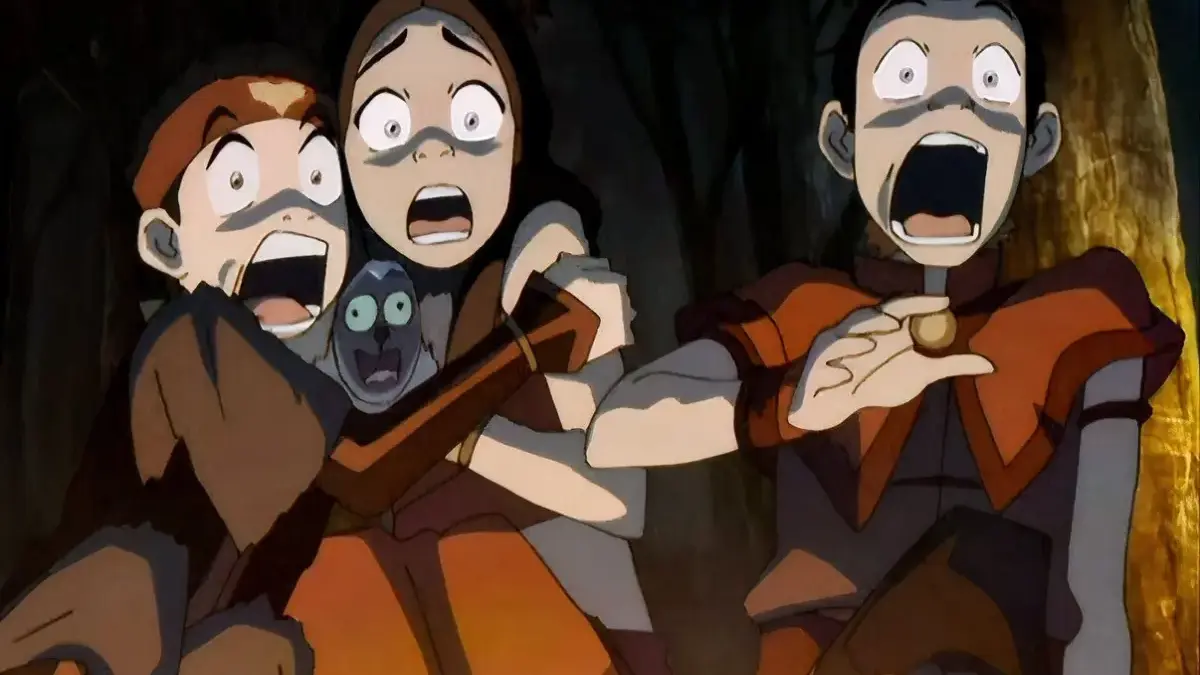
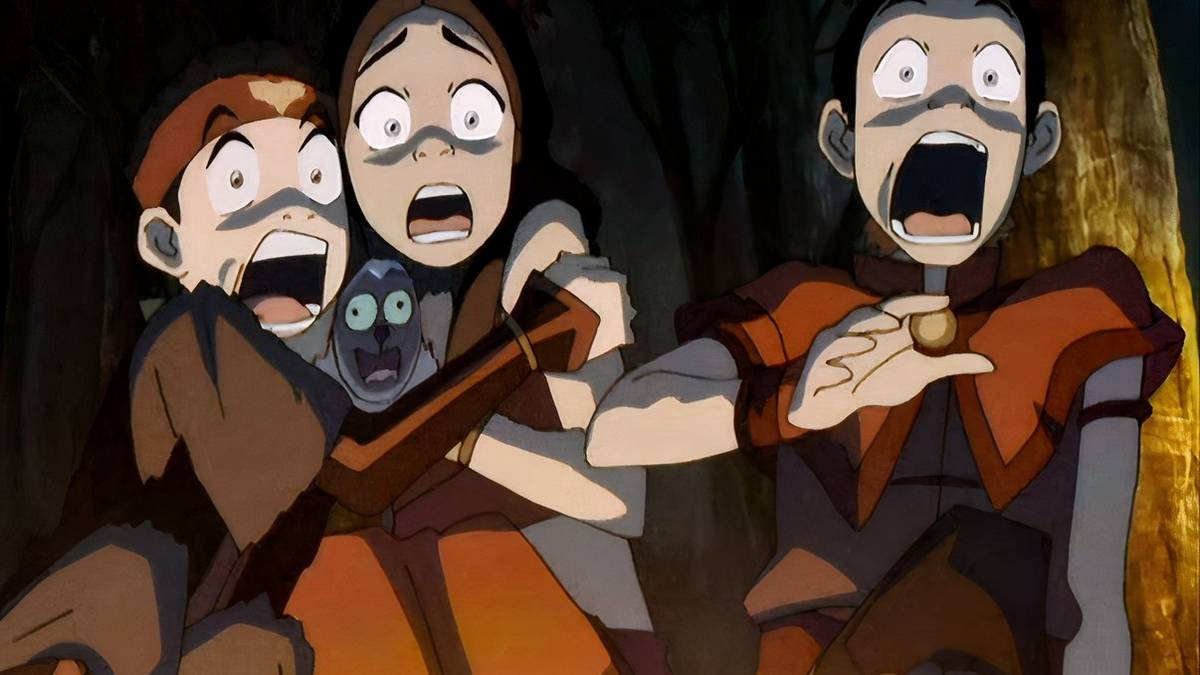
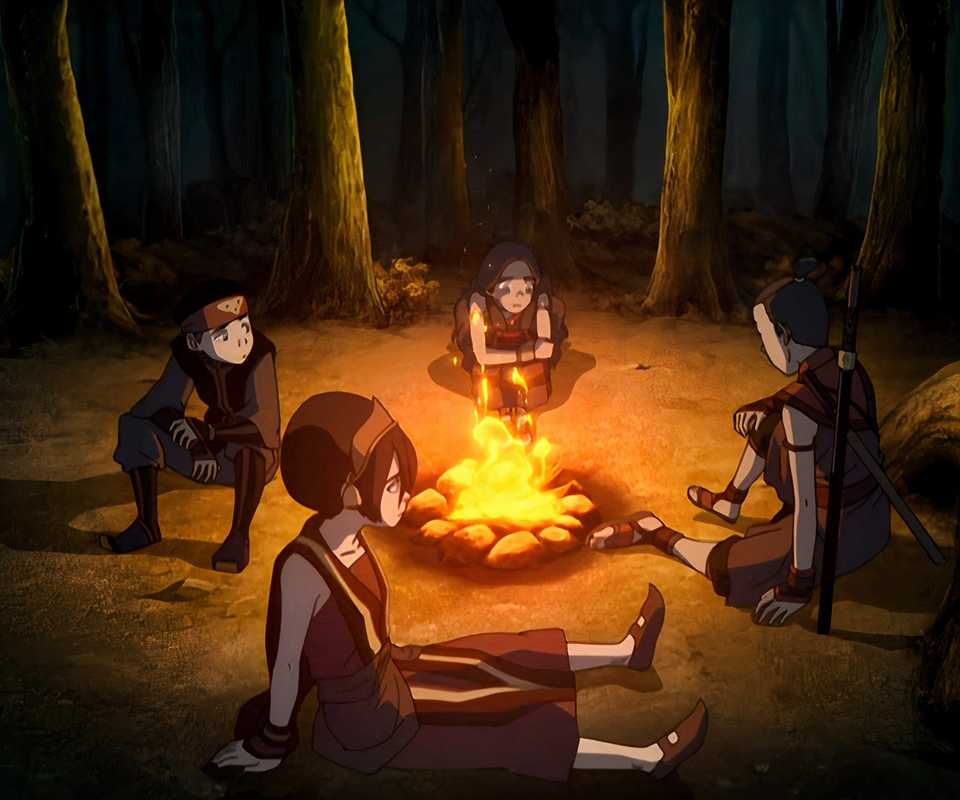
"The Puppetmaster" opens with the core cast sharing spooky ghost stories around a crackling campfire at night somewhere deep within the rugged territory of the Fire Nation, immediately establishing a decidedly eerie atmosphere. An elderly, seemingly harmless innkeeper named Hama soon approaches the group, warning them that local villagers have been mysteriously disappearing into the woods during every full moon. She warmly offers them a safe place to stay for the night. The narrative quickly evolves into a small-town mystery where Toph plays the hard-nosed detective while Aang and Sokka act as her well-meaning but hapless sidekicks.
Despite radiating an unsettling and suspicious aura, Hama eventually reveals a startling connection: she is also a waterbender hailing from the Southern Water Tribe, just like Katara. Given the tragic historical context that the Fire Nation systematically hunted down, captured, and imprisoned nearly every waterbender from the south—leaving Katara as the sole remaining practitioner of her generation—Hama instantly steps into the role of the mentor Katara had desperately yearned for throughout her entire life.

Under Hama’s tutelage, Katara learns that a waterbender is not necessarily bound to a physical pouch of liquid. Hama demonstrates how to draw microscopic moisture straight from the humid air and extract water from surrounding plant life, though doing so cruelly kills the fire lilies she uses for the demonstration. It provides an unsettling yet undeniably practical answer to a waterbender’s most glaring vulnerability. Suddenly, a resourceful waterbender who harbors no moral qualms about the source of their hydration becomes potentially the most dangerous combatant among the four bending styles.
By this stage in the series’ run, Avatar had long since established that the traditional boundaries governing bending were negotiable for those with exceptional skill. Lightning had already been introduced as an advanced, high-level application of firebending that only prodigies could master. Late in the second book, Toph managed to escape imprisonment by radically shifting her perspective, realizing that raw metal was simply purified earth that still contained unrefined mineral impurities. These breakthroughs consistently rewarded lateral thinking, rigorous training, and a willingness to challenge conventional wisdom.
Furthermore, the first season had established that cosmic events exert a massive influence on the strength of a bender. Sozin’s Comet famously amplifies firebending to apocalyptic levels once every hundred years. Similarly, mirroring the ocean tides, a waterbender’s innate power swells under the celestial light of the moon. It remains a notable quirk of the universe that earth and air never received equivalent cosmic amplifiers, but the lunar connection is crucial. The full moon provides the massive surge of energy required for Hama to push the fundamental concept of manipulating internal water to its darkest, most unthinkable extreme.
On the night of the full moon, Hama’s sinister facade drops entirely as she reveals a harrowing backstory. She was captured by the Fire Nation decades prior and locked away in a dry, inescapable dungeon with virtually no access to water. Over long years of torment, she developed bloodbending out of sheer survival instinct, initially practicing by controlling the rats in her subterranean cell like marionettes before eventually applying the technique to her human jailers. She had been secretly abducting inhabitants of the nearby Fire Nation village as an act of personal vengeance for the decades of systematic torture she endured. Because the Fire Nation nearly eradicated her entire culture, Hama views her actions as a justified balancing of the scales.
When Katara recoils in absolute horror and flatly refuses to adopt the dark art, a brutal, emotionally charged fight erupts between the two women. Both are forced to aggressively draw water from their immediate surroundings to sustain the high-stakes duel.
Katara manages to resist Hama’s initial attempts to control her movements via bloodbending, but when Aang and Sokka arrive to intervene and are immediately placed in mortal peril, Katara is driven to the absolute brink of despair. To protect her friends, she is forced to use bloodbending herself, turning the forbidden art against Hama. Even with the formidable power boost granted by the full moon, bloodbending requires immense concentration and willpower. Executing it successfully cements Katara’s status as one of the most powerful and naturally gifted waterbenders of her generation, drawing a thematic parallel to Toph’s earlier discovery of metalbending.

The episode refuses to offer a clean, triumphant resolution, however. Instead, it concludes on a devastatingly bleak note. Katara breaks down into wracking sobs of profound guilt and self-loathing, while a defeated Hama cackles with maniacal delight, thrilled that her dark legacy has successfully been passed on to the next generation.
The Legend of Korra Makes Bloodbending Everyone’s Problem
Decades later, within the industrialized era depicted in The Legend of Korra, various advanced sub-disciplines of bending become far more widespread than they were during Aang’s youth. The police force of the sprawling metropolis known as Republic City is composed entirely of elite master metalbenders. Firebenders routinely generate and channel controlled lightning to power the city’s electrical grid. Most alarmingly, one particularly dangerous crime family manages to master bloodbending in ways that far surpass anything Hama could have ever imagined or achieved.
The primary antagonist of the series’ first season is a masked revolutionary leader named Amon, who wields the terrifying ability to permanently strip a victim of their bending capabilities. Initially, this technique appears structurally similar to the ancient art of energybending that Aang utilized against Fire Lord Ozai. However, it is eventually revealed that Amon is actually Noatak, a waterbender from the Northern Water Tribe who, alongside his brother, inherited a rare and terrifying genetic predisposition for psychic bloodbending. This elite mutation meant they could mentally seize control of a person’s blood without needing the amplification of a full moon and without making any physical hand gestures. Noatak took the application a step further, discovering a way to permanently disrupt and sever the internal pathways of a person’s chi, thereby stripping them of their bending forever.
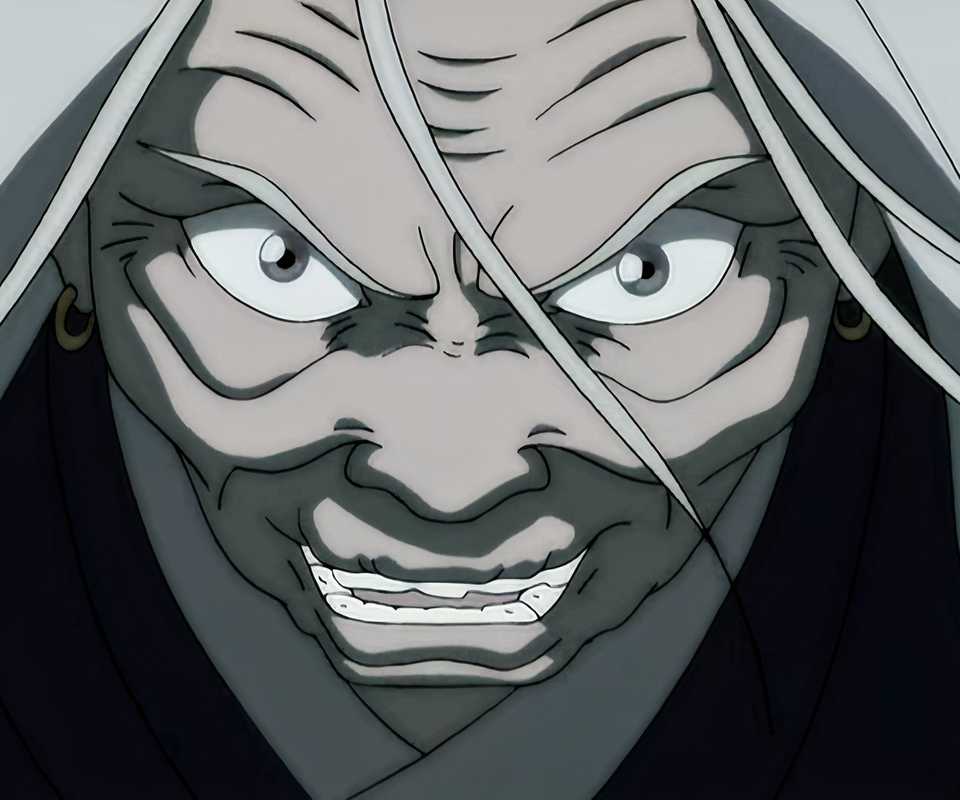
Toward the conclusion of the season, viewers learn that Noatak’s father was Yakone, a ruthless and deadly crime boss who successfully concealed his formidable powers in Republic City for years. After he was finally exposed, put on trial, and sentenced to life imprisonment, Yakone used psychic bloodbending to completely immobilize Sokka, Toph, and even Aang in the courtroom before escaping. In the ensuing confrontation, Aang was forced to enter the powerful Avatar State to overpower Yakone’s grip and permanently strip the crime lord of his bending abilities.
Yakone later fathered two sons, Noatak and Tarrlok, forcing them from a young age to practice bloodbending on wild animals and eventually on one another. Much like Hama, Yakone treated the potential of the younger generation as instruments for revenge against a society that had cornered him. As adults, Noatak adopted the persona of Amon to spearhead a violent anti-bending revolution, while Tarrlok secretly infiltrated the political hierarchy of Republic City, eventually rising to become the ambitious chairman of the United Republic Council. While the brothers were not working in active collusion—indeed, Amon eventually stripped Tarrlok of his bending as part of his ideological crusade—both utilized bloodbending to execute their father’s vengeance through vastly different avenues.
Notably, after Amon succeeds in temporarily stripping Korra of her water, earth, and firebending abilities, it is an elderly Katara who steps forward in a desperate attempt to restore her through traditional healing arts. Decades after Hama forced the burden of bloodbending onto her young shoulders, Katara comes face-to-face with the most severe and permanent damage the technique can inflict.

The first season ultimately resolves with one of the franchise’s most uplifting sequences as Korra finally connects with her past spiritual selves, allowing Aang to fully restore her lost bending. Yet, the narrative choice to render the Avatar nearly helpless and spiritually fractured because of an obscure, deeply sinister evolution of waterbending remains one of the boldest and scariest narrative turns in the history of the television universe.
All of these massive consequences trace directly back to a single, horrifying observation made by a tortured, vengeful old woman living in isolation: water exists inside all living things. That fundamental biological fact transformed an element traditionally associated with healing, community, and sustenance into an ultimate instrument of bodily domination and control.
Nearly twenty years after its initial broadcast, Katara’s visceral, emotional reaction to bloodbending remains far more unsettling than the mechanics of the technique itself. Audiences are conditioned by decades of storytelling to cheer when heroes level up, mature, and unlock impressive new powers. But when a newly discovered power is as inherently violating and frightening as bloodbending, it serves as a stark reminder that true strength can carry a devastating moral cost, leaving a hero with nothing to do but weep.