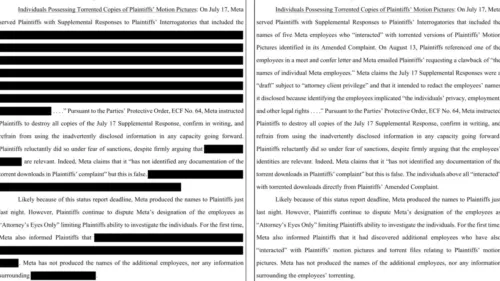
The complex landscape of online copyright enforcement faced new scrutiny following a Paris court ruling that prompted the DNS resolver Quad9 to withdraw its services from France. The fallout from the legal battle between sports broadcaster beIN Sports and infrastructure providers has revealed unintended consequences in automated censorship, including the routine blacklisting of expired domains now controlled by researchers.
The underlying legal dispute originated in May when beIN Sports obtained a court order directing major intermediaries to curb access to unauthorized tennis streams. What began as a targeted mandate focusing on a handful of web addresses has since escalated dramatically. According to data compiled from transparency notices filed by Google with the Lumen Database, the blocklist has expanded through successive waves to encompass 118 distinct domains.

Quad9 announced on October 22 that it would cease providing DNS resolution services to French users altogether, rather than comply with the mounting judicial penalties tied to the enforcement of the stream-blocking mandates. The Paris court had earlier ordered the non-profit resolver to block the designated pirate domains or face daily financial penalties. Quad9 maintained that it had not implemented the blocks prior to the penalty ruling, drawing objections from rights holders who pressed for strict intermediary liability.
The expansion of the blocklist occurred in structured increments over several months, tracking updates reported by major technology firms to public transparency archives. Following the initial mandate of six domains in May, subsequent updates added batches of 22 and later multiple sets of 30 domains throughout the autumn. The blocking measures were tied specifically to the timeline of the Women’s Tennis Association (WTA) season, with restrictions scheduled to remain in effect until the conclusion of the tournament cycle in mid-November.

A core issue highlighted by the tracking of these enforcement actions is the severe lack of public transparency surrounding digital blocking orders in France. Regulatory bodies such as Arcom do not regularly publish comprehensive updates regarding the specific targets of judicial injunctions. Consequently, researchers and the public rely heavily on voluntary disclosures submitted to the Lumen Database by corporations like Google. Even then, locating the complete scope of restricted domains requires navigating through fragmented case files and requesting access to withheld records, as later enforcement notices omit key tracking numbers.
The automated and sweeping nature of these blocklists has also drawn criticism over their efficiency, particularly concerning domains that no longer serve infringing content. Routine checks of the 118 domains on the French blocklist revealed that several web addresses had expired, changed hands, or become entirely defunct. While the majority of domains continued to resolve to active infrastructure, several exceptions demonstrated the rigid application of judicial bans regardless of changing circumstances on the open internet.

Among the anomalies discovered during DNS testing were domains that had been completely abandoned, registrar-suspended addresses, and sites previously seized by international law enforcement agencies operating in separate jurisdictions. For instance, specific sports streaming domains targeted by United States authorities earlier in the year remained actively blocked under French DNS mandates despite no longer pointing to active local infrastructure. Other domains on the French list were found to point to neutral online marketplaces or error pages rather than live video feeds.
Despite these changes, major public resolvers operating in France continued to enforce the blocking orders indiscriminately. Google’s DNS service and alternative provider networks were found to block the vast majority of the 118 listed domains, including defunct addresses and expired links. Notable exceptions included Cloudflare, which avoided direct daily penalties by implementing blocking requirements through its Content Delivery Network layer rather than its public 1.1.1.1 DNS resolver, an approach accepted by French courts as a proportional technical effort.
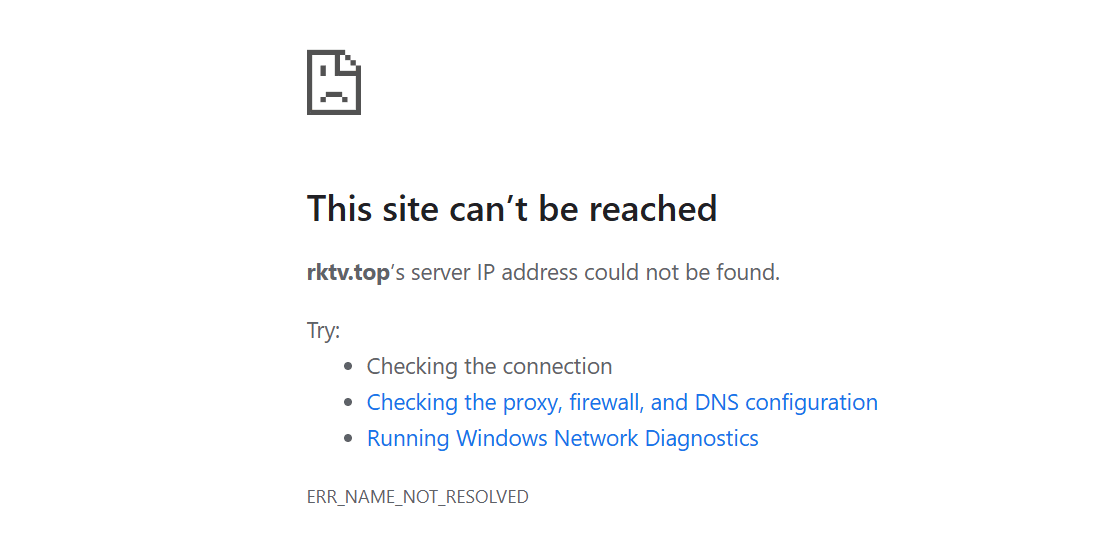
The most prominent illustration of the blunt instrument that domain-level blocking can represent emerged when researchers from the publication TorrentFreak registered two expired domain names previously included on the official French blacklist. The domains, which had lapsed and become available for public registration, were acquired to study the behavior of local filtering systems. The researchers established basic landing pages clearly stating that the domains were under new ownership for research purposes and contained no links, advertisements, or references to streaming services of any kind.
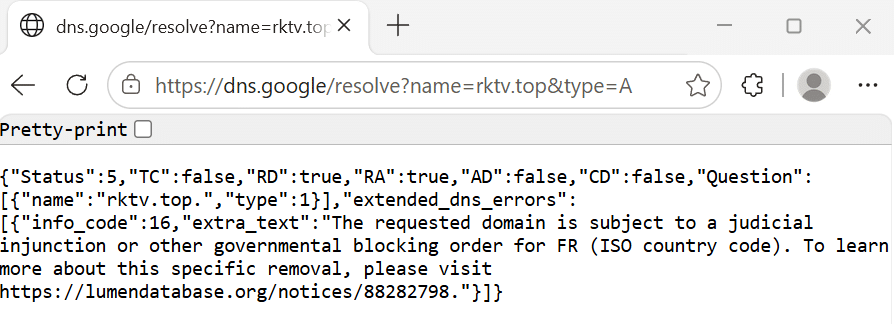
Despite the benign nature of the new content, automated filtering mechanisms in France treated the domains with the same severity as active piracy networks. When queried via Google’s DNS resolver from within France, the research domains returned extended error codes explicitly indicating censorship under judicial injunctions. Furthermore, several major French Internet Service Providers went beyond mere resolution refusal, actively redirecting web traffic intended for the research pages toward government-backed portals promoting licensed sports broadcasting options.
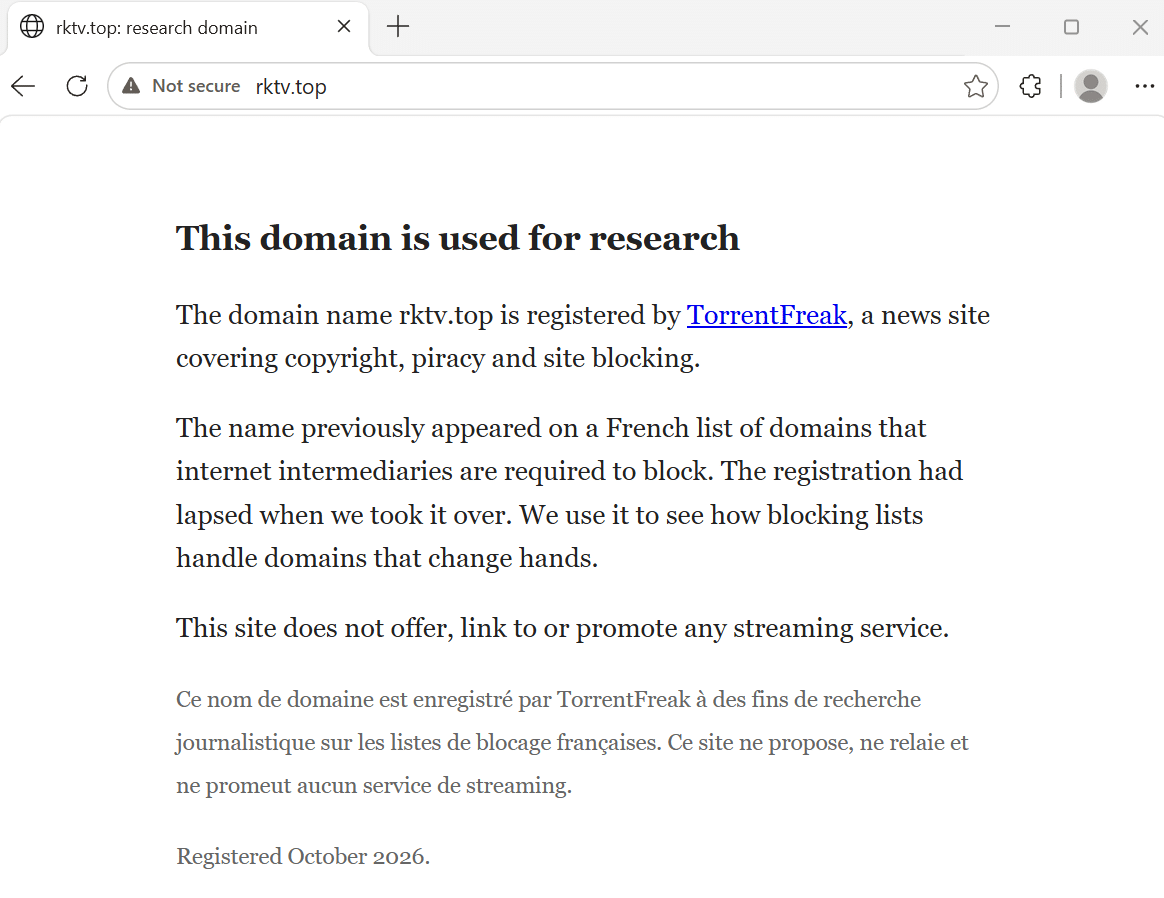
Visitors attempting to navigate to the domains were intercepted and routed to official consumer information pages, regardless of whether the underlying site hosted infringing material or a neutral research notice. Because no standardized, efficient administrative appeals process exists for domain owners whose properties become ensnared in broad blocking lists, the academic registrations remained isolated behind filtering roadblocks without a direct mechanism for contestation.
Technical analysis of the infrastructure supporting the wider blocklist indicated that a significant majority of the targeted domains rely on a concentrated cluster of foreign hosting providers. A substantial portion of the 118 entries resolved to specific Internet Protocol address ranges located in Hong Kong, returning standardized unauthorized access errors or generic premium service placeholder pages. This technical concentration suggests that despite the high volume of individual domain names, the judicial orders primarily target a small number of underlying streaming infrastructure operations.
Because operators of unauthorized streaming networks frequently spin up new domain names to replace those subjected to judicial blocks, traditional static DNS filtering has faced ongoing challenges regarding long-term efficacy. To counter these adaptive measures, French legislative efforts have sought to expand the scope of digital enforcement. Parliament adopted legislation enabling automated, real-time blocking of pirate sports streams during live broadcasts, allowing administrative bodies to add domains dynamically before seeking retrospective judicial review.
As the legal framework continues to evolve, questions remain regarding how temporary injunctions are managed once enforcement windows close. With the specific court order underpinning the current wave of blocks set to expire with the conclusion of the tennis calendar, the future status of the restricted domains—including the researcher-owned web addresses caught in the crossfire—remains uncertain as authorities weigh the expansion of automated internet filtering in France.