A teenager from Amman, Jordan, suspected of orchestrating the operations of the prolific data theft and extortion syndicate known as ShinyHunters, has been detained by local authorities and is reportedly cooperating with the FBI to identify other members of the hacking collective.
According to intelligence gathered by KrebsOnSecurity, the suspect—who operates under the hacker moniker "Rey"—was taken into custody just as the group was deep into an extortion campaign targeting a business unit recently divested by global aerospace giant Boeing. In a striking coincidence that highlights the complex web of modern cybercrime, the target of this extortion was an aviation and navigation unit whose parent company manufactures the very fleet of aircraft utilized by Royal Jordanian Airlines, the employer of Rey’s father.
On October 3, Reuters cited three unnamed sources confirming that a suspected ShinyHunters member in Amman, identified as Saif Al-din Khader, had been detained by Jordanian law enforcement and was actively cooperating with federal U.S. investigators. KrebsOnSecurity had previously unmasked Rey as Khader in a detailed profile published in November 2025, during which the young hacker candidly admitted to maintaining affiliations with multiple ransomware operations.
Rey’s name resurfaced prominently in late September following a major international development. Dutch police arrested 24-year-old convicted cybercriminal Pepijn van der Stap on September 15 on suspicion of facilitating data thefts and extortion schemes for ShinyHunters. Immediately following Van der Stap’s dramatic arrest, which involved special police units and flash-bang grenades in Amsterdam, Rey seized control of the ShinyHunters brand. Capitalizing on the vacuum, Rey publicly boasted about exfiltrating highly sensitive information from the FBI and attempting to extort the rival Cl0p ransomware syndicate.
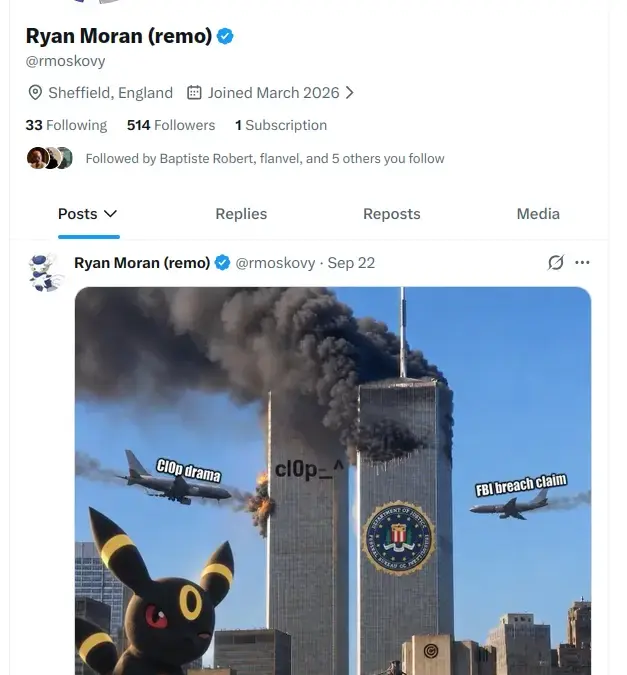
Using his long-standing account on Twitter/X, Rey relentlessly taunted both federal law enforcement and the Cl0p operators. His posts featured targeted memes accompanied by the avatar of "Umbreon," the former hacker alias utilized by Van der Stap. Investigators believe this was an intentional maneuver designed to frame the Dutch national for the high-profile breaches.
The technical backbone of these attacks lay in the exploitation of a critical security flaw. As detailed in previous cybersecurity advisories, ShinyHunters infiltrated the FBI’s recruitment portal and numerous other corporate environments by exploiting CVE-2026-35273. This zero-day vulnerability affected PeopleSoft, a widely deployed software-as-a-service platform owned by Oracle that manages corporate recruitment, human resources, benefits, and payroll systems.

Although Oracle moved swiftly to release a security patch after the zero-day was weaponized in June, and security firm Mandiant issued temporary web application firewall (WAF) rules for organizations unable to patch immediately, the threat actors adapted. According to reports from BleepingComputer and Google Threat Intelligence Group (GTIG) researchers, ShinyHunters utilized a well-known URL-encoding technique to bypass Mandiant’s defensive rules, launching a mass-exploitation campaign that compromised systems across higher education, healthcare, technology, agriculture, transportation, and government sectors.
The fallout from these breaches has been severe. Reuters reported that the FBI removed an Accenture contractor following revelations that a failure to properly patch the bureau’s recruitment website exposed sensitive files concerning more than 5,000 FBI personnel, including specialized unit assignments, psychiatric evaluations, and medical records.
"Rey" Means King, as in Royal
According to sources familiar with the ongoing multi-jurisdictional investigation, the FBI’s pursuit of ShinyHunters gained critical urgency when the group targeted the divested Boeing navigation unit. The compromised data allegedly contained proprietary digital aviation information that posed significant operational safety and security risks.
In a statement provided to KrebsOnSecurity, Boeing acknowledged the attempted extortion by the threat actors. The company confirmed the incident centered on data stolen from Jeppesen ForeFlight, a digital aviation subsidiary that Boeing sold in November 2025 to private equity firm Thoma Bravo for $10.55 billion.
"We are aware of claims by a threat actor regarding data allegedly associated with Boeing and our former subsidiary Jeppesen ForeFlight," a Boeing spokesperson stated. "We are actively reviewing the matter with the Jeppesen ForeFlight team."
Representatives for Jeppesen ForeFlight maintained that their internal investigation revealed no operational disruption. "Based on our investigation to date into this claim and proactive security posture, there was no impact to our operations or products," the company said in a written statement.

Rey’s connection to the aviation sector extends beyond his target selection. Evidence gathered during the investigation indicates his father is employed by Royal Jordanian Airlines, a carrier largely controlled by the Jordanian government that operates long-haul flights using Boeing aircraft. While Rey claimed on Telegram early last year that his father worked as an airline pilot—a detail that could not be independently verified—digital forensics paint a clearer picture. As documented in earlier security profiles, a family computer compromised by password-stealing malware revealed that Rey’s father utilized identical credentials across multiple employee login portals for the airline.
Royal Jordanian Airlines did not respond to requests for comment. Shortly after inquiries were sent to Rey’s father regarding his son’s alleged activities, Rey began aggressively scrubbing his digital footprint, deleting numerous social media profiles, including the Twitter/X account used to mock the FBI and Cl0p.
Despite purging his social media presence, Rey’s technical blog hosted on GitHub remained online. A lengthy investigative post published on the blog in March 2026 attempted to dox two Russian men alleged to be the core operators and developers behind the Cl0p ransomware syndicate.
Murder-for-Hire Allegations
Meanwhile, legal proceedings in the Netherlands have introduced far darker allegations against Pepijn van der Stap. Despite widespread media coverage celebrating his supposed rehabilitation and return to legitimate cybersecurity work, Dutch daily newspaper RTL reported on September 29 that investigators suspect Van der Stap of orchestrating at least two murders intended to be carried out abroad.
Prior to his September arrest, Van der Stap had served the majority of a four-year prison sentence for extensive data theft and extortion. Prosecutors previously estimated his illicit operations had generated between 1.5 million and 2.7 million euros. Following his release, Van der Stap secured employment as an "offensive security lead" at Neo Security, an Amsterdam-based cybersecurity firm where he claimed to test client network defenses.
Neo Security owner Benjamin Korper told Reuters that an independent firm was hired to audit Neo Security’s infrastructure and client networks for signs of compromise by Van der Stap, though no internal breaches have been discovered to date. Korper confirmed that Dutch forensic teams descended on his offices on the evening of September 15 to execute the raid that resulted in Van der Stap’s apprehension.

Before his initial 2023 conviction, Van der Stap maintained a dual life, working as a software engineer for Amsterdam startup Hadrian and volunteering with the Dutch Institute for Vulnerability Disclosure (DIVD) while simultaneously extorting major international corporations. Confronted about his history of deception during an interview prior to his second arrest, Van der Stap expressed resignation regarding public skepticism.
"You can throw a bunch of nice words at someone, but you can’t convince them if they don’t want to be convinced," Van der Stap said. "I’m doing what I can to repay victims, and that’s all I can do. If someone doesn’t want to believe me, then that’s on them."
Franchising and Burning a Brand
Security researchers emphasize that the individuals operating under the ShinyHunters moniker today bear little resemblance to the group’s original core members, most of whom were French nationals previously rounded up by law enforcement. Instead, ShinyHunters has evolved into an opportunistic franchise model.
Comparing the structure to the fictional "Dread Pirate Roberts" from The Princess Bride, cybersecurity analysts note that succession within the group occurs through arrests rather than death, allowing multiple individuals to adopt the brand simultaneously. Investigators are currently focusing on freelance affiliates who supply stolen corporate SaaS credentials in exchange for a percentage of any successful ransom payments.
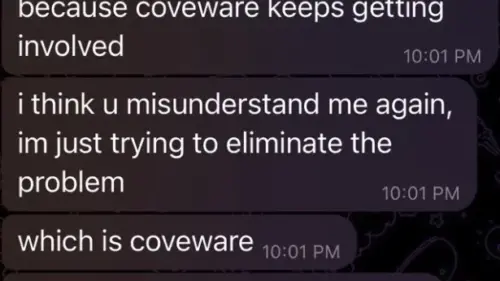
In the wake of Van der Stap’s arrest and Rey’s subsequent detention, cybercrime chat channels on Telegram erupted with criticism directed at the Jordanian teenager. Critics within the underground community mocked Rey for capitulating to federal pressure, deleting his channels, and ultimately driving the ShinyHunters darknet portal offline following an FBI ultimatum.
A competing Telegram channel dedicated to exposing cybercriminals alleged that Rey had purchased old forum PGP keys to impersonate the original ShinyHunters collective, leveraging the brand name to negotiate ransoms and amass a cut of the proceeds. "He bought the old forum PGP key and used it to make new Breachforum websites and Telegram channels larping as ShinyHunters to ransom companies," one forum participant noted.

Administrators of the monitoring channel "The Battle" echoed these sentiments, writing that Rey "made a serious mistake when he started pretending to be a member of ShinyHunters. That group had already been dismantled… yet Rey still chose to use its name while carrying out his crimes."
The group’s recent activities—including the high-profile breach of the FBI recruitment portal—were described by hackers speaking to The Register as a calculated public relations response to a May 2026 FBI flash notice that advised organizations against paying ransoms. While the FBI advisory warned that ShinyHunters frequently resorted to aggressive harassment tactics, including threatening phone calls and swatting victims, the hackers maintained that their attacks were executed to demonstrate technical capability and challenge the public narrative promoted by federal agencies and security researchers alike.