
Cyberpunk has historically been far less interested in accurately predicting the shape of tomorrow and much more focused on issuing stark warnings about its frightening potential. The genre thrives at the volatile intersection of high technology and low life—conjuring images of gleaming megacities towering over forgotten neighborhoods, artificial intelligence coexisting with human desperation, and authoritarian governments wielding cutting-edge technology as just another instrument of social control. Beneath the neon glow, the endless rain, and the towering skyscrapers lies a deeply human question: What happens to us when the machines we build become powerful enough to reshape the world entirely around us?
From artificial bodies and synthetic memories to immersive virtual realities and omnipresent surveillance, the greatest cyberpunk stories utilize technology to interrogate class dynamics, capitalism, personal identity, autonomy, and the very definition of humanity. While the genre has developed its own instantly recognizable visual language over the decades, its most powerful ideas have consistently centered on ordinary humans forced to live underneath technology rather than the technology itself.
Tracing this tradition from its silent-era foundations to the grand philosophical heights of modern science fiction cinema, these are the definitive films that defined the cyberpunk landscape.

Metropolis (1927)
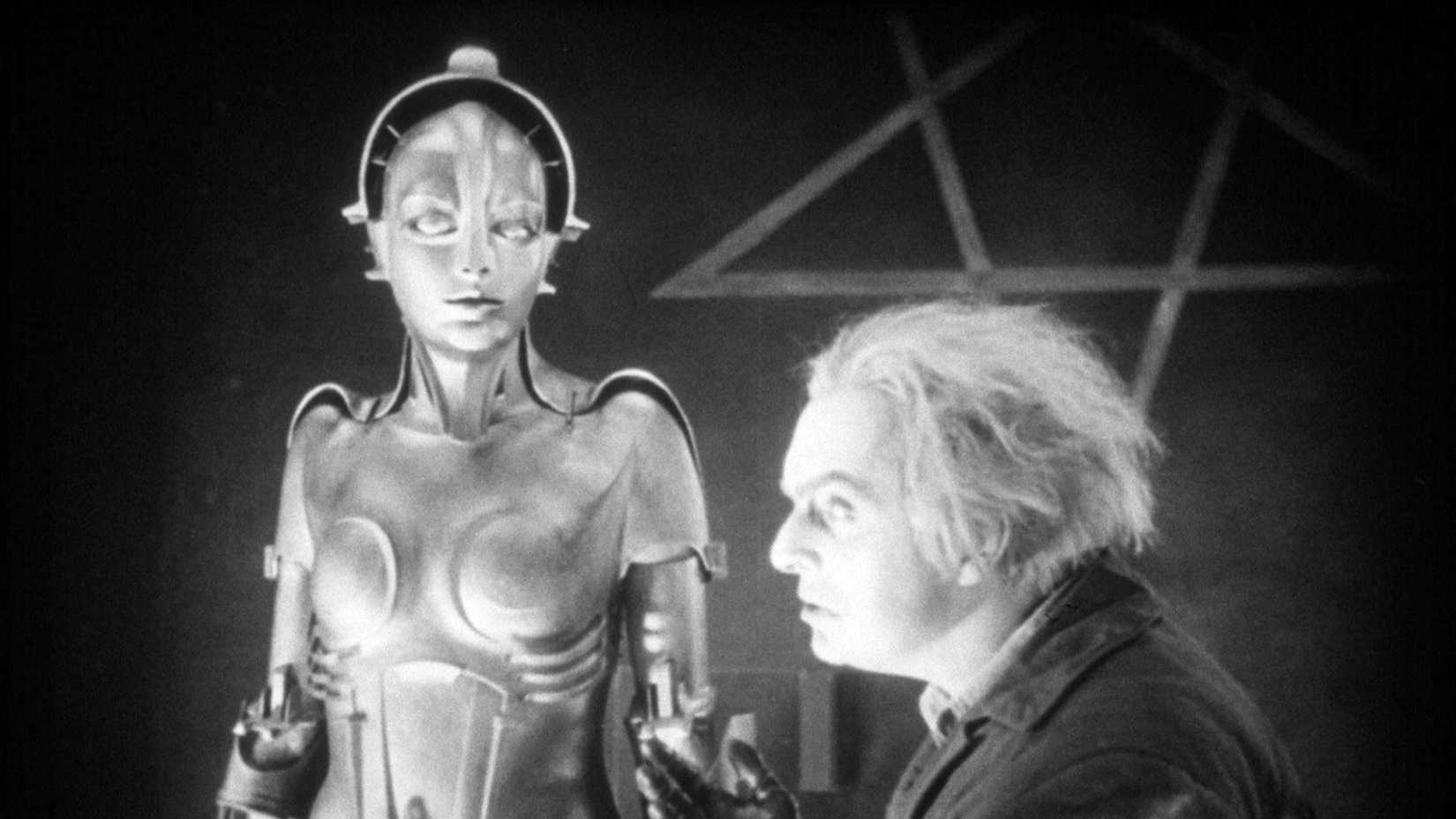
Long before cyberpunk had even been coined as a genre, director Fritz Lang imagined a sprawling city that looked precisely like the genre’s fever dream. In Metropolis, the ultra-wealthy live among gleaming skyscrapers while an exhausted, anonymous army of workers operates the heavy machinery buried deep beneath the surface. Freder Fredersen, played by Gustav Fröhlich, is the privileged son of the city’s ruler. After meeting Maria, a worker passionately preaching solidarity to the downtrodden masses, he discovers the horrifying human cost of his father’s glittering utopia. The plot spirals rapidly into technological paranoia when a mad scientist crafts a metallic double of Maria to hijack the underground uprising from within.
It is entirely possible to draw a straight line from Lang’s Maschinenmensch—the iconic humanoid machine at the center of the narrative—to the cybernetic nightmares that emerged many decades later. Well before reality began to blend seamlessly with science fiction, Metropolis understood that technological progress meant very little when its benefits belonged exclusively to those sitting comfortably at the top of the food chain. Its monumental architecture, dehumanizing machinery, and grotesque fusion of flesh and metal established an aesthetic vocabulary that creators and artists would spend the next century borrowing from. The term ‘cyberpunk’ did not exist in 1927, but Metropolis effectively forged its genetic code long before talking pictures even took over cinema.
Tetsuo: The Iron Man (1989)
There is nothing sleek, corporate, or polished about Tetsuo: The Iron Man. Shinya Tsukamoto’s harrowing 16mm nightmare begins in pure filth when a metal fetishist cuts open his own leg to force a threaded steel rod deep into his thigh. He is subsequently run over by an unassuming salaryman, inadvertently passing on a grotesque industrial curse. Soon, the meek salaryman finds himself staring into his bathroom mirror while pulling a razor-sharp wire of rusted metal from a bloody sore on his cheek. What follows is a hallucinatory technological seizure. Frantic stop-motion animation captures human flesh surrendering entirely to scrap iron, reaching a chaotic peak when the salaryman’s body violently mutates into a high-speed power drill. Tsukamoto turns cybernetic integration into a visceral panic attack, proving that when man finally merges with machine, the result is not a glorious upgrade but an agonizing nightmare.
With its abrasive, high-contrast 16mm photography, Tetsuo feels less like speculative fiction and more like a pirate signal beamed straight from a scrap-metal hell. Tsukamoto takes the familiar cyberpunk collision between human beings and technology and makes it brutally physical, drawing strong comparisons to David Cronenberg’s body horror classics like Videodrome and Scanners. There is no clean interface separating man from machine; the two simply fuse together in a frenzy of pain and biological mutation. If Blade Runner imagined a seductive technological future and Ghost in the Shell contemplated its philosophical consequences, Tetsuo raises the terrifying question of what it might feel like to violently evolve into a machine. Like Leigh Whannell’s Upgrade, it stands as cyberpunk engineered specifically for horror fans.
A Scanner Darkly (2006)
Bob Arctor does not know he is watching himself. That is the psychological nightmare at the center of Richard Linklater’s A Scanner Darkly, an adaptation of Philip K. Dick’s bleak 1977 cyberpunk novel of the same name. Set in a near-future California ravaged by the mind-altering narcotic known as Substance D, undercover agent Arctor wears an advanced scramble suit that constantly cycles through thousands of different faces and voices to preserve his anonymity. He remains anonymous to his superiors and invisible to his friends, but as his mind steadily fractures, the fragile space separating investigator, drug addict, and prey disintegrates over the course of the narrative.
Linklater’s distinctive rotoscoped animation makes the movie feel appropriately unstable, as though reality itself has begun to loosen its grip under the influence of the fictional narcotic. Stripped of the usual glowing skyscrapers and sprawling neon streetscapes, the film relocates the genre’s systemic rot to an anonymous suburban sprawl, where pervasive surveillance technology effectively weaponizes the mundane. Arctor’s true adversary is not a rogue artificial intelligence or an evil megacorporation. His nightmare begins when his own superiors order him to monitor his household, forcing an addict whose brain is already breaking down to investigate himself from behind a screen.

Videodrome (1983)
As the sleazy chief executive officer of a bottom-feeding UHF television station, Max Renn, played by James Woods, simply wants boundary-pushing filth to keep viewers glued to the screen. When he stumbles across "Videodrome," a pirate broadcast featuring unsimulated violence, his attempts to trace the mysterious signal uncover a weaponized conspiracy—a malignant transmission that causes vivid hallucinations and physically rewires the human central nervous system.
Director David Cronenberg took cyberpunk out of high-tech server rooms and planted it firmly in front of the living room television with Videodrome. It remains a masterclass in the genre four decades later because it treats electronic media as an invasive parasite. Well before the modern era of doom-scrolling and algorithms fighting aggressively for human attention, Cronenberg grasped that screens would not remain benign for long. By heralding the arrival of "the new flesh," Cronenberg imagined a future where technology and media become so deeply intertwined with the human body that the fundamental distinction between viewer and screen eventually collapses.
Strange Days (1995)
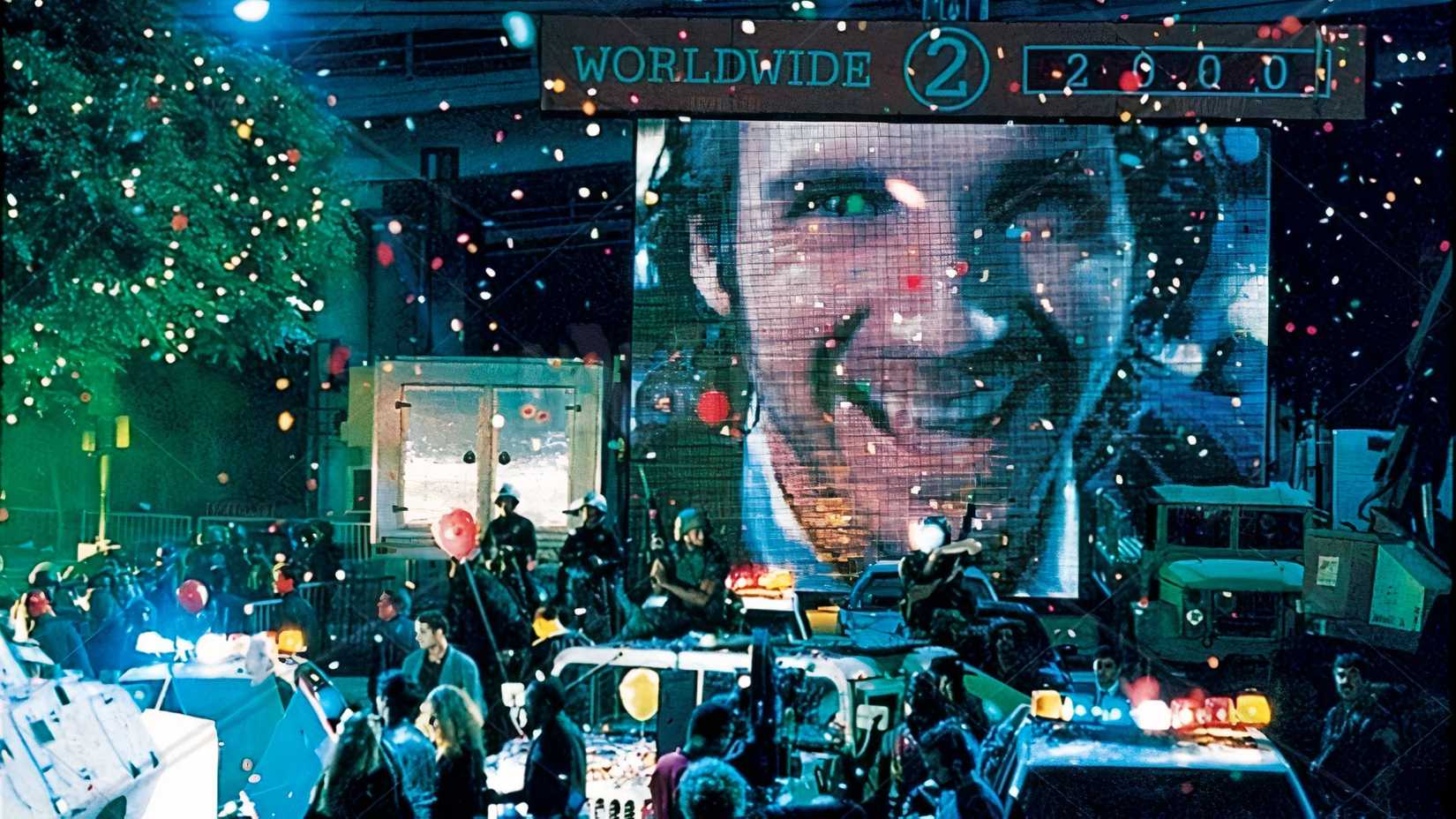
What if you could sell someone a physical experience instead of a traditional movie? That is the illicit business at the heart of Kathryn Bigelow’s Strange Days. In the final, tense days of 1999, disgraced former police officer Lenny Nero, portrayed by Ralph Fiennes, deals in SQUID discs—illegal recordings of a person’s physical sensations ripped straight from the cerebral cortex for someone else to experience firsthand. It functions much like the braindance technology found in Cyberpunk 2077, presenting an irresistible form of technology for a society already deeply addicted to voyeurism.

When Lenny receives a disc containing the point-of-view murder of a young escort, he is dragged headfirst into a lethal conspiracy involving police corruption, political violence, and a Los Angeles ready to violently explode. Bigelow wraps a city’s darkest impulses inside a filthy neo-noir wrapper, exposing how easily human intimacy becomes pornography, street violence transforms into entertainment, and personal memory is reduced to a tradeable commodity. The film captures a world where technological capability has wildly outpaced human maturity, giving way to a bleak potential future where individuals will happily monetize even their own trauma just to get by.
RoboCop (1987)
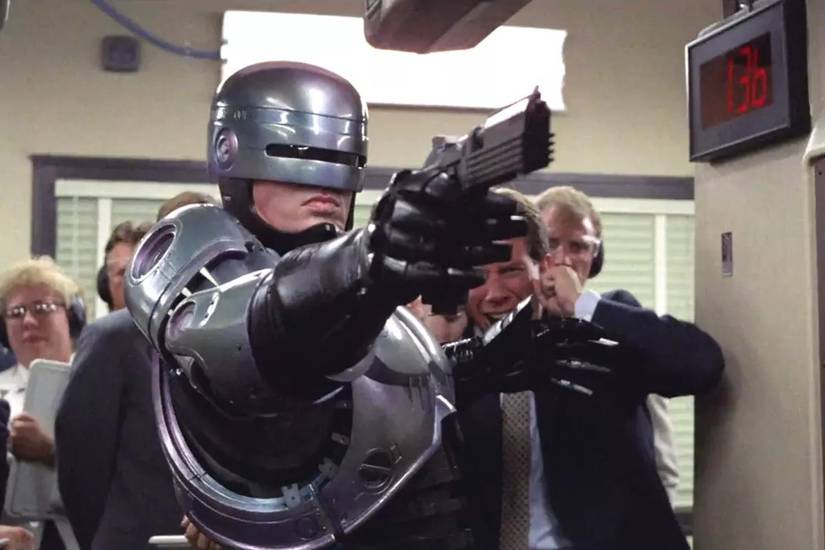
Paul Verhoeven’s 1987 classic RoboCop needs very little introduction. In a crumbling, economically devastated near-future Detroit, law enforcement has been entirely privatized into a corporate product controlled by the monolithic megacorporation Omni Consumer Products (OCP). After Alex Murphy, a dedicated Detroit police officer transferred to the city’s notoriously crime-ridden Metro West precinct, is brutally executed by crime boss Clarence Boddicker, OCP resurrects his remains as an armored cyborg enforcer to clean up the streets.
However, Murphy’s underlying humanity proves significantly harder for the corporation to erase than anticipated. Fragments of his old life begin breaking through his strict programming, forcing him to reckon with the man buried beneath the heavy machinery. RoboCop remains a cyberpunk titan due to its lethal blend of high-octane action and biting social satire. Verhoeven successfully skewers a dystopia where boardrooms casually order assassinations and fake television commercials hawk commercial products between body counts. Yet, beneath the dark absurdity lies the genre’s ultimate horror: corporate ownership of the human body. Murphy’s crusade transforms into a desperate fight to reclaim the humanity that OCP has literally turned into corporate property.

The Matrix (1999)
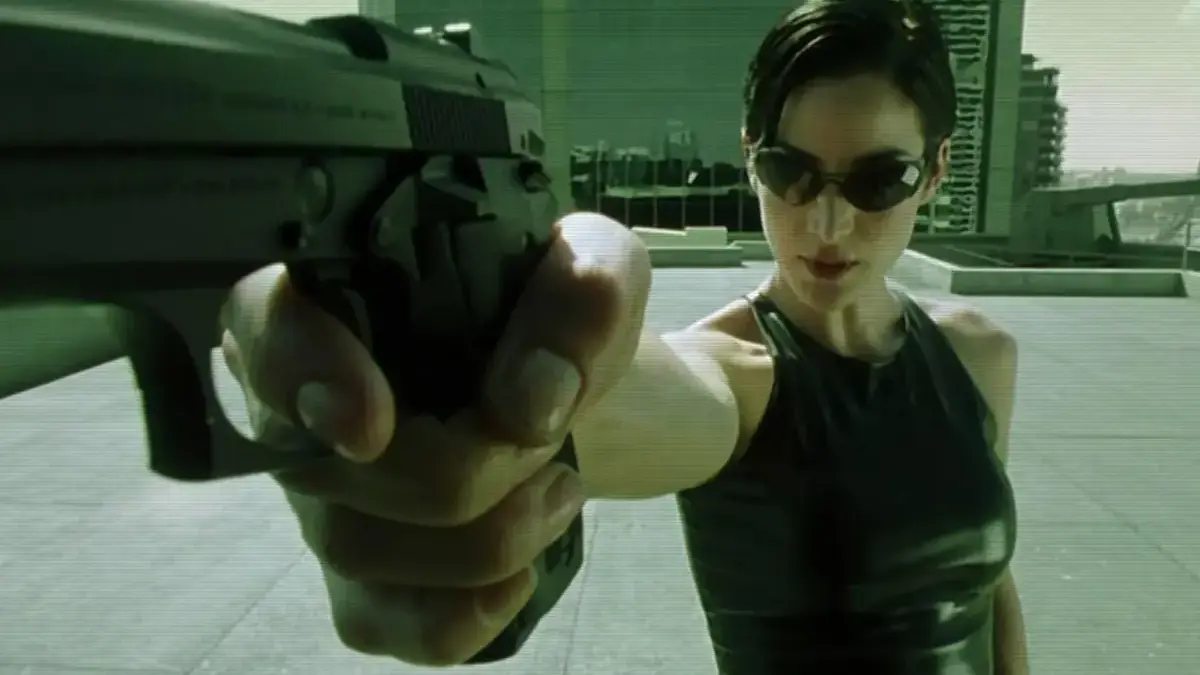
The Wachowskis weaponized cyberpunk for the blockbuster era with The Matrix, a genre-defining film that translated simulated realities and cybernetic hacking into a massive global cultural phenomenon. The original film captured the nascent anxieties of the early internet so perfectly that its vision of a digital prison eventually became embedded in everyday vocabulary. The story follows Thomas Anderson, a disillusioned software programmer living a secret life as the hacker Neo. His search for answers leads him to Morpheus and Trinity, who reveal that his perceived reality of 1999 is actually a machine-built simulation designed to keep humanity docile and harvested for energy.
After awakening in the physical ruins of a scorched Earth, Neo discovers he possesses the ability to bend the Matrix to his will, transforming from a hunted hacker into the centerpiece of humanity’s fight for liberation. The Wachowskis subsequently expanded that expansive mythology across two increasingly ambitious sequels, The Matrix Reloaded and The Matrix Revolutions, before returning nearly two decades later with The Matrix Resurrections. That belated fourth film took a deliberately meta approach to the franchise, though its unconventional revival proved notably divisive with audiences and critics alike.
Akira (1988)
Thirty years after a cataclysmic nuclear explosion completely destroys Tokyo and ignites World War III, the rebuilt metropolis is overflowing with corruption, political unrest, secret military experimentation, and angry motorcycle gangs with nowhere to channel their youthful rage. When one such biker, Tetsuo, encounters a mysterious child possessing extraordinary psychic powers, he unknowingly sets off a chain reaction that threatens to tear the entire city apart from the inside out.
Katsuhiro Otomo’s Akira is frequently remembered first for its groundbreaking animation, and deservedly so. Rather than relying on computer-generated shortcuts, Otomo built his sprawling dystopia using over 160,000 hand-painted animation cels. The production famously shattered industry standards by utilizing 327 distinct colors, including fifty custom shades created exclusively to capture the deep shadows and blinding neon glow of the city at night. Every collapsing skyscraper and iconic motorcycle light trail was painstakingly drawn by hand. By combining unprecedented technical ambition with a bleak vision of post-war trauma, Akira permanently codified the visual language of the cyberpunk genre for generations of creators to come.
Blade Runner (1982)
Los Angeles, 2019. The future has finally arrived, and it looks thoroughly exhausted. Ridley Scott’s Blade Runner follows Rick Deckard, a weary former police officer reluctantly pulled back into active service as a blade runner—a specialized detective tasked with tracking down and "retiring" rogue replicants, bioengineered synthetic humans virtually indistinguishable from their human creators. His latest assignment sends him in pursuit of four escaped replicants led by Roy Batty, who have returned to Earth searching desperately for a way to extend their deliberately limited lifespans. As Deckard closes in, the line separating hunter from hunted begins to blur, forcing him to confront the deeply uncomfortable possibility that the machines he has been ordered to destroy may possess far more humanity than the people who built them.
Few films have defined the aesthetic and thematic parameters of cyberpunk as completely as Blade Runner. Scott’s vision of Los Angeles is not some pristine, utopian tomorrow; it is a filthy, overcrowded, rain-soaked metropolis where towering corporate arcologies loom over street-level desperation, and technological advancement has done little to improve the baseline quality of life for ordinary citizens. The film’s unique fusion of film noir, dystopian science fiction, artificial intelligence, and existential philosophy established the visual and thematic template for decades of cyberpunk fiction that followed. Its enduring influence remains plainly visible in Denis Villeneuve’s contemplative continuation, Blade Runner 2049, which expands Scott’s world while asking its own probing questions about identity, memory, and artificial life. Furthermore, the franchise continues to expand through upcoming projects like Amazon’s Blade Runner 2099 series, which aims to push the iconic dystopian setting even further into the future.
Ghost in the Shell (1995)
While some may hesitate to place an anime film at the absolute pinnacle of the cyberpunk subgenre, Ghost in the Shell stands as an inarguable masterclass in brooding science fiction. Based on the manga by Masamune Shirow, the darkly lit film grapples directly with the philosophical quandary of what happens to the human soul when the physical body becomes entirely optional. It serves as a definitive love letter to the future, distilling everything that makes the subgenre so endlessly fascinating into a tightly paced narrative.
The film follows a fully cybernetic operative named Major Motoko Kusanagi who serves within Japan’s elite Section 9 task force. Tasked with hunting down the Puppet Master, an elusive hacker capable of infiltrating human cyberbrains, she soon finds herself pulled into a complex conspiracy that forces her to question the authenticity of her own identity and memories. Director Mamoru Oshii is not particularly interested in explicitly explaining his complex vision of the future; instead, he expects the audience to inhabit it. Characters drift quietly through dense computer networks, flooded city streets, and enormous industrial spaces while the narrative frequently pauses to consider consciousness, biological evolution, and the strange persistence of human identity.
The profound influence Ghost in the Shell has exerted on modern cinema is impossible to overstate. From The Matrix to Blade Runner 2049, direct echoes of Oshii’s visionary future can be found across some of the greatest science fiction ever produced, cementing its place within the genre.



Leave a Reply