

Qualcomm has officially rolled out an early developer preview of Linux tailored for Snapdragon X2 Series laptops, signaling a major push to invite kernel developers, distribution maintainers, and hardware enablement engineers to get hands-on with the new architecture and begin rigorous testing.
The initiative follows groundwork laid by the company since the Snapdragon Summit 2025. Rather than relying on out-of-tree patches that typically require a small circle of maintainers to constantly update and manage, the current strategy emphasizes pushing foundational drivers directly into the Linux mainline. Industry observers note that this upstream-focused approach is critical for long-term hardware support, ensuring that future Linux distributions can support Snapdragon X2 devices out of the box without fragmented custom kernels.
Importantly, Qualcomm has emphasized that this initial release is strictly aimed at developers and engineers rather than end users. The software stack is still in its infancy, and daily-driver stability for standard desktop users is not the immediate objective. Instead, the focus is on building a robust foundation that will eventually allow these ARM-based laptops to run mainstream Linux distributions smoothly and efficiently.

The Progress So Far
The current developer preview pairs a modern Debian 13 "Trixie" userspace with a custom kernel designed to interface with the Snapdragon X2 silicon. The initial engineering efforts are heavily concentrated on readying core subsystems that developers require before they can begin any serious application-level work or system optimization.
System booting is currently managed via systemd-boot acting as the UEFI manager. Meanwhile, Core I/O development covers essential interfaces such as USB, PCIe, and the Qualcomm Universal Peripheral serial engine, which handles UART, I2C, and SPI connections. These foundational elements are crucial for ensuring that peripherals, storage devices, and expansion cards can communicate reliably with the processor.
Graphics and compute duties are being handled largely through Mesa’s open-source Qualcomm drivers. Within this stack, Freedreno provides OpenGL support, Turnip takes care of Vulkan 1.3 capabilities, and Rusticl handles OpenCL compute workloads. Although development across all three graphics and compute components remains active and ongoing, functional display output, browser hardware acceleration, and GPU-driven compute workloads are already operational in this preview.

In addition to graphics, Qualcomm is pushing its FastRPC driver upstream. FastRPC serves as the company’s established mechanism for routing demanding compute tasks from the main CPU to dedicated digital signal processors. By integrating this driver, developers can tap directly into the Hexagon NPU for local artificial intelligence inference workloads. Furthermore, the latest series of updates incorporates critical power management and thermal support frameworks, which are vital for maintaining battery efficiency and preventing thermal throttling in a laptop form factor.
Two Build Paths and Flexible Options
Official documentation released alongside the Snapdragon X2 Linux software outlines two distinct paths that developers can follow depending on their setup and access levels.
The first option is an unregistered path that allows developers to build the Debian OS layer using prebuilt firmware binaries. This route enables engineers to get started immediately without needing a formal Qualcomm developer account. The second path requires a registered developer account, granting complete access to full firmware source code and enabling developers to build every component from scratch. For those who prefer to bypass the compilation phase entirely, prebuilt flashable images are also made available to skip the build process and jump straight to hardware flashing.
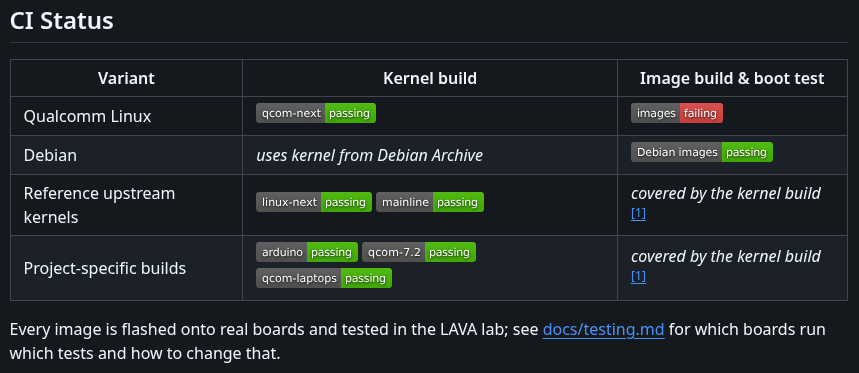
Host system requirements vary depending on which component is being compiled. Building the Debian user-space layer requires an ARM64-based machine running Ubuntu 24.04 LTS or later, or Debian Trixie. Conversely, building the proprietary firmware components requires an x86_64 host running Ubuntu 22.04 LTS or later.
Developers attending this year’s Snapdragon Summit in Maui, Hawaii, have also had the opportunity to witness live demonstrations of Linux running natively on Snapdragon X2 hardware, highlighting the tangible progress Qualcomm has achieved since announcing the hardware platform.
Industry analysts and open-source advocates have responded positively to Qualcomm’s structured roadmap, dedicated documentation portal, and public code repositories. Providing clear build scripts and actively courting community feedback represents a collaborative model that many silicon vendors have historically struggled to adopt. As these upstream drivers continue to merge into the mainline Linux kernel, the burden on individual distributions is significantly reduced, paving the way for broader adoption and ensuring that modern ARM-powered laptops become viable, long-lasting alternatives in the broader computing ecosystem.
Leave a Reply