
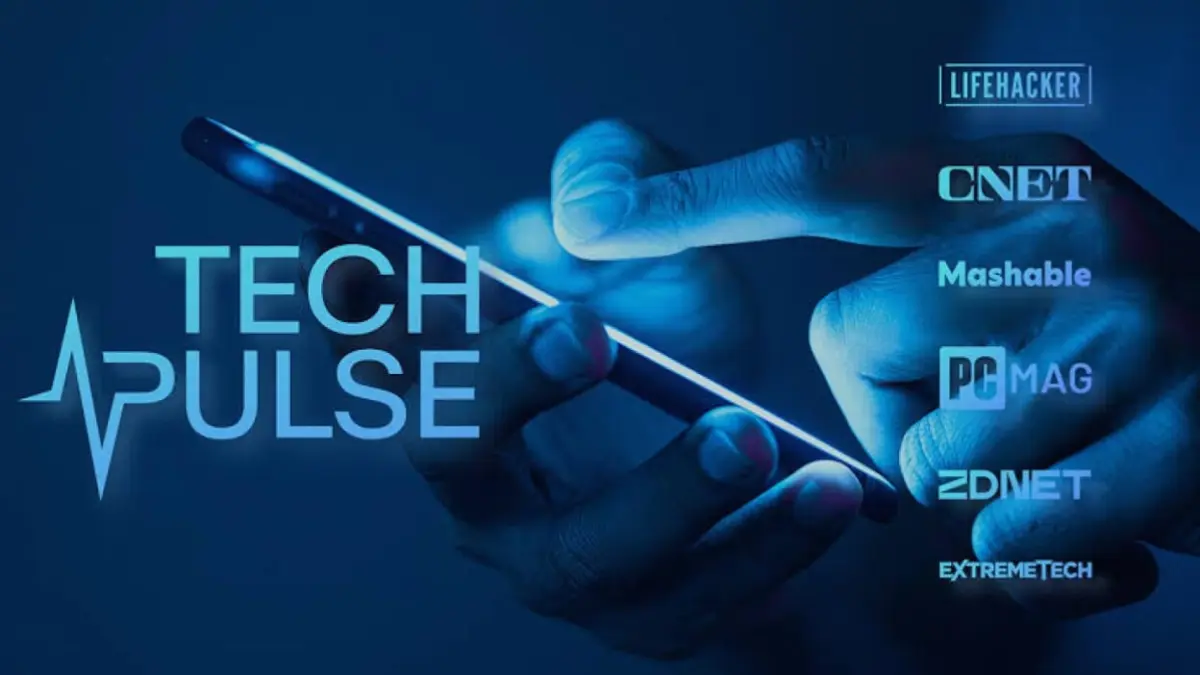
In an era where digital news consumption is increasingly dominated by opaque recommendation algorithms and fragmented social platforms, Lifehacker Editor in Chief Jordan Calhoun has highlighted the release of TechPulse, a new mobile application designed to serve as a consolidated, algorithm-free destination for technology news, hardware reviews, productivity guidance, and digital culture reporting. Developed under the banner of CNET Group and Ziff Davis, the free application aggregates editorial content from several established technology and lifestyle publications—including CNET, PCMag, Mashable, and Lifehacker—into a single, chronologically ordered feed. By bringing these distinct media outlets together within a unified software interface, TechPulse offers a streamlined approach to news discovery that reflects the simplicity of early internet homepages while eliminating the noise and manipulation common to contemporary digital feeds.
The introduction of TechPulse addresses a broader historical shift in how audiences navigate online media and access technology journalism. Over the past several decades, user habits on the web have transitioned through several distinct technological eras. As Calhoun notes when examining the evolution of personal browsing patterns, a browser’s homepage originally served as both a reflection of individual identity and a primary lens through which users discovered information. During the early days of personal computing, when major search engines were still emerging in public consciousness, setting a startup page was a deliberate daily choice that structured an individual’s interaction with the internet.
For many internet users who came of age during the late 1990s and early 2000s, landing pages evolved alongside personal academic and professional milestones. In the initial era of consumer dial-up and early broadband access, major web portals like MSN served as default launchpads for news, web searching, and communication. As specialized web destinations expanded, personal startup choices frequently migrated toward niche portals—such as ESPN, which operated under its early web domain espn.go.com—or emerging social networks like Facebook during its initial collegiate expansion. By the time many users completed higher education, minimalist search tools like Google had established themselves as the universal standard for beginning a web session. Throughout each phase of this evolution, the chosen homepage provided a stable, user-controlled window into the wider web.
Over time, however, the foundational mechanics of digital discovery underwent substantial structural changes. The traditional model of fixed landing pages gradually gave way to syndicated RSS feed aggregators, specialized browser extensions, individual publication apps, and eventually, the algorithmically sorted timelines that dominate modern social platforms. While these contemporary networks increased the speed of information sharing, they also introduced algorithmic sorting engines designed to capture user attention, lengthen app engagement, and prioritize viral content over direct editorial delivery. Consequently, modern readers frequently navigate cluttered, unpredictable feeds where information is continuously shuffled according to mathematical models tuned to subconscious behavioral triggers.
TechPulse was developed to offer a direct alternative to this algorithmic landscape. Built as a human-curated information hub, the mobile app bypasses automated recommendation engines entirely in favor of a straightforward, reverse-chronological content delivery system. Every article, review, visual guide, and video appearing within the feed is selected, written, filmed, and edited by professional journalists across the participating newsrooms. By presenting content strictly in the order it is published, the platform restores transparency to the reading experience, enabling users to stay informed on technology developments without being subjected to artificial engagement mechanics or hidden sorting rules.
Central to the design of TechPulse is the integration of diverse editorial perspectives from across the CNET Group network. Rather than blending different publications into a generic news stream, the app preserves the individual identities and specialized subject areas of each contributing brand. This structure allows readers to access a broad spectrum of technology reporting—ranging from deep hardware benchmarks to cultural analysis—within a single, unified interface.
For consumers seeking objective hardware evaluations and buying advice, TechPulse incorporates extensive reporting from CNET and PCMag. Both publications are widely recognized for their empirical testing methodologies, lab-based hardware analyses, and comprehensive buyer’s guides. Readers looking to evaluate new personal electronics, computing hardware, smartphones, smart home equipment, or mobile devices can filter for coverage from CNET and PCMag to inspect detailed lab results, comparative analyses, and expert purchasing recommendations.

Complementing this product evaluation is functional reporting from Lifehacker, which focuses on practical application and software utilization. While CNET and PCMag assist readers in selecting and purchasing new devices, Lifehacker’s editorial scope focuses on helping users maximize the efficiency and utility of the technology they already own. Led by Calhoun—who brings a background spanning sociology, criminal justice, psychology, and public policy, alongside his published work as an author and editor—Lifehacker contributes practical tech hacks, workflow optimizations, software configurations, and practical productivity tips designed to streamline everyday digital life.
To address the wider cultural and entertainment impacts of consumer technology, TechPulse includes reporting from Mashable. Mashable’s contributions to the application focus on digital culture trends, internet phenomena, entertainment coverage, and film reviews. By combining Mashable’s cultural reporting alongside the technical testing of PCMag, the consumer guides of CNET, and the practical utility of Lifehacker, TechPulse delivers a comprehensive view of modern digital life within a single mobile dashboard.
Beyond written reporting, TechPulse incorporates native video integration across its interface. The application hosts filmed reviews, hands-on product demonstrations, expert commentary, and video feature stories produced by the respective editorial teams. This native integration enables users to watch high-definition video coverage directly within the application, eliminating the need to launch external media players or navigate to third-party streaming sites. The combination of written text and embedded video ensures that readers can engage with news in whatever medium best fits their immediate needs.
To further accommodate individual reading preferences, TechPulse includes dashboard customization options that give users control over their daily feed. While the default setting provides a continuous chronological stream of all published articles and videos across all four outlets, users can adjust their display settings to prioritize specific coverage areas. Readers focused primarily on hardware testing can elevate CNET and PCMag stories, while those seeking software advice or entertainment news can highlight Lifehacker or Mashable. Alternatively, users who prefer a completely hands-off experience can leave the app in its default configuration, relying on the central timeline to deliver a balanced overview of daily technology news.
A central element of TechPulse’s design model is its focus on privacy and frictionless access. In a digital media ecosystem where news outlets frequently rely on paywalls, mandatory user accounts, invasive tracking forms, and recurring subscriptions, TechPulse operates as a completely free platform. Accessing the app’s full catalog of articles and video coverage requires no paid subscription or financial commitment. Furthermore, the app does not require users to register an account, create a profile, log in, or provide an email address.
This open approach removes traditional onboarding barriers, allowing readers to install the application and immediately access content without surrendering personal data or navigating registration screens. The decision to eliminate login hurdles reflects a commitment to privacy and user convenience, offering a clean, distraction-free environment that stands in contrast to data-heavy news aggregators.
The launch of TechPulse represents a broader movement within digital media to establish direct, unmediated relationships with audiences. As external search engines and social platforms continually alter their referral algorithms, independent media organizations face ongoing challenges in delivering news reliably to their readers. By offering a unified, dedicated mobile app that brings together several recognized technology publications, CNET Group provides a stable destination for readers seeking reliable, human-curated journalism.
TechPulse is currently available for download globally across major mobile platforms. Users on iOS devices can download the app through the Apple App Store, while Android users can install the software via the Google Play Store. By providing a clean, chronological feed of reporting from CNET, PCMag, Mashable, and Lifehacker, TechPulse delivers a practical, noise-free portal designed to keep readers informed without the interference of algorithmic sorting.


Leave a Reply