
September 18, 2026 — By Bruno S.
The landscape of artificial intelligence is undergoing a profound transformation, shifting away from isolated text-based models toward systems capable of processing and reasoning across multiple forms of information simultaneously. Known as multimodal AI agents, these advanced software systems can ingest text, images, audio, video, documents, and structured data, combining these diverse inputs to formulate goals, utilize external tools, and execute complex real-world actions.
As organizations increasingly look for automation that mirrors human cognitive workflows, multimodal agents are emerging as a bridge between passive data processing and active problem-solving. While traditional AI models have largely operated within single-modality constraints—typically relying on written prompts—multimodal agents dismantle these boundaries, enabling applications that can read an invoice, analyze an error screenshot, navigate software interfaces, and engage in fluid voice conversations within a single session.
What Are Multimodal AI Agents?
At their core, multimodal AI agents are automated software systems endowed with the capacity to process several types of data at once and subsequently act upon that synthesized understanding. In computer science terminology, a modality refers to a distinct type of data format, such as written text, a visual image, or an audio recording.
While earlier iterations of artificial intelligence treated each format separately—often requiring distinct tools to route and interpret text versus imagery—multimodal agents integrate these formats into a unified input stream. This mirrors human cognitive processing, where a person might simultaneously review a written report, examine a technical diagram, and listen to a voice message before deciding on a course of action.
These agents also vary widely in their degree of autonomy. While fully autonomous systems complete multi-step workflows without human intervention, other implementations operate on a supervised model, proposing actions and awaiting explicit approval before executing tasks in external environments.
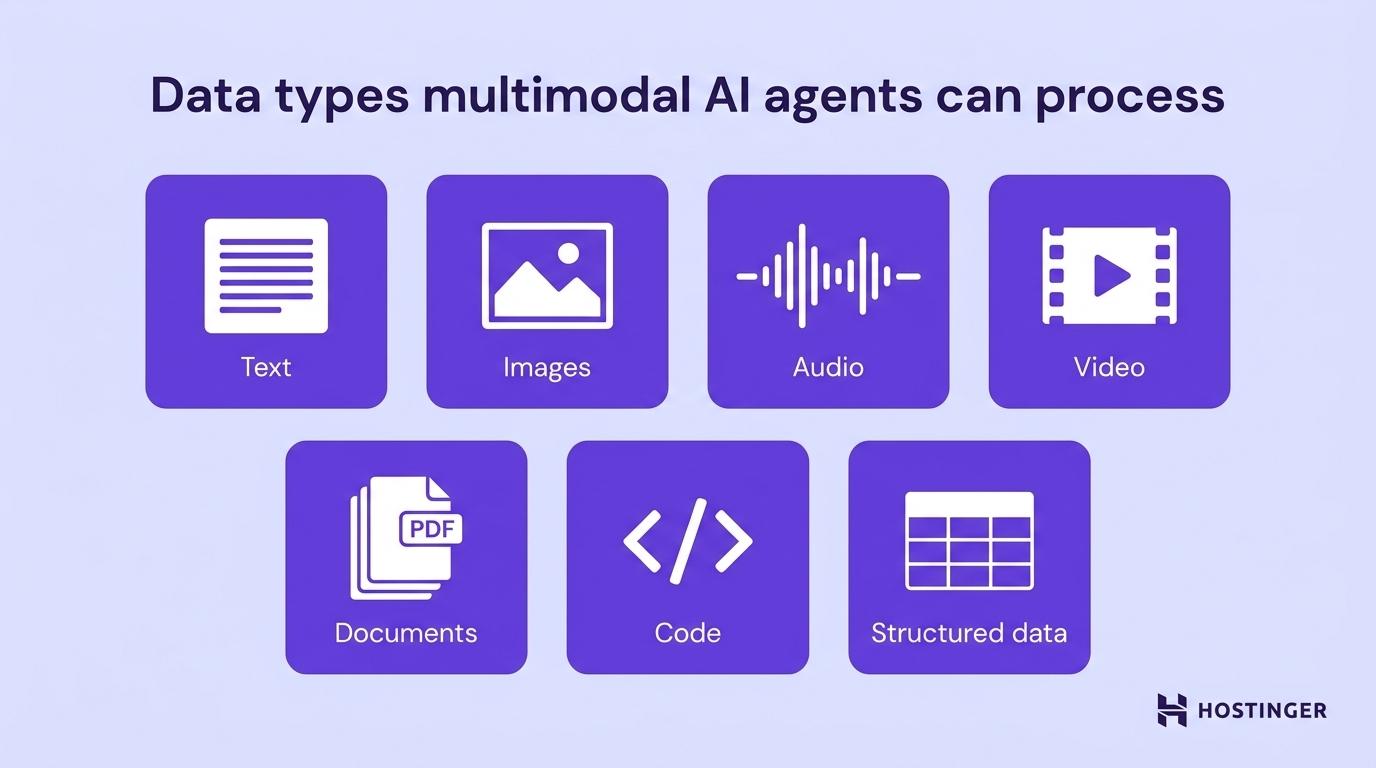
These systems typically ingest seven primary categories of data: written text, visual images, audio files, video recordings, complex documents, raw code, and structured records. By handling these formats concurrently, the agents can cross-reference information to resolve ambiguities that would typically trip up a single-modality model.
How Do Multimodal AI Agents Work?
The operational architecture of a multimodal AI agent generally unfolds across a continuous five-stage lifecycle: receiving inputs, interpreting and combining formats, reasoning and planning toward a goal, utilizing tools or executing actions, and producing an output or handing off subsequent steps.
During the initial ingestion phase, the agent accepts information across any available medium, such as a written query, an uploaded spreadsheet, an attached image, or a voice recording. In a customer support environment, for instance, this might involve accepting a text description of a technical failure alongside a screenshot displaying the exact error message on a user’s screen.
In the second stage, the agent synthesizes these disparate inputs into a cohesive understanding. Rather than treating the text and the screenshot as isolated data points, the system correlates the visual evidence with the written description to establish a complete picture. Cross-referencing allows the agent to clear up potential contradictions, using visual confirmation to clarify vague text descriptions.
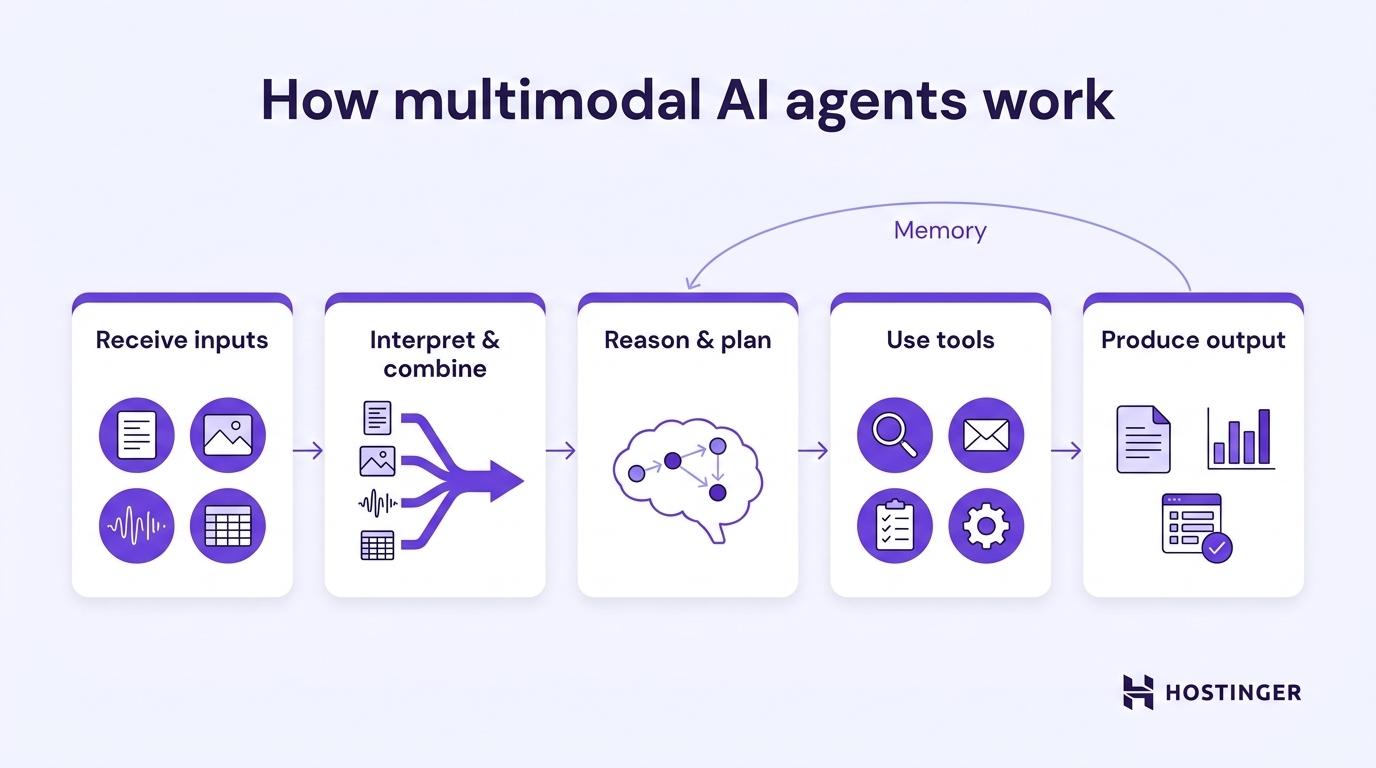
The reasoning and planning phase relies heavily on large language models (LLMs) or similar foundational models to interpret the combined inputs and chart out a sequence of actions. This multi-step planning capability is what fundamentally separates agentic workflows from standard model interactions, as each subsequent step builds directly upon the results of the previous one.
Moving into action, the agent selects and deploys specific tools required for the task, ranging from web searches and API calls to messaging systems, form-filling mechanisms, or triggers in external software. This tool-use capability marks the boundary between a passive model and an active agent. Combined with multimodal inputs, tool access allows these systems to tackle complex challenges that no single model could resolve independently.
Finally, the agent generates its output—whether that is a written summary, a generated graphic, a completed form, or a structured report—while maintaining a continuous loop until the ultimate objective is achieved. Central to this entire cycle is memory. Short-term memory retains context within a single task, while persistent memory preserves continuity across separate sessions, recalling established preferences, communication styles, or historical decisions.
Multimodal AI Models Versus Multimodal AI Agents
A common point of confusion in the current technological landscape involves the distinction between a multimodal AI model and a multimodal AI agent. While both utilize multi-format data processing, they serve fundamentally different functions.
A multimodal AI model reads various types of information and generates a corresponding response. Models like advanced iterations of ChatGPT and Claude process text and images concurrently, but they remain reactive, responding only when directly prompted by a user.
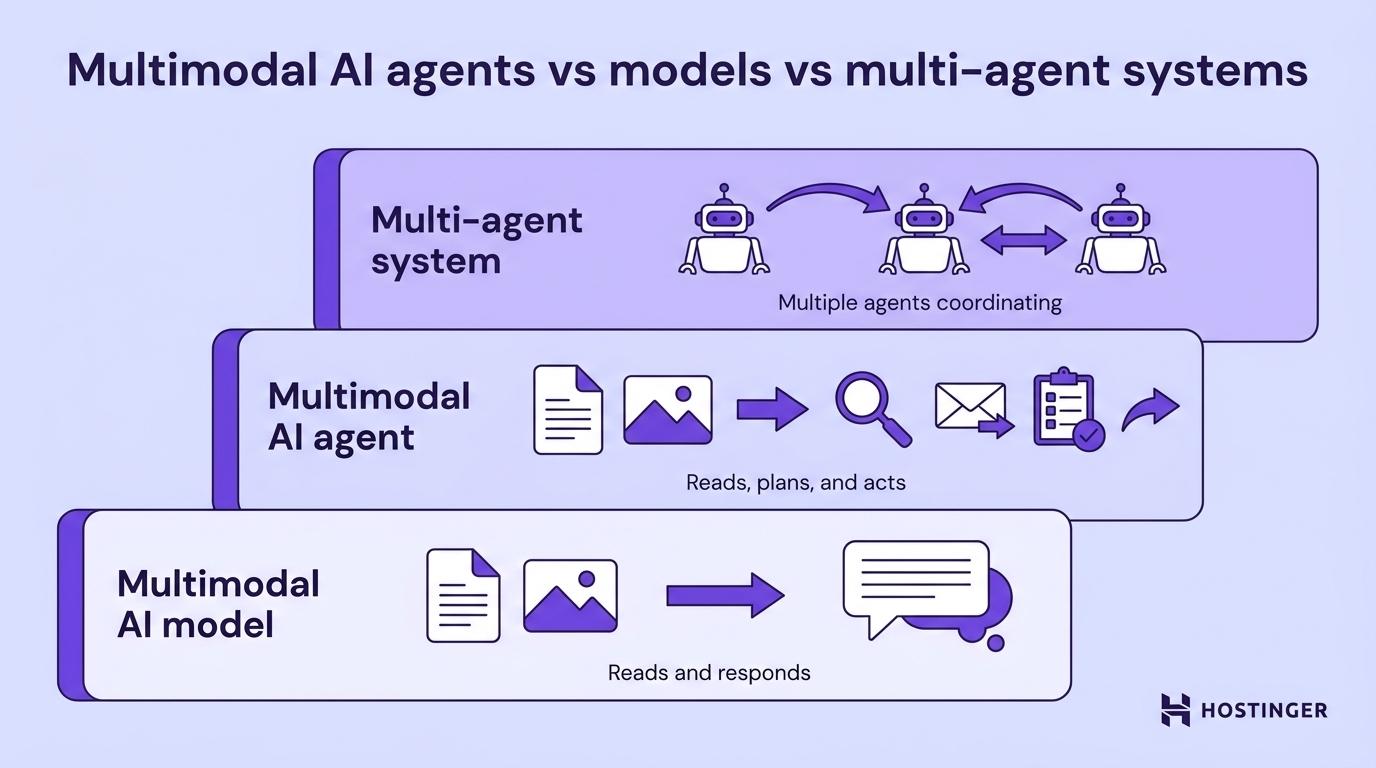
A multimodal AI agent, by contrast, takes that foundational perceptual capability and applies it toward pursuing a specific goal and taking real-world actions. The underlying model acts as the reasoning engine, but the agent system encompasses the architecture required to perceive its environment, plan sequences of actions, and execute tasks autonomously.
Furthermore, multi-agent systems represent an even broader architectural evolution, establishing networks of individual agents that divide complex workloads among specialized units, passing interim results from one agent to the next until a major objective is met.
Real-World Applications and Use Cases
The practical utility of multimodal AI agents spans numerous industries, particularly where information arrives in fragmented formats that would overwhelm text-only solutions.
In document analysis and customer support, these agents parse complex contracts, invoices, and technical reports where visual layouts, tables, and diagrams carry as much weight as the surrounding text. By reviewing error screenshots directly alongside customer tickets, support agents eliminate the friction of misdescribed technical issues, accelerating resolution times.
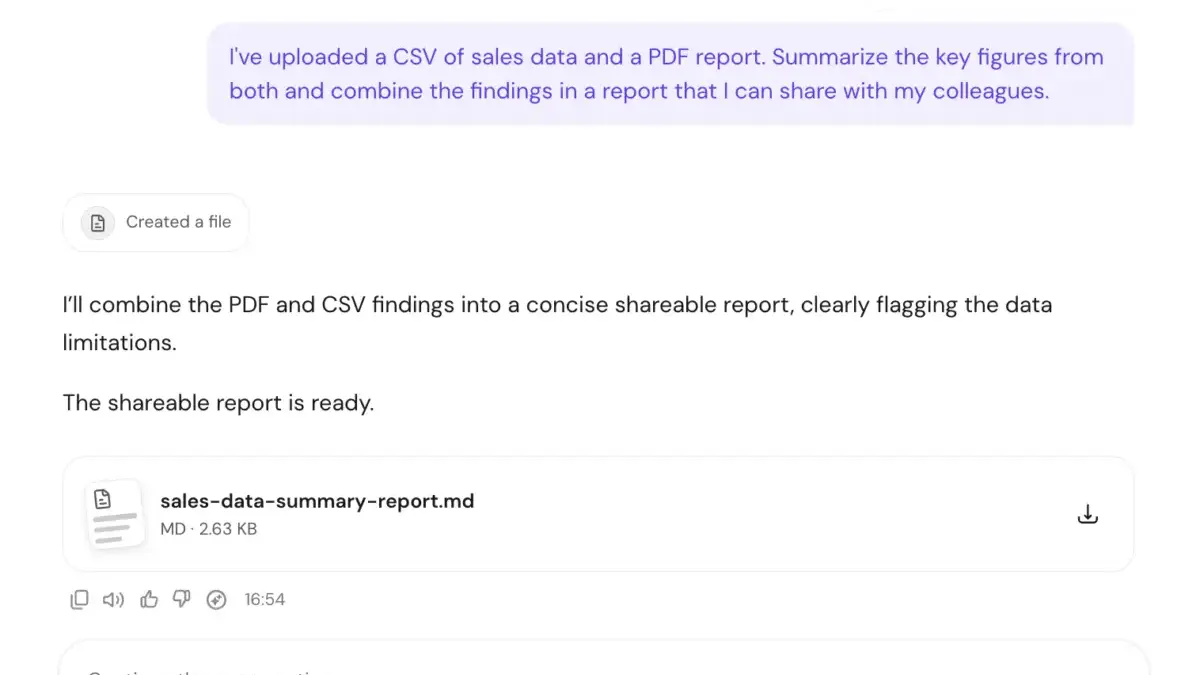
Business task automation represents another major deployment area. Modern agents can ingest mixed file types—such as monthly sales spreadsheets, supplier pricing PDFs, product images, and email threads—and process them within a unified workflow. These systems can identify pricing discrepancies, draft follow-up correspondence, and schedule administrative reminders within a single conversational interface.
Computer-use agents take software interaction a step further by operating digital interfaces much like a human user. By "seeing" the screen, these agents click buttons, navigate menus, and fill out forms within existing legacy applications, bypassing the need for custom API integrations.
Voice-based assistants leverage rapid audio processing to hear, reason, and respond in spoken dialogue, though maintaining the ultra-low latency required for natural conversation remains a significant technical hurdle. Meanwhile, content creation tools combine text drafting and visual generation within unified workflows, ensuring consistent brand language and visual aesthetics.
In high-stakes domains such as healthcare and physical robotics, multimodal agents fuse camera feeds, audio signals, sensor readings, and patient histories to assist professionals. Clinicians can review medical imaging alongside patient records with the support of an agent designed to flag subtle irregularities, while engineers can monitor assembly line sensors and video feeds simultaneously. Because these are high-stakes environments, human oversight remains a mandatory design requirement rather than an optional preference.
Benefits and Limitations
The primary advantages of multimodal AI agents stem from their alignment with real-world information structures. By eliminating manual conversion steps and providing richer, multi-format context, these systems reduce friction across complex workflows and enable a higher degree of automation.
However, these benefits come with distinct trade-offs. The primary constraints involve significantly higher compute costs and the increased risk of errors when attempting to reconcile conflicting inputs from multiple modalities. Furthermore, managing persistent memory securely and ensuring reliable multi-step planning across extended workflows remain active areas of research and development as the technology matures.

Leave a Reply