
As artificial intelligence and machine learning workloads continue to scale in complexity and scope, demand for high-performance graphics processing units has reached historic highs. Organizations ranging from nimble startups to global enterprises are constantly evaluating where to host their demanding compute requirements. Selecting the right GPU cloud provider has become a critical strategic decision, balancing hardware availability, deployment architecture, and cost efficiency.
A comprehensive analysis of ten leading GPU cloud providers highlights distinct approaches to meeting this surging demand. Major platforms now span everything from straightforward, root-accessible dedicated servers to serverless cloud functions and massive multi-node clusters equipped with cutting-edge NVIDIA hardware like the Blackwell and Hopper architectures.
Understanding these differences is essential for technical teams looking to optimize their infrastructure spending without sacrificing performance or operational control.
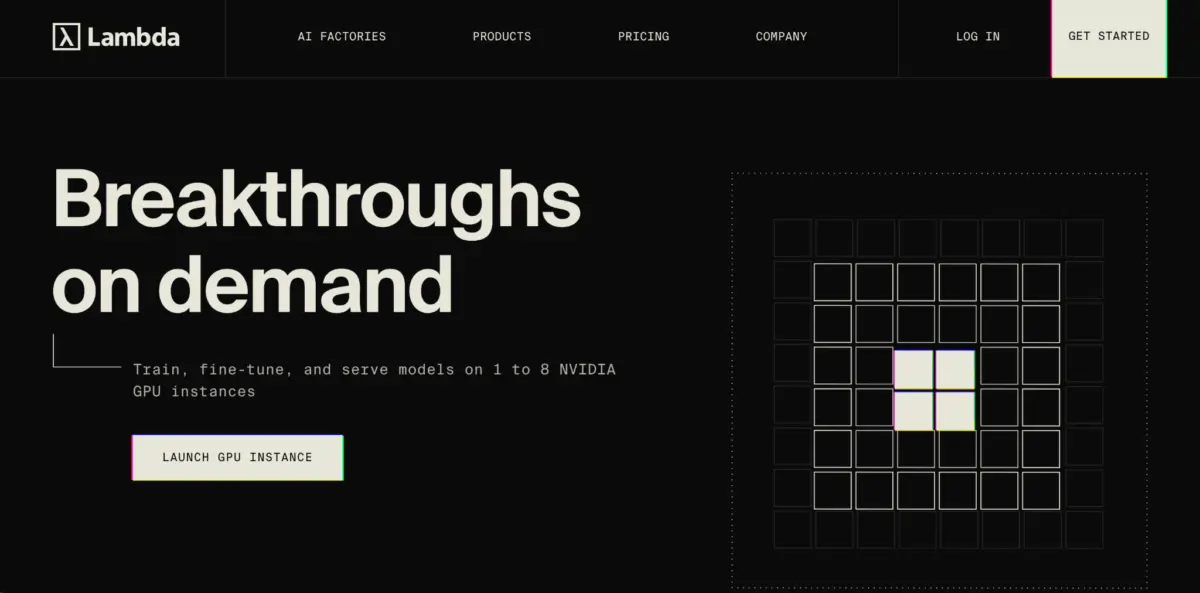
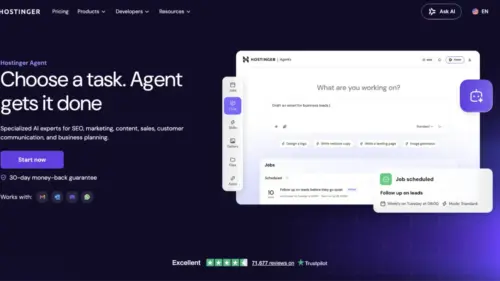
1. Hostinger: Best for Flexible GPU Infrastructure Without Hyperscaler Complexity
Hostinger provides direct access to powerful NVIDIA GPUs while maintaining a streamlined deployment model that avoids the steep complexity typically associated with traditional hyperscalers. Users retain granular control over their server environments through full root, terminal, and SSH access, yet they can bypass tedious initial setups by deploying preconfigured AI applications complete with pre-installed drivers, containers, and dependencies.

Starting at accessible hourly rates for consumer-grade hardware like the RTX 4090, Hostinger’s catalog scales upward to high-memory workstation and data center cards, including dedicated options for the advanced B200 series. The RTX 4090 serves as an economical entry point for experimentation, image generation with tools like Stable Diffusion, and smaller-scale model inference. Meanwhile, higher-tier options such as the A100 and B200 provide massive amounts of video memory required for intensive model training and large-scale inference.
Billing operates on an hourly credit model with per-minute metering, allowing for flexible usage without long-term commitments. Because billing continues as long as an instance exists—even if idle—destroying the instance is necessary to halt compute charges. The absence of data egress charges further simplifies cost estimation for projects that require moving generated datasets out of the cloud environment.
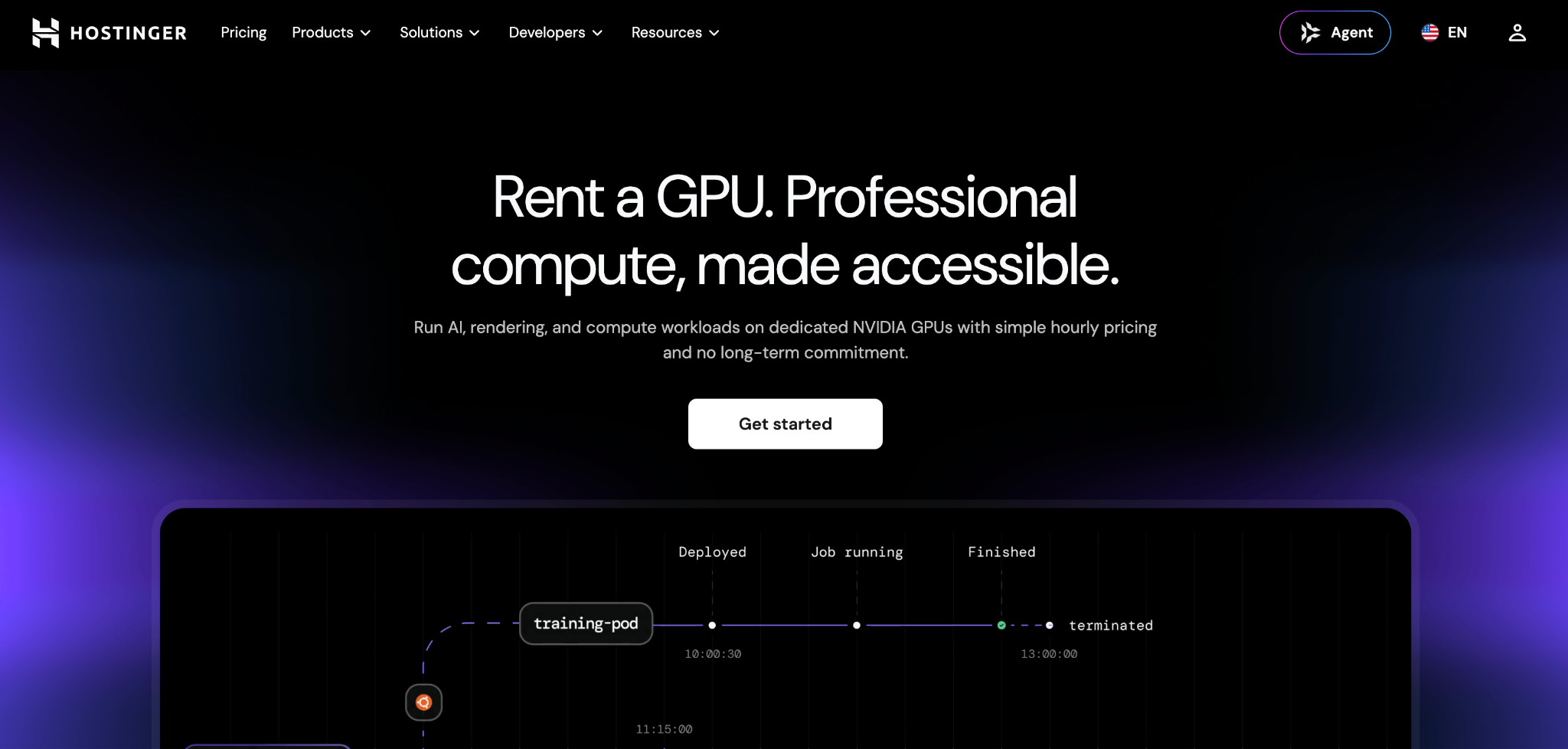
2. RunPod: Best for Flexible AI Development and Serverless GPU Workloads
RunPod caters directly to developers by offering two distinct modes of operation: Pods for persistent development environments and Serverless architecture for API-driven workloads that scale dynamically with incoming demand. This dual approach bridges the gap between active model training and production-ready inference without forcing teams to migrate between different cloud providers.
The provider features an expansive hardware catalog spanning dozens of GPU models distributed across numerous global regions. Options range from cost-effective workstation cards to advanced enterprise accelerators like the A100, H100, H200, and modern Blackwell processors. RunPod utilizes second-by-second billing for compute resources, ensuring that short-lived tasks are billed precisely without unnecessary rounding up.

Pods provide dedicated environments where engineers maintain full control over runtimes and storage, making them ideal for training and fine-tuning. Conversely, the Serverless platform removes the overhead of maintaining always-on infrastructure by automatically spinning up workers in response to API requests. Separate persistent storage options allow critical model weights and datasets to survive instance terminations.
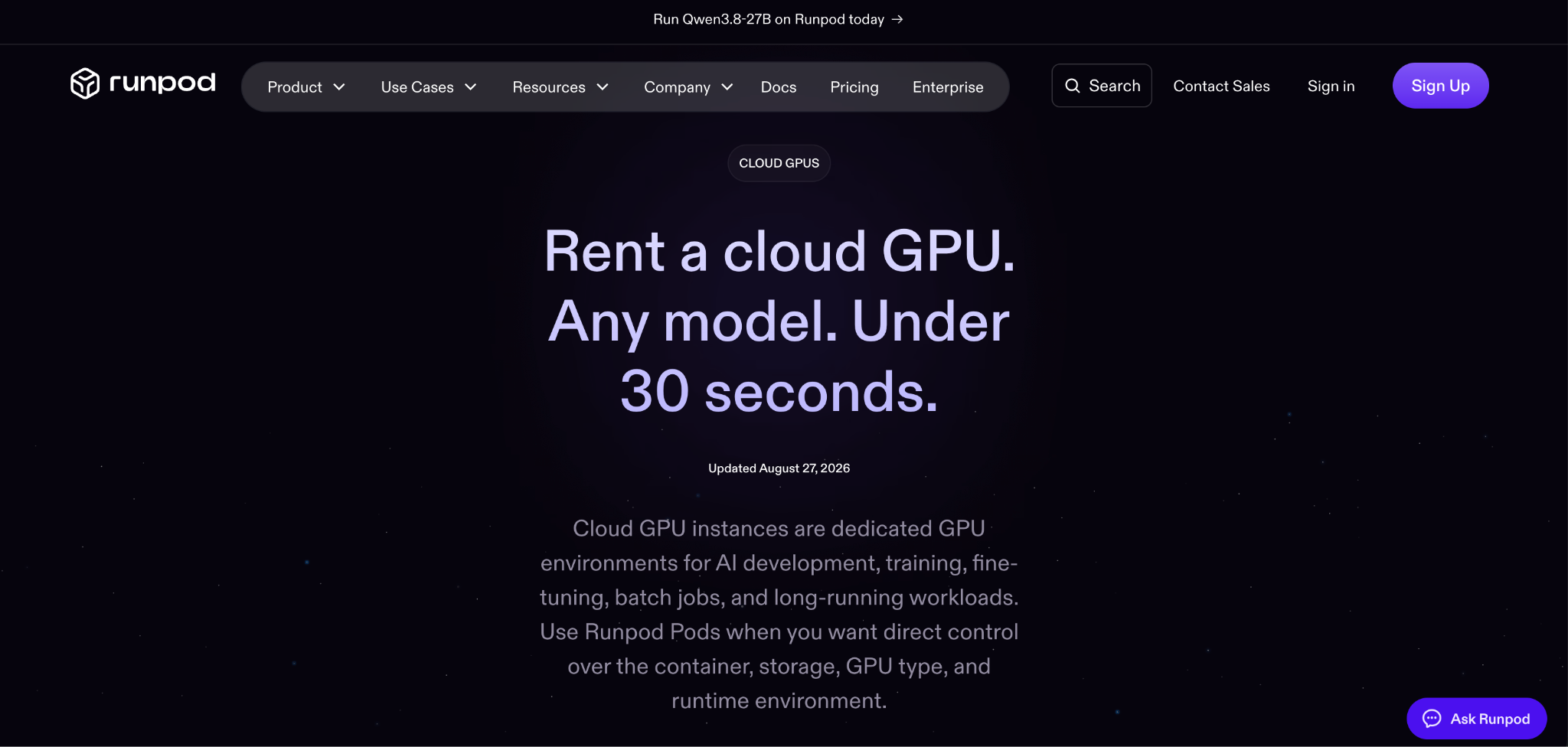
3. Vast.ai: Best for Finding Low-Cost GPU Capacity
Operating as a decentralized GPU marketplace, Vast.ai connects users with independent infrastructure providers, creating a vast inventory of tens of thousands of GPUs across global data centers. This marketplace model supports an exceptionally wide range of hardware, from older consumer cards to the latest enterprise data center accelerators.
The platform provides both on-demand instances and interruptible capacity. While on-demand machines remain active until manually terminated, interruptible instances offer significantly lower rental rates in exchange for the risk of sudden workload preemption. This trade-off suits fault-tolerant jobs and checkpointed training runs exceptionally well, though it remains less ideal for uninterrupted production pipelines.
Because the marketplace aggregates independent hosts, individual listings vary widely in supporting hardware, network bandwidth, and host reliability. Users must evaluate complete machine configurations—including CPU, RAM, and storage—rather than relying solely on the lowest advertised hourly rate. Programmatic access via REST APIs and Python SDKs also enables automated provisioning for technical teams.
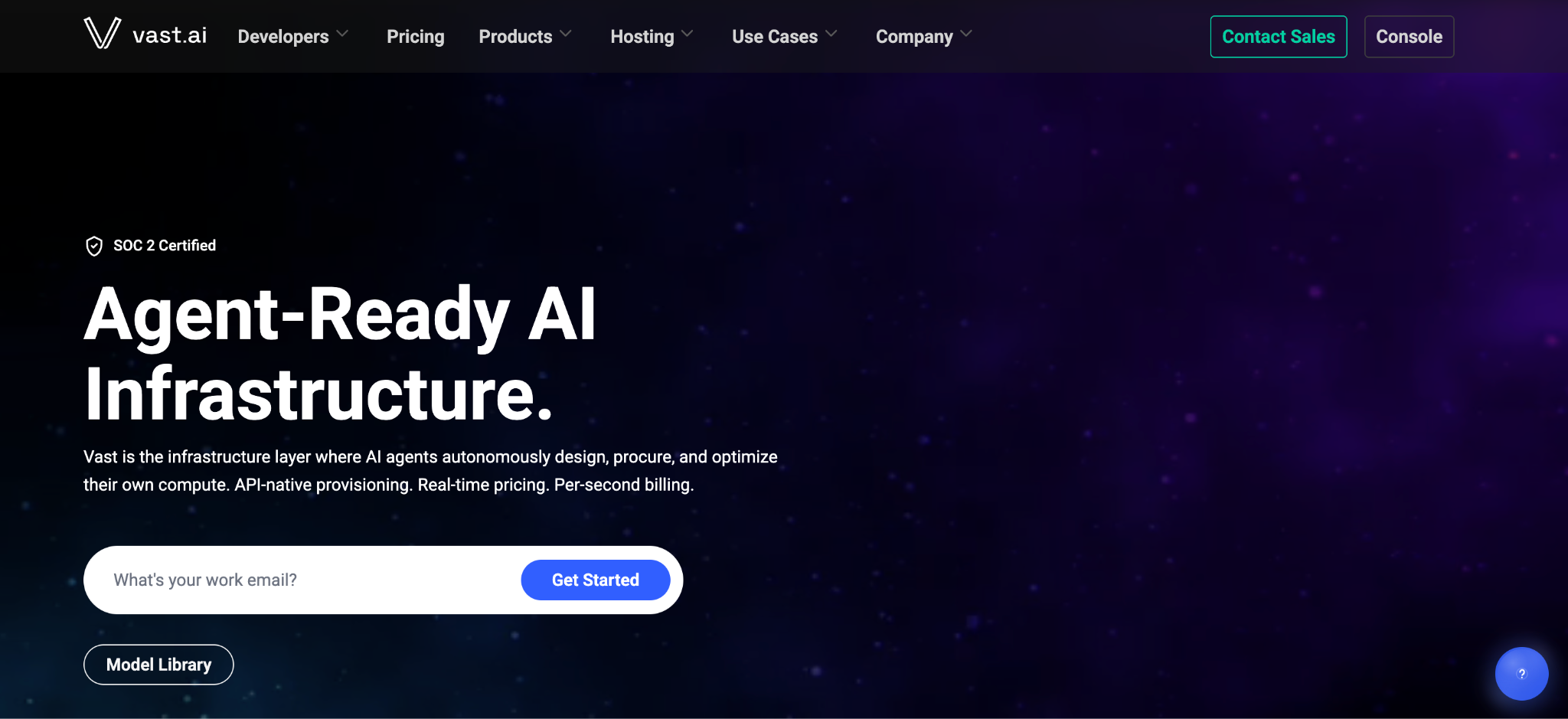
4. Lambda: Best for Straightforward ML Training Infrastructure
Lambda builds its infrastructure specifically around the demands of artificial intelligence and machine learning research. Instances are pre-equipped with the Lambda Stack, a curated software environment containing essential machine learning frameworks, CUDA libraries, and deep learning tools designed to minimize setup friction.
The provider offers configurations ranging from single-GPU instances to dense eight-GPU nodes utilizing hardware such as the A100, H100, and advanced B200 accelerators. Billing is metered by the minute, and Lambda does not levy data egress fees. Furthermore, essential compute components—including vCPUs, system RAM, and local high-speed SSD storage—are bundled directly into the instance pricing rather than billed separately.
For organizations whose computational needs outgrow a single eight-GPU node, Lambda provides one-click cluster deployments that scale seamlessly to thousands of interconnected accelerators. While self-service instances operate on a first-come, first-served basis, the standardization of the environment makes it a reliable choice for dedicated machine learning engineering teams.
5. CoreWeave: Best for Large-Scale AI Infrastructure
CoreWeave specializes in dense, high-performance multi-GPU infrastructure designed explicitly for distributed artificial intelligence workloads and large-scale model training. By combining advanced NVIDIA accelerators with ultra-fast networking fabrics, the provider targets enterprise-grade computational demands.
Unlike providers that focus heavily on single-GPU rentals, many of CoreWeave’s core training configurations are offered as complete multi-node systems. This node-centric pricing model means organizations are generally paying for an entire multi-GPU setup, making the platform most cost-effective for workloads capable of leveraging parallel processing across multiple accelerators simultaneously.
CoreWeave integrates advanced networking solutions, such as InfiniBand, to facilitate high-speed communication between nodes during distributed training phases. Managed Kubernetes services simplify the orchestration of containerized workloads across these large clusters. The absence of data transfer and egress fees further supports enterprises moving massive volumes of training data through their pipelines.
6. Modal: Best for Serverless GPU Applications
Modal delivers a fully managed serverless execution environment where GPU infrastructure provisions instantly upon application demand and scales automatically back down to zero when idle. This architecture eliminates the financial drain of maintaining active instances during lulls in traffic, making it an attractive option for inference APIs and batch processing jobs.
Built natively around Python, Modal allows developers to define infrastructure requirements, dependencies, and scaling rules directly within their application code. Compute is billed precisely by the second, while CPU and memory are metered separately. A workspace fee structure governs concurrent execution limits and resource credits depending on the chosen subscription tier.
While serverless execution introduces potential cold starts as containers initialize and load models into memory, Modal utilizes optimized filesystems and memory snapshots to mitigate latency. This model abstracts away underlying server administration, making it ideal for scalable application logic but less suited for continuous, long-running training tasks that require persistent low-level server control.
7. Google Cloud: Best for GPU Workloads Already Using Google Cloud
Google Cloud integrates GPU acceleration directly into its Compute Engine infrastructure, bundling accelerators into virtual machine configurations that include predefined vCPUs, system memory, and local storage options. The hardware lineup covers everything from flexible L4 instances for inference to high-end A3 and A4 configurations powered by Hopper and Blackwell accelerators.
Pricing and inventory availability vary significantly by region and zone, requiring careful architectural planning before deployment. Google Cloud offers both on-demand billing and discounted Spot VMs for flexible workloads capable of handling interruptions. Commited-use discounts provide further cost predictability for long-term enterprise commitments.
This ecosystem is naturally optimized for organizations already anchored within the Google Cloud environment. Leveraging native integrations with managed Kubernetes, cloud storage, and advanced data analytics pipelines allows teams to embed GPU compute smoothly into existing enterprise workflows without introducing external third-party infrastructure dependencies.
8. AWS: Best for GPU Workloads Inside a Large AWS Architecture
Amazon Web Services delivers robust GPU compute capabilities via Amazon EC2 accelerated computing instances. Instance families are tailored to specific hardware generations, mapping consumer and data center accelerators directly to optimized CPU, network, and storage profiles.
AWS employs sophisticated purchasing models, including On-Demand instances, Spot pricing for interruptible tasks, and Capacity Blocks. Capacity Blocks allow organizations to reserve specific GPU allocations in advance for scheduled operational windows, providing guaranteed capacity for crucial training phases. High-speed networking features like the Elastic Fabric Adapter enable seamless multi-node communication for distributed training.
While pricing varies by region and configuration, leveraging EC2 instances within a broader AWS architecture ensures native compatibility with Amazon S3 storage, identity management, and enterprise security frameworks. This deep ecosystem integration makes AWS a natural choice for organizations operating enterprise-scale cloud strategies, though smaller standalone projects may find the infrastructure overhead excessive.
9. Microsoft Azure: Best for GPU Workloads Inside a Microsoft Cloud Environment
Microsoft Azure provisions GPU compute through specialized Virtual Machines that couple NVIDIA accelerators with balanced CPU, memory, and high-performance storage options. The portfolio includes versatile options for general workloads alongside the heavy ND series designed specifically for distributed deep learning and high-performance computing.
Azure supports flexible pay-as-you-go billing alongside Spot Virtual Machines intended for fault-tolerant batch jobs and checkpointed training routines. For predictable enterprise demands, reserved instances and savings plans offer significant cost reductions over standard pay-as-you-go rates.
The platform’s primary strength lies in its seamless integration with the broader Microsoft ecosystem. Organizations utilizing Azure Kubernetes Service, Azure Managed Disks, and enterprise directory services can incorporate GPU nodes directly into existing operational frameworks. Regional availability constraints and separate storage billing require careful cost auditing, but the unified environment simplifies large-scale enterprise deployments.
10. Nebius: Best for Scaling AI Workloads from Single GPUs to Large Clusters
Nebius operates as a specialized AI cloud provider built from the ground up around NVIDIA hardware. The platform allows teams to initiate development and fine-tuning on single virtual machines before scaling seamlessly into massive multi-node clusters interconnected via InfiniBand networking.
The provider’s hardware lineup includes modern L40S, RTX PRO 6000, and advanced Hopper and Blackwell accelerators. Billing is structured around second-by-second metering for active GPU virtual machines, with discounted preemptible pricing available for workloads capable of withstanding interruptions. CPU, RAM, and block storage tiers are billed distinctly to maintain transparency in resource consumption.
Nebius bridges the gap between individual experimentation and large-scale enterprise clusters. By offering managed Kubernetes orchestration alongside high-end configurations like HGX and NVL architectures, the platform provides a clear scaling trajectory for organizations whose computational demands expand rapidly over time.
How to Choose the Best GPU Cloud Provider for Your Workload
Selecting the optimal GPU cloud provider requires a systematic evaluation of model requirements, cost structures, and operational goals. The process should begin by analyzing the specific memory and computational demands of the underlying model or application.
Video memory is often the most critical constraint in deep learning tasks. Model size, precision requirements, context lengths, and operational phases dictate whether a workload requires a modest 24GB consumer card or an enterprise accelerator with upwards of 192GB of VRAM. Verifying hardware compatibility prior to deployment prevents costly misallocations.
Evaluating the true minimum cost extends beyond reviewing baseline hourly rates. Factors such as multi-GPU bundling requirements, data transfer fees, storage allocation, and idle billing intervals heavily influence total expenditures. Organizations must determine whether granular per-second billing or reserved capacity agreements align best with their operational timelines.
Management overhead is another essential consideration. Teams seeking complete control over their operating environments may prefer root-accessible virtual machines, while those prioritizing operational velocity often lean toward serverless architectures or managed Kubernetes clusters. Aligning infrastructure choices with existing cloud ecosystems and anticipated scaling trajectories ensures long-term efficiency and performance.

Leave a Reply