As the video game industry marches forward with increasingly complex hardware, breathtaking photorealism, and massive open-world simulations, players often find themselves staring down a library containing tens of thousands of options. While the natural inclination for many is to gravitate toward the latest high-profile releases, gaming history reveals that older titles can offer an astonishing degree of timeless entertainment. However, not all retro games age gracefully. Some suffer from mechanical roughness or clunky stage designs that feel tedious by modern standards.
Yet, a select few classic titles hold up remarkably well. These are games where the absolute most a player might ask for is a slight resolution adjustment or minor quality-of-life improvements; otherwise, they remain nearly flawless. Within the extensive catalog of Nintendo’s historical releases, several masterpieces stand out as creations so fundamentally sound that they never require a remake. Instead, the company simply needs to keep making them accessible across modern platforms, leaving them untouched because they remain brilliant in their original forms.

Super Mario World
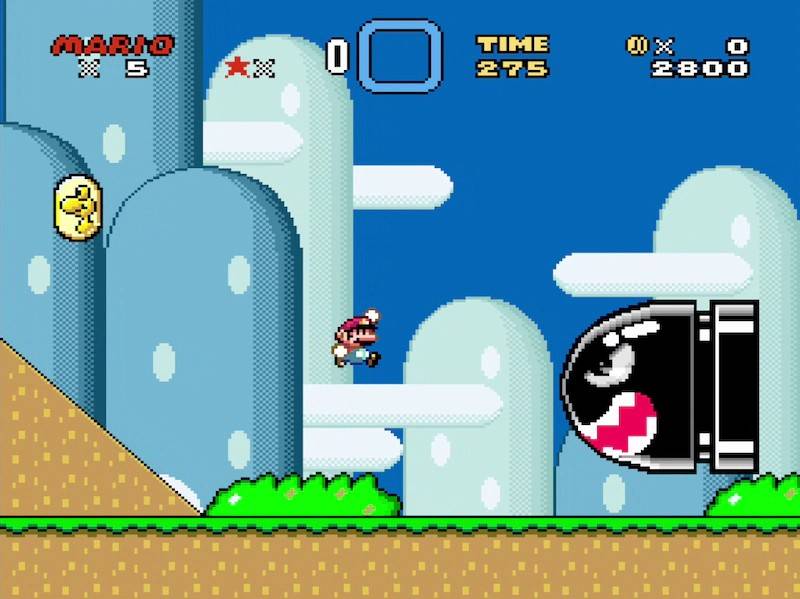
Launching alongside the Super Nintendo Entertainment System on November 21, 1990, Super Mario World served as an immediate technical and artistic revelation. Designed to showcase the raw capabilities of Nintendo’s new 16-bit hardware, the pack-in title pushed boundaries across the board. Sprites scaled smoothly, background layers scrolled independently through parallax effects, and players could utilize the controller’s shoulder buttons to pan the camera ahead, allowing Mario to scout for oncoming hazards. Furthermore, the color palette offered a richness and variety that far outstripped its 8-bit predecessor.
Exploring Dinosaur Land proved to be an enduring joy, anchored by level design that went far beyond mere technical showmanship. Stages hid a multitude of secrets, including alternate exits that opened up massive shortcuts or led directly to hidden overworlds like Star Road and the Special Zone. When Mario took to the air, players gained nuanced control over his flight speed, letting him glide gently or execute precise dive bombs onto enemies. He was also joined by the iconic dinosaur companion Yoshi, who introduced unique traversal and combat abilities. While modern artists attempting to modernize the game might paint more detailed backgrounds and add visual depth, Super Mario World requires none of these enhancements to remain deeply entertaining.
The Legend of Zelda: A Link to the Past
Discussions surrounding The Legend of Zelda often focus heavily on the monumental transition to 3D gaming seen in Ocarina of Time, which brought players unforgettable moments from the initial journey into the Great Deku Tree to the twisting corridors of the Forest Temple and the tense, shadowy ledges of the Shadow Temple. However, long before that 3D milestone, the franchise established its golden standard in a top-down format.

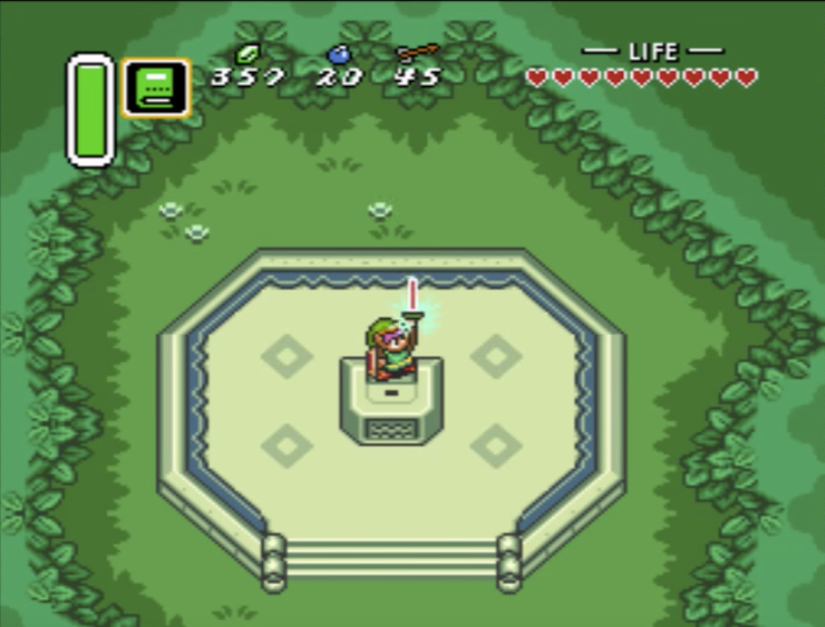
Released on November 21, 1991, The Legend of Zelda: A Link to the Past delivered one of the most memorable atmospheric openings in gaming history. An evening rainstorm set the stage as Princess Zelda pleaded for a hero to rescue her from a palace dungeon where an evil wizard had imprisoned her. The game introduced a vibrant, lived-in village populated by the citizens of Hyrule, before dramatically subverting expectations by revealing a corrupted mirror image of the land in the Dark World.
Dungeons throughout the adventure were constructed with intricate puzzles that demanded strategic thinking rather than mindless trial-and-error. Players navigated familiar rooms across multi-layered catwalks, dropped into pits to reach lower floors, and struck directional switches to alter the layout of entire chambers. Every minor animation contributed to the cohesive storytelling, such as an arrow visibly vibrating upon embedding into a stone wall—a testament to the developers’ meticulous attention to detail. While a well-crafted modern update could theoretically elevate these elements, the original foundation remains remarkably solid, proving that another journey through this specific version of Hyrule is always time well spent.
Super Mario Kart
While contemporary gaming debates often center on whether newer iterations or modern deluxe packages represent the absolute pinnacle of Nintendo’s blockbuster racing franchise, the title that started it all occasionally gets overlooked. Released on August 27, 1992, the original Super Mario Kart laid a revolutionary foundation that fueled a multi-decade phenomenon.
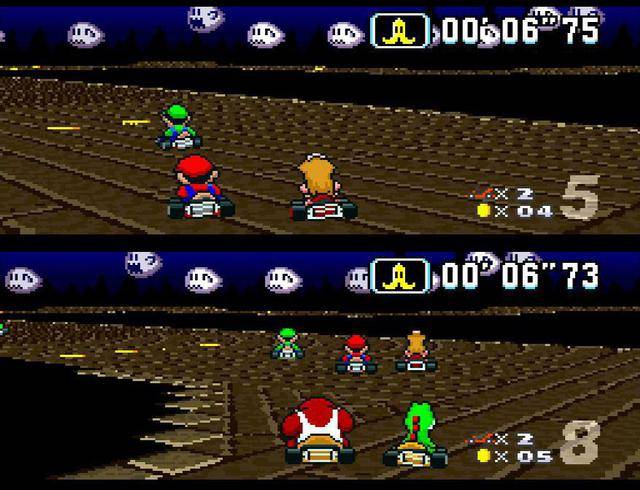
The early kart racer succeeded by establishing distinct handling archetypes based on character selection and vehicle frame. Heavyweights like Donkey Kong Jr. and Bowser suffered from slow acceleration off the starting line, but proved unstoppable once they built momentum on straightaways. Conversely, characters like Koopa Troopa and Toad offered tight turning radiuses, allowing them to dart deftly between rivals, collect scattered coins, and shave precious fractions of a second off their lap times on sharp corners.
Course designs featured flat, readable environments that allowed players to track everything happening around them, fostering a pure, skill-based competitive loop. Shortcuts required precise driving execution to secure the narrow margins that separated first and second place, operating without the aggressive rubber-banding AI or game-changing equalizer items like the blue shell that would come to define later entries. Although many of these classic tracks have returned in subsequent releases as legacy content, experiencing them in their original context reveals the enduring strength of the foundational design.
Super Mario Bros. 3
Widely regarded as the absolute apex of 2D platforming, Super Mario Bros. 3 achieved a level of design harmony that few games have ever matched. Released on October 23, 1988, the game was later revisited as part of the Super Mario All-Stars collection, which updated the visual presentation with more colorful backgrounds. Unfortunately, that compilation also introduced subtle alterations to Mario’s momentum and physics, making his movement feel slightly more deliberate than the brisk responsiveness of the original NES code.
This minor discrepancy highlights how core mechanics often outweigh visual fidelity in defining a classic. Super Mario Bros. 3 famously opened with a literal red theatrical curtain rising to reveal a staged performance, complete with platforms physically bolted into the painted backdrop. The Mushroom Kingdom itself displayed unprecedented environmental variety, shifting seamlessly from the sunny prairies of the first world to the biting ice and snow of World 6, the aquatic expanses of World 3, and the pipe-heavy, hazard-filled layouts of World 7.
Beyond its solo campaign, the game offered robust multiplayer features that let players challenge one another for supremacy on the world map, encounter roving map hazards, and engage in competitive minigames. Thanks to subsequent digital availability, this definitive 8-bit adventure continues to demonstrate that it has lost none of its original magic.
Super Metroid
On the hostile alien planet of Zebes, the atmosphere is palpable from the moment bounty hunter Samus Aran steps out of her ship and onto the barren surface. Yet the true depth of the experience reveals itself only when players venture beneath the crust, descending into the dark, labyrinthine shafts that lead toward an inevitable confrontation with the Mother Brain.
When Super Metroid launched on March 19, 1994, it arrived surrounded by an aura of absolute confidence. Exploring the desolate corridors often elicited genuine tension, broken only by sudden encounters with hostile alien life forms that tested the player’s reflexes and tactical resourcefulness. Every major milestone reward granted new traversal capabilities, allowing Samus to burrow deeper into an interconnected world that far exceeded the scope of her original 8-bit outing.
Nothing within Super Metroid feels antiquated or broken. The pixel artwork retains its striking aesthetic, the haunting soundtrack establishes an unmatched mood, and the map layout rewards curiosity and mastery in equal measure. For players returning to its cavernous depths, the environment feels entirely welcoming, proving that a timeless masterpiece requires no modernization to retain its grip on the imagination.