Binance has officially resumed withdrawal operations across 15 blockchain networks following a catastrophic security breach late last week that saw North Korean hackers steal a staggering $6.3 billion from the exchange’s hot wallets. The incident, widely recognized as the largest hack in the history of the cryptocurrency industry, triggered immediate industry-wide shockwaves, drawing swift intervention from global law enforcement and sparking intense debates over decentralization, security infrastructure, and digital asset regulation.
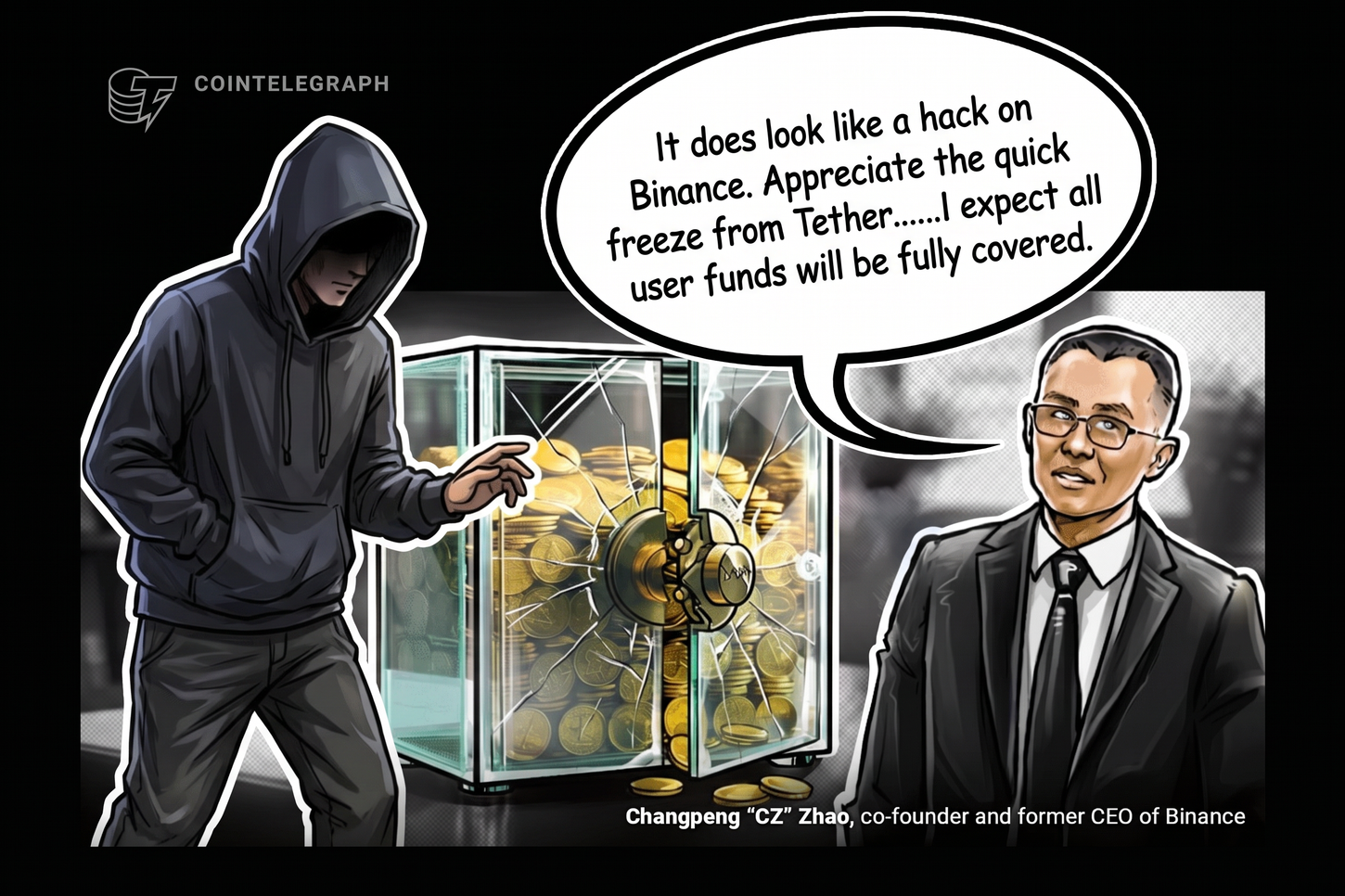
Following the phased reopening of its platform, Binance reported processing approximately $4.65 billion in user withdrawals while simultaneously drawing in about $1 billion in incoming deposits. Founder Changpeng Zhao shared figures indicating that during the initial 12-hour window, the platform experienced a remarkably modest 2.1% net outflow, emphasizing that the vast majority of users maintained their trust in the exchange. "98% choose to stay," Zhao stated on social media. Meanwhile, independent tracking data from DeFi Llama recorded approximately $4.54 billion in total outflows over a 24-hour period, though analysts note that these figures frequently account for internal wallet rebalancing and movements into newly generated hot wallets.
In an impressive display of corporate financial resilience, Binance moved rapidly to cover the deficit. Roughly 95% of the stolen cryptocurrency has already been replenished through a combination of the company’s internal corporate reserves, insurance policies, and the utilization of 50% of the funds held in the Secure Asset Fund for Users (SAFU).
The historic breach occurred on Thursday when members of the notorious North Korean state-sponsored threat group TraderTraitor gained unauthorized access to delegated wallet permissions via a compromised laptop. Security experts have dissected the technical vectors of the attack. Blockaid CEO Ido Ben-Natan noted that while the threat actors could have executed the theft without relying on account abstraction standards like EIP-7702, the technology likely streamlined their ability to bypass underlying safeguards and drain vast sums of digital assets in a single, sweeping motion.

However, Binance co-CEO Richard Teng firmly rejected theories attributing the multi-billion-dollar breach to a simple oversight or a lone compromised machine. To be clear, Teng clarified that the attacker did not merely exploit a single engineer’s permissions, nor was the exploit a basic one-click action. He confirmed that ongoing forensic investigations have not assigned direct responsibility to any individual employee.
FBI and Secret Service Intervention and On-Chain Freezes
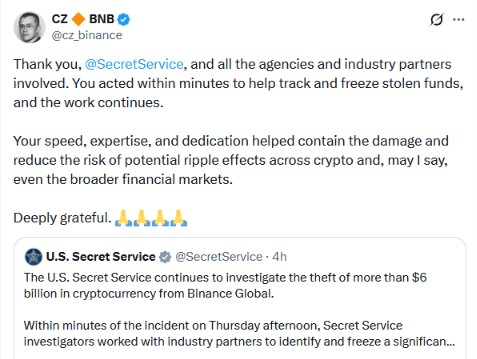
The aftermath of the breach prompted an immediate, high-stakes response from United States law enforcement agencies. Binance founder Changpeng Zhao publicly thanked the United States Secret Service for acting within minutes to assist in tracking and freezing the illicitly obtained funds, noting that their speed, technical expertise, and dedication were instrumental in containing the potential damage.
According to blockchain intelligence firm Elliptic, coordinated efforts successfully froze approximately $2.84 billion of the stolen assets—predominantly stablecoins such as USDC and USDT—directly on-chain. This swift defensive action left the hackers with roughly $3.33 billion in unimmobilized funds. In a desperate race against time to beat the unprecedented stablecoin blacklists, the attackers reportedly borrowed approximately $44.6 million worth of Ether against their remaining stablecoin holdings on the decentralized lending protocol Aave.
The United States Federal Bureau of Investigation formally attributed the cyberattack to TraderTraitor, a hacking collective tied to North Korea’s Lazarus Group. The same syndicate has previously been linked to massive multi-billion-dollar heists targeting competing platforms like Bybit and Bitget. Addressing the geopolitical dimensions of the incident, President Donald Trump remarked that the administration intends to discuss the matter directly with North Korea. In tandem with these diplomatic notes, the FBI published a comprehensive list of wallet addresses associated with the hack, explicitly directing THORnode operators, RPC node operators, instant exchanges, decentralized finance services, and other digital asset infrastructure providers to block any transactions connected to or derived from the illicit addresses.
THORChain Operators Face Tough Choices Amid Decentralization Debates
The North Korean perpetrators have historically relied on cross-chain liquidity protocols like THORChain to execute permissionlessly swapped cryptocurrencies following major exploits. News of the heavy transaction volume anticipated by the protocol briefly pushed the price of THORChain’s native token, RUNE, up by 13% amid expectations of surging network fees.
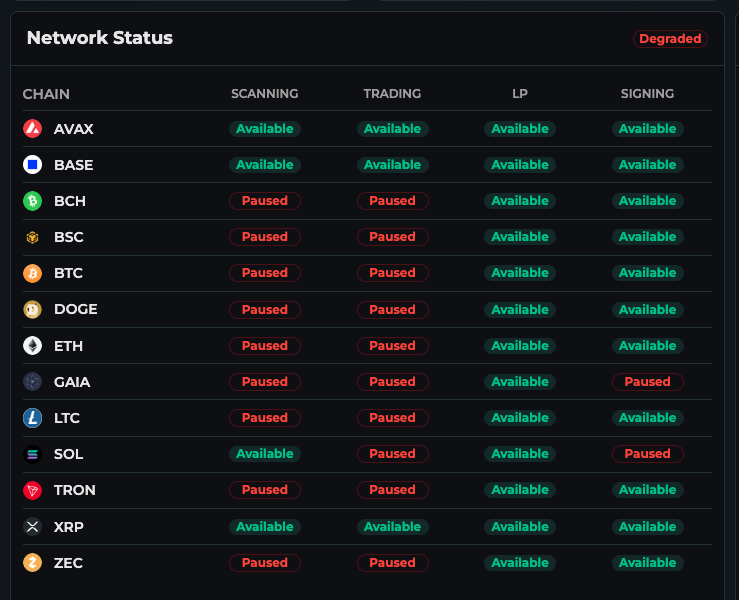
However, the hackers’ laundering efforts hit a roadblock when automated safety systems independently paused nine major chains on THORChain—including Bitcoin, Ethereum, and Tron—for unrelated reasons shortly after the Binance breach occurred.
The situation has cast a sharp spotlight on the governance of decentralized networks. THORChain developer Chad Barraford noted on the Unchained podcast that approximately 50 individuals operate the network’s 100 active nodes. Given the unprecedented scale of the theft and direct pressure from the FBI and Secret Service, node operators face difficult choices. If they refuse to heed law enforcement warnings to halt the protocol or block specific addresses, they could potentially face legal scrutiny.
Conversely, THORChain founder JP Thor, who maintains he is no longer actively involved in the project, strongly argued that node operators must resist external pressure and stay true to the foundational ideals of decentralization and permissionlessness. In his view, if THORNodes decide to take the protocol offline, the core experiment effectively ends, marking the death of unencumbered and neutral financial settlement venues.
Under THORChain’s governance model, a supermajority consisting of one-third plus one of the node operators can vote to halt network activity, while individual nodes are free to disconnect if they refuse to process tainted transactions. The protocol is designed to function with as few as four active nodes processing transfers. Additional blockchain forensics from platforms like Lookonchain indicate that the hackers also utilized the cross-chain platform Relay to convert roughly half of $95.9 million in stolen Solana into Bitcoin.
Market Ramifications and Legislative Fallout
Broader traditional and digital asset markets felt the immediate tremors of the breach. Cryptocurrencies and crypto-linked equities, including shares of Coinbase, Circle, and Strategy, experienced sharp sell-offs as market sentiment dipped. Despite the panic, Strive CEO Matt Cole observed that Bitcoin held its ground better than many analysts initially anticipated, expressing strong long-term conviction that the event does not alter the fundamental investment thesis for digital gold. Bitcoin found a local bottom near $76,500 before recovering to trade around $77,745.
In corporate treasury adjustments prompted by the climate of uncertainty, Nasdaq-listed firm Next Technology Holding announced that its board approved the liquidation of its entire Bitcoin treasury, consisting of 5,833 BTC valued at approximately $450 million.
Market analysts remain watchful regarding the vast reserves of cryptocurrency now sitting in wallets tied to the hackers. Security firms estimate that the attackers have accumulated anywhere from 18,000 to over 18,200 Bitcoin, alongside massive staches of Ether ranging between 430,000 and 551,000 ETH accumulated through subsequent swaps. Observers warn that liquidating these holdings too rapidly could introduce heavy downward pressure on major crypto asset prices.
On Capitol Hill, the historic breach reignited political urgency. Senator Cynthia Lummis and advocacy group The Digital Chamber renewed calls for comprehensive federal cryptocurrency legislation designed to establish clearer security frameworks and better mitigate the fallout of large-scale cyberattacks.
Hardware Wallet Security Concerns Compound Industry Jitters
Adding to the week’s security anxieties, hardware wallet manufacturer Trezor issued an urgent advisory warning customers who purchased devices from its former authorized reseller, CryptoBilis, since March to transfer their funds immediately following the discovery of a suspected hardware implant in a Safe 5 device.
Trezor reported that an Indonesian customer identified an unauthorized circuit board inside a Safe 5 unit purchased through Tokopedia in August. While Trezor stated it had not yet physically inspected the device or received direct reports of lost funds, the warning follows similar disclosures from rival manufacturer Ledger on October 9 regarding unauthorized hardware modifications found in devices distributed through the same reseller, CryptoBilis.
Standard Chartered Predicts Accelerated Shift Toward Decentralized Exchanges
Reflecting on the long-term industry impact of the Binance hack, Standard Chartered analyst Geoffrey Kendrick suggested that decentralized exchanges are poised to capture increased market share as users reevaluate the security risks inherent in centralized platforms. Reaffirming his long-term price target of $100 for Uniswap’s UNI token by 2030, Kendrick noted that Uniswap has historically maintained an unblemished security record free of major exploits. With the CEX-to-DEX trading ratio currently hovering around 23.5%, Kendrick argued that the historic breach at Binance provides yet another catalyst that could push that ratio significantly higher over the coming years.

Regulatory Warnings and Ancillary Cybersecurity Incidents
Regulatory bodies also weighed in on evolving technological risks, with Commodity Futures Trading Commission Chair Mike Selig warning that the rise of autonomous artificial intelligence agents could challenge financial regulatory frameworks traditionally built around human behavior and decision-making speeds. While acknowledging that advanced intelligence models could democratize sophisticated risk-management tools for smaller traders and businesses, Selig cautioned that autonomous systems introduce novel vulnerabilities, including unpredictable market reactions, correlated trading behaviors, and surveillance challenges due to lightning-fast execution speeds.
Meanwhile, blockchain analytics firm Chainalysis confirmed it was targeted in an unrelated cybersecurity incident. The company stated that a forensic review revealed no unauthorized access to core investigation content, authentication credentials, or session tokens, though limited non-sensitive customer data—including user IDs, names, and email addresses—was exposed. Chainalysis noted it is currently leveraging large language models to audit its internal security postures and emphasized that the breach had no connection to the ongoing crypto theft investigations involving Binance.
Closing out the week’s legal proceedings, two Texas brothers, Raymond Christian Garcia and Isiah Angelo Garcia, were sentenced to prison terms of 180 months and 186 months, respectively, following their guilty pleas for an armed cryptocurrency robbery and the kidnapping of a family in Grant, Minnesota. Court documents revealed that the brothers traveled from Texas to Minnesota in September 2025, invading a family home, holding victims at gunpoint with zip-ties for over nine hours, and coercing them into surrendering access to their digital asset accounts.