
By Paul Brody
Do you remember Pets.com? It raised $110 million from Amazon and other prominent investors to build a business where people ordered pet toys and dog food online. The company ultimately crashed and burned, teaching everyone an important lesson: you cannot profitably ship a 50-pound bag of dog food to a customer’s door.
As online retail entrepreneur Ed Baum asked in a 2001 postmortem: “Did Pets.com’s business plan assume the invention of transporters to magically move bags of pet food without shipping costs?”
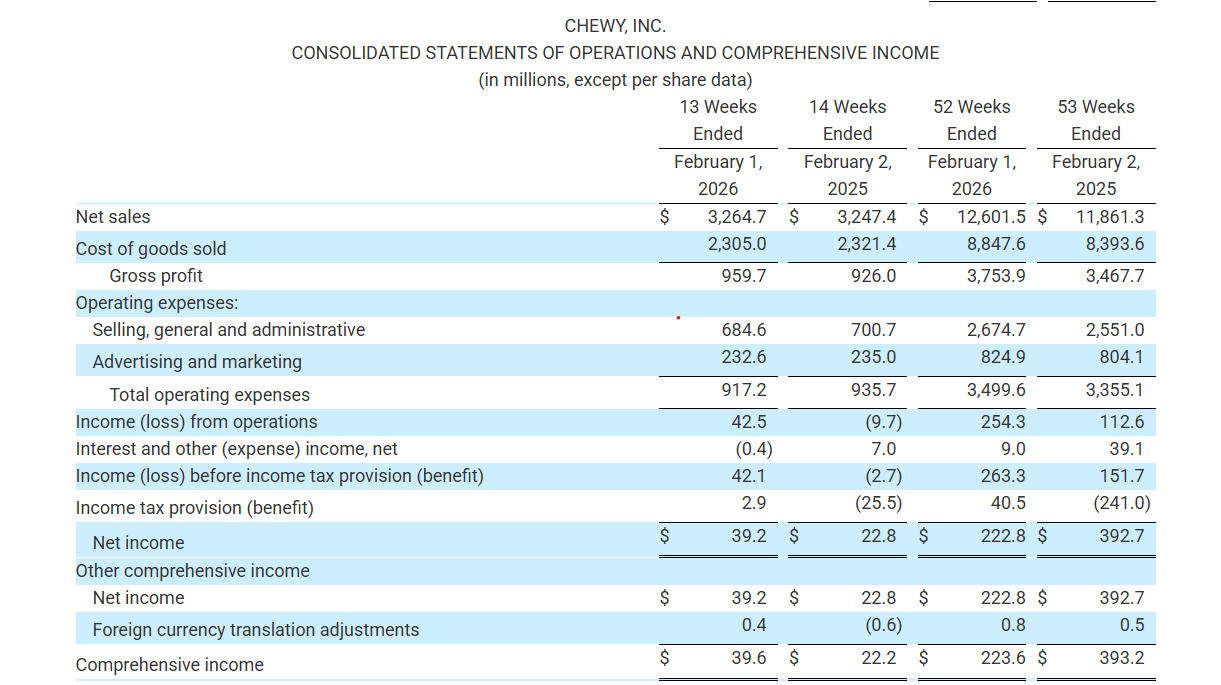
Please, whatever you do, do not share this with the people at Chewy; they might not realize their business model does not work. Chewy reported $12.6 billion in sales and $223 million in net income in its latest fiscal year.
The real lesson of Pets.com was never that shipping dog food was inherently a bad idea. Rather, it was that the idea arrived long before the logistics, customer habits, and unit economics required to make it work.
As it was with chew toys and dog food, so it may be with enterprise blockchains.
Collectively, the crypto industry probably incinerated just as much money trying to commercialize enterprise blockchain between 2017 and 2023 as Pets.com did—perhaps even more. But the dozens of companies that pursued enterprise blockchain were not delusional; they were simply too early.
Why Businesses Need Enterprise Blockchains
It is not difficult to understand the appeal of enterprise blockchain solutions, at least on a superficial level. Nearly all enterprise systems today tend to fail at the boundaries between companies. Broadly speaking, there are two distinct failure modes.
The first is the legacy failure mode, where collaboration information is constantly out of sync. In this world, enterprise IT systems operate as isolated islands, communicating asynchronously with each other via digital text messages and emailed spreadsheets. It is cheap and easy to set up, provided you do not mind always operating with slightly inaccurate information.
Failure mode two is the costly, real-time proprietary integration. Powerful industry leaders politely request their key suppliers and partners to join their closed, always-on networks. These systems are extraordinarily costly, but they work effectively and leave everyone with a kind of business version of Stockholm syndrome, where you come to appreciate the thoroughness and efficiency of the digital chokehold you are in.

Blockchains offered a compelling alternative: shared information and business logic across an open ecosystem. They promised all the benefits of a proprietary system in terms of real-time visibility and efficiency, but without the vendor lock-in.
Sometime around 2017, this started to look like an obvious, winning proposition. Investment poured in, consortia were launched, press releases were drafted and disseminated, and then pretty much everything collapsed. TradeLens, We.Trade, Contour, B3i, ASX Chess, and Everledger all came and went in just a few short years.
Although there is considerable nuance to the individual details of each of these stories, they all largely share one common denominator: they had to perform unnatural architectural gymnastics to make up for the complete lack of privacy natively available in early blockchains.
Companies Need Privacy, Not Transparency
No commercial enterprise wants its competitors to see the granular details of its operations. In practice, this meant building private or permissioned chains and then layering on numerous non-blockchain-like mechanisms to keep information confidential. The results were uniformly slow, expensive, and ultimately failed to gain market traction.
It is hard to overstate the financial bloodbath experienced by startups and enterprises that tried and failed to make enterprise blockchain work during this era. A quick web and historical search reveals 18 different platforms and companies, some of them highly prominent.
Many had backing from major financial institutions like Deutsche Bank and HSBC, alongside tech giants like IBM. Yet having pedigreed parents and major global brands made no difference—the lack of native privacy crippled the technology, and the business results were dismal.
The few survivors left standing have largely “de-chained” themselves, abandoning blockchain theater and reverting to a classic Software-as-a-Service (SaaS) model. Many corporations that tested these permissioned enterprise systems as users walked away with a definitive takeaway: we tried blockchain, and it simply did not work.
That is an unfortunate outcome, because the underlying technological landscape has fundamentally shifted.
Blockchains Today Have Scalability, Privacy, and Liquidity
Today’s blockchains have achieved massive scale. Ethereum in 2020 handled roughly one million transactions a day, and costs per transaction periodically spiked to $30 to $50 when demand surged. Today, most transactions are executed for less than a penny, and network capacity is expanding toward billions of transactions per day. Nobody talks about the traditional scalability trilemma anymore. Ethereum is decentralized, and it is scaled.
Privacy has also undergone a massive transformation. While privacy remains an opt-in rather than default setting, a vast range of privacy tools and systems are now readily available, spanning privacy pools, zero-knowledge rollups, and full privacy-focused chains.
On top of that, Ethereum developers are building a range of tools designed to incorporate basic elements of privacy at multiple levels within the network. The result is that it is now entirely possible to run complex business operations at scale while maintaining a high degree of operational confidentiality.
Finally, there is the capital. Money is moving on-chain at an unprecedented pace. Regulators around the globe have established clear frameworks for stablecoins, triggering a tsunami of liquidity with transaction volumes reaching nearly $1.8 trillion in June alone.
When you combine the operational benefits of modern blockchains with these financial rails, you get something enterprises have never truly had before: a unified ecosystem where you can buy, sell, move assets, and get paid for them instantly.
The return on investment across every single component of this equation is substantial. Combined, they can yield colossal operational advantages. Partners at McKinsey have found that digital supply chain tools can make inventory reductions of 35% to 75% possible through enhanced planning and visibility.
More conservatively, based on firsthand experience in the field, simply shifting away from cascades of spreadsheets and electronic data interchange messages allows firms to run most supply chains with about 20% less inventory while maintaining the exact same service level. In most industries, that translates into billions of dollars in liberated working capital.
The benefits extend far beyond inventory management. Smart contracts drastically reduce the time required to handle complex business rules, dropping turnaround times from days to minutes while cutting administrative costs in half.
Microsoft, for instance, began moving its Xbox video game network onto smart contracts for managing royalty disbursements, successfully cutting the time required to access monthly royalty statements from 45 days down to four minutes. All of this was achieved while processing more than two million transactions a day.
Once inventories, contracts, purchase orders, and invoices exist on-chain, companies can tap into working capital optimizations directly. When a business can cryptographically prove that a purchase order originates from a top-tier buyer, it can access credit at a lower cost. And when an organization has complete, immutable visibility into inventory and delivery status, receivables can be factored immediately and efficiently.
The possibilities and financial returns are massive. The use cases are self-evident. It is time for enterprises to try again.
Paul Brody is the Founder and CEO of Nightfall Networks, a blockchain technology company focused on building robust privacy systems for enterprise users. He is the former Global Blockchain Leader at EY and the former Chairman of the Enterprise Ethereum Alliance.