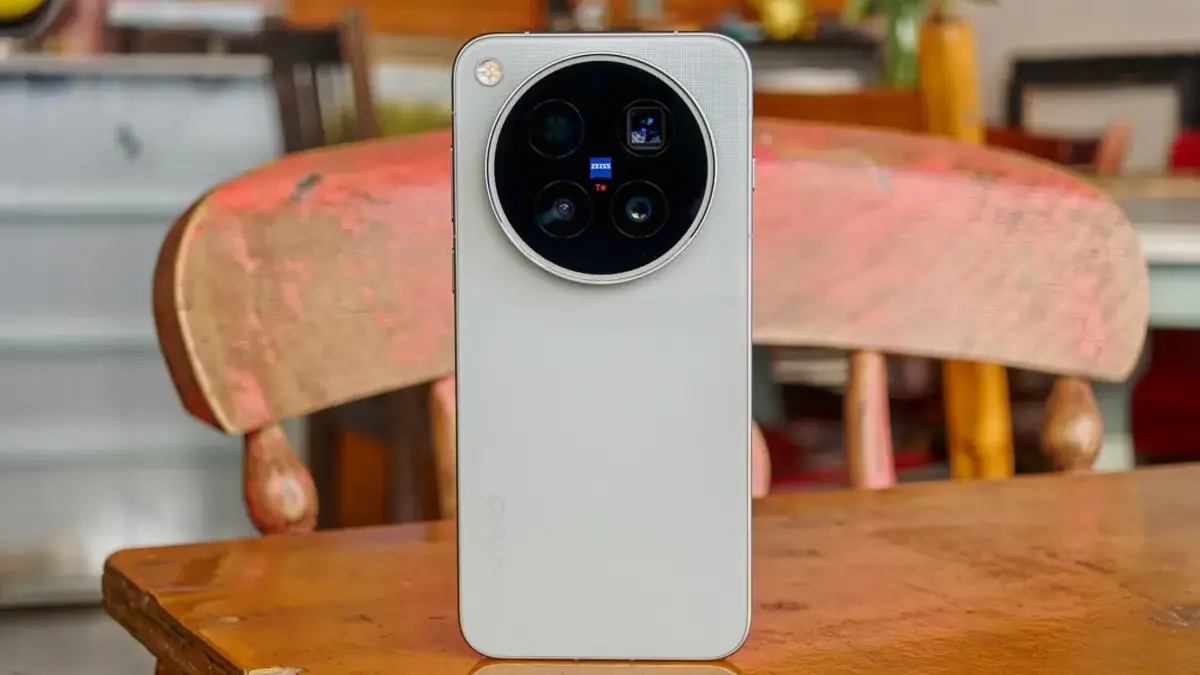
When Vivo’s X300 Ultra was declared by reviewers this spring to feature the best cameras in any smartphone, two distinct elements cemented its elite status: a masterclass main camera boasting a narrow 35mm focal length and the most capable ultrawide lens found on any mobile device worldwide.
Disappointingly, photography enthusiasts will not find either of those signature features in the new Vivo X500 Pro Max. While the newly released device arrives with an impressive camera system that delivers world-leading dynamic range alongside the exact same stellar telephoto lens featured on the older Ultra model, it nonetheless leaves behind a touch of the unique identity that made its predecessor so extraordinary.
The X500 Pro Max is part of a broader, contemporary industry trend that has seen China’s major Android manufacturers aggressively rolling out high-end "Pro Max" variants. Companies such as Xiaomi, Oppo, Honor, and now Vivo are utilizing this branding strategy to bridge the performance gap between their traditional Pro flagships and their dedicated, camera-centric Ultra models. Skeptics may view the new naming convention as a convenient marketing justification to mask rising hardware costs—particularly surrounding increased RAM pricing—while optimists see it as a welcome consolidation of top-tier mobile technology. In reality, industry observers suspect it is likely a combination of both.

Despite sitting below the true Ultra tier, the Pro Max adopts plenty of high-end features familiar to owners of older flagship hardware. It matches the physical footprint of its predecessor and features an identical 1440p, 144Hz OLED display. It also houses an even larger 7,800mAh battery that comfortably breezes through two full days of typical use, supported by rapid 90W wired and 40W wireless charging capabilities.
Under the hood, the X500 Pro Max departs from the Ultra lineage by omitting the absolute latest Snapdragon chipset. Instead, it relies on MediaTek’s new Dimensity 9600 Pro processor, a robust 2nm phone chip that delivers roughly comparable day-to-day performance. It also retains the exact same periscope telephoto camera that earned critical acclaim on the previous generation. However, all of this hardware comes at a steep price: retailing at €1,799 (approximately $2,000), the device places itself squarely in the ultra-premium bracket.
Even with these top-shelf specifications, the X500 Pro Max is not a true successor to the X300 Ultra, a device that is still rumored to receive a direct, dedicated sequel sometime next year. Because the Pro Max officially occupies a rung slightly lower in Vivo’s corporate device hierarchy, expecting it to fully match or outperform the older Ultra would be a mischaracterization. The underlying issue is not necessarily that the X500 Pro Max camera is objectively worse than the Ultra, but rather that it feels significantly less unique.
As expected from a step-down model, the phone’s 50-megapixel, 1/1.28-inch-type main camera sensor is both smaller and lower in resolution than the sensor packed into the Ultra, which inevitably impacts overall raw quality. However, the newer device manages to offset this disadvantage through one specific technological advantage over its predecessor: it incorporates Sony’s brand-new Lytia L910 image sensor. This sensor utilizes LOFIC (Lateral Overflow Integration Capacitor) technology, which enables a much wider 17-stop dynamic range, bringing noticeable enhancements primarily in highlight control.

Yet, the technical brilliance of the X300 Ultra’s camera was never solely about raw numbers; it was heavily defined by its creative choices. Photographers and reviewers alike widely praised its adoption of a classic 35mm focal length. Consequently, the return to the ubiquitous 24mm focal length on the Pro Max—a standard found on iPhones and countless other competing devices—feels like a step backward for creative framing.
This standard 24mm perspective functions essentially as a wide-angle lens, designed intentionally to capture as much of a physical scene as possible while leaving the ultrawide lens to manage massive landscape vistas. For many mobile photographers, this wide default forces a reliance on stepping back or defaulting to the telephoto lens to capture tighter framing and natural background blur, or bokeh. Unfortunately, that workaround frequently introduces other quality compromises, particularly in challenging low-light environments.
A 35mm main camera, by contrast, feels much closer to the kit and prime lenses photographers routinely pair with dedicated standalone cameras. It is narrow enough to deploy naturally for striking portraits and deliberate, purposeful framing. It also sits more harmoniously between a 14mm ultrawide and an 85mm telephoto, offering a balanced progression of natural perspective options across the zoom range. While users of the X500 Pro Max can always shoot at the native 24mm and crop digitally, doing so discards valuable sensor resolution and relies on digital zoom tricks rather than leveraging pure optical design.
If there is a redeeming quality to Vivo’s decision to return to a wider main camera, it is that it helps balance out the X500 Pro Max’s other primary hardware compromise: a substantially smaller ultrawide camera sensor.

The design philosophy behind the X300 Ultra dictated that all three rear lenses should deliver comparable output quality. To achieve that, the Ultra treated its ultrawide shooter almost like a secondary main camera, outfitting it with a large physical sensor and even optical image stabilization—an extreme rarity for wide-angle lenses. In fact, the ultrawide sensor on the Ultra matched the physical size of the main camera sensor found on many standard devices. While replicating that exact feat on a step-down model was unlikely, the 1/2.75-inch-type ultrawide sensor inside the X500 Pro Max still represents a noticeable drop in capability.
Real-world testing highlights this discrepancy. Taking the phone to a nighttime Champions League soccer match reveals a stark drop in consistency when shifting between the ultrawide lens and the other two shooters. Beneath the blazing stadium lights, the ultrawide tends to blow out the fine white details on the pitch and player kits while casting the surrounding crowd into relative shadow. Conversely, the main and telephoto sensors manage to pull significantly more detail out of the dimly lit spectators while retaining high-contrast highlights on the field without sacrificing the overall mood of the scene.
These technical critiques must be framed within proper perspective. The X500 Pro Max remains an exceptionally capable mobile photography system that easily outclasses any smartphone officially available for purchase in the United States. The returning periscope telephoto lens, in particular, is extraordinary. Every lens benefits directly from Vivo’s naturalistic color-tuning profile, which was developed in partnership with Zeiss. Furthermore, the video suite is robust, offering professional Log recording alongside slow-motion capture at 4K resolution and 240 frames per second. The device even maintains compatibility with Vivo’s specialized teleconverter lenses, including a remarkably chunky 400mm attachment. It is simply unfortunate that the most daring and interesting elements of the Ultra’s camera system failed to trickle down to the company’s inaugural Pro Max release.
Intuitively, rival manufacturers have been exploring similar territory. Another flagship tested concurrently in the mobile market picks up almost precisely where the X300 Ultra left off: Oppo’s Find X10 Pro Max. Serving as a direct market competitor to Vivo’s latest offering, the Oppo handset employs a triple 200-megapixel camera array anchored by a wide-angle main shooter, but crucially pairs it with a vastly improved ultrawide camera to preserve the cohesive feeling that all three rear lenses maintain equal fidelity.

As consumers look ahead, the impending release of the X500 Ultra in the spring will reveal whether Vivo can build upon the foundational success of its predecessor while finding innovative ways to make its mobile cameras stand out in an increasingly crowded market. Given that the Pro Max already commands a steep €1,799 price tag, any future Ultra iteration is almost certain to cost substantially more, leaving it with immense pressure to prove its elite pricing is fully justified.