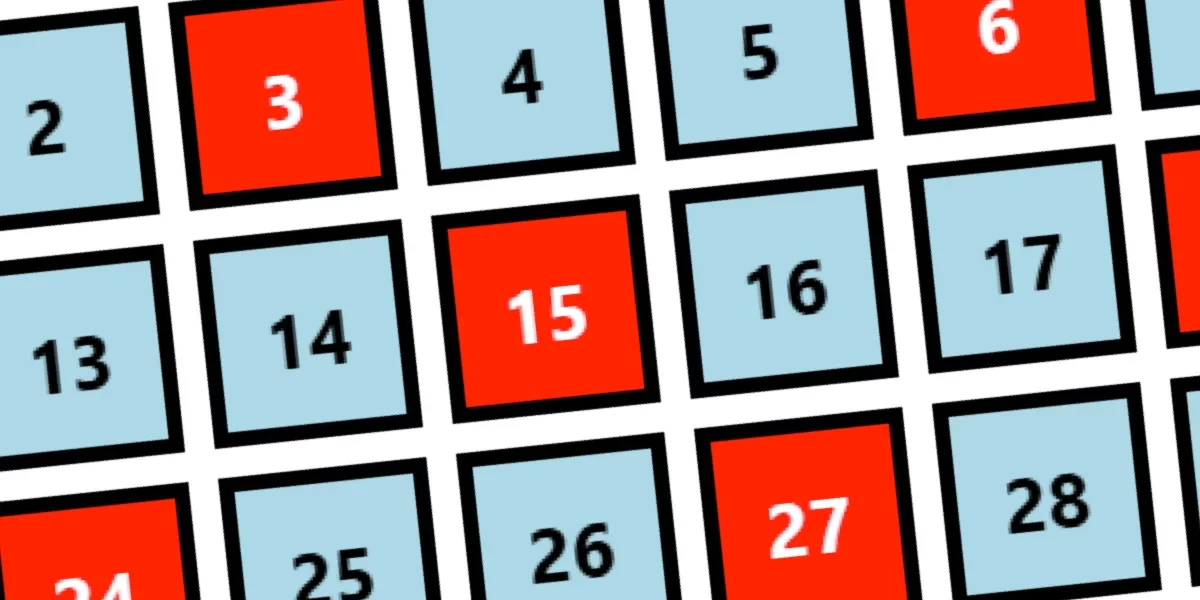
The prospect of re-implementing an existing web standard feature might initially seem entirely redundant—an exercise in code duplication with no practical utility. Yet, developers often find unexpected value in pushing boundaries to see how far contemporary styling capabilities can stretch. A recent exploration into modern CSS demonstrates that recreating native functionalities can serve two distinct purposes: unlocking unprecedented control over parameters on the fly, and thoroughly testing the limits of new browser features. While web developers will likely never need to rely on a dynamic pseudo-class for everyday production workflows, diving into the mechanics provides a masterclass in emerging styling logic.
At the heart of the traditional styling limitation lies the static nature of structural pseudo-classes. Consider a standard styling rule designed to select elements using an arithmetic expression, such as a selector matching every fifth item offset by eight. If a developer subsequently decides to update either the multiplier or the offset value, the standard approach demands manually rewriting the selector directly in the stylesheet. Web standards have long lacked a mechanism that would allow custom properties to be interpolated directly inside standard functional notation like a mathematical formula.
The ambition to achieve fully dynamic styling control has led developers to experiment with cutting-edge capabilities. Setting up a foundational structure typically involves a parent container holding a series of child elements, where the container’s custom properties act as control variables. While this configuration is not strictly mandatory for every use case, it offers a clean, straightforward framework to observe how advanced logic parses layout relationships.
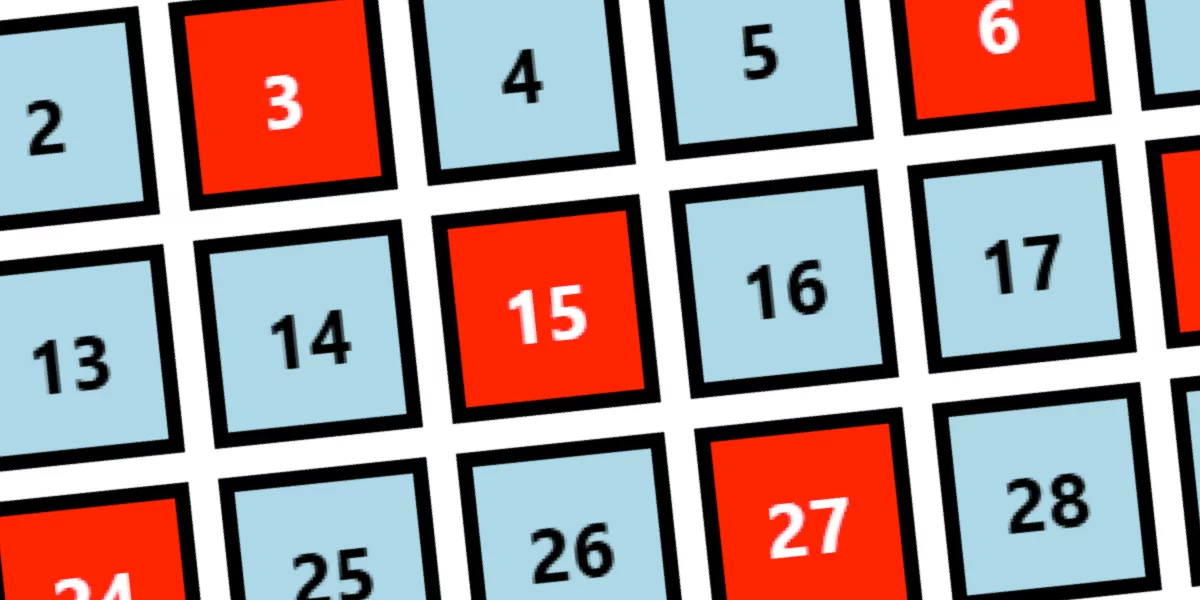
Examining :nth-child(B) and Single-Item Selection
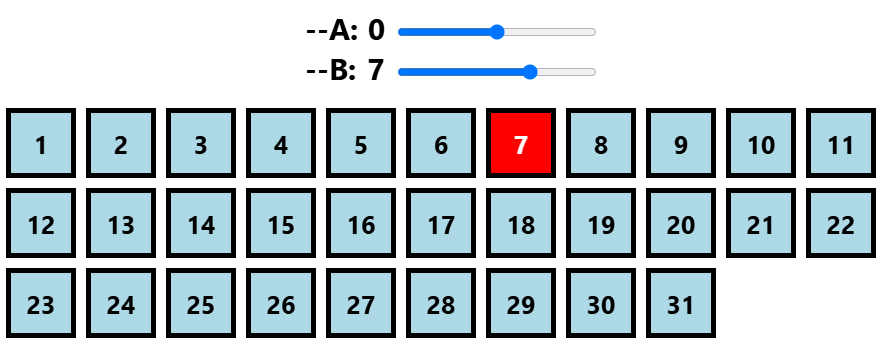
To understand how dynamic pseudo-classes can be emulated, it helps to begin with the simplest possible case: selecting a single, specific element by its exact index. Conventionally, developers rely on a static numeric argument inside the parentheses. However, by leveraging newer additions to the styling specification—specifically the inline conditional syntax and container style queries—developers can evaluate conditions directly on individual elements.
If a specified condition within a style query evaluates to true, an intended property value, such as a background color, is applied dynamically. Otherwise, the property remains unaffected, or an alternative value can be specified via an explicit fallback branch. The syntax functions much like a standard conditional evaluation found in other programming environments. By evaluating the relationship between an element’s runtime position and a designated custom property variable, stylesheets can ascertain whether a specific match should occur.
This approach reveals that an element’s position among its peers can be queried dynamically. Rather than baking a static index into the stylesheet, the index acts as a variable that can be updated on the fly at the container level. While this introduces a degree of redundancy—requiring explicit property declarations for each styled attribute—it grants developers the unique ability to shift target elements instantly by simply modifying custom property values.
Expanding to Range and Sequence Selections
Moving beyond single-item matches, developers can apply similar logical evaluations to broader ranges. Selecting multiple elements starting from a specific index point relies on evaluating whether an element’s sibling index is greater than or equal to a target variable. Similarly, selecting all elements up to a certain threshold utilizes a less-than-or-equal comparison.
Combining these concepts enables seamless range selection, effectively replacing complex and often confusing structural notations with intuitive mathematical evaluations. Rather than deciphering specialized structural syntax, developers can evaluate whether an element’s position falls inclusively between two custom variables. This method translates cleanly into readable conditional logic, offering a more transparent way to handle multi-element targeting.
Handling repeating patterns introduces the need for mathematical remainder testing. For instance, selecting every third element requires determining whether the remainder of an element’s index divided by the target multiplier equals zero. Modern styling features support mathematical functions that evaluate remainders directly. By checking whether the remainder operation yields zero, stylesheets can successfully target repeating intervals.
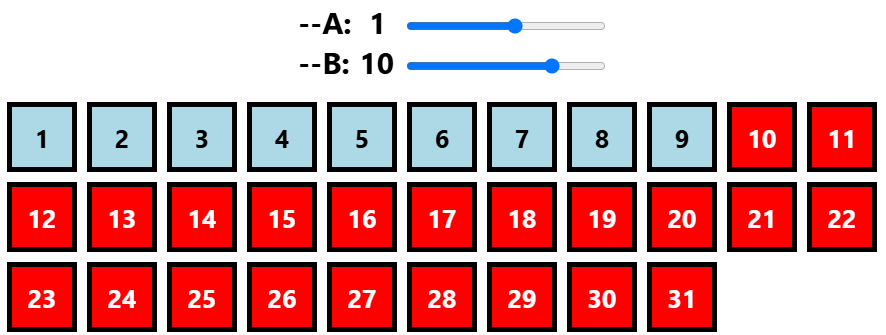
A critical edge case arises when dealing with negative multipliers. Because all structural indexes are positive integers, negative inputs should logically result in zero matches. To ensure precision, compound conditions can be joined together using logical conjunctions within style queries. This ensures that the remainder test is accompanied by a check verifying that the multiplier itself remains a positive value, mirroring the robust logical grouping found in traditional programming languages.
Implementing General Expressions and Advanced Modifiers
Synthesizing these concepts leads to the generic form of structural matching, where elements are targeted based on a linear expression combining a multiplier and an offset. Expressing this mathematically requires ensuring that the calculated step value results in a valid, non-negative integer. By combining remainder calculations with division checks, stylesheets can determine exact programmatic matches for complex sequences.
Handling edge cases, such as when a multiplier evaluates to zero, requires additional logical safeguards to prevent unexpected parsing results. Advanced implementations introduce intermediate variables to handle these scenarios gracefully, evaluating alternative mathematical signs and remainders depending on the input values. Dissecting these advanced scripts challenges developers to deeply understand how browser layout engines compute element positions relative to their containers.
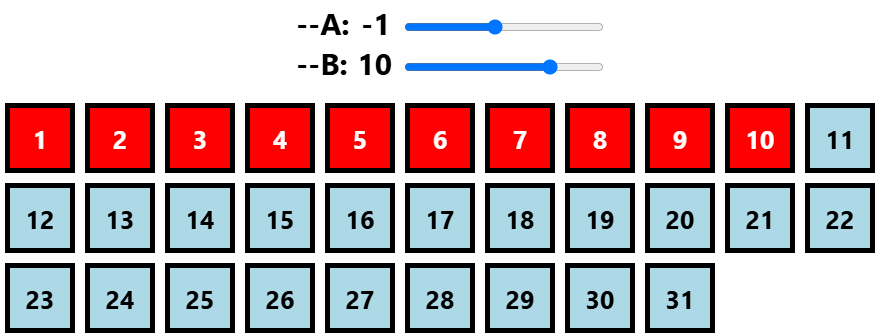
Ultimately, exploring these advanced styling techniques highlights the evolving nature of web development. Selectors are fundamentally sets of conditions used to filter and target specific elements within a document tree. As modern styling specifications continue to introduce powerful evaluation tools, the boundary between static markup rules and dynamic, programmable layouts continues to blur. Developers looking for further challenges often extend these concepts to evaluate reverse-order positioning, utilizing sibling counts to adapt styles dynamically from the end of a container onward.