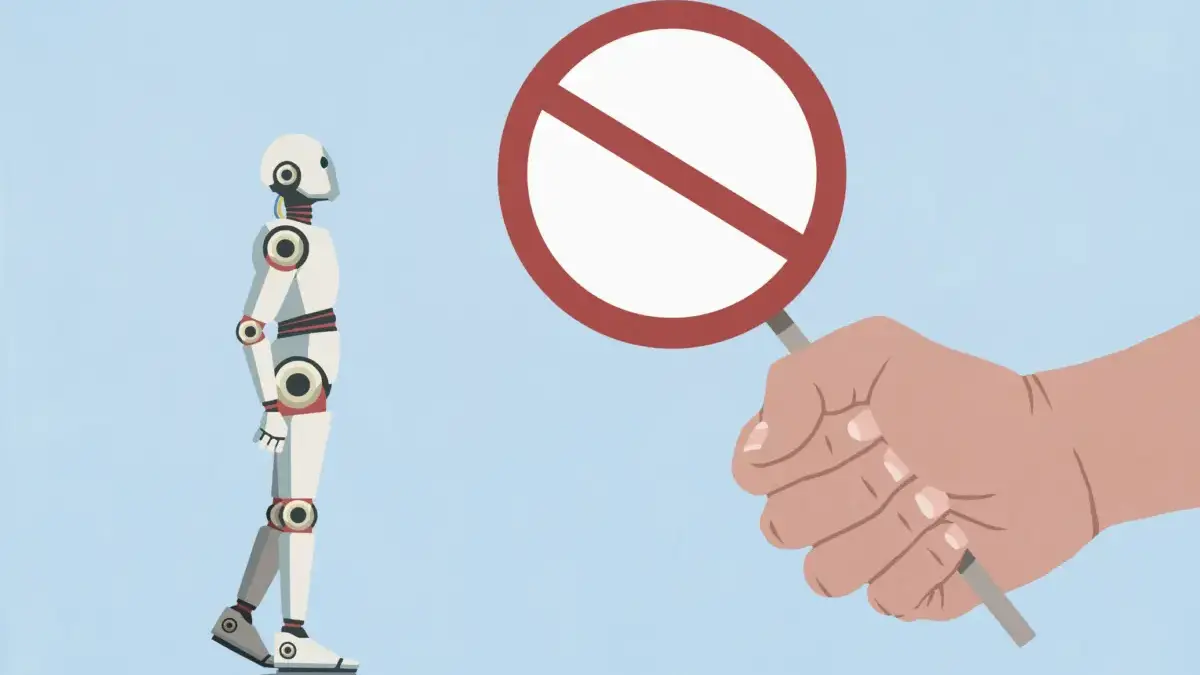
The debate over artificial intelligence in the workplace has traditionally centered on automation, productivity, and the displacement of labor. However, a growing conversation is now taking shape around the intersection of emerging technology and deeply held personal beliefs. While religious leaders like Pope Leo XIV have frequently decried artificial intelligence as a profound threat to human dignity, it is not just the devoutly faithful who are scrutinizing how generative models and automated tools square with their core values. In a novel development for the secular community, David Durman, a nontheistic humanist and university administrator, has successfully secured a formal religious workplace exemption allowing him to abstain from using artificial intelligence on the job.
Durman, who works as an administrator at the University of Kentucky supporting researchers as they apply for institutional grants, serves as the first known humanist to obtain workplace accommodations of this nature. His case highlights an emerging legal and philosophical frontier where employees are looking beyond traditional religious frameworks to protect their personal convictions regarding cognitive autonomy, environmental stewardship, and the preservation of human creativity in an increasingly automated world.
To achieve this milestone, Durman worked alongside the American Humanist Association (AHA), a prominent nonprofit organization dedicated to advancing secular humanism and defending the rights of non-religious individuals. As artificial intelligence began to permeate daily administrative routines and workflows across various industries, Durman recognized that relying on these systems ran fundamentally counter to his ethical worldview.
Defining the boundaries of his philosophy, Durman explained that humanism encompasses a comprehensive collection of beliefs regarding the human experience and how individuals interact with the surrounding world. It centers heavily on human well-being and flourishing, both on an individual level and collectively within society. Furthermore, the philosophy implores people to actively work toward improving their own well-being and the flourishing of those around them through deliberate, conscious effort.
The crux of Durman’s objection lies in how artificial intelligence impacts critical thinking and moral agency. According to his perspective, the active application of the human mind is the primary mechanism through which individuals become moral actors for themselves and for others. In a statement published by the American Humanist Association earlier this week, Durman elaborated on his broader concerns, noting that artificial intelligence actively interferes with people’s ability to earn a living, carries environmental costs that spell disaster for humanity and the planet, and threatens vital cultural pillars like art and literature through the supplanting and theft of human creativity. He warned that any technological shift that diminishes active cognitive engagement will inevitably create a negative impact on human capacity and societal progress.
Humanism is inherently non-religious, yet it frequently appeals to individuals who remain skeptical of deities or supernatural forces while still seeking a robust scientific and moral framework to ground their lives. Alexandria Huiskens, a staff attorney at the AHA, emphasized that concerns regarding artificial intelligence and human dignity transcend any single theological tradition. Whether rooted in Catholic teachings, Unitarian Universalism, or secular humanism, anxieties about the erosion of human value are shared widely. Huiskens noted that the AHA wants humanists and nontheists to recognize that they fall into protected legal categories and enjoy the same workplace rights under the law as their religious peers.
Durman’s successful accommodation request follows a similar path blazed by Erin Maus, a Unitarian Universalist and software engineer who previously secured workplace protections allowing her to avoid using artificial intelligence tools in her engineering duties. Maus’s situation drew considerable attention because software development has become an industry where writing code entirely without AI assistance is increasingly rare. In contrast, Durman’s administrative role did not strictly mandate artificial intelligence usage, though recommendations from colleagues and leadership to experiment with the tools were becoming more common. Anticipating that informal suggestions might eventually transition into mandatory requirements, Durman opted to secure his exemption proactively.
Reflecting on his motivation, Durman clarified that his pursuit of these protections was deeply personal and rooted entirely in his own convictions. He stressed that he has no intention of prescribing how others should think or feel about the technology. Nevertheless, he expressed hope that his case might encourage other workers who share similar reservations to pursue resolutions through the appropriate channels available to them, whether or not they frame those concerns through a traditional religious lens.
University officials have confirmed the validity of the arrangement on an individual basis. Jay Blanton, a spokesperson for the University of Kentucky, explained that the institution evaluates all requests for religious accommodations by carefully considering an employee’s specific job responsibilities and the surrounding circumstances of each unique request. In Durman’s case, the university determined that an appropriate accommodation could be successfully implemented while still enabling the employee to perform all essential functions of his position. Blanton added that as technology and job duties continue to evolve, these accommodations are subject to ongoing review to ensure they remain reasonable and workable for all parties involved.
As artificial intelligence continues to transform the modern workplace, the precedent set by Durman and Maus signals a shifting landscape in employment law and employee relations. Workers across various philosophical and secular traditions are increasingly examining their relationship with automation, ensuring that their daily labor does not compromise the foundational principles that guide their lives.