
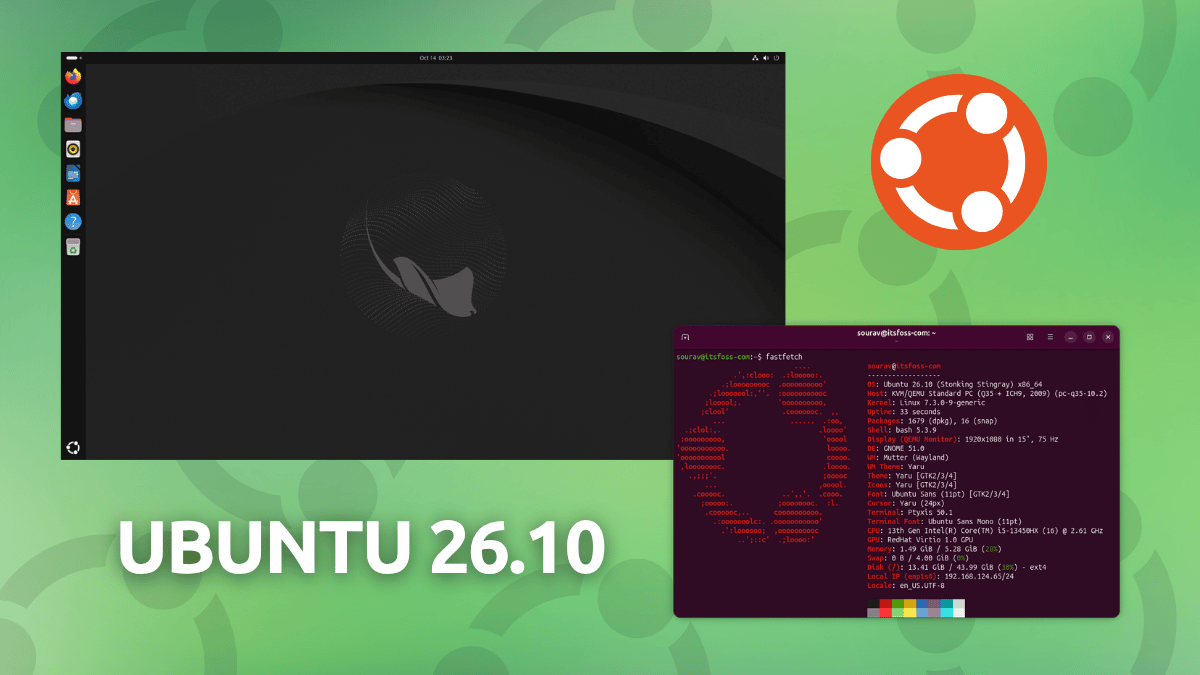
Canonical has officially released Ubuntu 26.10, codenamed "Stonking Stingray." As an interim release bridging the gap between long-term support versions, this update focuses heavily on modernizing core system components, improving hardware compatibility, and enhancing overall system performance. While it will receive nine months of standard support ending in July 2027, Ubuntu 26.10 introduces several significant technological shifts that give users a glimpse into the future direction of the popular Linux distribution.
Perhaps the most notable architectural milestone in Ubuntu 26.10 is the continuation of its deep system "rustification." Until this release, foundational core utilities within Ubuntu—such as cp, mv, and rm—remained tethered to their traditional GNU versions due to lingering compatibility concerns. With the arrival of Ubuntu 26.10, these critical core utilities have officially transitioned to the Rust-based uutils implementation. This migration marks a major step forward in Canonical’s ongoing effort to rewrite essential system components in memory-safe languages, further oxidizing the Linux distribution’s core stack.
This memory-safe transformation is not limited to core system utilities. Ubuntu 26.10 extends its rustification initiative to OpenPGP security frameworks. The distribution has integrated Sequoia PGP, a modern, Rust-based OpenPGP implementation built by former GnuPG developers, directly into the main archive. Alongside traditional GnuPG tools like gpg and gpgv, users will now find the sq and sqv tools natively available, offering improved security, modularity, and modern cryptographic standards out of the box.

Under the hood, Ubuntu 26.10 is powered by the freshly minted Linux 7.3 kernel. This kernel release brings substantial hardware enablement improvements, most notably broad support for recent Snapdragon X2 Elite laptops, as well as several older Snapdragon X Elite and X Plus mobile machines manufactured by industry leaders such as Lenovo, HP, and Acer. The inclusion of these drivers broadens Ubuntu’s viability on modern ARM-based Windows-on-ARM hardware alternatives and emerging mobile workstation platforms.
Gamers and graphics-intensive users will also find plenty to appreciate in the Linux 7.3 kernel. This release incorporates the initial wave of VRAM overcommit work engineered by Valve developer Natalie Vock. For users operating on graphics cards with limited dedicated video memory, this feature allows certain data workloads to dynamically offload to regular system RAM, resulting in smoother gameplay and reduced stuttering on constrained hardware. Alongside these kernel updates, Ubuntu has transitioned to the NVIDIA 615 driver series, replacing the older 595 and 610 iterations. Crucially, the 615 series ships exclusively with open kernel modules, providing robust support for Turing-generation and newer NVIDIA graphics processing units.
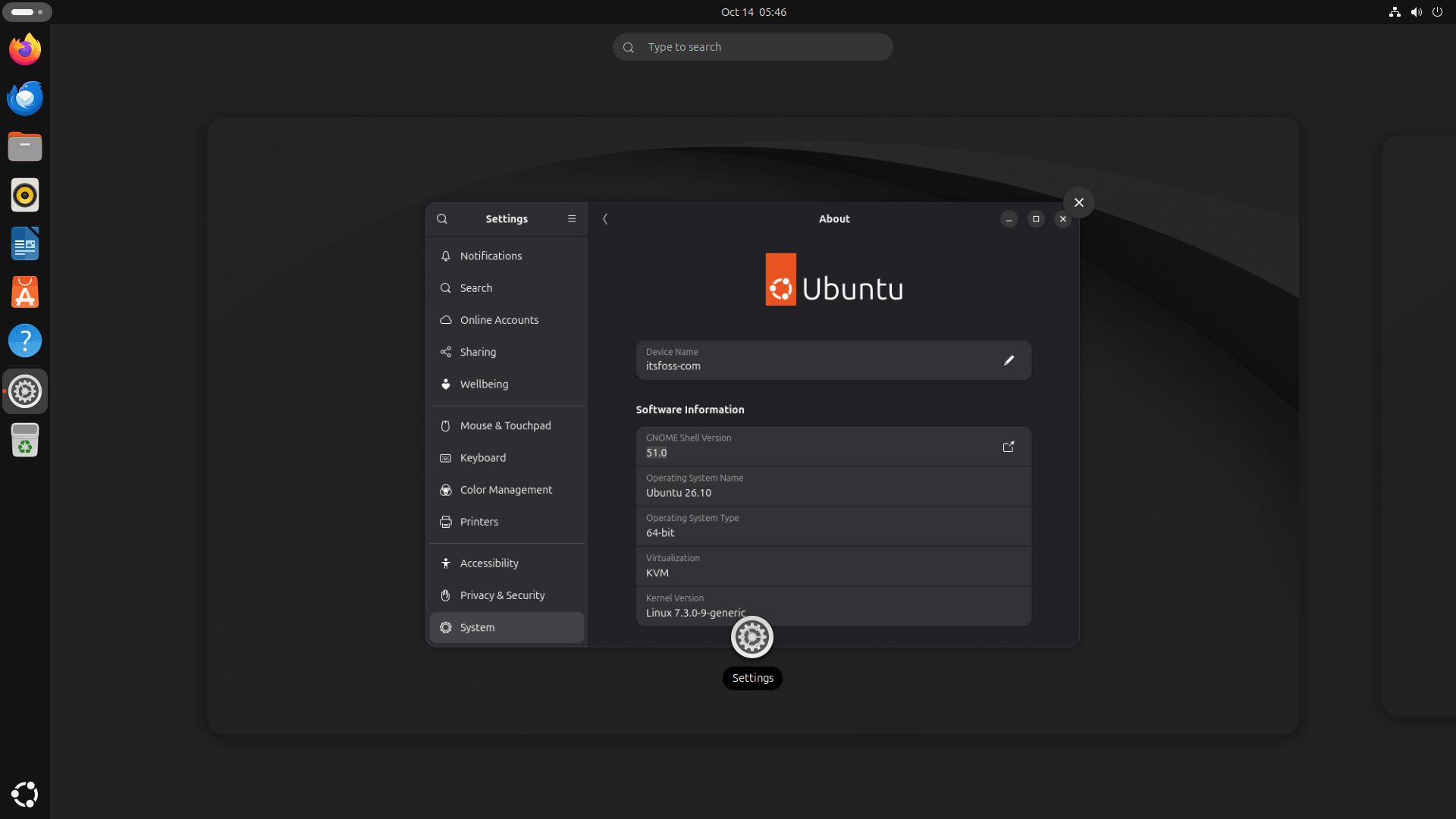
On the desktop front, Ubuntu 26.10 ships with the newly released GNOME 51 desktop environment. The latest GNOME iteration brings a series of quality-of-life enhancements, including a dedicated fingerprint manager integrated directly into the Users panel, convenient support for DNS search domains within Network settings, and an intuitive count badge in the Files manager when users drag and drop multiple items simultaneously.
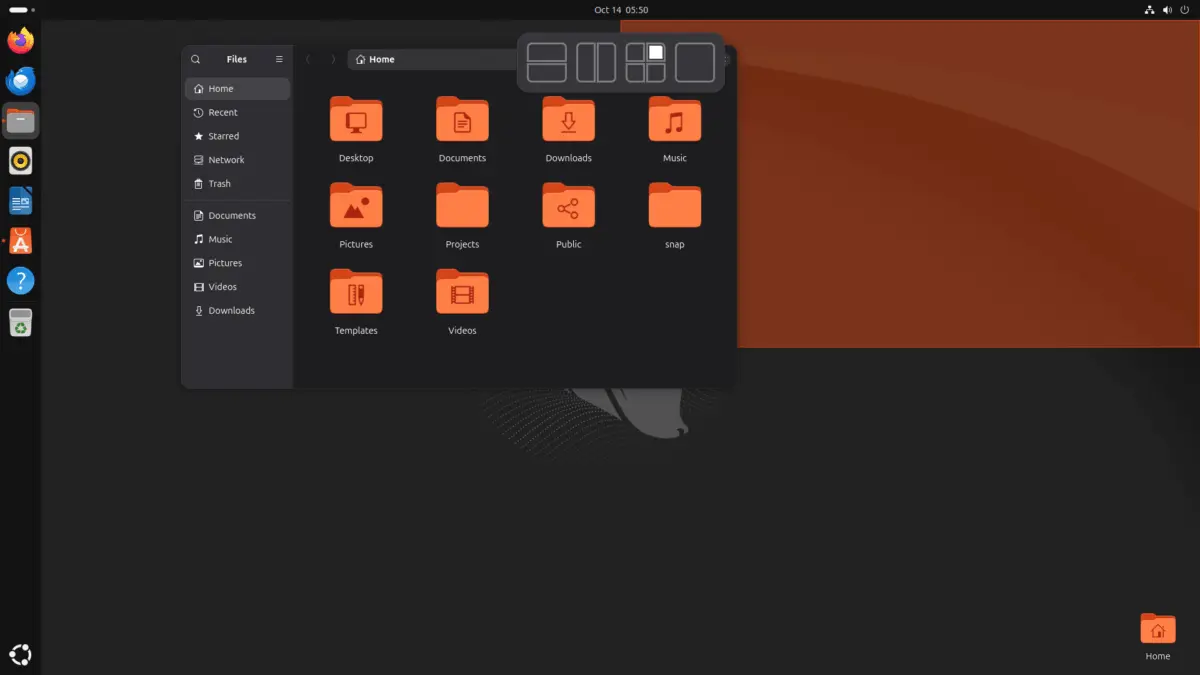
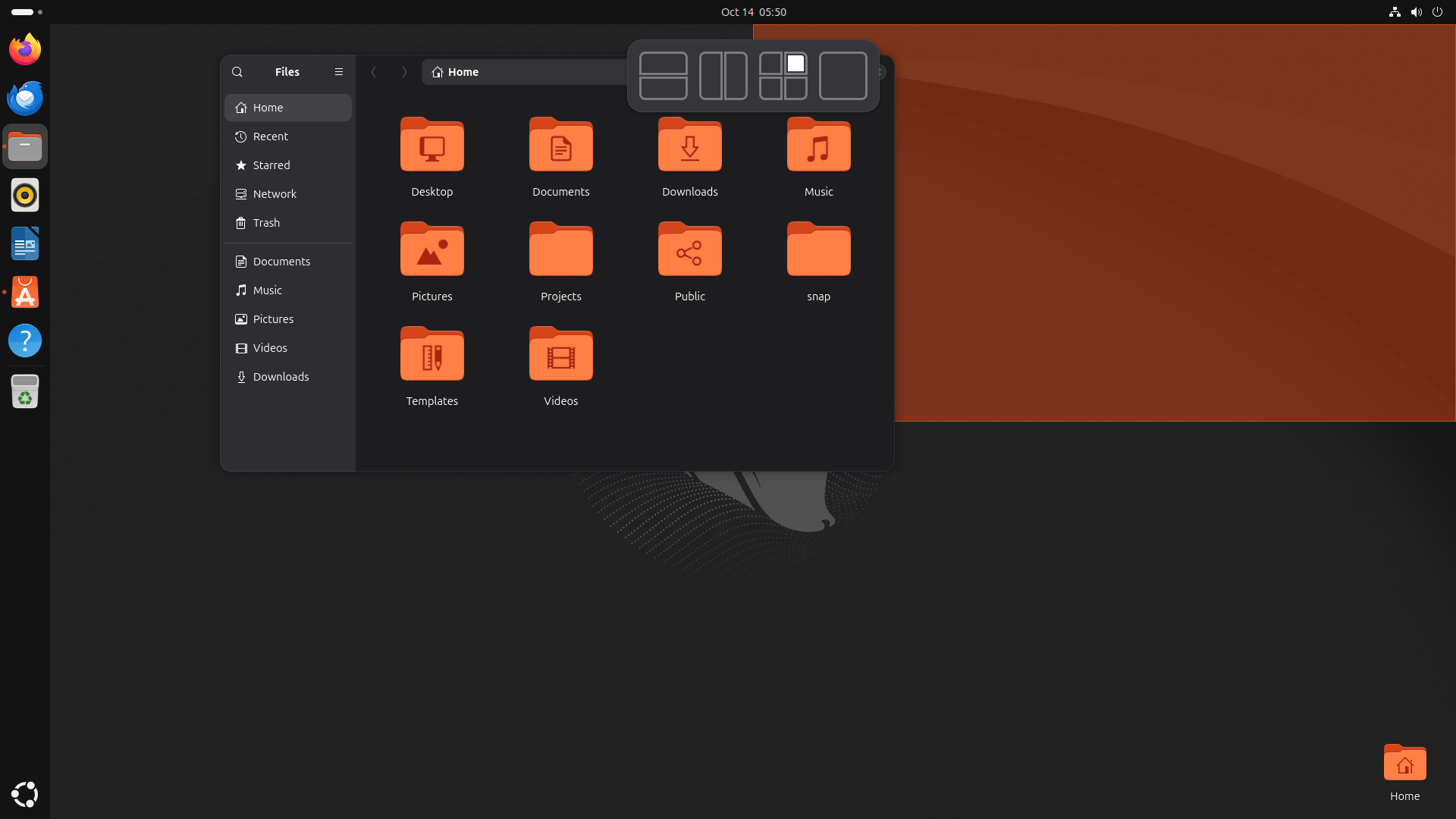
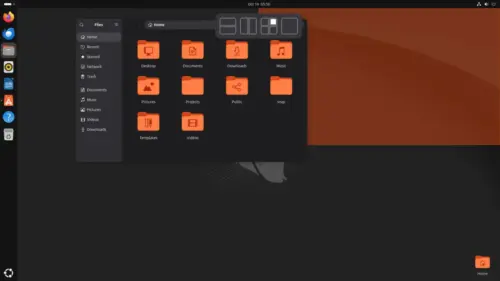
Complementing GNOME 51 is the inclusion of the Ubuntu Tiling Assistant, which introduces a streamlined, Windows-style interface for managing snappable window layouts directly out of the box. Users who were anticipating a completely overhauled installer and a redesigned first-boot onboarding experience will have to wait, as those interface overhauls are currently scheduled to debut in the forthcoming long-term support release, Ubuntu 28.04 LTS.
For users wishing to deploy or evaluate the new operating system, installation ISO images for Ubuntu 26.10 are readily available across multiple architectures, including AMD64, ARM64, and RISC-V, through the official Ubuntu website. Desktop users can grab the standard desktop ISOs, while specialized deployments such as Server, Netboot, and Windows Subsystem for Linux images can be retrieved directly from the official Ubuntu releases portal.


Leave a Reply