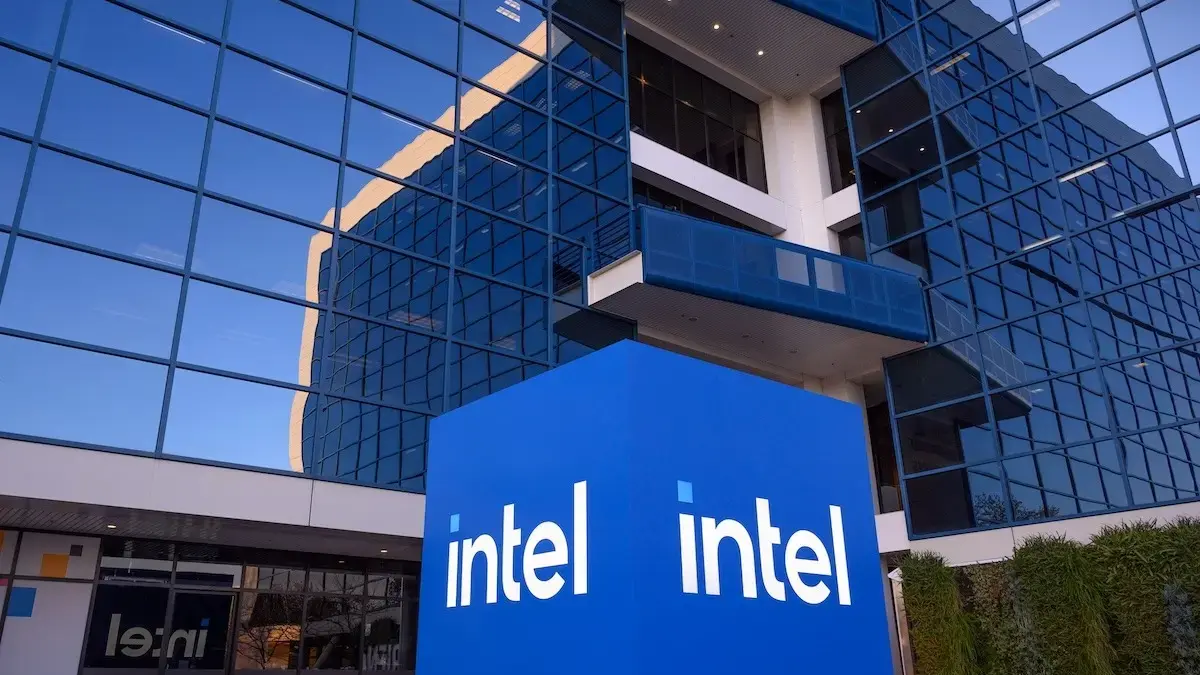
Intel has reported its third-quarter 2026 financial results, posting revenue of $16.5 billion. This represents a 21% increase compared to the same period in the previous year, driven primarily by robust, expanding data center demand that managed to offset severe manufacturing bottlenecks and a sharp contraction in personal computer sales across the broader consumer hardware market.
The financial results vividly reflect a deeper, structural divide currently reshaping the global technology hardware sector. While artificial intelligence infrastructure spending continues to heavily drive chip sales for server processors and memory suppliers alike, component shortages and steeply elevated memory prices are collectively increasing system costs. These financial pressures are ultimately weighing heavily on consumer hardware demand, creating an uneven landscape for legacy semiconductor giants trying to pivot toward next-generation technologies.

Data center demand collides with manufacturing bottlenecks
Intel’s Data Center and AI group served as the primary engine for the quarter, generating $7.3 billion in revenue. This marked an impressive 78% increase year over year, reflecting strong, sustained demand across hyperscale, enterprise, and cloud computing customers eager to scale their workloads.
However, this surging demand ran directly into severe operational roadblocks. Shortages of raw materials, substrates, and other critical electronic components severely limited Intel’s physical ability to manufacture and ship enough units of its flagship Xeon server family. Compounding these supply chain headaches was an unexpected two-week shutdown at a major Intel fabrication facility in Israel, which was forced offline following a serious gas explosion that left three workers seriously injured.
Because the intricate process of turning raw silicon wafers into finished, working computer chips typically takes roughly three months, wafers that were still actively in process when the manufacturing plant abruptly shut down had to be scrapped. During the subsequent earnings call, Intel CFO David Zinsner told investors and analysts that the vast majority of those write-offs will land in the fourth quarter, though he does not expect further scrapping to plague the first quarter of the coming year. Zinsner estimated that this unfortunate fabrication disruption will carry a roughly $300 million impact on revenue in the fourth quarter of 2026, with a similarly sized impact expected in the first quarter of 2027.

Intel CEO Lip-Bu Tan acknowledged both the progress and the painful setbacks during the financial briefing. "Our Q3 results demonstrate improving execution, meaningful progress expanding supply and continued advancement of our process technology," Tan said in the official press release.
However, during the live earnings call, he struck a more candid tone regarding the operational realities of the quarter. "I’m disappointed that we were not able to meet strong customer demand in this quarter," Tan admitted. "We face near-term challenges, including manufacturing supply shortage, the unprecedented memory crunch, and the resulting softness in PC demand. But I remain confident in our path forward."
Looking ahead to the immediate future, Intel projected fourth-quarter revenue to land between $15.0 billion and $16.0 billion, with a non-GAAP gross margin expected to drop to 38.0%, down significantly from the 44.1% reported in the third quarter.

Memory shortage and PC market contraction
While Intel struggled directly with internal component supply and fab disruptions, external memory manufacturers reaped massive financial rewards from the soaring demand driven entirely by global artificial intelligence infrastructure investments. Major memory giants including Samsung and SK Hynix recently reported record-breaking quarterly profits on the back of this trend.
Unfortunately, those same rising memory prices created immediate, direct headwinds for personal computer manufacturers and, by extension, for Intel’s Client Computing and Physical AI Group. Revenue for that vital consumer-facing division declined 5% year over year during the third quarter, settling at $8.1 billion.
Surging dynamic random-access memory, or DRAM, costs from major vendors like Samsung, SK Hynix, and Micron forced PC makers to pass those expenses along by raising retail prices on finished laptops and desktops. This sudden price hike prompted everyday consumers and enterprise buyers alike to defer their hardware upgrades, stretching out replacement cycles.

"We expect the current environment to persist until memory availability and prices begin to normalize," CEO Lip-Bu Tan explained during the earnings call. "While the next few quarters will be challenging for the PC market, our roadmap continues to strengthen, and our long-term outlook remains positive."
Independent market data underscores the severity of the consumer hardware slump. According to recent figures from Counterpoint Research, global personal computer shipments plummeted 21% year over year in the third quarter of 2026, dropping down to a meager 57 million units. The research firm’s analysts are forecasting an even steeper 27% year-over-year decline for the upcoming fourth quarter.
Minsoo Kang, a senior analyst at Counterpoint Research, highlighted the macro-level pressures in a recent market report. "The global PC market is facing mounting pressure as rising memory and component costs push system prices higher and force consumers to delay replacement purchases," Kang noted.

This sentiment was echoed by David Naranjo, associate director at Counterpoint Research, who emphasized that the entire ecosystem is undergoing a painful transition. "The PC industry is entering a period of structural adjustment, where rising component costs, higher system prices, and longer replacement cycles are fundamentally reshaping market dynamics," Naranjo stated.
Addressing the company’s financial roadmap through these turbulence-filled quarters, CFO David Zinsner noted that Intel does not expect to generate positive free cash flow throughout 2027. He characterized the upcoming year explicitly as an "investment year," during which the corporate group plans to significantly increase capital expenditures in order to aggressively rebuild its production capacity and secure its manufacturing future.