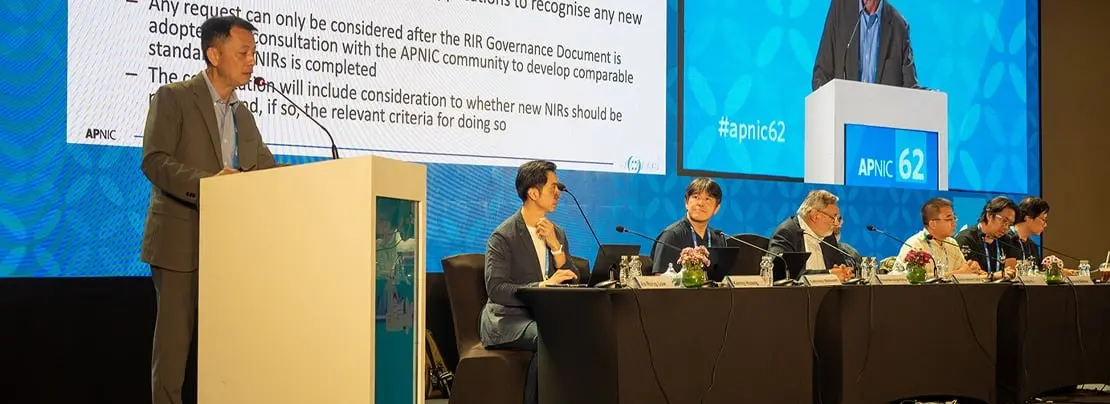
The recent APNIC Member Meeting (AMM) held during the APNIC 62 conference successfully brought together Internet community members, technical experts, and regional stakeholders from across the Asia-Pacific region to review operational performance, address ongoing challenges, and deliberate on the strategic trajectory of the organization.
Hosted both in-person and virtually, APNIC 62 drew a robust participation of 584 individuals representing 54 distinct economies. Throughout the multi-day event, more than 50 community members actively contributed to open-mic sessions, while members of the APNIC Executive Council (EC) engaged in continuous dialogues with regional partners, members, and community representatives. The insights, feedback, and diverse perspectives gathered during these interactions are considered vital inputs that will directly shape the development of APNIC’s upcoming 2028-2032 Strategic Plan, which is scheduled to commence next year.
Financial Sustainability
Financial stewardship and long-term economic sustainability remained a primary focus of discussion for the Executive Council and the wider membership during the AMM. Members were presented with a comprehensive financial overview indicating that APNIC’s operational activities during the first half of the year were executed in strict alignment with the 2026 Activity Plan, ensuring that overall financial performance remains firmly on track.
According to the reports shared at the meeting, APNIC continues to operate well within its established budgetary limits. The organization currently forecasts a full-year operating deficit of AUD 209,000, representing a notable improvement compared to the initially budgeted deficit of AUD 308,000. Looking further ahead, leadership confirmed that APNIC remains securely on path to return to a fully balanced budget by 2027.
Beyond the immediate fiscal year, discussions during the meeting heavily emphasized the necessity of maintaining financial sustainability past 2027 against a backdrop of slowing membership growth. Addressing this macroeconomic trend will demand continuous organizational discipline, particularly regarding the prioritization of activities. Leadership noted that this may involve scaling back or discontinuing operational work that no longer directly aligns with the evolving needs of APNIC members, while simultaneously pursuing ongoing enhancements to operational efficiency.
Attendees were also provided with detailed updates concerning APNIC’s investment portfolio, the successful sale of the property located at 6 Cordelia Street, and the organization’s overarching financial reserve strategy. These fiscal topics sparked considerable interest and detailed commentary during the open-mic session, with leadership expressing appreciation for the constructive feedback offered by participants. Comprehensive documentation, including the official Executive Council report, the Treasurer’s report, and session recordings, remains accessible online for members wishing to review the financial data in greater depth.
Enhancing Governance Through Community Participation
Community participation continues to serve as the foundational bedrock of APNIC’s multistakeholder governance model, playing a crucial role in the continuous development of both the organization and the broader global Internet Number Registry system.
During the conference, the Executive Council formally acknowledged and thanked community leaders Maemura Akinori, Nicole Chan, Dr Devesh Tyagi, Di Ma, and Gaurav Kansal for their substantial contributions to the ongoing ICP-2 Review and RIR Governance Document processes. Their collaborative efforts underscore the community-driven nature of Internet resource management in the region.
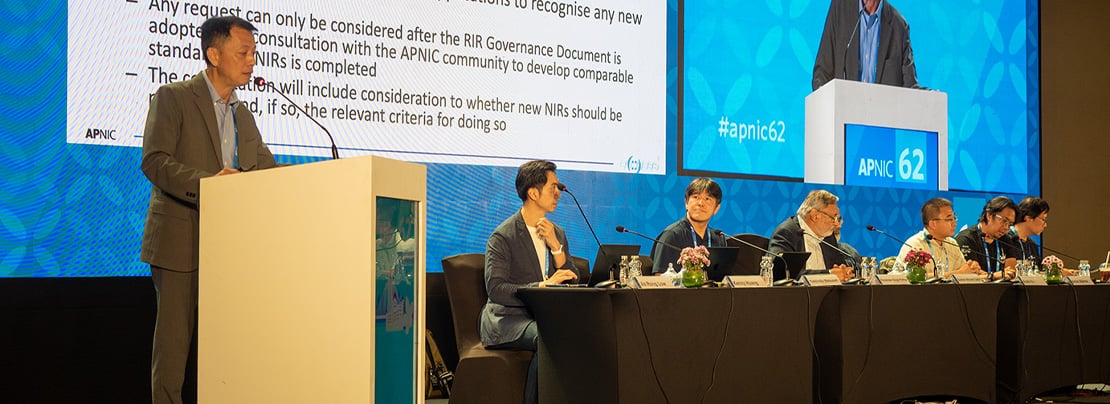
A major focal point of the APNIC Open Policy Meeting was the robust evaluation of seven distinct policy proposals—representing the highest volume of proposals seen at recent gatherings. Out of these submissions, two successfully achieved community consensus.
Discussions also centered heavily on cultivating the next generation of technical and community leadership. The Community Consultation on Increasing Diversity in Community Leadership brought to light a range of pressing challenges alongside promising opportunities. Key topics included finding effective ways to strengthen members’ sense of connection to the wider APNIC community and establishing structured development pathways to support emerging leaders.
Participants repeatedly emphasized the immense value of the APNIC Fellowship Program, particularly highlighting its instrumental role in supporting future leaders originating from developing economies across the region. The APNIC Secretariat is currently in the process of consolidating the findings gathered from these consultations for the Executive Council’s formal review to determine subsequent strategic steps.
APNIC’s Future Strategic Direction
APNIC 62 additionally served as the official platform for releasing the findings of the 2026 APNIC Survey. Commissioned by the Executive Council and administered by an independent professional research organization, the survey gathered comprehensive feedback from over 1,300 APNIC Members and community participants. The resulting data provides a statistically robust and reliable overview of how the community perceives APNIC’s current performance, alongside insights into future needs and organizational priorities.
The survey results revealed consistently high levels of satisfaction across multiple critical dimensions, including institutional trust, service quality, the tangible value of membership, and overall organizational effectiveness.
A particularly significant insight derived from the survey data was the remarkable breadth of priorities identified by respondents. Rather than concentrating narrowly on one or two specific operational areas, participants underscored the importance of maintaining a diverse suite of activities across the entire organization. These activities are viewed as essential for supporting core registry operations while actively contributing to the maintenance of an open, stable, and secure Internet environment throughout the Asia-Pacific region.
The Executive Council announced plans to publish a formal response later this year, detailing how these valuable survey findings will directly inform and shape the formulation of APNIC’s next comprehensive Strategic Plan.
Stay Involved
As the conference concluded, leadership reiterated its gratitude to everyone who contributed their time, expertise, and perspectives to APNIC 62 and the AMM.
Members are strongly encouraged to maintain their active engagement by participating in ongoing consultations, policy discussions, and governance activities. Channels such as the APNIC EC Contact Form remain open for continuous communication, ensuring that the Executive Council remains closely aligned with members’ core priorities and well-equipped to make informed decisions for APNIC’s future.