The debate over who truly controls the modern computer reached a new inflection point this week as major artificial intelligence laboratories stepped up restrictions on user behavior. Just weeks after industry discussions highlighted that the ability to reverse engineer software traditionally defines the boundary of open systems, frontier AI labs have begun pushing back against how users interact with proprietary developer tools.
Users leveraging advanced coding assistants like Claude Code have increasingly encountered automated "safety checks" interrupting them mid-decompilation. Similarly, developers utilizing coding platforms such as Codex have reported receiving automated warnings and temporary account restrictions simply for probing the firmware of their own smart televisions. Industry observers, including technology reporting outlets like 404 Media, have characterized these sudden measures as a direct crackdown on some of the most creative and technically inquisitive applications of artificial intelligence.

This friction highlights a growing ideological divide within the technology sector. For users seeking absolute autonomy over their hardware and personal data, the episode underscores why localized artificial intelligence systems and open-weight models are rapidly emerging as the preferred alternative. At the heart of the current debate is a fundamental question about software governance: who ultimately holds the authority to say "no" on a user’s machine?
AI at the Core of New Linux Distros
The intersection of artificial intelligence and operating system design continues to evolve at a rapid pace, bringing both opportunity and commercial compromise to the open-source community. Playtron, the Linux-based gaming operating system founded by Cyanogen co-founder Kirt McMaster, underwent a strategic rebranding as Kora in July 2025. The company has now formally unveiled Kora OS, a desktop Linux distribution specifically tailored for users whose primary workflows revolve around artificial intelligence.

While Kora OS is scheduled to be distributed freely when it officially launches in 2027, the underlying business model relies heavily on subscription services that bundle proprietary AI models and specialized agent capabilities. Components like Cortex and the primary desktop user interface remain proprietary. Consequently, the operating system is built upon a Linux foundation, but it is not entirely open source, offering local processing capabilities only when technically feasible.
Kora is far from an isolated phenomenon. Alternative environments such as Omarchy, alongside distribution projects like openKylin and openEuler, signal a broader industry shift. The coming years will likely see a proliferation of operating systems that place artificial intelligence at the center of their architecture, forcing users to weigh the convenience of integrated intelligence against the loss of traditional software transparency.

Agent Security and the Hidden Cost of Automation
The integration of autonomous coding agents into daily developer workflows has simultaneously introduced subtle security vulnerabilities that are only now coming to light. A prominent example involves the convenience features built into developer assistants, such as the option to bypass future prompts by selecting a persistent approval setting. When a user accepts this choice, the system records an explicit allow rule within local configuration files, such as .claude/settings.local.json, embedded deep inside project directories.
Security audits conducted by firms like Apiiro, which searched public code repositories on GitHub, revealed over one hundred thousand instances of this configuration file exposed publicly. Because these automation tools frequently record exact command strings, sensitive credentials—including production passwords and access tokens—have occasionally been stored in plain text within these local files.

The underlying vulnerability highlights broader concerns regarding how automated tools handle sensitive data. Although software maintainers have sometimes struggled to address these infrastructure issues promptly, the demand for rigorous security education has spurred the creation of dedicated learning resources. Educational initiatives like the MIT-licensed Memory Poisoning Lab allow developers to explore memory poisoning attacks against AI agents safely offline, utilizing scripted environments and synthetic data without requiring external API keys.
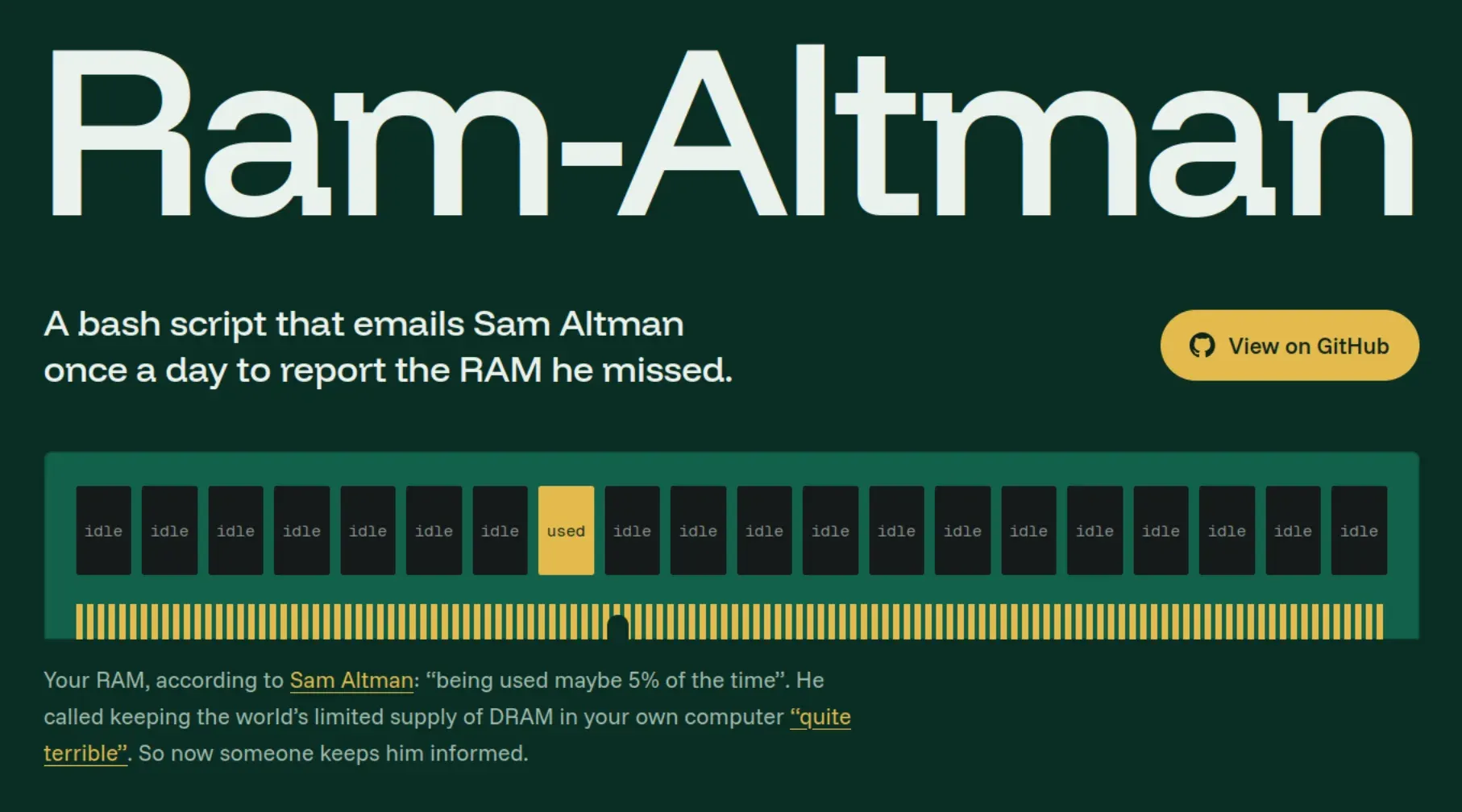
At the same time, specialized hardware acceleration frameworks continue to push the boundaries of local performance. Innovations such as TurboDiffusion demonstrate how video generation acceleration frameworks can dramatically speed up end-to-end diffusion processing on high-end consumer hardware like a single RTX 5090 graphics card. Meanwhile, the developer community continues to channel its trademark humor into critique, as seen with satirical scripts that periodically check local RAM utilization and notify industry executives when consumer hardware resources remain underutilized.
AI Jargon: Abliteration
As the ecosystem surrounding open-weight artificial intelligence models matures, developers have coined specific terminology to describe the technical methods used to customize model behavior. Among these terms is "abliteration," a technique designed to remove refusal behaviors from open-weight language models without necessitating full retraining.
Researchers have observed that a model’s propensity to decline certain prompts is frequently tied to a distinct directional vector within its internal neural activations. By identifying this specific vector and mathematically subtracting it from the model’s underlying weights, researchers can effectively prevent the model from issuing refusals.
This technical reality underscores the profound difference between centralized cloud-based models and open-weight alternatives. While proprietary cloud services enforce rigid guardrails dictated by external providers, open-weight models place those boundaries directly under the control of the end user, allowing developers to configure or remove behavioral restrictions as they see fit.