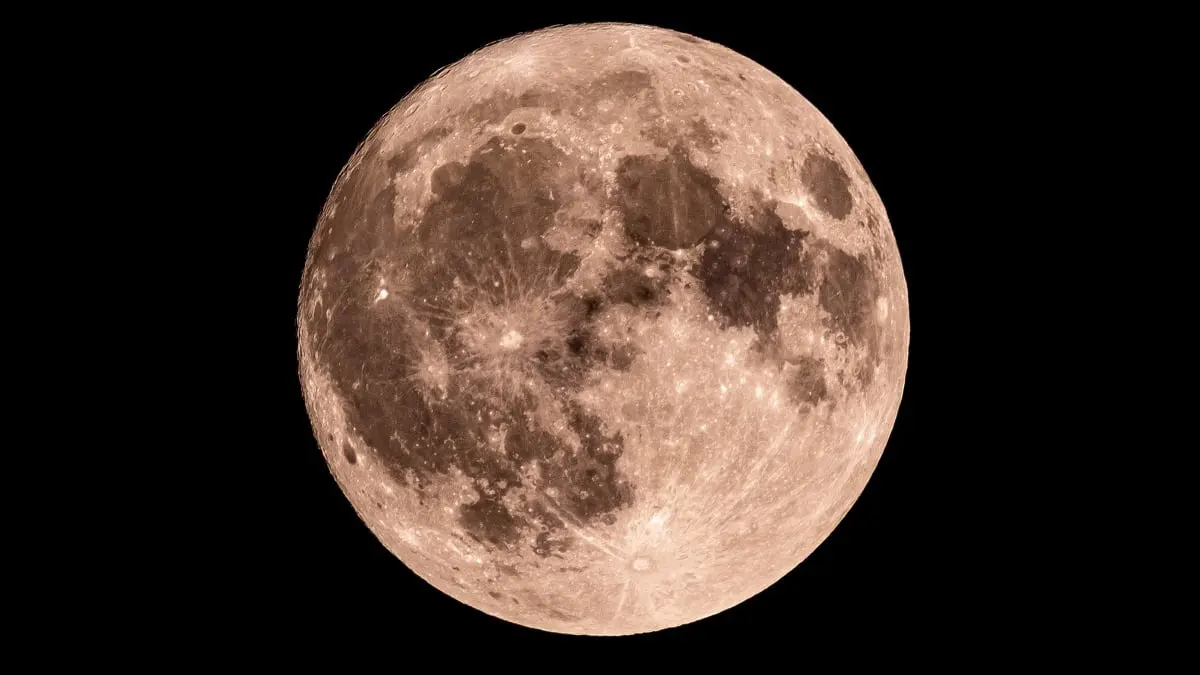
Stargazers and astronomy enthusiasts across the United States turned their eyes toward the night sky to witness the peak of the October Full Moon, an event that unfolded across late October evenings depending on regional time zones. The lunar cycle reached its exact maximum illumination just after midnight Eastern Time on October 26, creating a striking spectacle for night owls. Because of the precise timing of this celestial peak, observers located in the eastern portions of the country experienced the moment right as the new day began, while residents further west enjoyed the brilliant sight during the evening hours of October 25.
For anyone hoping to take advantage of the crystal-clear lunar face during its peak phase, the timing offered an ideal opportunity to study the intricate topography of Earth’s closest celestial neighbor. According to data provided by NASA’s Daily Moon Guide tracker, the lunar body sat squarely in its full phase, boasting a surface that appeared entirely illuminated and one hundred percent visible from an observer’s perspective on Earth. This total illumination flattens the shadows normally cast along the terminator line—the dividing line between day and night on the Moon—yet several prominent features remain strikingly distinct even to the unaided human eye.
What is today’s Moon phase?
The Moon remains officially locked in its vibrant Full Moon phase, a period when the sunlit side faces our planet directly. Without the assistance of visual aids such as binoculars or telescopes, casual observers stepping outside under clear skies have a clear view of several iconic lunar landmarks. Among the most recognizable features visible to the naked eye are the Copernicus Crater, a prominent impact crater with a terraced interior and a brilliant system of bright rays extending across the surface; the Tycho Crater in the southern highlands, famous for its magnificent ray system that stretches across vast distances; and the Mare Crisium, a dark, basaltic plain situated in the Moon’s northeastern quadrant that stands out sharply against the brighter surrounding highlands.
For those equipped with basic binoculars, the observational experience expands significantly, allowing for the spotting of additional geological formations that require a slight magnification boost to properly appreciate. Binoculars bring into sharper focus features such as the Endymion Crater near the northeastern limb, the Alphonsus Crater located within the rugged highlands near the center of the visible disk, and the sprawling expanse of the Grimaldi Basin near the western edge, known for possessing one of the darkest volcanic plains on the entire lunar surface.
Dedicated astronomers and amateur stargazers utilizing telescopes are treated to an even deeper look into lunar history. Through a telescope of moderate power, observers can pinpoint the historic landing sites of the Apollo 15 and Apollo 16 crewed lunar missions, where human explorers once walked and conducted geological surveys decades ago. Additionally, telescope users can trace the rugged contours of the Caucasus Mountains, a sharp and jagged mountain range stretching across the lunar surface, casting distinct shadows when viewed under optimal lighting conditions.
When is the next Full Moon?
As the current lunar cycle steadily progresses toward its next phases, the countdown to the subsequent Full Moon has already begun. Following the glowing spectacle of the October event, the next Full Moon is scheduled to take place on November 24, bringing another round of brilliant nighttime illumination and renewed opportunities for stargazers to point their instruments toward the heavens.
What are Moon phases?
To understand why the lunar appearance shifts so dramatically from week to week, scientists look to the orbital mechanics governing the Earth-Moon-Sun system. The Moon takes approximately 29.5 days to complete one full orbit around Earth, a duration known as a synodic month. Throughout this monthly journey, the visible appearance of the Moon changes continuously from our vantage point on the surface of our planet. As the Moon travels along its orbital path, we observe varying proportions of its sunlit hemisphere. The cycle begins with a slim crescent, builds through the intermediate quarter phases, culminates in the brilliant expanse of the Full Moon, and then gradually recedes before the cycle begins anew.
As explanations from space agencies like NASA emphasize, these distinct phases are caused entirely by the changing geometry of the Moon’s position relative to both Earth and the Sun. As the Moon orbits Earth, the angle between the Sun, the Moon, and our planet shifts constantly, altering how much of the illuminated half we are able to see from our terrestrial viewpoint.
The complete lunar cycle encompasses eight distinct phases that mark the passage of the month. The journey begins with the New Moon, a phase during which the Moon positions itself directly between Earth and the Sun. Because the side of the Moon facing our planet is left entirely in shadow during this alignment, the New Moon remains practically invisible to the unaided eye.
As days pass and the Moon moves along its orbit, a tiny, growing sliver of light becomes visible on its right side for observers situated in the Northern Hemisphere, marking the Waxing Crescent phase. This illuminated portion steadily grows until the First Quarter phase is reached, at which point exactly half of the visible lunar disk is lit on the right side, creating the familiar half-Moon appearance.
The illumination continues to spread across the surface during the Waxing Gibbous phase, where more than half of the Moon is lit up, though it has not yet reached its full capacity. This buildup leads directly into the Full Moon phase, where the entire face of the lunar disk turns toward Earth fully illuminated and completely visible across the night sky.
Following the peak of the Full Moon, the cycle enters its descending half. During the Waning Gibbous phase, the Moon begins losing light gradually along its right side from the perspective of the Northern Hemisphere. This reduction continues until the Third Quarter, also frequently referred to as the Last Quarter, arrives. At this stage, another half-Moon shape appears, but the orientation reverses, with the left side now illuminated by sunlight.
Finally, the cycle draws toward its close with the Waning Crescent phase, during which only a thin, fading sliver of light remains clinging to the left side of the lunar disk before the Moon eventually transitions back into shadow, completing its nearly month-long journey and preparing to restart the timeless celestial cycle once more.