
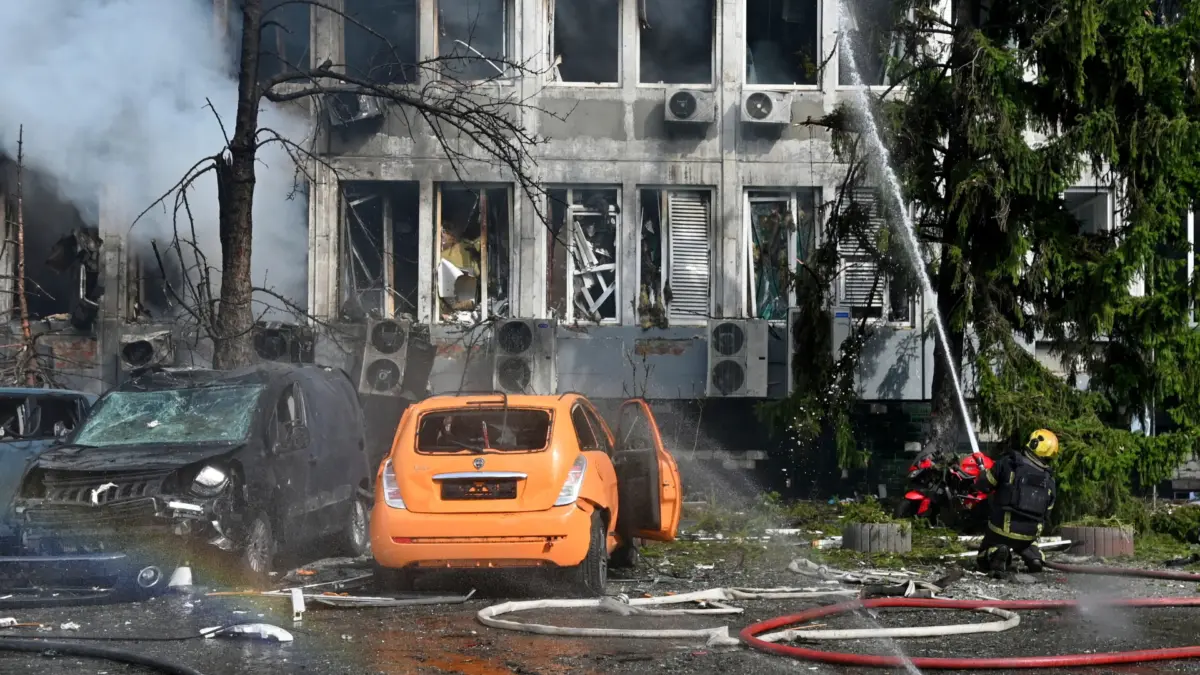
The Russian military has expanded its ongoing campaign against Ukraine by launching direct strikes on critical data centers and telecommunications infrastructure, marking a dangerous new phase in the conflict that increasingly targets the digital backbone of civilian life. According to reports from the BBC, a Russian drone recently struck a prominent data center situated within a central business district of the Ukrainian capital, Kyiv. The targeted strike resulted in significant structural damage to the facility and tragically claimed the lives of four individuals in the surrounding area.
This devastating attack is not an isolated incident. Multiple reports from the region indicate that a broader wave of strikes has targeted various data centers, internet service providers, and network infrastructure hubs located across different parts of Ukraine. The deliberate targeting of these technological facilities represents a calculated shift toward disrupting the digital connectivity that sustains both the civilian population and the national economy under wartime conditions.
Ukrainian President Volodymyr Zelensky condemned the attacks, emphasizing that Moscow’s strategy appears explicitly designed to maximize disruption for ordinary citizens who rely on digital infrastructure for their daily routines, education, and employment. In a strongly worded statement regarding the escalating campaign, Zelensky highlighted the wide-ranging societal impact of these military actions.
"All this affects people’s ability to stay connected, study, work," Zelensky stated, pointing to the essential nature of modern telecommunications and data services. In a subsequent message shared across social media platforms, the Ukrainian leader elaborated on the expanding scope of the military operations conducted by Russian forces, noting that foreign enterprises, domestic businesses, data storage facilities, and independent internet providers are all being treated as legitimate military objectives by the Kremlin.
"The Russians are constantly expanding their escalation operation: American and other businesses, data centers, internet providers—for Russia, all ordinary life is simply a target," Zelensky wrote. He further stressed the urgency of a unified international response to these actions, asserting that it is vital for the global community to hold Russia accountable so that the aggressor genuinely feels the consequences of its systematic campaign of terror against civilian infrastructure.
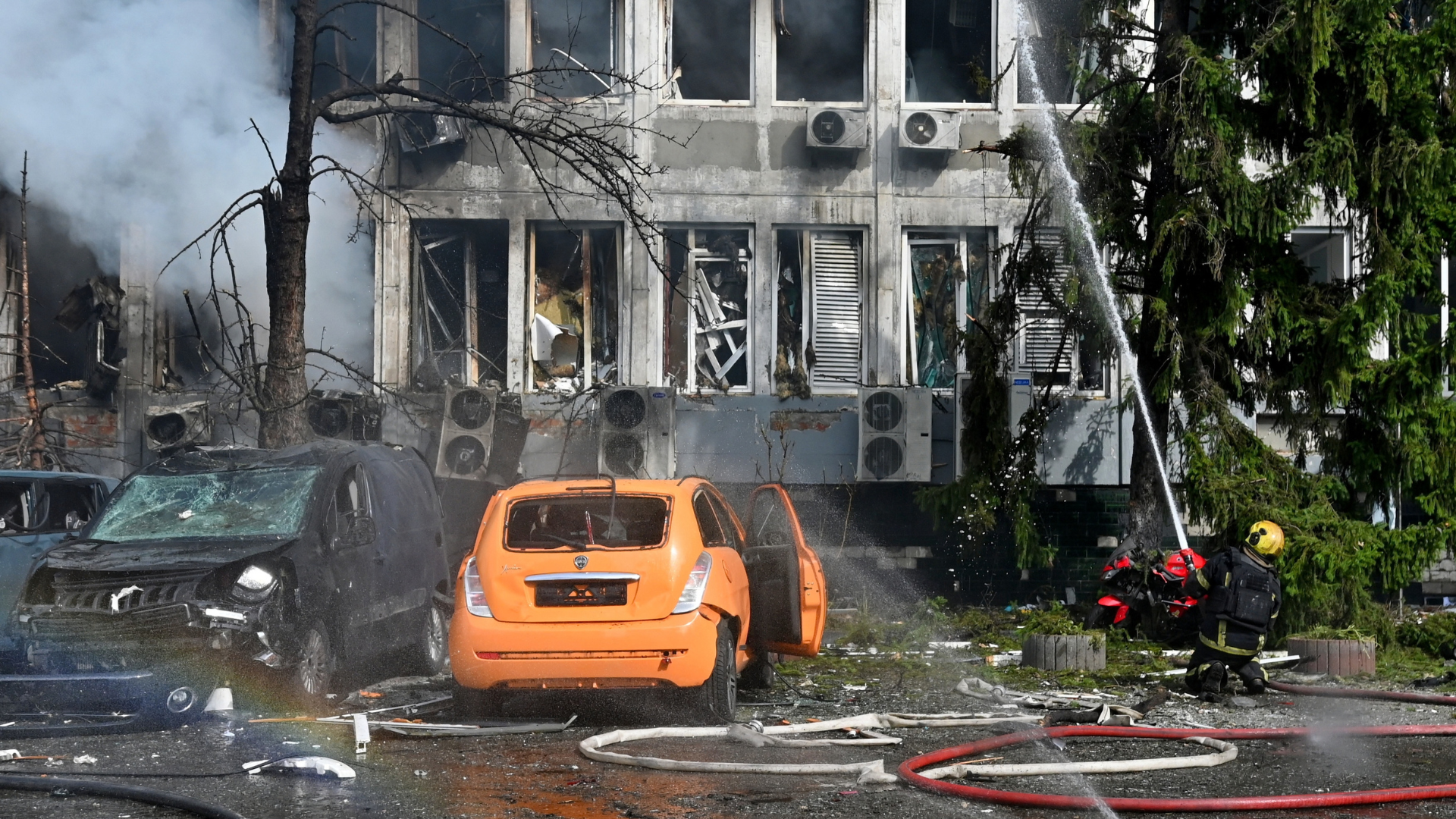
While Ukraine and international observers view these strikes as attacks on civilian life and essential services, the Russian government has offered a contrasting justification for the operation. Moscow formally confirmed that its forces targeted the Datagroup facility in Kyiv, claiming that the site was utilized by Ukrainian military intelligence for operational purposes. Furthermore, Russian military officials indicated that they consider various other data and telecommunications centers across the country as part of their targeting matrix. Specifically, Russian statements have explicitly referenced facilities owned by several major telecommunications and technology companies operating within Ukraine, including New-Telco, United DC, Kyivstar, and Parkovyi.
The inclusion of major telecom operators and commercial data hubs like Kyivstar—which is one of Ukraine’s largest mobile network providers—highlights how deeply intertwined civilian telecommunications networks have become with the broader geopolitical conflict. Kyivstar has previously faced sophisticated cyberattacks and physical disruptions since the escalation of hostilities, yet the explicit military targeting of physical infrastructure housing core servers and network equipment underscores a persistent threat to the country’s national communications framework.
Data centers serve as the critical repositories for digital information, hosting websites, cloud storage, enterprise software, and government databases that keep modern economies functioning. By striking these facilities, military operations risk plunging regional businesses, financial institutions, emergency services, and educational platforms into prolonged disarray. For a nation attempting to maintain a semblance of economic stability and educational continuity amidst relentless conflict, the destruction of physical data facilities compounds the already staggering human and material toll of the war.
International cybersecurity experts and technology analysts have closely monitored the intersection of kinetic warfare and digital infrastructure since the conflict began. While cyberattacks have frequently accompanied traditional military maneuvers throughout the war, the direct physical bombardment of data centers represents a physical manifestation of digital warfare. Targeting the physical real estate that houses cloud infrastructure and telecommunication switches ensures that recovery efforts are far more complex and costly than simply mitigating software-based intrusions or distributed denial-of-service attacks.
As the situation on the ground continues to develop, the international community faces mounting pressure to address the deliberate targeting of civilian-adjacent technical infrastructure. Ukrainian authorities continue to appeal to Western allies, technology corporations, and global governance bodies for advanced air defense systems capable of protecting critical urban centers and high-value technological installations from incoming drone and missile barrages. Meanwhile, local engineers and IT professionals work tirelessly under hazardous conditions to repair damaged networks, restore lost connectivity, and safeguard vital data against further destruction as the conflict enters its latest, highly destructive phase.



Leave a Reply