

The complex and often turbulent history of Series.ly, once one of Spain’s most widely recognized and frequently visited platforms for sharing media links, has taken yet another dramatic turn. Nearly a decade after its original administration faced high-profile legal battles and eventual closure, the resurrected domain has found itself firmly in the crosshairs of Spanish intellectual property authorities and major rightsholders. Despite operating under a completely new team following a 2021 domain auction, the modern iteration of Series.ly has been subjected to aggressive anti-piracy enforcement measures, culminating in a temporary global domain suspension coordinated across international jurisdictions.
The original Series.ly operation famously abandoned its piracy-related links in late 2014, bowing to mounting pressure and legal scrutiny that later resulted in arrests and multi-year courtroom sagas for its initial founders. However, the brand and domain experienced an unexpected afterlife when a new group of operators acquired the domain name at auction in 2021. Maintaining that they possessed no operational or structural ties to the original creators, the new team rebuilt the platform as a community-driven catalog requiring user registration.
Under this new management, Series.ly quickly regained a significant footprint on the web. It grew into a popular destination, pulling in nearly two million monthly visits, with roughly 90 percent of its audience originating from Spain. This rapid resurgence in popularity inevitably drew the attention of the country’s entertainment industry. Rightsholders, refusing to let the revived brand operate without challenge, mobilized to dismantle the platform before its audience could expand further.
From Complaints to Official Investigation
In May, the prominent Spanish film and television producers’ collective EGEDA—Entidad de Gestión de Derechos de Audiovisual—escalated the matter by filing a formal complaint against the site. The grievance was lodged with the Second Section of Spain’s Intellectual Property Commission, an administrative body operating under the umbrella of the Ministry of Culture designed specifically to fast-track the suppression of unauthorized online content.

Prompted by the complaint, an investigator appointed by the Commission launched a review of a sample size consisting of 42 out of the 110 specific titles cited in EGEDA’s filing. The findings of the investigation revealed that 35 of those copyrighted titles could be readily streamed or downloaded directly through links hosted or indexed on Series.ly at the time of the check. Following this verification, the Commission issued a formal notice in July commanding the site operators to voluntarily remove the infringing material. According to regulatory authorities, Series.ly never acknowledged or responded to the takedown directive.
From Google to a Libyan Registrar
With the administrative warnings apparently ignored, the Commission escalated its enforcement strategy at the end of July by sanctioning a broad suite of anti-piracy measures directed squarely at third-party internet intermediaries. The sweeping administrative resolution instructed major search engine operators, including Google and Bing, to completely purge the Series.ly domain from their search indices. Furthermore, the ruling mandated that all Spanish internet service providers boasting a market share greater than one percent implement a strict network-level block against the domain name.
Under the terms of the administrative order, these domestic ISPs were also directed to actively redirect any unsuspecting users attempting to reach the site toward a specialized government landing page. This informational portal was designed to notify visitors that the domain had been blocked by official decree for having illegally facilitated access to intellectual property protected under Spanish law.
The multifaceted order did not stop at domestic search engines and ISPs. It also explicitly targeted technical infrastructure providers, listing the content delivery network Cloudflare and the Ukrainian hosting firm Virtual Systems—whose Kyiv data facilities had recently suffered damage from Russian missile strikes—as entities connected to the site’s deployment. Crucially, the order also named Series.ly’s designated domain registrar, the Libyan Spider Network. Regulators stipulated that these enforcement mechanisms applied not only to the site’s active domain name at the time, but would automatically extend to any alternative domains that the operators might subsequently deploy to circumvent the blocks.

Because administrative orders of this nature require judicial backing under Spanish legal frameworks to ensure proportionality and legality, the resolution was submitted to the courts for final authorization. On September 28, a judge presiding at the Central Court of First Instance in Madrid formally reviewed the file, concluded that the requested intermediary sanctions were entirely proportionate to the scale of the infringement, and approved them as requested by the Commission.
The Libyan Registrar Acts
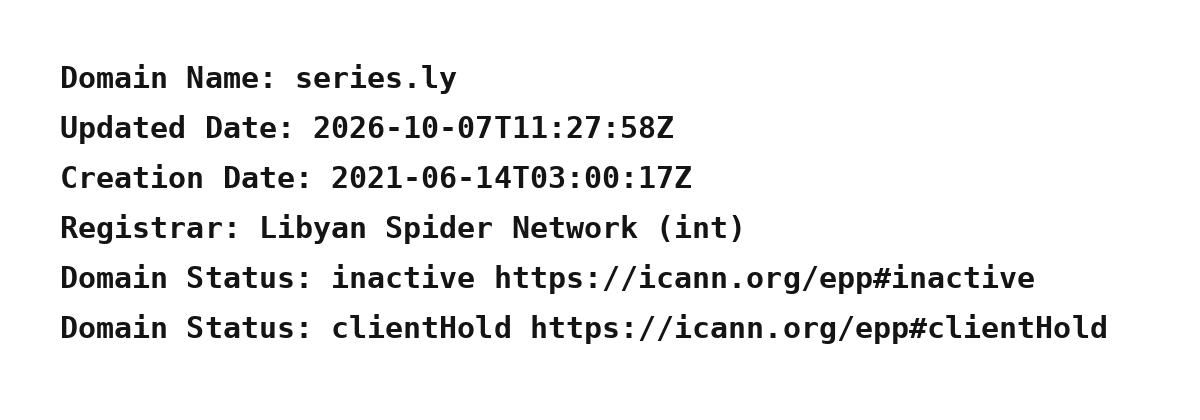
Little more than a week following the judicial sign-off, the international dimensions of the enforcement action materialized. Early in the month, Series.ly abruptly vanished from the active web after its domain registrar, Libyan Spider, intervened directly.
Updated WHOIS records for the domain demonstrated that series.ly had been shifted to a restrictive "clientHold" status. This specific administrative flag is applied unilaterally by domain registrars to effectively force a domain offline by removing its records from the primary top-level domain zone—in this case, the .ly zone. Consequently, requests directed at the domain failed to resolve, plunging the site into digital darkness.
While Libyan Spider declined to issue a public statement regarding the suspension, representatives for Series.ly confirmed that the registrar had cited the Spanish administrative order and the corresponding court ruling. The notice reached the site’s current operators through the digital auction house that had originally sold them the domain, which operates locally as an authorized reseller for the Libyan registrar.
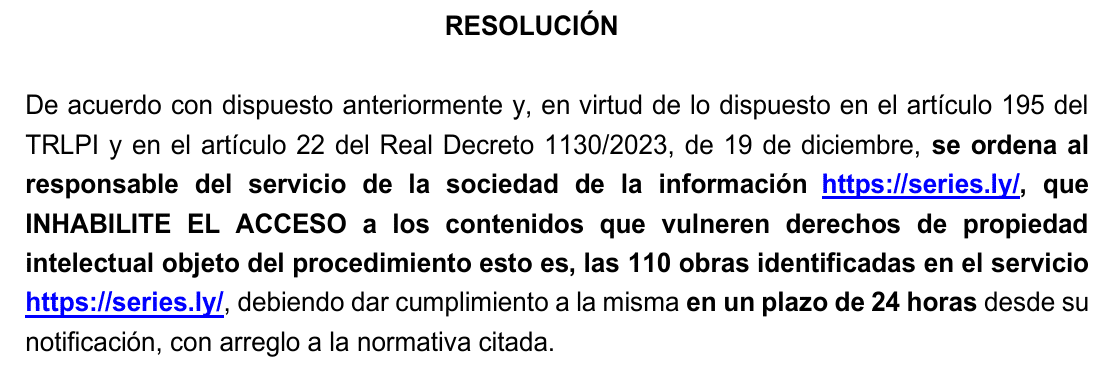
"The reason they gave us was a Spanish copyright resolution and a court order authorizing suspension measures against the domain," the Series.ly operator explained in statements translated from Spanish.
While it remained immediately unclear whether all other named intermediaries, such as domestic ISPs and search engines, had fully implemented their respective blocks, the underlying judicial authorization remained fully valid and enforceable.
Interestingly, the void left by the sudden suspension of Series.ly was almost immediately met with the appearance of a fresh online destination operating under the brand name Cinubo. Simultaneously, the official Telegram and Discord community channels previously utilized by Series.ly were rapidly rebranded to reflect the new Cinubo identity, suggesting that the operators were positioning a fallback presence.
No Plans to Appeal
Reflecting on the swift enforcement action, the site’s operator insisted that they had failed to receive adequate advance warning before the domain was pulled offline. An investigative email dispatched by EGEDA had reportedly been routed to an internal address, while the primary public contact email listed visibly on the platform’s portal went unaddressed prior to the registrar’s intervention.
Defending the operational philosophy of the platform, the operator maintained that Series.ly functions strictly as a non-profit endeavor that has failed to generate any revenue since its modern relaunch. Emphasizing a structural distinction common among link-aggregation services, the operator noted that the platform does not physically host video files on its own servers; instead, the links directing users to external viewing options are contributed entirely by the active community of registered users.
"Our position is that complaints about those video files should be directed at the services that host or distribute them," the operator argued. "We think it’s disproportionate that a complaint about content hosted by third parties ends up getting our entire domain suspended, including email and the personal library features."
Despite expressing frustration over the broad scope of the punishment, the operator stated that there were no immediate plans to mount a formal legal appeal against the Spanish ruling. They pointed to the fact that the corporate entity behind the project is legally domiciled in the island nation of Nevis, raising substantive questions regarding the extraterritorial reach and jurisdiction of Spanish administrative mandates.
"We question whether a procedure handled in Spain justifies suspending our domain worldwide, which also affects email and services that have nothing to do with the works in question," the operator noted.
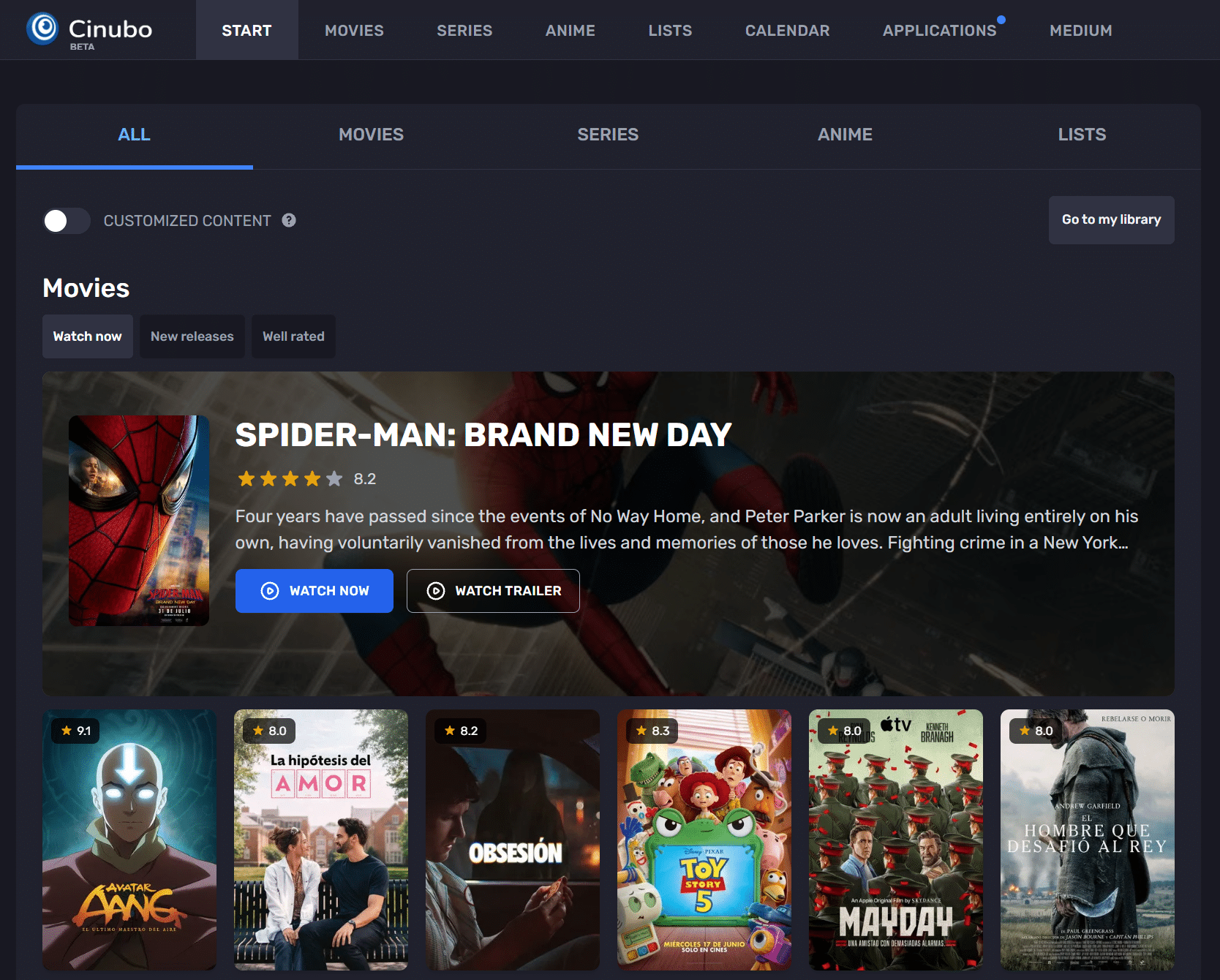
Even so, the legal battle may be far from concluded. The blanket nature of the Spanish regulatory order explicitly encompasses any fresh domain names deployed for identical distribution purposes—a provision that could theoretically ensnare the newly minted Cinubo brand as well. Furthermore, as domestic ISPs and search platforms continue to process the broad judicial directives, the technical pressure on the operators remains acute.
Days after the initial takedown, however, a surprising administrative reversal occurred. The series.ly domain unexpectedly returned to the active control of its owner after the registrar lifted the suspension status. Nevertheless, the operators stressed that the domain could no longer be utilized to share or link to copyright-infringing content. Instead, the resurrected Series.ly web portal transitioned into a static site dedicated entirely to documenting the historical timeline and evolution of the domain, permanently shedding its status as an active media-streaming portal.


Leave a Reply