
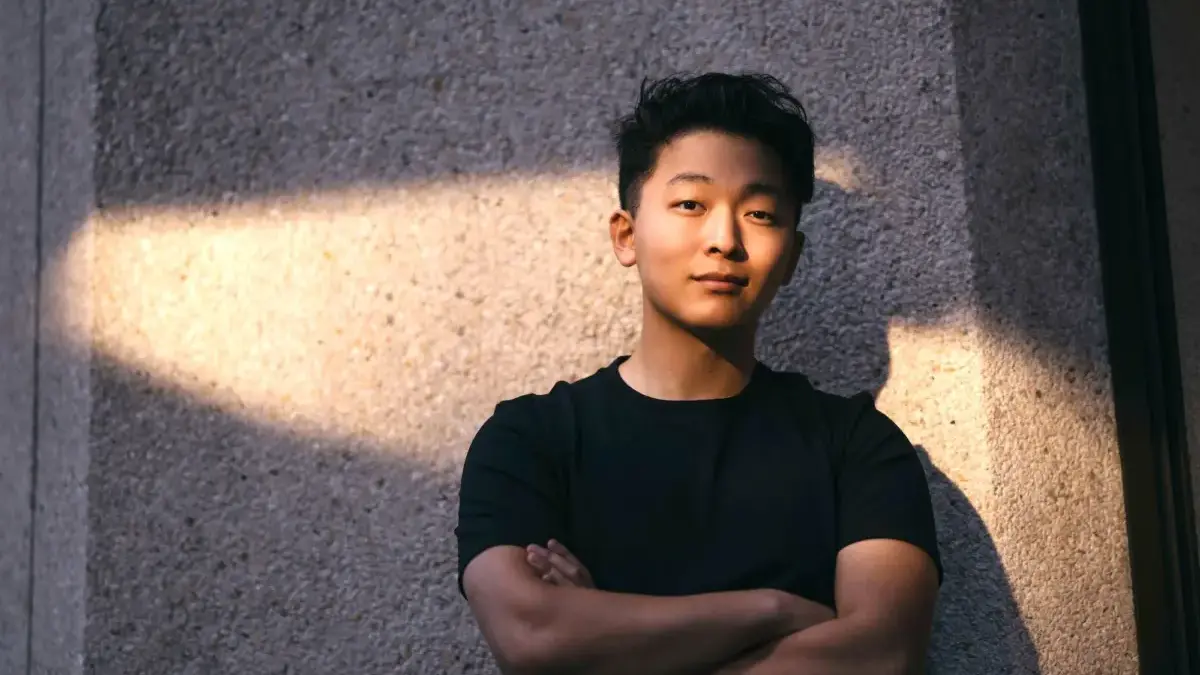
When self-taught coder Sigil Wen was just 17 years old, he made a life-altering move to Silicon Valley, embedding himself directly into the epicenter of the artificial intelligence boom. He took up residence in an AI hacker house alongside famed researcher Andrej Karpathy, immersing himself in an environment that would prove to be a foundational crucible for the modern generative AI landscape. During his time there, Wen hacked, coded, and collaborated shoulder-to-shoulder with a cohort of peers who have since grown to become some of the most influential figures and founders in the entire technology sector. Among them were Aravind Srinivas, who would go on to found the conversational search engine Perplexity, and Noam Brown, a key researcher at OpenAI.
That early immersion meant Wen was uniquely positioned at the bleeding edge of the technology, testing and tinkering with early iterations of foundational AI tools that would soon captivate the global public. He experimented with a prototype chatbot shared by Anthropic co-founder Ben Mann that would eventually evolve into Claude, as well as an early image generator developed by David Holz that later blossomed into Midjourney. His hands-on technical exploration also extended to the early development stages of OpenAI’s GPT-3 and the widely adopted image generator Stable Diffusion. His raw talent did not go unnoticed by industry veterans; prominent investor, author, and entrepreneur Naval Ravikant hired the young coder to work on Airchat, Ravikant’s audio-focused social network designed to rival Clubhouse.
For sheer amusement and technical curiosity, Wen even engineered a way to get GPT-2 running locally on his Apple Watch, a feat that underscored his deep affinity for pushing hardware to its absolute limits. Reflecting on those formative months, Wen described the experience to TechCrunch as a genuinely magical time, saturated with breakthrough moments and a collective sense of historic technological shifts.
Now, having traded traditional academic pathways for practical creation as a Thiel Fellow—the prestigious program established by billionaire investor Peter Thiel that provides young visionaries with capital and freedom to pursue entrepreneurial projects instead of attending college—Wen is stepping forward with his own major contribution to the ecosystem. On Monday, Conway Research, the startup Wen founded, officially launched an invite-only beta of Underdog, introducing what is shaping up to be one of the most private and secure consumer-facing AI assistants that Silicon Valley has yet to offer to the market.
Unlike the vast majority of mainstream AI tools that rely on continuous cloud connectivity and massive remote server farms, Underdog is engineered to run wholly on-device. This architectural design ensures that a user’s sensitive personal data remains strictly on the hardware they already own and physically control. At launch, the application is compatible with Apple Macs and Windows PCs, with dedicated versions for Linux, iPhone, and Android slated to roll out in the near future.
To achieve the performance required for a fluid user experience entirely on local hardware, Wen built Husky, a proprietary inference engine specifically optimized to run AI models with exceptional speed. According to Wen, Husky achieves its performance advantages by drastically reducing the amount of data transferred back and forth between a computer’s main central processing unit and its graphics processing unit, streamlining the computational pipeline in a way that sets it apart from other existing on-device inference engines.
Underdog also incorporates robust, foundational security layers designed to protect user privacy at every level. Among these features is advanced client-side encryption for the authentication keys granting Underdog access to a user’s sensitive accounts, such as email and other authorized services.
Despite these impressive technical optimizations, Underdog operates on a significantly smaller scale than the massive, state-of-the-art frontier models hosted in sprawling data centers by big tech conglomerates. The application currently utilizes a 27-billion parameter reasoning model that has been carefully fine-tuned from Qwen3.8 27B. Wen argues that this compact model punches well above its weight class, comparing favorably in several performance benchmarks to Claude Opus 4.6, a model that represented the pinnacle of industry performance just six months prior. By his estimation, this level of capability is more than sufficient to handle the vast majority of everyday computational tasks that typical users expect from an AI assistant, ranging from comprehensive shopping research to solving complex math homework questions.
"You don’t need to sacrifice your privacy for the capability because they’re just as capable," Wen asserts, expressing strong confidence in the trajectory of local computing. He adds that small, on-device models will inevitably continue to grow more sophisticated and capable over time as hardware improves and optimization techniques evolve.
Perhaps the most disruptive and intriguing aspect of Underdog is its unorthodox early business model, which diverges sharply from the subscription-heavy and ad-driven paradigms dominating the current tech landscape. The application will be completely free for users at the outset and will never rely on advertising monetization. Because the artificial intelligence runs locally on the consumer’s own machine, Underdog bypasses the astronomical operational overhead associated with paying a third-party cloud provider for continuous server-side inference. Explaining the economic viability of this approach, Wen noted that his structural costs are so exceptionally low that he does not need to charge a monthly subscription fee just to keep the service running.
Instead, with backing from high-profile angel investors including Stripe co-founder Patrick Collison, Wen is borrowing a proven financial playbook from the fintech era. Underdog plans to generate revenue by taking a tiny percentage cut from payment transactions that the AI assistant securely facilitates using Stripe’s robust payment infrastructure, operating essentially like an interchange fee. This economic alignment means that the AI assistant has no financial incentive to harvest, harvest, or monetize user data. The commercial interests of Underdog remain directly aligned with the user, functioning much like a trusted bank or credit card provider rather than an ad-tech surveillance engine.
This privacy-first economic model stands in stark and deliberate contrast to the underlying business motivations of many other players currently competing in the AI assistant space. The privacy policies of numerous competing consumer AI tools explicitly permit the collection of intimate user data, information that can potentially be monetized, shared with advertisers, sold to third parties, or repurposed to train subsequent generations of frontier models.
For everyday consumers, that silent trade-off of personal data for utility can carry profound risks, particularly given the intimate nature of modern AI interactions. A genuinely useful AI assistant often requires access to the most sensitive details of an individual’s personal and professional life, ranging from private medical conditions and confidential financial records to personal schedules and family data.
As Wen articulated in what he calls his AI manifesto, the fundamental question driving his startup is both simple and provocative: "Why should using AI require surrendering your private information?" Expanding on this personal philosophy in his conversation with TechCrunch, Wen emphasized the sincerity behind his vision, stating that he is ultimately building a product that he wants to use himself and one that he would be genuinely proud for his future children to interact with.
Conway Research, the parent startup behind Underdog, has secured substantial validation from the venture capital community. Beyond Patrick Collison’s personal investment, Conway is backed by Andreessen Horowitz through partner Chris Dixon, alongside Khosla Ventures, Hummingbird, SV Angel, and the Anthology Fund—a specialized partnership fund established jointly by Menlo Ventures and Anthropic. The company’s funding round also features an elite roster of angel investors, including Vercel founder Guillermo Rauch, Noam Brown, and Deedy Das, cementing deep industry support for Wen’s vision of private, decentralized artificial intelligence.


Leave a Reply