
The modern artificial intelligence boom is frequently discussed in terms of raw algorithmic breakthroughs, massive funding rounds, and sprawling data centers. Yet beneath the high-level software models lies a grueling engineering challenge: the physical hardware infrastructure required to train and run these systems. As AI models scale to unprecedented parameters, the traditional limitations of computer architecture are colliding with software design. AI workloads do not typically run on a single supercomputer built from a monolithic block of silicon; instead, they rely on intricate clusters of hardware pieced together over high-speed networks.
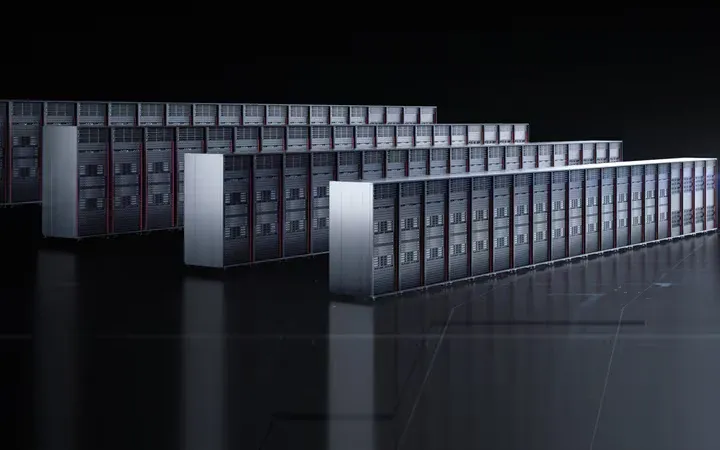
This is where the concept of the SuperPoD enters the equation. A SuperPoD—frequently referred to as a supernode—is a tightly coupled, scale-up computing system that connects numerous individual compute nodes so closely that software can utilize resources across the entire arrangement as if it were a single, unified machine. Historically, the operating systems capable of binding these disparate nodes into a singular cohesive entity have been strictly proprietary, developed behind closed doors by major hardware vendors.
However, the open-source Linux community is making a definitive push to change that landscape. The openEuler open-source Linux distribution ecosystem has released versions designed specifically to tackle this challenge, aiming to run entire clusters of AI-focused hardware as a unified system under an open-source governance model. With community adoption steadily growing, this latest architectural shift represents a significant evolution in how operating systems manage massive, distributed computing power.
The Growing Need for a True Cluster Operating System
Linux has long provided the foundational base for some of the world’s most robust operating systems. From embedded devices to massive cloud servers, Linux excels at orchestrating computational tasks. However, its traditional scope has largely been confined to a single physical machine. A standard Linux installation schedules memory, manages the central processing unit, and handles hardware devices contained within a single physical box. If an enterprise or researcher requires more computational horsepower, the standard approach involves adding another discrete box and wiring the two together over a traditional network interface.
While this decentralized, networked approach has powered the internet for decades, the modern AI ecosystem demands a paradigm shift. Today’s massive language models and heavy neural network workloads run across entire racks of interconnected machines that must behave seamlessly as one giant computer. In this environment, the network connections linking the separate servers frequently become the primary bottleneck limiting overall system performance. Latency and bandwidth constraints between nodes can stall expensive processors, leaving multi-million-dollar hardware sitting idle while waiting for data to traverse the network.
To overcome these physical limitations, the industry has gravitated toward architectures like the Huawei-developed SuperPoD. By binding machines together with specialized, high-bandwidth interconnects, software can bypass traditional networking overhead. openEuler, functioning as an open-source Linux distribution ecosystem, has oriented its recent software releases squarely around this capability. By open-sourcing the code necessary to operate a SuperPoD as a single system, the project is opening up high-end infrastructure management to a broader community of developers and researchers.

A Linux Distribution Built for the SuperPoD Architecture
The release of openEuler 24.03 LTS SP3 marked a critical milestone as the first iteration of the distribution engineered specifically to support SuperPoD configurations. Industry observers and project maintainers have noted that this release introduces pioneering OS-level support for this specialized hardware topology.
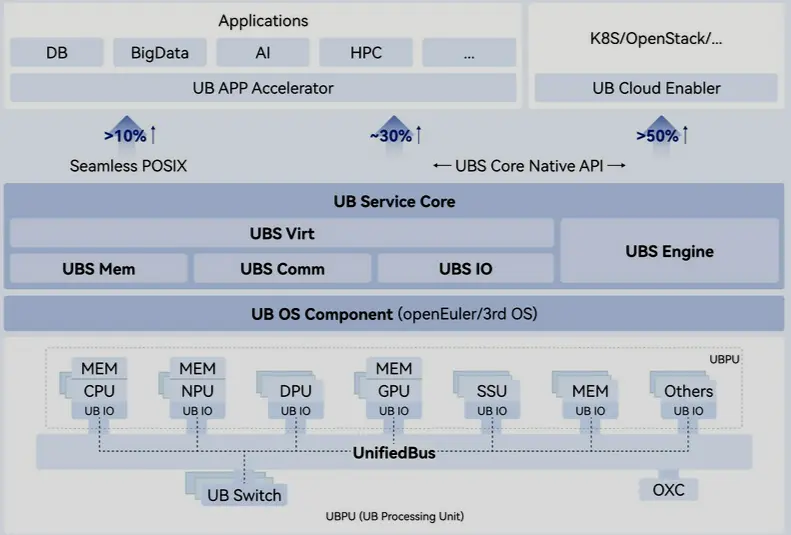
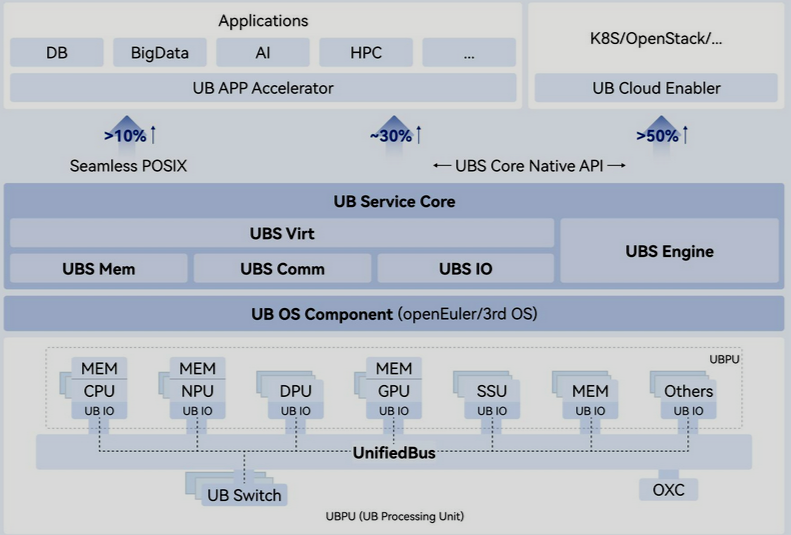
The technical mechanism enabling this cross-node coordination relies on a combination of hardware and software components. Specifically, openEuler supports SuperPoD architectures through UnifiedBus and its associated operating system software stack. While UnifiedBus provides the high-speed physical and logical interconnect layer, the UB OS Component and the UB Service Core deliver the necessary operating system and cluster-level services operating directly on top of that interconnect.
In a conventional Linux deployment, memory allocation and device scheduling are strictly bound to the local node. By contrast, the UnifiedBus and openEuler’s integration layers allow applications running on one node to directly access memory banks and hardware accelerators sitting on entirely different, remote nodes almost as if those resources were physically attached to the local motherboard. This effectively shatters the traditional single-machine boundary, allowing the operating system to schedule and coordinate distributed hardware resources as a unified, monolithic pool.
This architectural shift carries profound implications for AI hardware performance. Internal testing conducted by the openEuler project indicates that this peer-to-peer UnifiedBus design can yield substantial performance improvements. According to the project’s benchmarks, application performance in large-scale AI compute scenarios experiences a boost ranging from 30 to 50 percent, primarily by alleviating the communication bottlenecks that traditionally plague distributed cluster training.
The Origins and Evolution of the SuperPoD OS Ecosystem
Understanding the significance of this development requires looking at the origins of the distribution itself. openEuler originated from Huawei’s proprietary in-house operating system, EulerOS, before being transitioned into an independent, open-source distribution stewarded by the OpenAtom Foundation. Over the years, the project has expanded its hardware reach considerably, supporting a wide array of processor architectures including Arm-based chips such as Huawei’s Kunpeng, standard x86 processors, and the open-standard RISC-V architecture. By the close of 2025, the openEuler ecosystem had surpassed 16 million cumulative installations, demonstrating broad enterprise traction.
The underlying technologies powering the SuperPoD integration—namely SuperPoD itself and the UnifiedBus architecture—originated as Huawei innovations deployed across various advanced computing lines, including Atlas artificial intelligence systems and TaiShan 950 SuperPoD configurations designed for general-purpose high-performance computing. By open-sourcing the UB OS Component within the openEuler community, the project has democratized access to software stacks that were previously locked within proprietary enterprise ecosystems.
Intelligence BooM and the Push for Full-Stack AI Solutions
Beyond the core operating system level, openEuler is aggressively expanding its footprint into higher-level artificial intelligence workflows through an initiative known as Intelligence BooM. This project serves as an open-source, full-stack AI solution designed to streamline the deployment and management of machine learning infrastructure.
In this context, a full-stack approach means that instead of offering isolated tools or libraries, the platform covers the entire software spectrum required by modern AI workloads, starting from the low-level operating system kernel and extending all the way up to application execution frameworks. The goal is to provide researchers and enterprise users with an out-of-the-box environment tailored for training and running large-scale models, thereby sparing engineers from the complex and repetitive task of assembling disparate software libraries from scratch.
Beneath the user-facing layers, openEuler continues to refine the intricate plumbing required to make massive hardware clusters run efficiently. This includes advanced capabilities such as heterogeneous compute fusion, which combines different types of silicon chips into a single usable resource pool, and co-computing, which allows central processing units and neural processing units to tackle collaborative tasks simultaneously. Furthermore, the system incorporates advanced memory pooling across disparate chips and physical machines, along with dynamic workload packing and accelerator slicing to ensure that expensive artificial intelligence accelerators maintain high utilization rates.
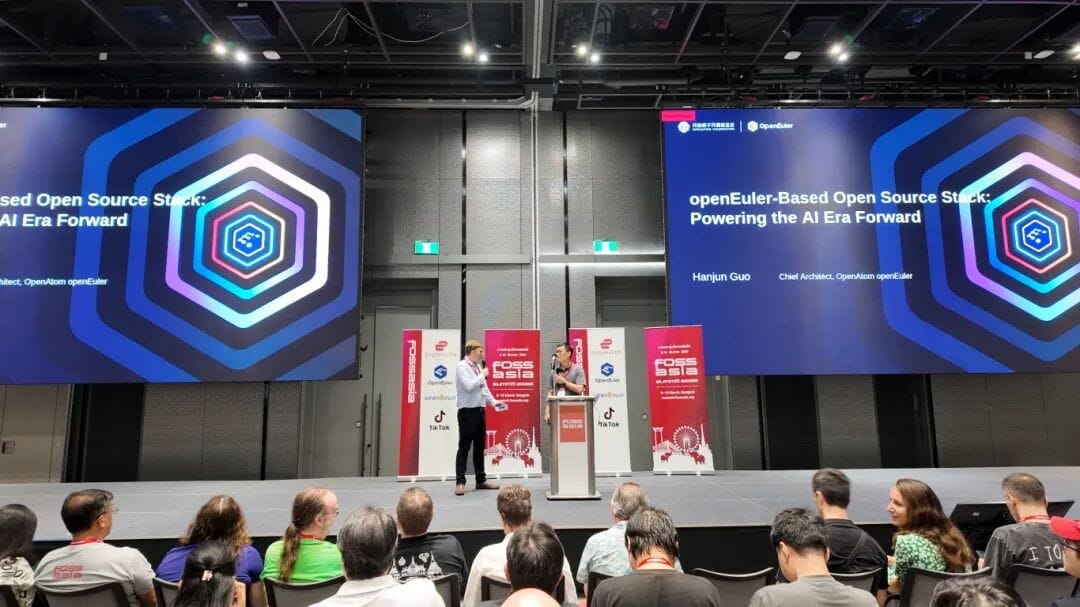
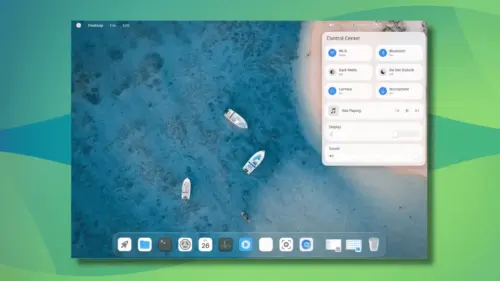
For everyday users and developers, the ecosystem also extends to desktop environments through initiatives like DevStation. This desktop build of openEuler ships with an integrated AI assistant designed to handle routine administrative tasks, software installations, and environment configurations via natural language processing commands. The project’s maintainers have signaled ongoing efforts to test these developer-focused tools in real-world deployment scenarios to evaluate their utility for general-purpose software engineering.
As the global artificial intelligence landscape continues to evolve, with a significant proportion of open-source and open-weight models emerging from Asian research institutions and enterprises, foundational infrastructure projects are drawing intense industry scrutiny. By keeping its enterprise-focused clustering capabilities and user-facing tools open source, openEuler is charting a distinct path for large-scale infrastructure management, making it an ecosystem that hardware and software engineers will continue to monitor closely.
Leave a Reply