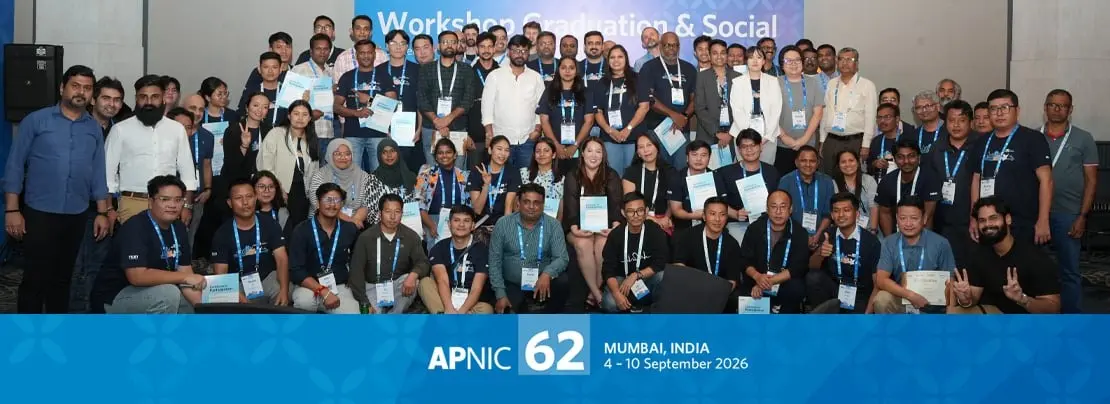
More than 50 network engineers, operators, and technical professionals from across the region recently gathered to participate in intensive, hands-on training sessions at the APNIC 62 conference. Designed to address the evolving complexities of modern internet infrastructure, the workshops focused heavily on building practical competencies in critical areas such as network security, operational automation, and next-generation service provider routing.
The comprehensive educational program featured two specialized APNIC Academy workshops, which collectively drew 55 participants, alongside a separately coordinated routing workshop hosted by INNOG that welcomed an additional 27 attendees. Together, these concurrent training streams provided a collaborative environment where technical staff could bridge theoretical concepts with real-world operational challenges, ultimately strengthening the reliability, security, and scalability of networks throughout the Asia Pacific region.
Improving Network Security Capability
As cyber threats continue to grow in sophistication and scale, equipping operators with robust defensive strategies remains a primary objective for regional technical bodies. The Network Security Workshop at APNIC 62 was structured to tackle these challenges directly, offering participants a deep dive into crucial defensive methodologies and operational protocols.
Led by local certified trainer Sourav Satpathy alongside APNIC instructional staff, the curriculum covered a wide range of essential security topics. Attendees explored advanced cryptography, infrastructure security principles, Distributed Denial-of-Service (DDoS) mitigation strategies, and comprehensive packet analysis techniques. The sessions also delved into intrusion detection systems, Border Gateway Protocol (BGP) operational security, Domain Name System (DNS) security extensions, routing security utilizing Resource Public Key Infrastructure (RPKI), and the deployment of secure IPsec virtual private networks (VPNs).
Through rigorous hands-on exercises conducted in simulated network environments, participants gained valuable experience in identifying underlying vulnerabilities, enhancing network monitoring and detection capabilities, and deploying resilient security frameworks designed to safeguard critical infrastructure against modern threats.
The practical focus of the curriculum resonated strongly with attendees, particularly those operating within resource-constrained environments. One participant emphasized the immense value of the workshop’s emphasis on open-source solutions, noting that many subsidiary companies within their corporate network lack the financial resources to acquire commercial security software. By focusing on accessible, high-utility open-source tools, the workshop empowered these engineers to construct robust security capabilities within strict budgetary limits.
Another attendee outlined plans to translate the newly acquired knowledge into broader national and institutional initiatives. By engaging government network operators to encourage the deployment of current security best practices, they aim to significantly reduce systemic vulnerabilities. Furthermore, this participant expressed a strong commitment to collaborating with the APNIC team to conduct similar technical training workshops at the national level, fostering a culture of continuous learning and collective defense.
These testimonials underscored the broader impact of such educational initiatives, demonstrating that targeted technical training does not merely benefit individual enterprises, but actively elevates the baseline operational security and resilience of the entire regional digital ecosystem.
Advancing Network Automation Skills
To manage the exponential growth of internet traffic and the increasing complexity of modern architectures, network operators are increasingly turning to automation to eliminate repetitive manual tasks and minimize human error. Recognizing this industry shift, the Network Automation Workshop was delivered using a Train-the-Trainer (TTT) format, led by instructors Dave Phelan and Makito Lay.
The workshop was meticulously designed to help participants establish scalable, reliable, and standardized approaches to network operations through code and automated workflows. Attendees explored foundational automation principles, configuration management strategies, the SALT framework, and effective use of YAML and Jinja templating languages. Additional modules covered inventory management systems, event-driven automation architectures, and rigorous validation workflows.
By utilizing industry-relevant tools and methodologies during practical lab sessions, participants learned how to translate automation concepts into actionable solutions for their home networks. The Train-the-Trainer methodology played a pivotal role in the workshop’s design, ensuring that attendees would not only master the technical material themselves, but also acquire the pedagogical tools necessary to disseminate this knowledge effectively within their own organizations and local operator communities.
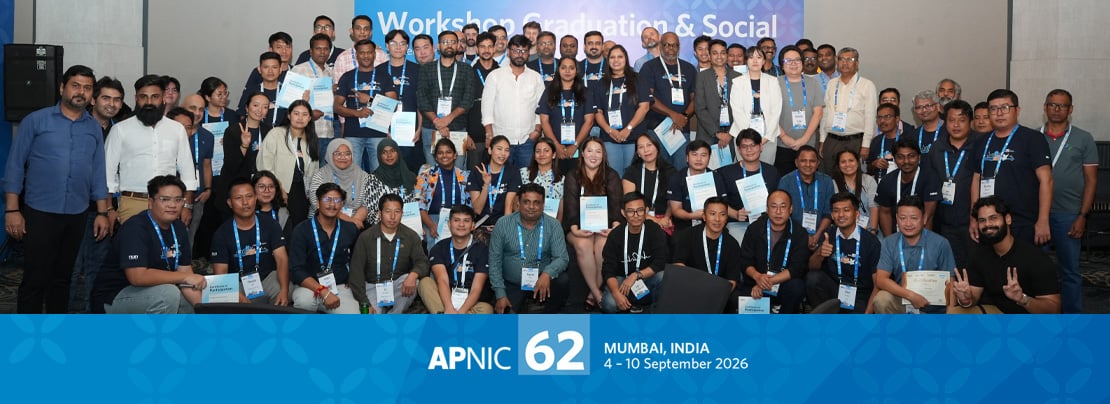
The immediate applicability of the automation curriculum was highlighted by several attendees who noted how the training would directly influence their ongoing professional projects. One engineer shared that the skills acquired in SaltStack would enable them to transition from writing basic scripts for repetitive Security Operations tasks to developing a comprehensive, end-to-end incident response automation system.
Operational efficiency was a recurring theme among telecommunications professionals attending the session. An engineer from Bhutan Telecom pointed out that adopting the taught automation practices would significantly reduce manual intervention and configuration errors within their core infrastructure. Over the long term, these skills will be leveraged to streamline network configuration, enhance monitoring systems, and automate other routine operational duties. Because the session followed a Train-the-Trainer model, the participant noted a clear pathway to sharing these competencies internally, thereby accelerating automation adoption across their entire network operations team.
Similar sentiments were echoed regarding community-level impacts. An attendee representing the Myanmar network operator group and MMIX explained that the training would help improve operational consistency, lower the risk of configuration mistakes, and allow for the safer deployment of network changes. By bringing these lessons back to local engineers and the broader MMNOG community, the participant aims to help cultivate a wider pool of automation expertise within the country.
Exploring Next-Generation Service Provider Routing
Complementing the APNIC Academy sessions, APNIC 62 also hosted the Next-Gen Service Provider Routing Workshop, organized in collaboration with INNOG and delivered by industry experts Paresh Khatri, Thomas Corre, and Bastien Claeys.
Tailored specifically for experienced service provider engineers, this intensive three-day program focused on advanced technologies that are rapidly reshaping modern carrier-grade networks. The curriculum provided deep technical insights into Segment Routing (SR), Ethernet VPN (EVPN), streaming telemetry, and Containerlab. These architectural advancements are increasingly vital for simplifying complex network operations, improving end-to-end visibility, and meeting the rigorous service delivery demands of contemporary enterprise and consumer markets.
The workshop successfully balanced theoretical lectures with extensive, hands-on lab exercises, allowing participants to experience firsthand how these sophisticated technologies perform in operational environments. Attendees worked through practical deployments of segment routing implementations, advanced EVPN services, Flex-Algo traffic engineering, and telemetry-driven monitoring architectures.
This specialized training reflected ongoing transformations within the telecommunications sector, where traditional routing paradigms are being augmented or replaced by programmable, highly observable architectures. By engaging with realistic lab topologies that mirror production service provider environments, the participants gained crucial competencies that will enable them to design, deploy, and maintain the high-performance backbone networks of tomorrow.
Building Regional Capability
The success of the workshops at APNIC 62 highlights the enduring demand for high-quality, practical technical education within the global internet operations community. By immersing themselves in network security, operational automation, and next-generation routing, participants acquired tangible skills that can be deployed immediately within their respective organizations.
Feedback gathered throughout the event consistently reaffirmed the immense value of educational frameworks that successfully merge foundational theory with immersive, real-world operational scenarios. Furthermore, the strong emphasis on knowledge sharing—particularly through the Train-the-Trainer initiatives—ensures that the benefits of the conference extend far beyond the immediate group of attendees, rippling outward to colleagues, local network operator groups, and wider technical communities across the Asia Pacific region.
As technical landscapes continue to evolve at a rapid pace, initiatives like the APNIC Academy workshops remain essential for fostering a secure, resilient, and highly reliable internet infrastructure. Professionals interested in developing their technical expertise can explore upcoming training schedules and register for future regional sessions directly through the APNIC Academy platform.