
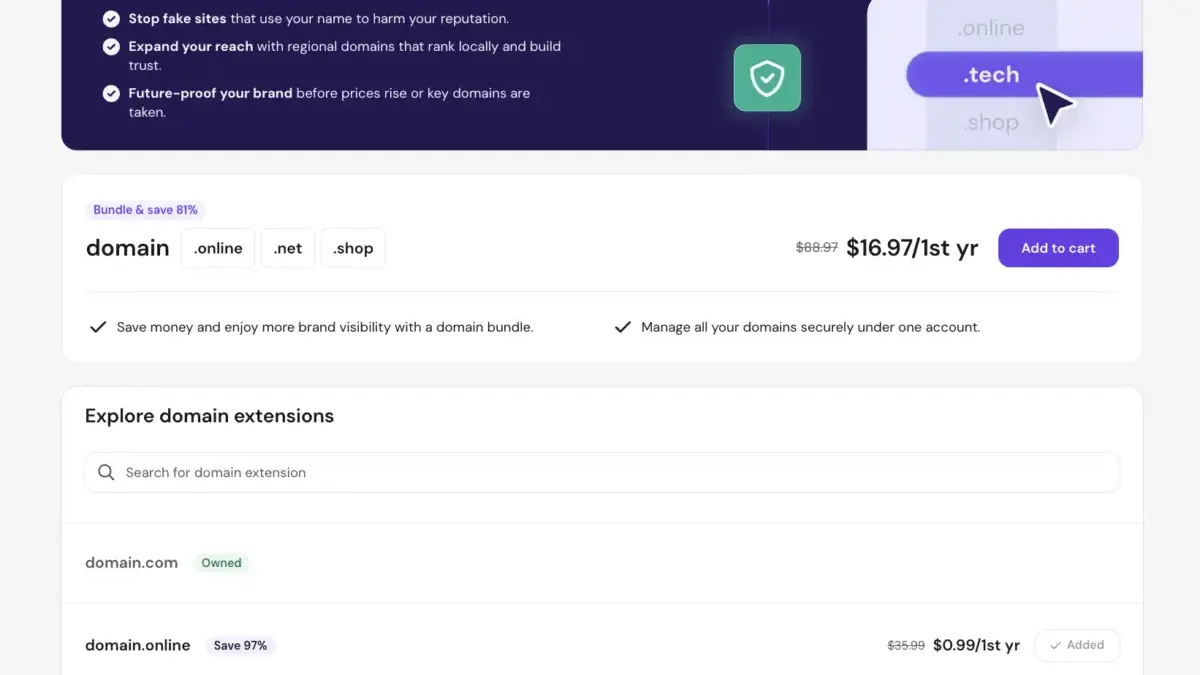
In the digital landscape, the question of whether a business should invest in multiple domain extensions is a recurring strategic debate for brand owners, web developers, and marketing professionals. While a single web address is often considered standard for a fledgling enterprise, established organizations frequently weigh the defensive benefits of snapping up variations against the mounting operational costs of maintaining a bloated portfolio. Industry experts and domain management specialists suggest that while a comprehensive approach to domain acquisition can safeguard a brand against malicious actors, an indiscriminate buying spree offers little intrinsic value and can quickly drain resources.
The fundamental rule of domain registration remains strictly first-come, first-served. Every extension represents a distinct registration of an identical name under a separate top-level domain, or TLD. For instance, if an enterprise secures a primary address, any other entity—be it a direct competitor or an opportunistic squatter—can potentially acquire the remaining variations, such as alternative endings or regional country-code suffixes. This structural reality forces businesses to carefully evaluate when defensive registrations are truly necessary and when a single web address remains entirely sufficient.
When Multiple Domain Extensions Become a Necessity
Strategic analysts generally categorize the need for multiple domain extensions into four distinct operational scenarios: safeguarding core brand identity, addressing specific international target markets, capturing common user misspellings, and eliminating potential customer confusion. Each of these motivations serves to mitigate a concrete risk to a business’s reputation and bottom line. When none of these factors are present, financial resources are invariably better directed toward core business development and site optimization.
Brand protection and the mitigation of typos or consumer confusion share a common underlying risk profile. Domain squatters routinely monitor the market for emerging business names, registering popular variations with the explicit intent of reselling them to the rightful brand owners at an exorbitant markup. The financial argument for proactive acquisition is straightforward. A standard defensive registration typically ranges between modest annual fees per domain, whereas attempting to recover a hijacked address through official legal channels involves substantial administrative costs. Filing a formal complaint under dispute-resolution policies requires significant organizational fees before legal representation is even considered, and outcomes are never guaranteed. Consequently, years of proactive renewals often cost significantly less than a single dispute proceeding.
Beyond deterring bad actors, geographic expansion represents a major driver for securing multiple extensions. Country-code top-level domains, commonly referred to as ccTLDs, send a powerful signal to local consumers that an enterprise operates directly within their domestic market. Shoppers are generally more inclined to complete financial transactions and share sensitive payment details when interacting with a familiar national extension, while local commercial partners view the regional suffix as a sign of operational commitment. However, digital strategists advise against premature investments in country-specific domains, recommending that businesses wait until they have established local customers, active pricing models, and reliable fulfillment infrastructure in those target regions before acquiring the corresponding local extensions.
Managing Misspellings and Preventing Traffic Loss
Capturing common misspellings of a brand name is another critical justification for a multi-domain strategy. Even minor typing errors can divert significant volumes of traffic away from the intended destination. Users attempting to access a primary site frequently make typographical errors at both the name and extension levels, accidentally landing on alternative addresses. High-profile brands routinely experience misspellings that generate substantial monthly search volumes, and leaving these vulnerable variations unmonitored creates opportunities for bad actors to capture diverted traffic or launch deceptive phishing campaigns that mimic the original business.
Customer confusion directly impacts commercial performance. When individuals attempt to navigate to a business from memory or via printed marketing materials, reaching an unintended destination due to an unsecured extension represents a direct loss of customer acquisition investment. Every mistyped keystroke that directs a consumer to a third-party site effectively hands a potential client over to an unrelated entity or competitor.
When One Domain Extension Is More Than Enough
Despite the clear defensive advantages in specific contexts, a single domain extension is frequently sufficient for many projects. Enterprises operating with localized audiences, generic brand names, or minimal initial web traffic face significantly lower risks from domain squatting. A squatter who registers an alternative extension for a highly generic commercial phrase will struggle to leverage that holding for a lucrative resale, as the market is saturated with similar naming alternatives.
Furthermore, the cumulative cost of maintaining an extensive portfolio can quickly become burdensome. While individual registration fees might appear modest initially, renewal costs often escalate after promotional periods expire, varying widely across different extensions. For businesses that lack substantial organic traffic or recognizable brand equity, investing in a large collection of alternative domains diverts capital away from essential improvements to the primary digital platform.
Prioritizing Domain Extensions and Strategic Value
When organizations determine that a multi-extension strategy is warranted, establishing a clear priority order is essential for managing both risk and expenditure. The primary extension remains the foundational asset upon which all digital operations are built. Following the core address, businesses should prioritize the relevant country-code top-level domain for their primary operational market, followed by widely recognized global alternatives and, finally, critical typo variations for high-traffic brands.
For the vast majority of commercial enterprises, a portfolio consisting of a primary web address alongside a small handful of carefully selected alternatives is more than adequate. Every additional domain added to an organization’s account should serve a distinct, identifiable defensive or operational purpose. If management cannot articulate the specific risk mitigated by an extra registration, the acquisition is generally unnecessary.
Clarifying the Impact on Search Engine Optimization
A persistent misconception in digital marketing is that acquiring multiple domain extensions provides an automatic boost to search engine optimization performance. Industry standards dictate that search algorithms evaluate individual web pages and their underlying content rather than corporate registration records. Simply holding an extension that displays a placeholder or empty page contributes nothing to the primary web presence. Furthermore, redirecting a newly acquired domain that lacks historical backlink profiles or established authority passes minimal ranking signals to the main site.
Complications arise when business owners attempt to publish identical content across multiple extensions simultaneously. Such practices create internal competition between duplicate sites, often causing search algorithms to select a single version while filtering out the remaining pages. Consequently, industry best practices dictate maintaining a single live website while permanently redirecting all auxiliary extensions via proper status codes to the main URL. Country-code domains serve as a notable exception, provided they feature genuinely localized content tailored to regional languages and currencies rather than functioning as simple redirect mechanisms.
Consolidating and Managing a Domain Portfolio
Effectively managing a collection of secondary domains involves implementing permanent redirects to channel both visitors and search engine authority toward the primary web property. This process ensures that any accidental traffic reaching auxiliary addresses is seamlessly integrated into the main operational site. Enterprise platforms frequently offer centralized account management tools that simplify the simultaneous registration and monitoring of numerous extensions under unified administrative settings.
Ultimately, evaluating whether an additional domain extension is worth the investment requires organizations to weigh the associated costs directly against the specific risks of brand dilution, geographic targeting needs, or potential traffic diversion. By treating domain assets as a streamlined component of broader corporate infrastructure, businesses can protect their digital identity without falling into the trap of unnecessary and costly over-registration.


Leave a Reply