The digital security landscape is underpinned by an old adage: if you are not paying for the product, you are the product. This sentiment rings especially true within the virtual private network industry. Because a VPN provider sits directly in the path of all your internet traffic, a poorly vetted or predatory free service can pose a far greater security risk than using no protection at all. Malicious operators can monitor traffic, harvest sensitive credentials, or monetize personal data without user consent.
Despite these risks, users frequently encounter situations where a VPN is genuinely necessary, yet purchasing a long-term subscription is economically impractical. Premium commercial VPN services typically require substantial upfront commitments via yearly or multi-year plans to secure reasonable pricing. Committing to a two-year contract merely to access a single geo-blocked resource or secure a temporary connection is rarely justifiable for casual users.
Fortunately, a select group of established privacy-focused companies offer viable, highly secure free tiers. These organizations primarily generate revenue through paid enterprise and consumer subscribers rather than monetizing user data. Many of these services subject their infrastructure to independent security audits, utilizing free plans largely as customer acquisition and lead-generation tools. Linux users can strategically leverage these reputable offerings to meet occasional privacy and access requirements without compromising their personal data.
When and Why Users Require Free VPN Services
The most prevalent catalyst for utilizing a VPN remains geo-restriction. Content providers, news outlets, and commercial platforms frequently restrict access based on geographic location, prompting users to employ a VPN to simulate presence in an alternative region. In more restrictive political climates, governments may block specific domains, independent media outlets, or communication channels, leaving circumvention tools as the sole pathway to the open internet. Travelers often encounter similar hurdles when attempting to access domestic university portals, banking systems, or enterprise networks that reject foreign IP addresses.
Beyond circumventing digital borders, public Wi-Fi networks present persistent security vulnerabilities. Connecting to unencrypted networks in hotels, airports, or cafes exposes local traffic to potential snooping. A trusted VPN interposes an encrypted tunnel between the local hardware and the broader internet, mitigating risks on shared infrastructure. However, users who require continuous, everyday protection or high-bandwidth streaming capabilities are generally advised to invest in dedicated, paid subscription services rather than relying on restricted free tiers.
Evaluating Free VPN Services on Linux
Assessing a free VPN requires understanding its inherent limitations. Prospective users must examine whether a service requires account creation, with options ranging from anonymous connectivity to mandatory email registration. Furthermore, distinctions between browser-based extensions and system-wide clients dictate the scope of protection. While browser extensions shield traffic originating solely from that specific application, system-wide desktop clients route all operating system traffic—including terminal commands, package managers, and background background utilities—through the encrypted tunnel.

Other critical metrics include data caps, which vary from unlimited usage to restrictive monthly allowances ranging between two and fifty gigabytes, alongside limitations on server availability and geographic selection. Robust encryption protocols like WireGuard or OpenVPN remain essential indicators of service quality, while streaming compatibility is rarely supported on complimentary tiers. Finally, while nearly all commercial providers advertise a strict no-logs policy, claims backed by independent third-party audits carry significantly more credibility than unverified assertions.
Browser-Based Free Options for Linux
Browser-integrated solutions offer a streamlined approach for casual tasks such as bypassing simple geo-blocks or securing web traffic on public networks. These tools require no external software installation, operating directly within the browser interface. However, they do not secure terminal sessions, torrent clients, or auxiliary applications running outside the browser environment.
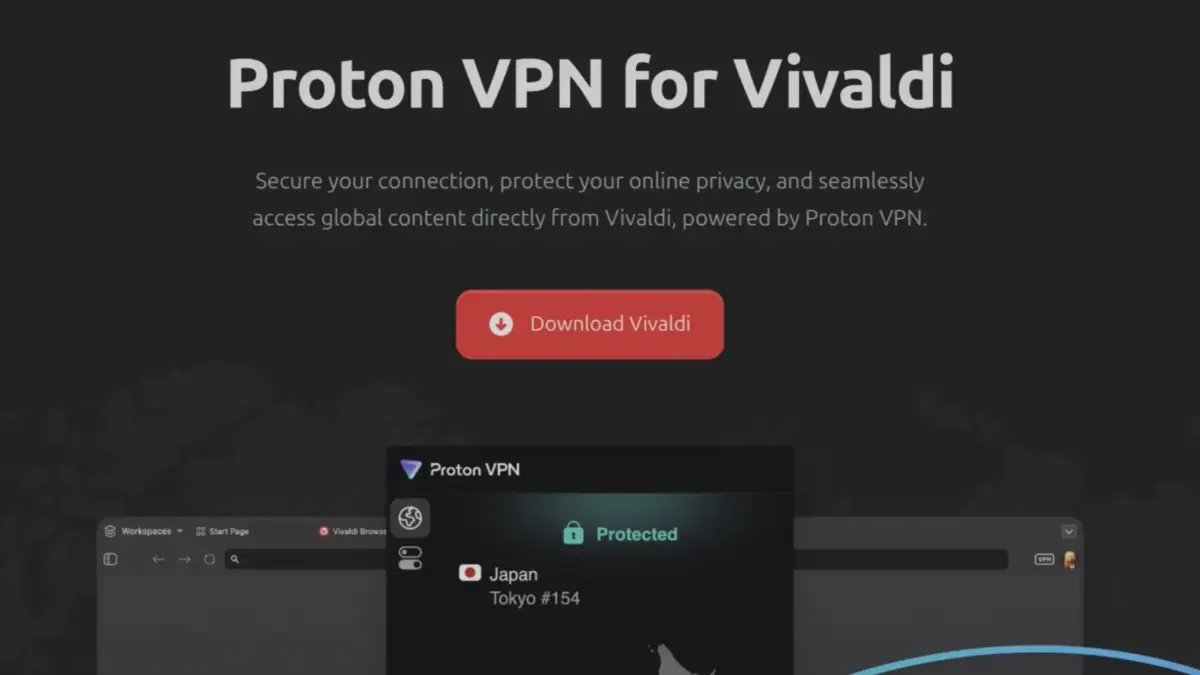
Vivaldi integrated the free tier of Proton VPN directly into its web browser across Linux, Windows, and macOS following a collaborative partnership. This integration stands out by offering unlimited data usage mirroring Proton’s standard free tier, accompanied by an independent no-logs policy and moderate connection speeds restricted to Proton’s complimentary server locations. While users must authenticate via a Vivaldi or Proton account to prevent service abuse, the implementation provides a seamless experience for existing browser loyalists.

Mozilla introduced a built-in free VPN capability within Firefox, providing users with a substantial fifty gigabyte monthly data allowance. This feature permits manual server location selection and requires a valid Mozilla account. However, availability remains contingent upon regional rollouts, covering a limited number of countries primarily across North America, Europe, and select international markets. Users requiring comprehensive system-wide protection can alternatively opt for Mozilla’s paid subscription tier.
Opera continues to offer a long-standing integrated free proxy-like feature across its desktop platforms, including Linux distributions. Requiring no account registration or configuration, the service provides unlimited data access grouped broadly by geographic regions such as the Americas, Europe, or Asia. While convenient for public Wi-Fi encryption, the inability to target specific countries limits its utility for advanced geo-restriction circumvention, and questions regarding corporate ownership structures prompt varied privacy considerations among European and international users.
System-Wide VPNs Featuring Dedicated Linux Clients
For comprehensive security encompassing the entire operating system, dedicated desktop clients with native Linux support remain the gold standard. These applications ensure that every packet leaving the machine—from system updates to terminal commands—is routed securely.
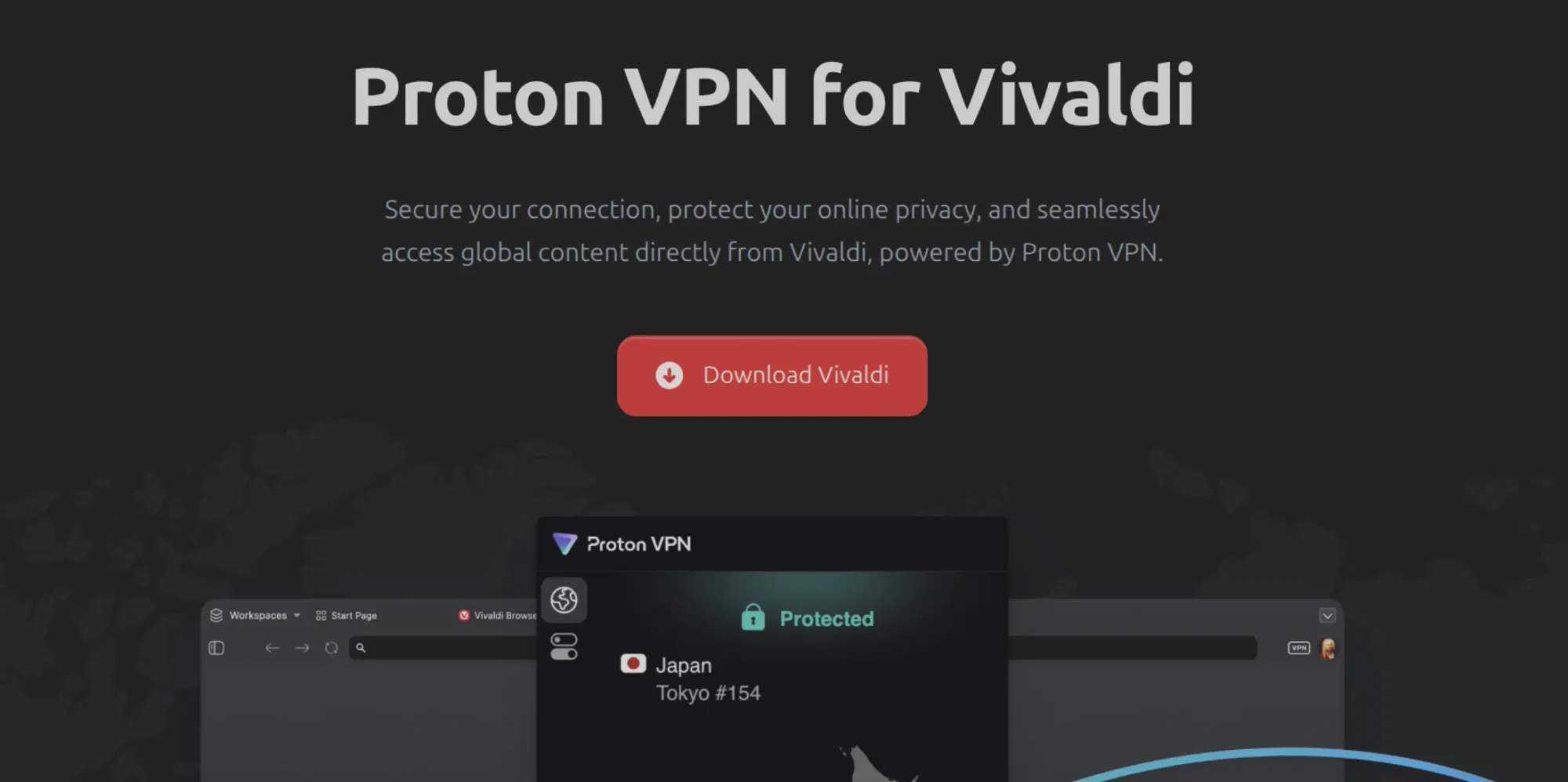
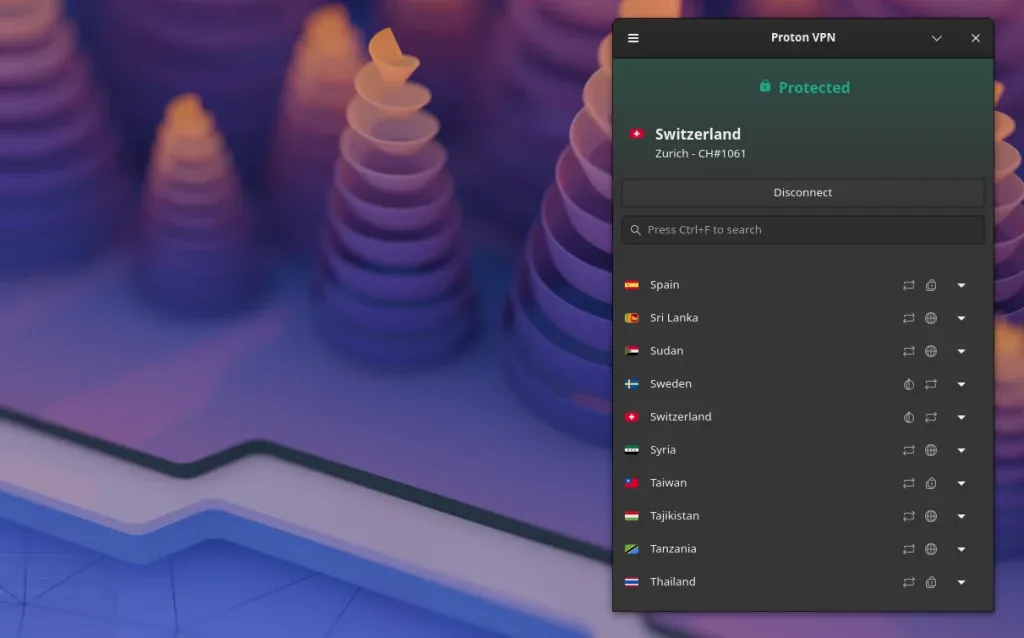
Proton VPN maintains one of the industry’s most robust free tiers, offering unlimited data, zero advertisements, and an independently audited no-logs policy paired with fully open-source applications. Free users can connect one device at a time to servers distributed across roughly ten countries, with speeds prioritized behind paid subscribers. Proton is notable for providing both official command-line interface and graphical user interface applications natively for Linux environments.
Windscribe, a Canadian privacy provider, employs a capped model offering ten gigabytes of monthly data upon email confirmation, or two gigabytes for entirely anonymous registrations. Free users retain the ability to select from servers in ten countries without restrictions on simultaneous device connections. Windscribe features open-source desktop clients with both GUI and CLI support for Linux, incorporating essential utilities like firewall kill-switches and split tunneling under audited privacy frameworks.
hide.me operates a free tier based out of Malaysia that requires no registration or payment credentials. While the service previously enforced a monthly data cap, current offerings provide unlimited data paired with bandwidth throttling that limits connection speeds for free users. Supporting a single simultaneous connection across multiple global server locations, the provider supplies an official, open-source command-line client built on WireGuard for Linux systems.

AdGuard VPN extends its established suite of privacy utilities to Linux via an official command-line client compatible with Debian, Ubuntu, Linux Mint, and RPM-based distributions. Requiring a registered user account, the complimentary tier enforces a three gigabyte monthly data allowance alongside speed restrictions and a two-device simultaneous connection limit.
RiseupVPN offers a distinct operational model, functioning entirely as a donation-funded service maintained by a volunteer collective since 1999. Operating without user accounts, configuration hurdles, or logging practices, the service utilizes a network of gateways primarily located in North America and Europe. Packaged for various Linux distributions including Debian, Ubuntu, and Arch Linux via the AUR, the service prioritizes censorship circumvention and digital activism over commercial speeds.
Lantern focuses primarily on censorship circumvention, utilizing an open-source framework developed by a United States-based nonprofit. The free tier requires no registration, imposing a daily data cap of approximately two hundred fifty megabytes before throttling connection speeds until the 24-hour cycle resets. Unlimited data access is reserved for users connecting from highly restricted regions or subscribing to premium plans.
Ultimately, selecting an appropriate free VPN depends entirely on individual use cases. Casual browsing and public Wi-Fi security are easily satisfied by browser-based integrations, while comprehensive system-wide protection is best achieved through established providers like Proton VPN or Windscribe. Users facing severe censorship environments continue to rely on community-supported alternatives, while those demanding consistent high-speed streaming capabilities must ultimately transition to reputable paid subscription services.