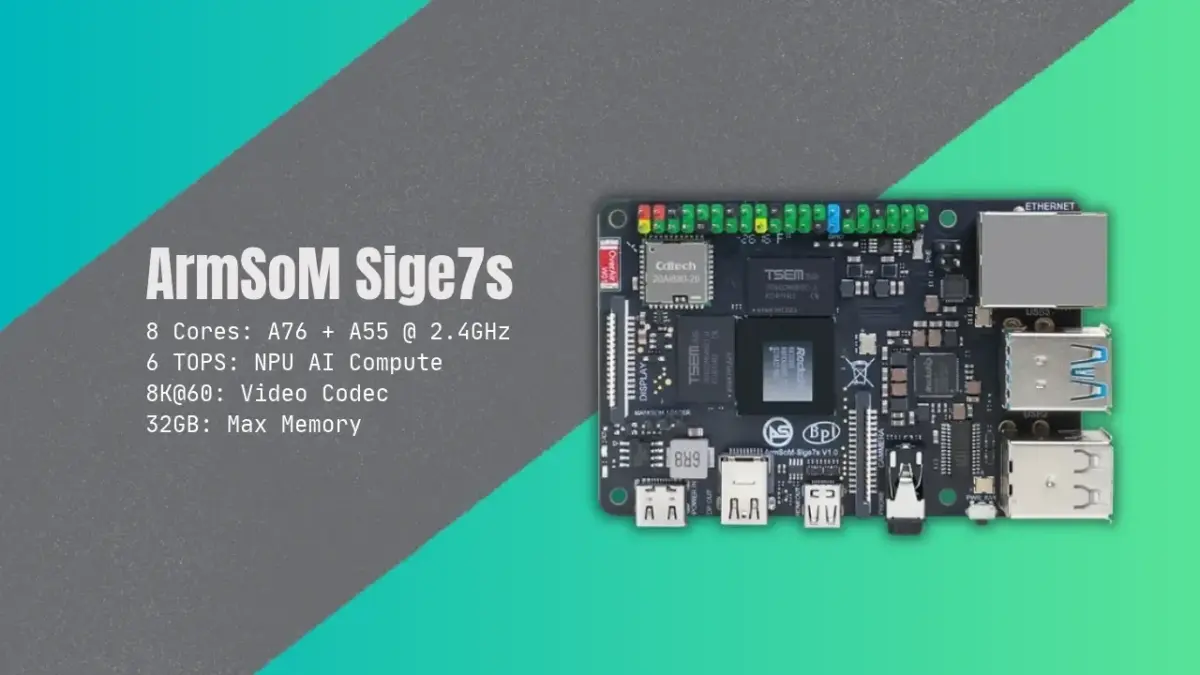
ArmSoM is refreshing its hardware portfolio by returning to Rockchip silicon with the introduction of the Sige7s single-board computer. The hardware maker, known for developing versatile single-board computers and closely collaborating with industry peers like Banana Pi, has built its latest hardware around the capable Rockchip RK3588S processor. This launch follows earlier releases in the Sige lineup, including the Rockchip-powered Sige7 and the Sige6, which marked the company’s first foray into utilizing Allwinner technology for its board architecture.
The introduction of the Sige7s signals a strategic shift toward offering high-compute performance at a more accessible entry price point. Starting at $153 on ArmSoM’s official store—with regional listings also expanding to platforms like AliExpress and Taobao—the board aims to deliver robust processing power while making calculated adjustments to peripheral connectivity to keep costs managed for developers and hobbyists.
Understanding the Sige7s Design and Specifications
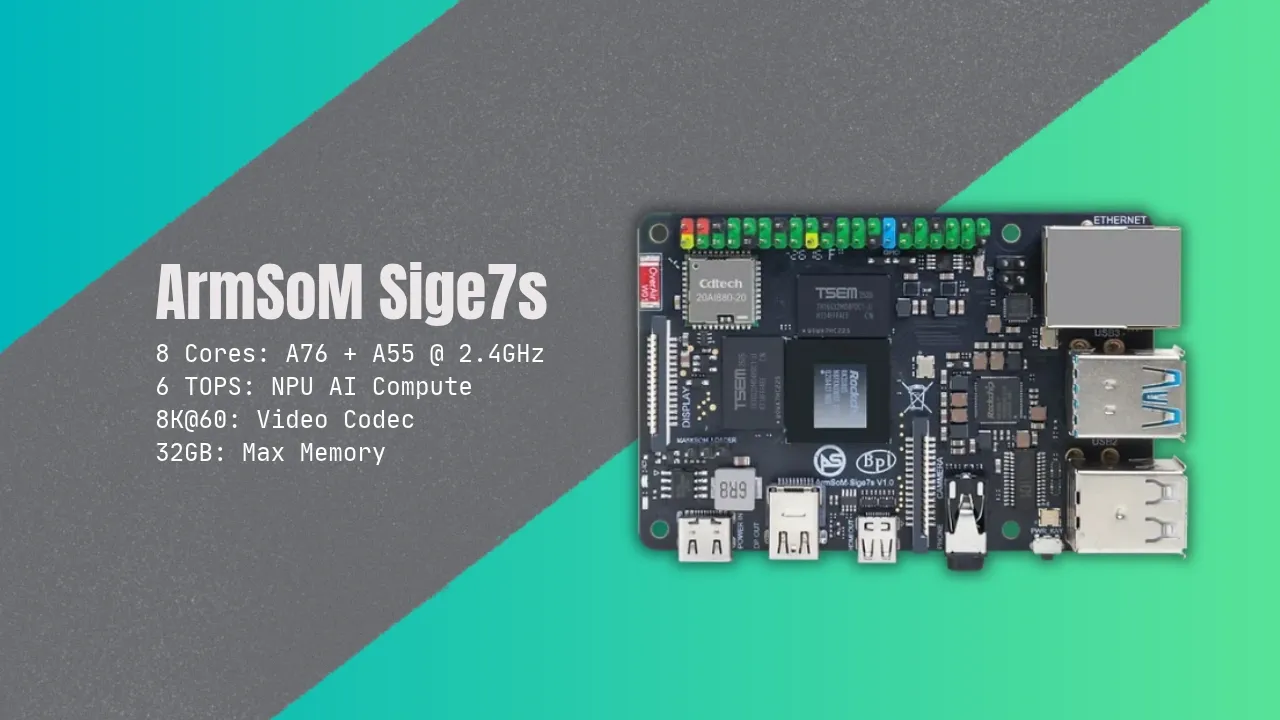
The defining characteristic of the Sige7s lies in its processor choice. The "s" designation in the product name refers to the Rockchip RK3588S, which serves as a streamlined variation of the flagship RK3588 chipset found in the standard Sige7 model. While the peripheral bandwidth is adjusted, the core processing capability remains identical.
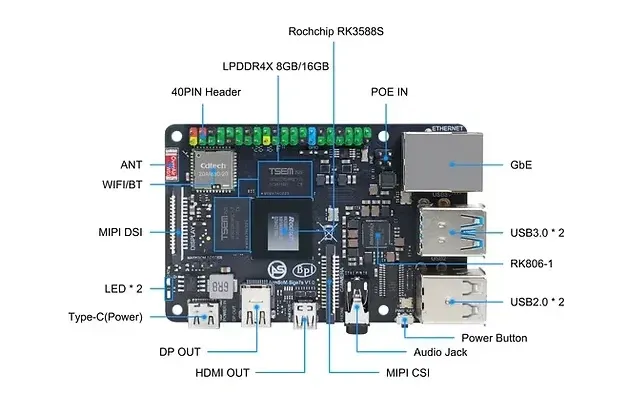
Users deploying the Sige7s receive the same robust CPU architecture, Mali-G610 MP4 GPU, and a neural processing unit capable of delivering 6 TOPS of AI performance. However, the trade-off for the lower price point is found in the input and output options. The board removes PCIe 3.0 support, reduces the HDMI output count from two to one, eliminates the HDMI input feature, and scales back to a single Gigabit Ethernet controller.

These architectural choices mean that the Sige7s is tailored heavily toward compute-heavy workloads rather than complex network routing or heavy peripheral expansion. Users seeking a Rockchip single-board computer that supports ultra-fast NVMe drives or dual networking configurations may find its I/O limitations restrictive, but those requiring RK3588-class processing power within a compact and budget-friendly package will find the specifications compelling.
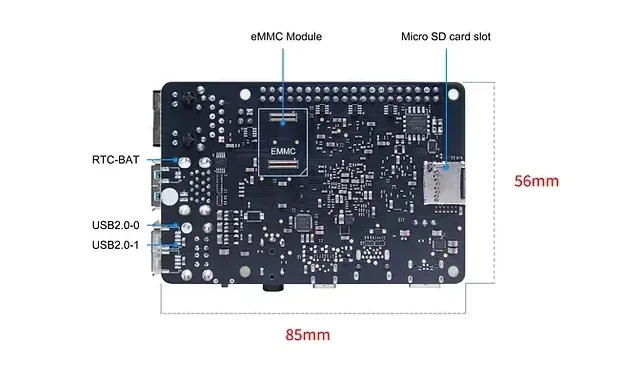
Beyond processing specifications, ArmSoM has integrated several practical design choices that improve usability and reduce indirect costs for end-users. The Sige7s features a flexible power input range accepting between 5V and 23V, liberating users from reliance on a strictly specified USB-C power brick. Furthermore, the board adopts a removable eMMC storage module. This configuration ensures that valuable operating system installations and personal data are not permanently soldered to the main board, simplifying the process of upgrading storage or reflashing data using an external machine.
Display capabilities remain strong on the Sige7s. The board supports HDMI 2.1 outputs capable of handling resolutions up to 8K at 60 frames per second, a DisplayPort 1.4 interface delivered over USB-C, and a two-lane MIPI DSI connector. An onboard hardware video engine enables decoding of 8K video at 60fps utilizing H.265 and VP9 codecs, alongside encoding capabilities at 8K and 30fps. These multimedia specifications allow the Sige7s to function effectively as a high-performance media center or digital signage controller.
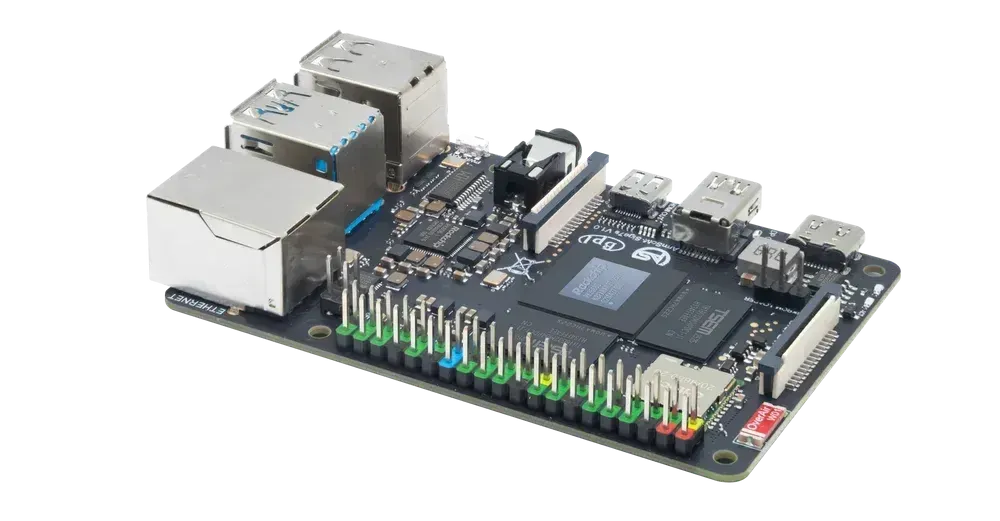
For physical prototyping and expansion, the board incorporates a 40-pin header that maintains compatibility with the Raspberry Pi standard. ArmSoM indicates that the hardware interfaces smoothly with existing Pi HATs, the official Raspberry Pi 7-inch display, IMX219-based Pi cameras, and various Pi 4 cooling solutions, offering a distinct advantage for developers and enthusiasts who already maintain an inventory of Raspberry Pi accessories.
Introducing the CM7s Compute Module
Alongside the release of the Sige7s, ArmSoM has introduced a complementary hardware option for embedded system designers through the CM7s compute module. Built around the identical RK3588S chip, the CM7s shares the exact same CPU, GPU, NPU, and hardware video engine specifications as its desktop-style counterpart, differing primarily in form factor and deployment methodology.
Compute modules are designed specifically for integration into custom carrier boards and industrial equipment, containing only the essential processor, memory, storage, and power management subsystems without exposing standard physical input and output ports like traditional USB, HDMI, or Ethernet jacks directly on the module itself. Measuring 55 by 40 millimeters, the CM7s shares a footprint comparable to the Raspberry Pi CM5, providing a familiar physical standard for hardware designers.
The CM7s is configurable with up to 32GB of LPDDR4 or LPDDR4X RAM and up to 256GB of eMMC storage. Connectivity is routed through high-density 100-pin connectors, which expose HDMI 2.1, DisplayPort 1.4, MIPI camera and display interfaces, USB 3.0 lanes, PCIe 2.0 or SATA channels, and standard general-purpose input/output buses. To provide long-term viability for commercial applications, ArmSoM has committed to producing and supporting the CM7s compute module until at least August 2034.
To facilitate rapid prototyping and testing with the module, ArmSoM offers the CM7s-IO carrier board. When paired with the carrier board, the module gains a comprehensive suite of interfaces, including standard HDMI, a USB-C port supporting DisplayPort output, four USB 3.0 ports, Gigabit Ethernet, a 40-pin GPIO header, an M.2 M-key slot designed for high-speed NVMe solid-state drives, a microSD card slot, and dedicated MIPI camera and display connectors. Unlike the standalone Sige7s board, the carrier board operates using a standard 12V DC barrel jack power supply.
Pricing, Availability, and Market Context
Both the Sige7s and the CM7s are currently available for purchase through ArmSoM’s official distribution channels, alongside storefront listings on international e-commerce platforms like AliExpress and Taobao. The Sige7s carries a starting price of $153, though buyers should note that wireless connectivity accessories such as Wi-Fi antennas are sold separately. The CM7s compute module starts at $179.
Purchasers in the United States should note that ArmSoM’s checkout system processes prepaid customs duties accounting for 25% of the product value, categorized under sales tax, which prevents unexpected carrier fees or customs bills upon final delivery. Deciding between the two offerings ultimately depends on the intended application: users seeking an immediate, ready-to-use desktop computer powered by the RK3588S can deploy the Sige7s directly, whereas engineers designing custom hardware solutions or requiring integrated NVMe storage expansion via a carrier board will find the CM7s compute module more suitable.
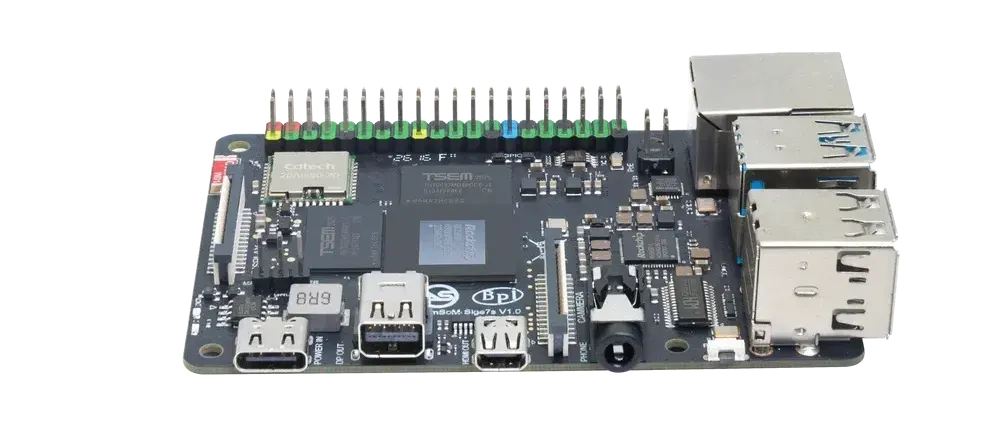
Observers of the single-board computer market may note similarities between ArmSoM hardware layouts and products from Banana Pi, a reflection of the close cooperative relationship and shared foundational designs between the two manufacturing entities. Additionally, feedback from early hardware evaluations indicates that ArmSoM’s technical documentation has seen notable improvements, addressing a common hurdle that new single-board computer platforms frequently face during initial market rollouts.