
The ongoing competitive landscape of the desktop processor market continues to draw intense scrutiny from industry observers and enthusiasts alike, particularly regarding Intel’s strategic positioning against rival offerings. Recent community discussions highlight a growing debate over whether traditional gaming performance benchmarks remain a top priority for major chip vendors, or if broader market shifts have fundamentally altered the motivation behind high-end hardware development.
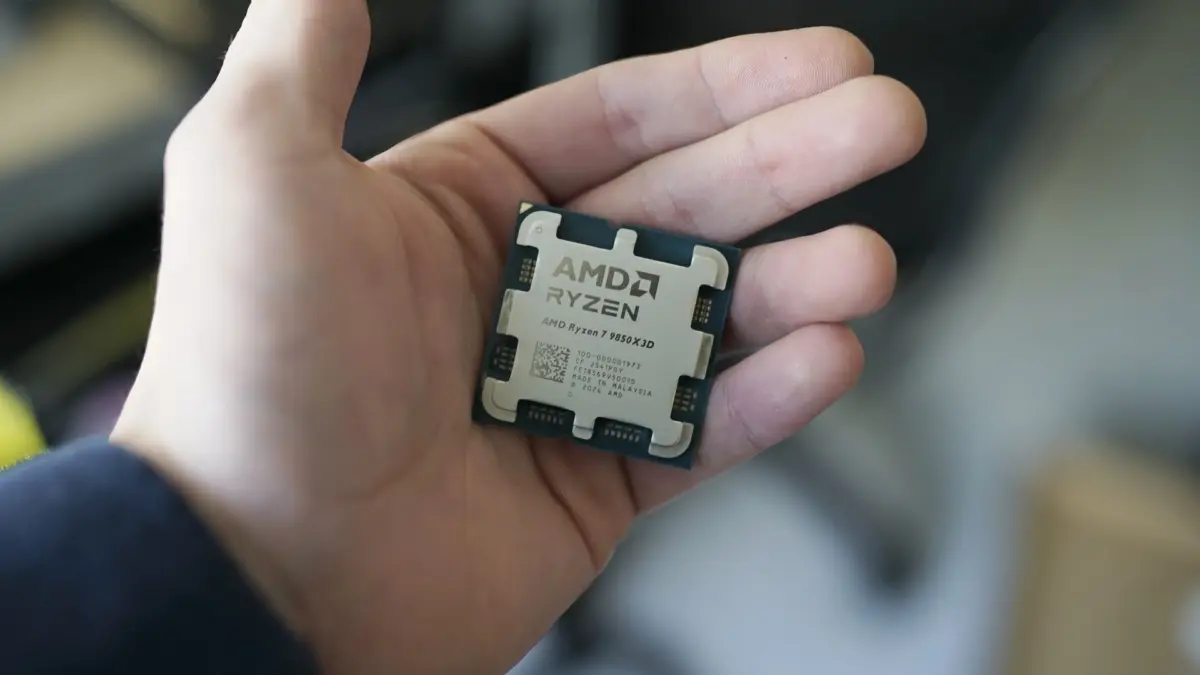
The discourse was sparked by observations surrounding the relentless dominance of alternative architectures on gaming benchmark leaderboards. Observers noted that for a prominent manufacturer like Intel, watching competing technology such as AMD’s X3D line repeatedly lead the benchmark charts was likely an intolerable position from a prestige standpoint. However, industry analysts and experienced community members are increasingly questioning the actual business rationale behind chasing gaming crowns in the current economic climate, especially when gaming represents a relatively distant afterthought for major semiconductor vendors whose primary revenues are driven elsewhere.
Even if the overall size of the gaming market were not a primary consideration, market analysts point out significant external hurdles facing PC enthusiasts in the near future. Questions have been raised regarding consumer appetite for purchasing or building new gaming systems in the coming years, particularly with memory, solid-state drive, and graphics processing unit prices remaining persistently elevated. These macroeconomic pressures threaten to dampen enthusiasm for high-end desktop upgrades, regardless of marginal gains in processing power.
Attention has increasingly turned toward Intel’s upcoming product lines, notably the anticipated Nova Lake architecture. Speculation within hardware circles suggests that Nova Lake could materialize as a limited or paper launch rather than a widespread commercial rollout. Nevertheless, tech hardware media outlets will likely welcome an actual personal computer hardware release to discuss, providing a focal point away from the typical speculative cycles that frequently dominate online forums.
Further complicating the narrative is the rumored use of specific monikers associated with the upcoming generation. Observers have noted that while certain designations imply a heavy gaming angle, fundamental questions remain regarding whether existing technologies—such as high-cache processors capable of satisfying even the most demanding enthusiasts pairing them with top-tier graphics cards like the hypothetical RTX 5090—were already more than sufficient. From this perspective, the lack of a widespread consumer outcry for significantly more central processing unit horsepower, in contrast to the constant demand for faster graphics hardware, makes the necessity of a dedicated gaming-focused desktop processor line harder to justify.
When examining the roadmap from multiple angles, some industry watchers struggle to find a compelling justification for the architecture within the desktop gaming segment. A prevailing theory among analysts is that the architecture may serve primarily as a necessary technological stepping stone toward more ambitious future microarchitectures. If the upcoming hardware ultimately arrives as a constrained or paper launch, this supposition would appear increasingly validated by market realities.
Alongside discussions of core architecture and market positioning, attention has also turned to Intel’s evolving product nomenclature. The anticipated shift toward a new four-digit naming convention appears to reflect a return to historical classification formats, with older sub-generation indicators seemingly relegated to the past. Under this updated framework, utilizing an additional zero as a placeholder suffix would be a logical step to accommodate future expansion as the product line grows and incorporates a wider variety of model numbers across different segments.
As the industry looks further ahead, sentiment among seasoned hardware followers suggests that the near-term consumer landscape is already being viewed with tempered expectations. For many observers and prospective builders, the immediate years are shaping up to be a transitional period, with attention already shifting past upcoming intermediate releases toward the subsequent generation of architectures slated for later in the decade.

Leave a Reply