
Anderon, the newly established quantum chip foundry spun out of IBM, announced this week that it has secured a monumental $1 billion award from the U.S. Department of Commerce under the CHIPS and Science Act. The substantial federal investment is designed to accelerate domestic production of advanced quantum wafers, arriving precisely as the quantum computing industry makes a critical transition from laboratory-scale experiments to high-volume manufacturing.
Headquartered in Albany, New York, Anderon specializes in the fabrication of 300-millimeter quantum wafers. The facility primarily serves its parent company, IBM, alongside a growing roster of external customers whose identities the company has opted to keep confidential for now. The timing of the federal funding aligns with an intensely competitive period in the technology sector. Late last year, IBM publically stated that it remains locked in a dead heat with tech rival Google to achieve commercial "quantum advantage" within the span of just a few months, with IBM aggressively targeting a 2029 release for its forthcoming Starling quantum computer system.
"IBM’s quantum roadmap requires a manufacturing foundation that can scale at the pace our work demands," Jay Gambetta, director of IBM Research, said in the formal announcement regarding the funding award. "Anderon’s focus on wafer fabrication gives us exactly that and strengthens our ability to execute and accelerate progress toward the next era of quantum computing."
The broader implications of scaling up quantum manufacturing extend far beyond corporate rivalry. In the near term, quantum computing is widely projected to revolutionize the discovery of advanced materials and complex chemicals—domains that have long remained completely out of reach for even the most powerful classical supercomputers operating today. Concurrently, other quantum-adjacent technologies, such as highly sensitive quantum sensors, are rapidly gaining commercial traction across various industrial sectors to reduce reliance on legacy technologies like GPS.

A Maturing Ecosystem of Specialized Foundries
Anderon is far from alone in carving out a niche in the nascent quantum manufacturing sector. It joins a small, select group of specialized facilities, including SkyWater Technology and GlobalFoundries, that are actively building out dedicated foundry ecosystems for quantum processors. SkyWater has previously forged manufacturing relationships with prominent quantum developers such as IonQ, Qolab, and PsiQuantum, though the landscape continues to consolidate; IonQ completed its strategic acquisition of SkyWater earlier this year in July. Meanwhile, GlobalFoundries maintains foundry partnerships with industry players like PsiQuantum, Quantinuum, and Diraq.
According to Heather West, the quantum research lead at market intelligence firm IDC, the market has seen a surge of acquisitions, investments, and manufacturing announcements since the beginning of the year. These developments span diverse global players employing vastly different manufacturing methodologies, including Anderon, GlobalFoundries, SkyWater, Quantum Computing Inc., and Quantum Foundry Copenhagen.
"That diversity is important because quantum chip manufacturing is not simply a matter of moving a quantum design into a conventional semiconductor fab," West explained in an interview. "Quantum devices can require specialized process flows, materials, metrology, packaging, and yield optimization that a traditional semiconductor foundry may not have developed. At the same time, quantum has long R&D cycles and relatively low volumes, which makes it difficult for any single manufacturing model to serve the entire market efficiently."
West’s analysis helps explain why global semiconductor manufacturing giants like Taiwan Semiconductor Manufacturing Company (TSMC) and Samsung have largely chosen to remain on the sidelines rather than dive directly into the complex quantum foundry business.

The manufacturing hurdles are further illustrated by Canadian quantum chip designer Xanadu. The company utilizes Taiwanese foundry UMC to produce thin-film lithium niobate for its advanced quantum processing units (QPUs), while simultaneously relying on other undisclosed foundries to fabricate III-V compound semiconductors that Xanadu ultimately assembles domestically in Canada, according to Xanadu COO Rafal Janik.
Winning Customers and Expanding Modalities
Despite the intricate technical hurdles involved, Anderon is already aggressively marketing its manufacturing capabilities and successfully attracting new clients across the broader technology ecosystem.
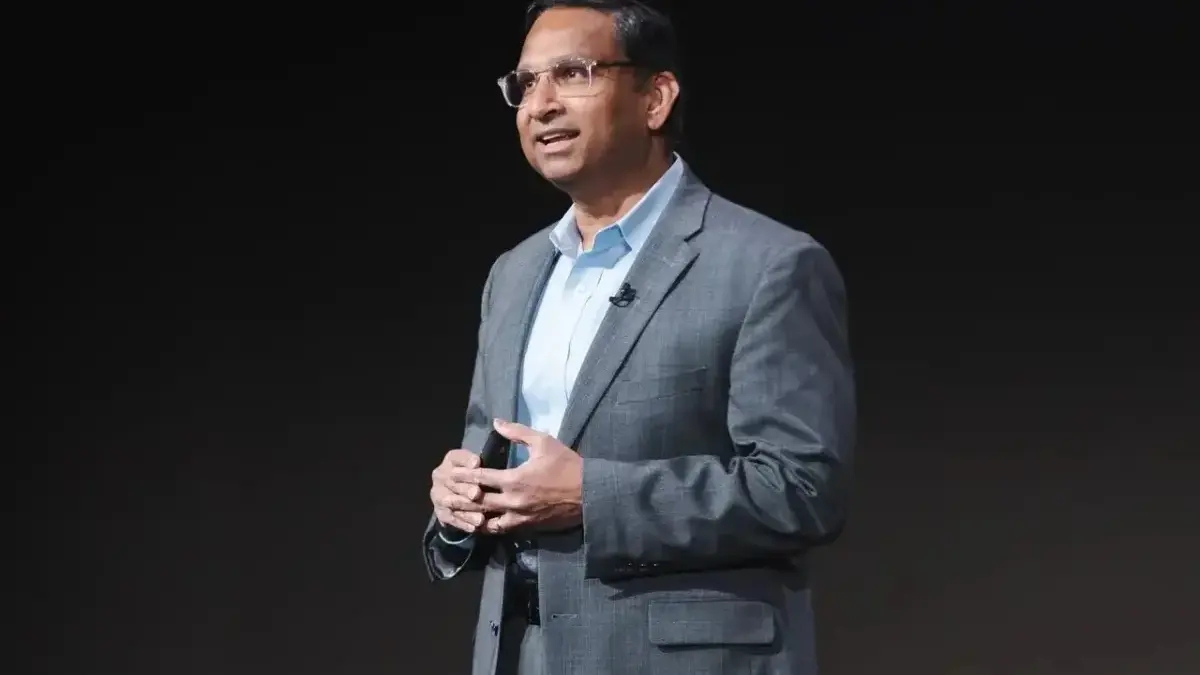
"Anderon is actively engaging with potential customers across the quantum ecosystem, including fabless processor developers, full system builders, national laboratories and programs, and more," newly appointed Anderon CEO Mukesh Khare told EE Times. "We believe there is strong demand for a dedicated, U.S.-based quantum wafer foundry and are excited by the interest we’ve seen across the industry."
Khare noted that Anderon currently offers specialized wafers engineered to support high-performance superconducting qubit arrays, quantum input/output signaling infrastructure, and readout signal chain components. These foundational components are versatile enough to support a wide array of quantum computing architectures. Looking ahead, the company plans to systematically expand its manufacturing portfolio to accommodate alternative quantum chip modalities, such as spin qubits.

While IBM has firmly committed to superconducting qubits as the foundational architecture for its quantum computers, competing firms are pursuing radically different technical paths, placing their bets on alternatives like quantum dots, carbon vacancies, or trapped ions to generate and manipulate stable qubits.
Industry analysts emphasize that the massive federal investment in Anderon should be viewed through a broader national lens rather than as a targeted government subsidy for a single corporate strategy.
"I would characterize the award as backing the development of a U.S. quantum manufacturing capability rather than making a government bet on IBM’s particular quantum architecture," West noted. "The fact that Anderon is structured as a pure-play foundry and intends to serve the broader quantum ecosystem is important here."
As quantum computing steadily approaches commercial viability, performance improvements in the underlying technology are becoming increasingly contingent upon strict manufacturing scale, rigorous process control, and secure supply chain access. Federal initiatives are actively attempting to shore up domestic capacity in strategically vital semiconductor sub-sectors, ensuring the domestic ecosystem matures well ahead of the anticipated surge in demand for large-scale enterprise quantum systems.

Ultimately, market researchers predict that quantum chip designers will increasingly rely on external, specialized foundries as the industry transitions away from academic research prototypes toward predictable, higher-volume production scales.
"Quantum companies need confidence that their intellectual property and process know-how are protected, while also relying on the foundry for process consistency, yield, and dependable access to capacity," West said. "As quantum systems scale, that combination of technical capability, manufacturing reliability, and trust will make foundry relationships increasingly strategic."
Leave a Reply