
Google has officially announced a major expansion of its artificial intelligence ecosystem with the introduction of a new developer platform for Connected Apps within Gemini and Search. Unveiled on the afternoon of October 28, the platform aims to bridge the gap between everyday digital tools and Google’s powerful AI assistants, marking a significant step toward a more integrated, action-oriented digital experience.
According to the company’s official announcements, the Connected Apps Platform is launching in preview this week, specifically targeting developers who want to seamlessly integrate their products into Google’s primary search and conversational AI interfaces. Google highlighted that this early developer preview provides a unique opportunity to "build once and reach high-intent users," streamlining how software creators connect their applications to one of the largest digital audiences in the world.
The rollout of this platform signals that users should prepare for a substantial influx of Connected Apps across Google’s ecosystem. Under the new developer framework, integrating an application involves connecting with a cloud-hosted Model Context Protocol (MCP) server and completing a mandatory review process. Once approved, developers retain the flexibility to choose whether their application becomes available within Gemini, Search, or both interfaces simultaneously.
To ensure stability and reliability during and after the launch phase, Google is equipping developers with a comprehensive suite of monitoring tools. Creators will be able to track crucial performance metrics, including traffic volume, latency, and error rates, giving them the necessary visibility to keep their integrations running smoothly as user adoption scales.
Groceries, Music, and More
While the platform preview rolls out to developers today, everyday users can also look forward to an expanding array of practical features and partnerships. Google highlighted several notable collaborations currently under the Connected Apps umbrella, including integrations with Adobe, Experian, Localiza, and Peloton. Many of these integrations are already live for users interacting with Gemini, and Google has confirmed plans to roll them out to Search in the coming weeks. Furthermore, the company is preparing to integrate the popular mental health app Calm into both Gemini and Search in the near future. Developers interested in exploring the new platform preview can sign up through Google’s developer portal to get started.
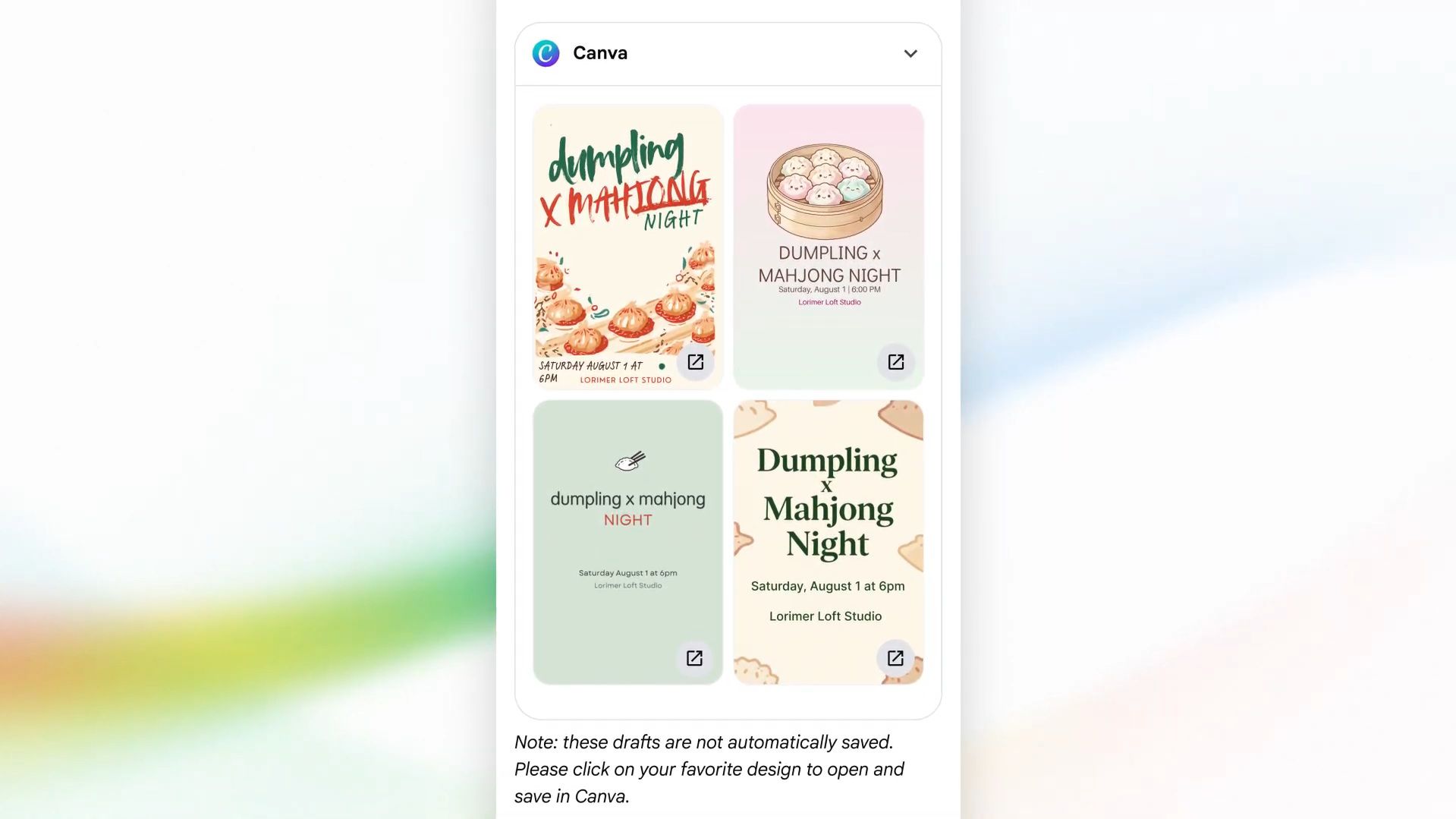
The evolution of Connected Apps builds upon previous expansions that rolled out earlier this year, when Google integrated services like Instacart and YouTube Music directly into the AI Mode experience. Even design platforms like Canva joined the ecosystem, allowing users to leverage Google’s AI to handle complex, multi-step digital tasks.

When interacting with these integrations, users essentially allow Google’s AI to take the operational reins to accomplish real-world tasks. For example, using the Instacart integration, a user can simply prompt the assistant by saying, "Get me all the things I need for my BBQ and add them to my grocery cart."
The AI handles the heavy lifting by processing the request, selecting relevant items, and populating the cart, while keeping the user fully informed of its actions along the way. Crucially, the system is designed with safety checkpoints. The AI will pause and notify the user when it reaches a critical juncture—specifically, the point of payment. At that stage, the user is prompted to open the native application to securely complete the transaction. Similarly, connecting YouTube Music allows the AI to assist with generating fresh playlists tailored to a user’s specific mood or event.
These developments point toward an AI landscape where digital assistants do more than just answer questions—they actively execute tasks across various domains of daily life. From grocery shopping and music curation to health and wellness tracking, Google’s strategy focuses on removing friction from mundane routines. As the Connected Apps Platform expands its reach to developers and introduces new partners in the weeks ahead, the ecosystem promises to make AI interaction increasingly practical and deeply embedded in everyday digital workflows.