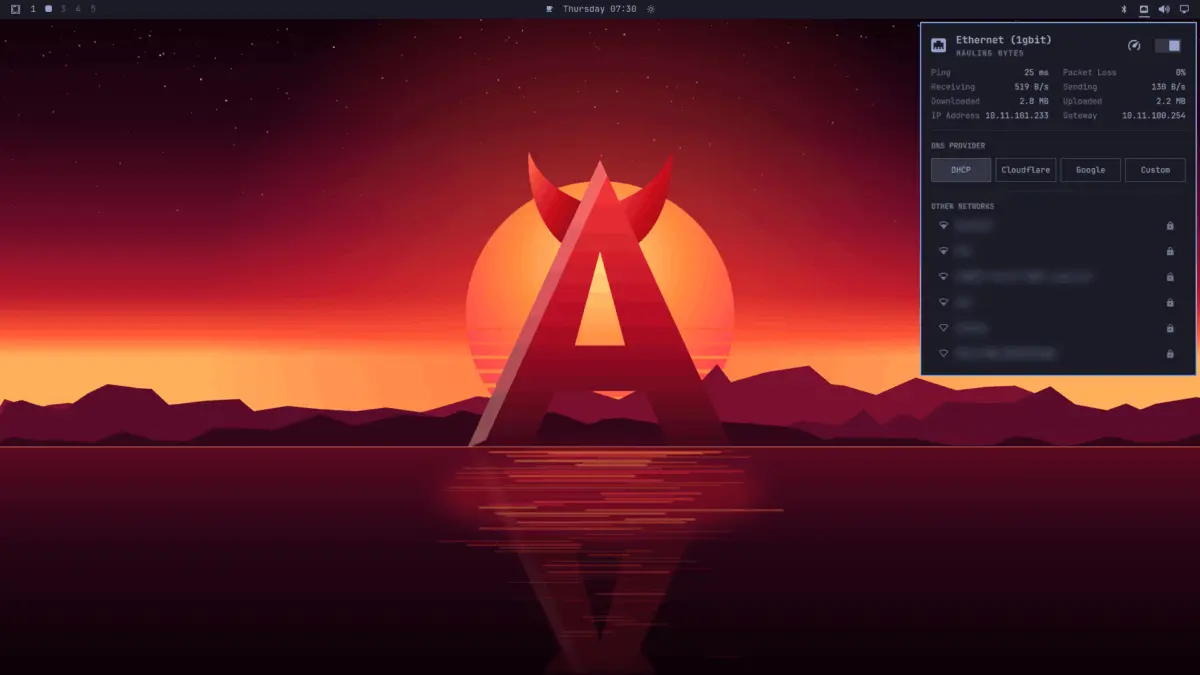
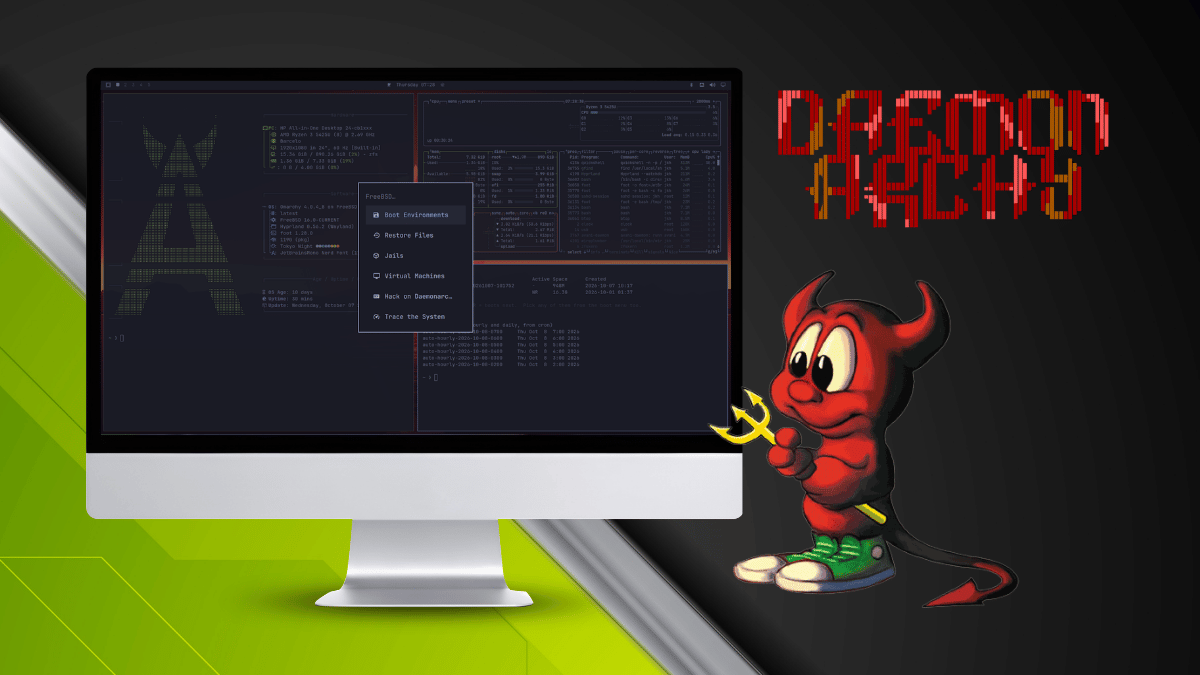
More than three decades after helping to launch FreeBSD in 1993, veteran open-source developer Jordan Hubbard has returned with a striking new project that merges the traditional world of BSD with modern Linux desktop tooling and artificial intelligence. Titled "Daemonarchy," the project is a playful nod to the popular Arch Linux-based Omarchy distribution, substituting the iconic BSD daemon as the base of the operating system while retaining a slick, modern user experience.
The initiative is already moving at a rapid pace. Despite being only a few weeks old, Daemonarchy has seen a steady cadence of updates, culminating in the release of version 1.3.1. The project highlights a fascinating intersection between historical operating system development, cutting-edge AI assistance, and cross-pollination between the traditionally rival ecosystems of BSD and Linux.
The genesis of Daemonarchy traces back to casual conversations on LinkedIn. Several peers within the developer community began pestering Hubbard, arguing that FreeBSD should offer the effortless setup procedures and visually striking aesthetics found in Omarchy. The comments sparked a curious thought in the mind of the FreeBSD co-founder: why shouldn’t such an experience exist for the BSD community?
At the time, Hubbard was experimenting with OpenAI’s GPT Astra 6 model. Seizing the opportunity to test the limits of generative AI in systems engineering, he utilized the model to help assemble the project. Remarkably, the initial pass of putting the core structure together took under two hours, though that timeframe notably excludes the rigorous Poudriere builds required to properly validate the system. Interestingly, the AI model was even tasked with selecting the final name for the distribution.
Rather than remaining an isolated experiment, the ports required for the distro were successfully submitted upstream to the FreeBSD ports tree for thorough review. These same ports are versatile enough to allow users to install Daemonarchy directly on top of an existing FreeBSD installation. In developing the distribution, Hubbard has also publicly credited the Wayland, Hyprland, and Arch Linux projects for providing the foundational layers upon which the modern desktop environment sits.
Daemonarchy aims to provide an out-of-the-box experience that rivals mainstream Linux distributions while maintaining the robust architecture of FreeBSD. The installation process closely mirrors that of Omarchy, prompting users for standard setup parameters such as keyboard layouts, user account details, hostnames, and timezones.
When it comes to storage configuration, Daemonarchy offers flexible deployment options. Users can choose to let the installer take over an entire physical disk, or they can designate a specific partition or free space allocation, with a minimum requirement of 40 gigabytes of storage. A whole-disk installation will completely wipe the targeted drive, whereas the partition mode restricts modifications solely to the chosen partition.

Because the installation utility does not shrink existing filesystems, users wishing to set up a dual-boot configuration must manually carve out the necessary free space from their other operating systems beforehand. Once installed, the system places everything on top of the ZFS file system, providing robust rollback support alongside optional data encryption features.
At the heart of the user experience is the Omarchy desktop environment, ported over with only the precise modifications necessary to ensure full compatibility with FreeBSD. The operating system itself is powered by FreeBSD 16.0-CURRENT. Because the CURRENT branch moves at a rapid, daily pace, each ISO image is deliberately pinned to a single, stable snapshot to maintain system integrity.
To bridge the gap between different ecosystems, a custom compatibility layer has been implemented. This layer maps the familiar pacman package manager syntax to FreeBSD’s native pkg utility, backs the graphical Wi-Fi panel with wpa_supplicant instead of NetworkManager, and utilizes PipeWire to manage audio output. Additionally, Bluetooth functionality is supported out of the box for peripherals like keyboards and mice, leveraging FreeBSD’s native Bluetooth stack.
Application management relies on FreeBSD’s expansive native package collection. Software can be installed using OctoPkg via graphical menus or directly through the command line with pkg, with the Chromium web browser coming pre-installed out of the box. Meanwhile, the integration of Linux-only applications is being handled carefully; these programs are currently being held back until specific versions can be thoroughly tested under the Linuxulator, FreeBSD’s built-in Linux compatibility layer.
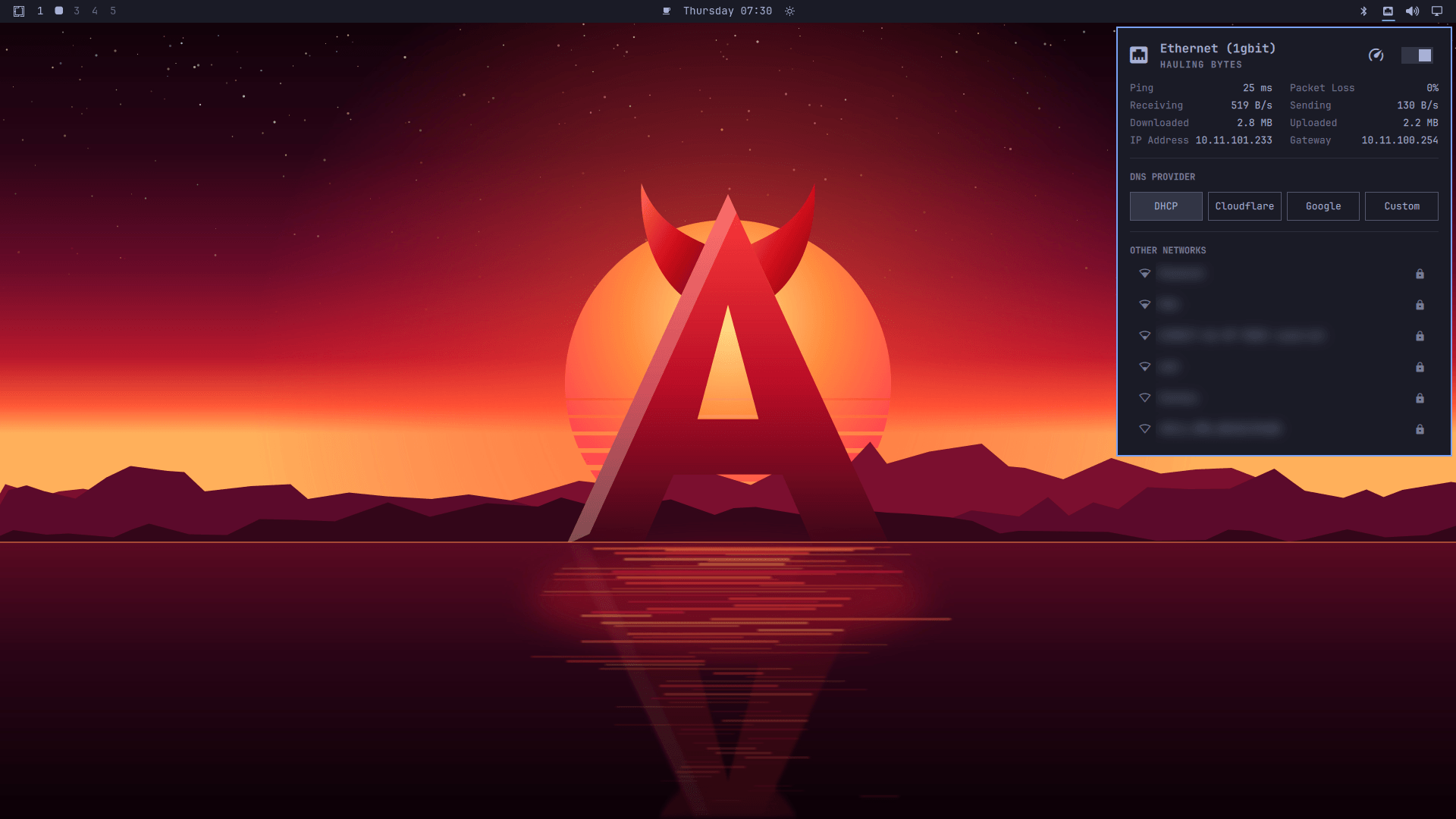
For advanced users and developers, Daemonarchy retains key FreeBSD power features. Jails provide lightweight, isolated environments that carry their own independent packages, while bhyve, the platform’s built-in hypervisor, allows users to spin up virtual machines running guest operating systems such as Linux and Windows.
System maintenance is designed to be streamlined. When users run a system upgrade through Omarchy’s update mechanism, it executes a targeted pkg upgrade for installed applications while intentionally leaving the FreeBSD base system and kernel untouched. Daemonarchy’s custom packages are delivered via a signed repository, allowing developers to roll out bug fixes and patches between major ISO releases. Furthermore, the distribution features bespoke visual touches, including a custom wallpaper, wordmark, and login theme.
The latest Daemonarchy 1.3.1 ISO release weighs in at just under two gigabytes. Users can flash the image onto a USB drive using command-line utilities like dd or via graphical live USB creators such as Fedora Media Writer before booting directly from the media. An active internet connection is mandatory during the installation process, as the installer dynamically downloads a wide array of necessary packages as it progresses. The complete source code and ongoing development efforts remain publicly accessible on GitHub.