For science fiction enthusiasts and movie buffs looking for a classic cinematic scare this season, one of the most important alien-invasion films in cinema history is currently available to stream for free on YouTube. Byron Haskin’s 1953 cinematic adaptation of The War of the Worlds, featuring vibrant color restoration, offers a look back at the roots of modern sci-fi horror amidst a landscape currently oversaturated with recent misfires in the franchise.
The timing couldn’t be more interesting for fans of H.G. Wells’ enduring literary legacy. At the time of writing, the discourse surrounding the modern state of the property has taken a decidedly cynical turn, largely driven by the critical reception of a recent 2025 "screenlife" adaptation. That contemporary entry has quickly become a punchline among film critics, frequently cited as a frontrunner for one of the worst motion pictures of the 21st century.
While the 2025 iteration has drawn attention for its remarkably poor creative choices—culminating bizarrely in an unprompted promotion for automated drone delivery in its final moments—it serves primarily as a cautionary tale of franchise mishandling. It is a film that leaves viewers bewildered, combing through its narrative missteps simply to understand how such a production came to fruition. Consequently, this recent stumble threatens to cast a long shadow over future cinematic explorations of Wells’ work, leaving the multi-generational history of adaptations with a strange and frustrating capstone.
Published originally in 1898, H.G. Wells’ seminal novel was not technically the very first alien-invasion narrative in the Western literary canon, but it is widely credited with cementing the extraterrestrial threat archetype firmly within the popular imagination. Over the 128 years since its publication, the novel has inspired a rich lineage of adaptations across various mediums. Creators ranging from Orson Welles to Steven Spielberg, alongside low-budget studios like The Asylum, have attempted their own interpretations of the catastrophic Martian descent.
Undoubtedly, the most historically famous adaptation remains Orson Welles’ legendary 1938 radio drama. Broadcast over the CBS Radio Network, the panicked realism of the presentation famously triggered widespread public alarm, convincing segments of the listening audience that a literal, live news program was detailing an ongoing extraterrestrial invasion.
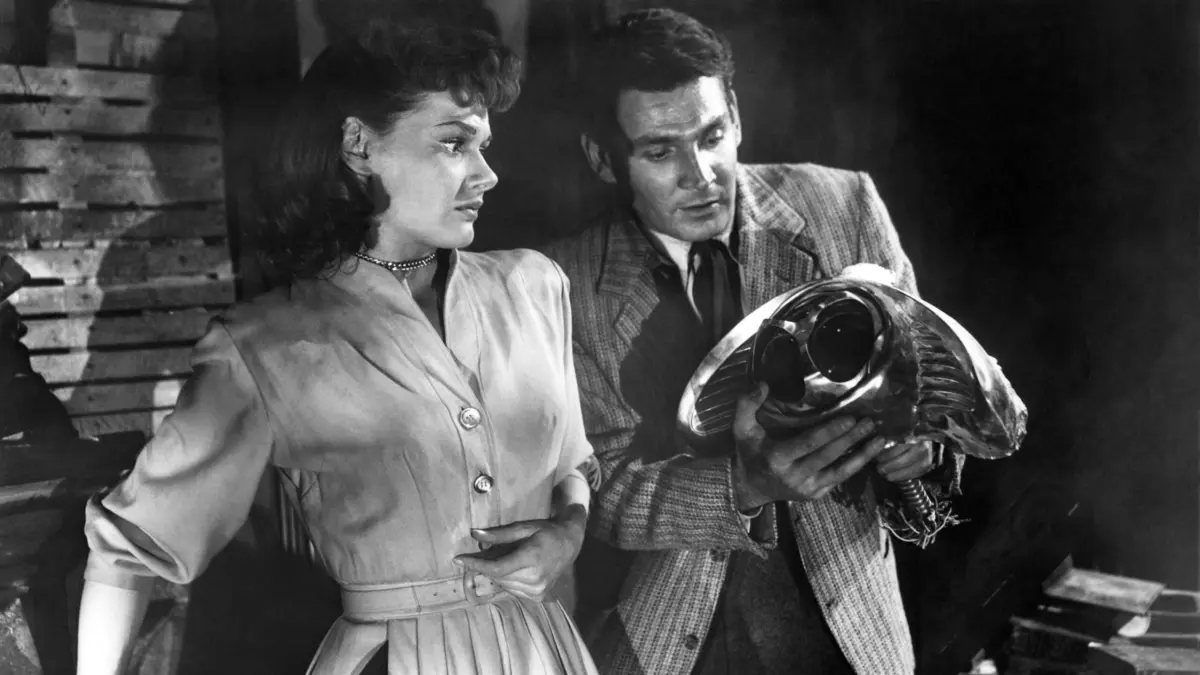
Fifteen years after that historic broadcast, Paramount Pictures brought the story to the silver screen for the very first time. Directed by Byron Haskin, written by Barré Lyndon, and produced by George Pal, the 1953 film shifted the setting from late-Victorian England to contemporary Southern California. It also accelerated the narrative pace, transforming Wells’ deliberate, slow-burn exploration of human vulnerability into an intense, 85-minute war film. For audiences seeking a piece of classic cinema to add to their viewing schedules, this foundational masterpiece is currently accessible to watch for free on YouTube in a colorized format.
Intellects vast and cool and unsympathetic
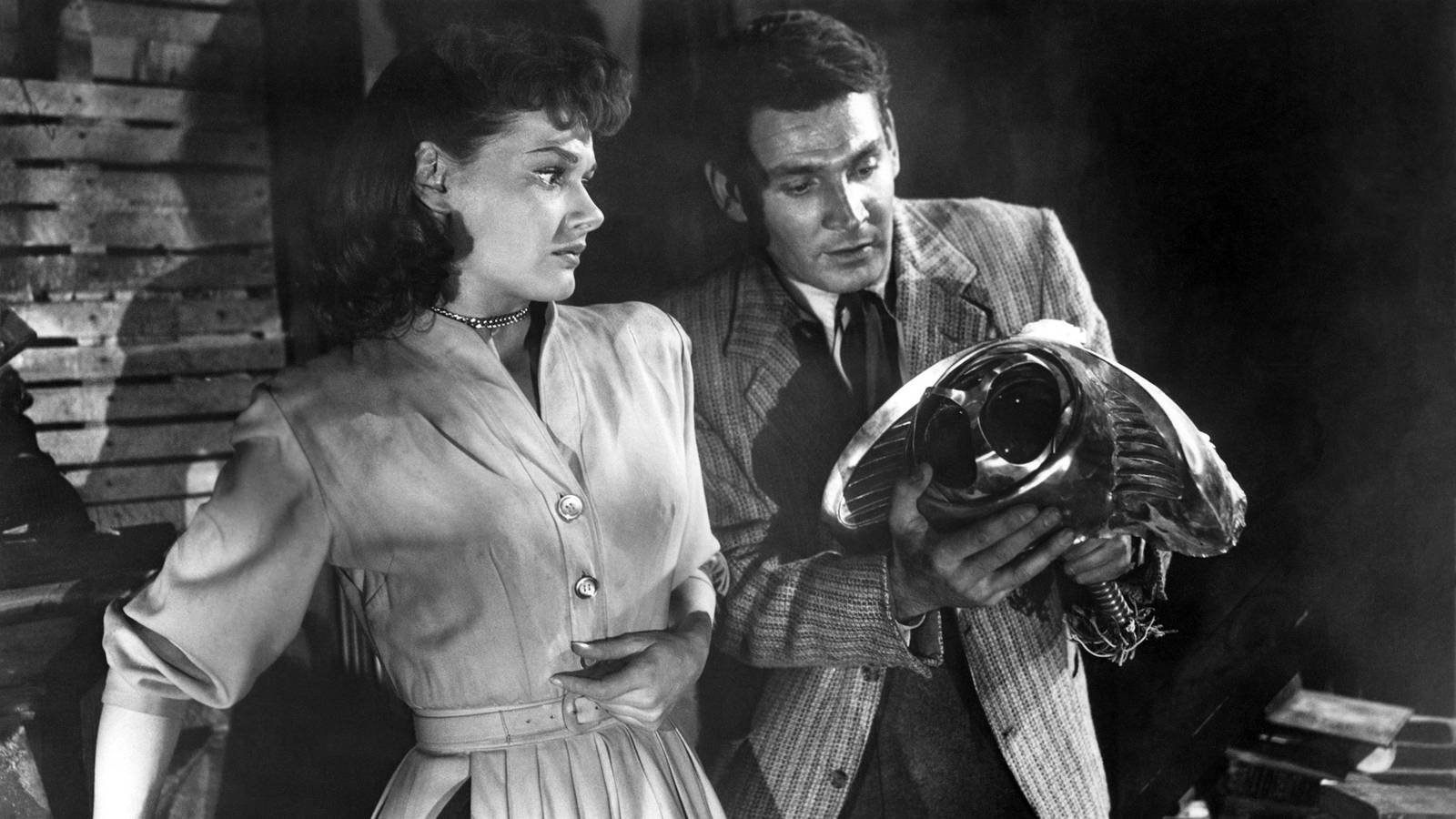
Haskin’s The War of the Worlds commences with a celestial anomaly: a series of strange meteors raining down across the globe. One such object crashes near a quiet California community, drawing the immediate attention of local physicist Dr. Clayton Forrester, portrayed by Gene Barry. Interestingly, science fiction history buffs will note a fun trivia connection here—the beloved Mystery Science Theater 3000 mad scientist character was later named in honor of this very protagonist.
Upon arriving at the impact site, Forrester examines the smoking projectile and deduces that the object must be hollow. However, the intense residual heat from its atmospheric reentry prevents anyone from getting close enough to conduct a thorough examination. Later that evening, the mystery dissolves into pure terror as the meteor splits open to reveal a metallic, cylindrical spacecraft from Mars. The craft observes its new environment through sophisticated electronic eyes mounted on flexible metal stalks.

When a small delegation of brave locals approaches the landing site in an attempt to establish peaceful contact, the Martians offer no parley. The cylinder immediately incinerates them with a searing heat ray, launching a systematic campaign to eradicate human life from the surface of the Earth. There is no tragic misunderstanding, nor is the conflict sparked by human error; the invaders have arrived with the singular objective of clearing the planet.
Following a disastrous initial military engagement between the United States Army and the Martian machinery, Dr. Forrester finds himself fleeing alongside a local resident named Sylvia, played by Ann Robinson. As the military attempts to mount a defense against an enemy that appears entirely impervious to conventional weaponry, the narrative follows Forrester and Sylvia through escalating battles and their devastating aftermath.
Like many landmark science fiction motion pictures produced during the 1950s, modern viewers must meet the film halfway. The special effects were considered cutting-edge for their time, earning the production an Academy Award for Best Special Effects, but they naturally border on quaint by today’s digital standards. The visual effects were never engineered to be scrutinized under the lens of high-resolution modern restorations.
Even so, if viewers can suspend their disbelief, the underlying horror that captivated 1950s audiences remains palpable. The Martian heat rays do not merely kill; they cause targets to instantly flash and vanish, leaving behind eerie, perfectly man-shaped piles of ash. It is a deceptively simple practical effect that retains its chilling nature, largely due to the casual, indifferent manner in which the towering war machines deploy their destructive technology—much like a gardener weeding a lawn.
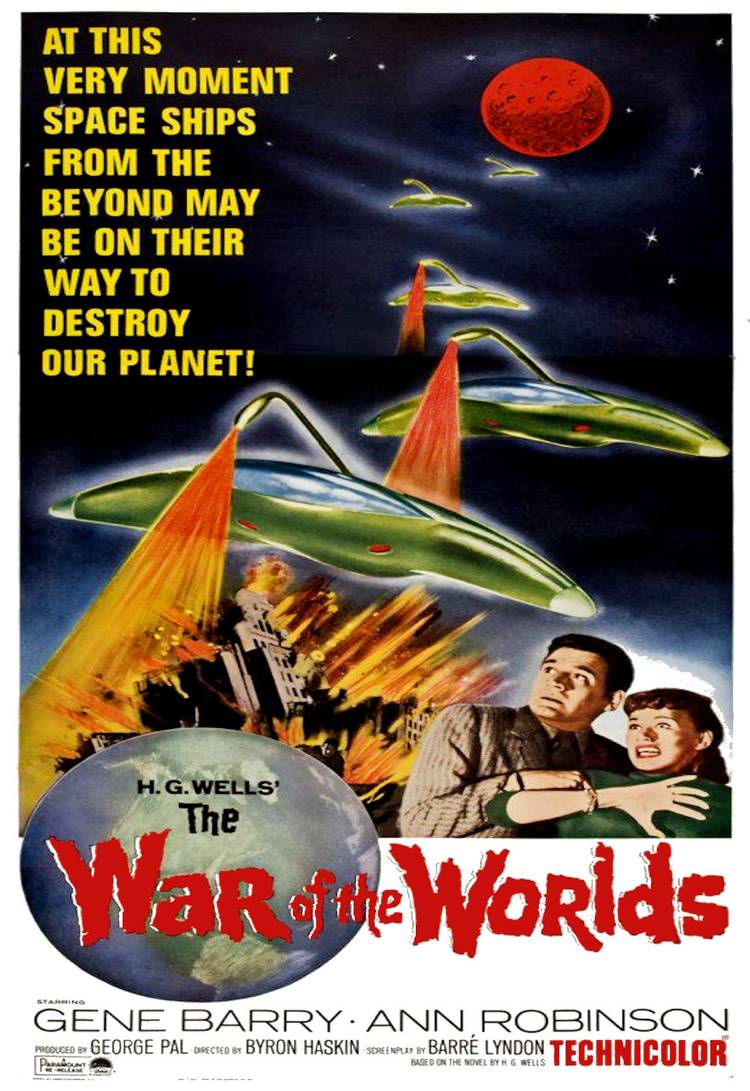
The first major confrontation between the United States military and the Martian war machines plays out as a stark nightmare of men and heavy machinery obliterated into nothingness. The military leadership acts decisively, listens to expert counsel, and executes sound tactical maneuvers, yet they still find themselves completely outmatched. Throughout the film, this localized dread is amplified by radio broadcasts reporting that other global superpowers are losing their major cities, unceremoniously wiped off the map by the relentless extraterrestrial advance. It ceases to resemble a traditional war film and instead functions as a pure disaster movie where the disaster is entirely unstoppable.
There is a bleak, existential power running through the 1950 adaptation that would have resonated deeply with audiences living under the shadow of the Cold War. Watching the film today, that impact persists, drawing comparisons to cosmic horror rather than standard creature features. While modern viewers might initially be tempted to dismiss the mid-century visual effects, approaching the film on its own terms reveals why it endures as a cornerstone of science fiction and horror cinema.
The War of the Worlds (1953) is currently streaming for free on YouTube.