The return of in-person gatherings has been a welcome development for communities worldwide, marking a return to face-to-face interaction after years of reliance on digital screens. Yet, as conference halls and meeting rooms fill up once again, event organizers and community leaders face a strategic choice. The virtual events ecosystem did not emerge out of nowhere during the pandemic; long before remote gatherings became a global necessity, many technology and open-source communities were already utilizing online formats to host hackathons, bug-triaging sessions, and webinars. These digital gatherings successfully brought dispersed members together for education, collaboration, and collective problem-solving.
Out of sheer necessity, the infrastructure and execution of virtual events have advanced significantly over the past few years. Organizers and participants alike have gained a deep understanding of what works and what falls short in a digital space. As physical gatherings return to the forefront, the central challenge is no longer choosing between digital or physical, but rather discovering how virtual and physical events can effectively co-exist to deliver an improved, more inclusive experience for everyone involved. By examining the economic realities, logistical hurdles, and structural innovations of modern gatherings, communities can leverage the best of both worlds.
Costs and Crowds
Few people in the professional or community-building space advocate for a complete return to an all-screen reality. The tangible energy of an in-person conference or local meetup is difficult to replicate entirely through a monitor. However, virtual events retain fundamental advantages that make them indispensable, particularly when examining the barriers of cost and logistics.
Launching a virtual event remains remarkably straightforward. Organizers rarely need more than a reliable video conferencing tool and a streaming platform to get started. Live streaming directly from a standard video chat platform can instantly connect a distributed group. For smaller communities operating on tight or nonexistent event budgets, this low barrier to entry is invaluable. In fact, utilizing virtual platforms offers nascent organizations a practical runway to build and engage an audience before committing significant capital to physical venues, travel, and equipment.
The reduction of financial and logistical friction extends far beyond the organizer; it fundamentally alters the calculus for attendees and community members. A typical local meetup might last between sixty and ninety minutes. When factoring in a thirty-minute commute each way, a brief evening gathering can easily demand upwards of two and a half hours of a participant’s day. For busy professionals, parents, or individuals with limited mobility, that commute can deter participation entirely. By shifting certain meetings to a virtual format, communities dramatically lower the barrier to entry, ensuring higher accessibility and sustained engagement. This convenience explains why countless local meetups and regular syncs continue to operate in digital formats today.
Furthermore, the low cost of hosting virtual events encourages experimentation. Organizers can test entirely new content formats, adjust schedules, target different demographics, and explore alternative presentation styles with virtually zero financial risk. Even if a newly conceived online session fails to attract a large audience, the organizer avoids the crushing overhead of venue rentals, catering, audio-visual equipment, and travel expenses. Regardless of the turnout, organizers still walk away with valuable data and lessons learned, positioning virtual formats as an ideal testing ground for community initiatives.
Practical Events
Beyond broad community meetups and large conferences, certain types of collaborative activities are uniquely well-suited for virtual environments. In open-source communities, critical maintenance tasks—such as updating documentation, triaging bug reports, and sorting through issue queues—are essential for project health. Yet, despite their importance, these administrative chores are often viewed as tedious work that individuals prefer to avoid in isolation.
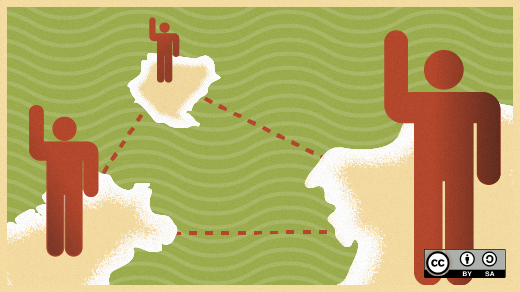
Virtual events provide an effective framework to transform these solitary chores into collaborative achievements. Organizers can designate a focused window, lasting one to two days, where community members gather online specifically to tackle documentation updates or bug triaging as a collective. By working through these tasks together in a shared digital space, participants can support one another, share institutional knowledge, and maintain momentum. The virtual environment eliminates the isolation of maintenance work, turning background chores into engaging community milestones.
Hybrid Events
As the events landscape continues to evolve, an increasing number of organizations are adopting hybrid models that integrate both in-person and virtual components. However, true hybrid integration goes far beyond simply setting up a webcam at the back of a conference hall to broadcast physical sessions to remote viewers. Successful hybrid design often involves dedicated, parallel tracks tailored specifically to the needs of online participants.
A prominent example of this approach can be seen in events like FOSDEM, which have implemented separate online rooms and schedules to accommodate a global audience alongside physical attendees. This structure ensures that remote participants are not treated as passive observers watching a distant stage, but rather as active participants in a dedicated digital ecosystem.
Some organizations leverage virtual tracks specifically for "Day 0" activities, encompassing orientation sessions, project team meetings, and preliminary meetups. By moving these introductory elements online, organizers enable community members who lack the resources or flexibility to travel to still participate in the crucial opening phases of a conference. Furthermore, incorporating a robust virtual track can reduce the overall duration of the physical event itself. When introductory and logistical meetings happen online prior to the main gathering, attendees do not need to spend as much time away from home as they would during a traditional, week-long physical conference.
Best of Both Worlds
The resurgence of in-person events is a welcome development, offering long-awaited opportunities for colleagues, peers, and open-source contributors to reconnect face-to-face. Yet, the hard-won lessons of recent years suggest that completely discarding virtual events would be a missed opportunity.
By thoughtfully embracing hybrid models equipped with dedicated virtual tracks, communities can make their gatherings accessible to a much broader audience, transcending geographical and financial limitations. Society has learned valuable lessons about the resilience and reach of digital connectivity. By integrating these insights into modern event planning, organizers can cultivate stronger, more inclusive communities that truly offer the best of both worlds.