
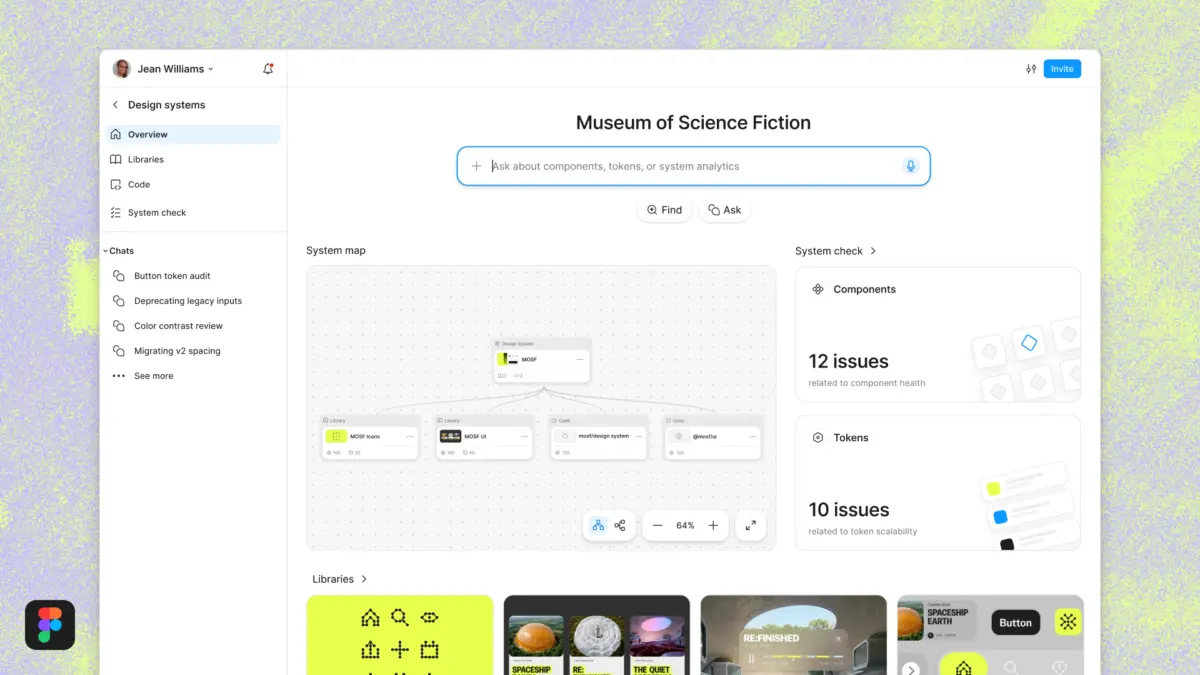
Design platform Figma has announced a new Markdown-based editor alongside a strategic integration with the Payload headless content management system during its very first Config event in India. The newly unveiled features are designed to help companies define their overarching design languages, seamlessly bring in comprehensive design and code libraries, and establish strict governance rules. Through these additions, Figma aims to provide both its proprietary AI agents and third-party tools with clear, structured guardrails, ensuring they adhere tightly to a brand’s unique design rules when generating assets and layouts.
The centerpiece of these announcements is a brand-new feature called Figma Specs. Operating as a streamlined Markdown editor, Specs allows users to explicitly define their brand’s design language in a straightforward, readable format. This living document acts as an authoritative reference point for human product teams and AI agents alike as they design and build within the Figma ecosystem. Flexibility is a core attribute of the new tool, as Specs can exist as an independent, standalone file within a project or co-exist directly alongside the visual workspace on the canvas.
Beyond its primary function as a robust text editor, Figma Specs allows users to directly reference other vital project elements. Creators can link specific components found on the canvas, embed interactive FigJam diagrams, and integrate complex code layers and raw designs into a single, cohesive source of truth. Teams are also empowered to pull in extensive background context regarding their established design systems, including full design libraries, code repositories, and comprehensive style guidelines. By centralizing this information, organizations can ensure that AI agents have constant access to accurate context, enabling them to follow brand rules with greater consistency.

This push toward better contextual governance arrives closely on the heels of Figma’s recent expansion of its on-canvas AI agent to a much wider user base. Because artificial intelligence models inherently possess a non-deterministic nature—often producing varied or unpredictable results from the exact same prompt—Figma is proactively offering structural tools to steer these models toward predictable, brand-compliant outcomes.
In tandem with the Specs rollout, Figma is bringing its code layers feature out of private beta and into public beta, opening it up for testing by a much broader audience. Initially teased during a platform update in June, code layers introduce actual coding directly into visual designs on the canvas, paving the way for significantly more interactive and dynamic prototypes. With this public beta release, users can prompt the on-canvas AI agent to transform a static design into functional code, or instruct it to modify specific segments of existing code to iterate quickly on a prototype.
Loredana Crisan, Figma’s chief design officer, emphasized the shifting paradigm of software creation in an interview, noting how modern development has evolved alongside generative technologies.
"We see Figma as the place where software teams come to decide what they build and ship. And so for that, I think one of the key things to keep in mind about what AI has changed and what it made available is the ability to build," Crisan told TechCrunch. "There are 17-times more lines of code being produced today than in the past. But when you’re looking at releases, only 1.3-times more releases. A lot of that code actually is not necessarily built to ship, but really built to discover what the product is. It’s built to design."

To further expand the utility of its ecosystem, Figma announced that it is extending support for over 20 new tools through its Model Context Protocol (MCP). This expanding roster includes platforms such as Open Code, Dia, Grok Bot, and Sarvam, an emerging artificial intelligence startup based in India.
The platform is also deepening its technical capabilities through the integration of Payload, the open-source headless CMS that Figma acquired last year. By connecting Payload directly with Figma Make—a product tailored for generating dynamic websites and managing content seamlessly—teams can now oversee and update their digital content without friction. Highlighting the growing momentum behind the acquisition, Figma noted that Payload’s software downloads have surged sixfold over the last twelve months.
Figma’s decision to host its inaugural Config event in India underscores the region’s immense strategic importance to the company. Late last year, Figma established its first official office in the country, staffed with dedicated personnel handling sales, strategic partnerships, go-to-market strategies, and product support. The company reports that India currently stands as its largest user base outside of the United States, with the platform deeply embedded in the operations of 40% of India’s top 100 companies listed on the Bombay Stock Exchange.



Leave a Reply