
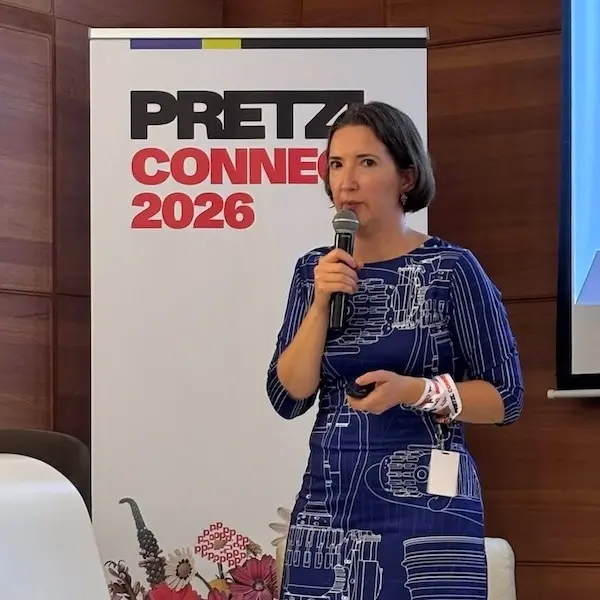
BUDAPEST, Hungary — Addressing industry leaders and engineers at the Pretzl Connect 2026 press event, Kate Underhill laid out a transformative vision for the future of European space exploration. As a future space transportation propulsion architect at the European Space Agency (ESA), Underhill emphasized that the next generation of launch systems and orbital infrastructure will rely just as heavily on advanced onboard computing, automation, and resilient connectivity as they will on traditional breakthroughs in propulsion technology.
However, this growing reliance on complex digital ecosystems exposes the European space sector to wider geopolitical vulnerabilities. Chief among these are international semiconductor manufacturing dependencies, fragile raw material supply chains, and restrictive regulatory frameworks that threaten to encumber the continent’s aerospace ambitions. Underhill’s keynote and subsequent discussions highlighted a critical inflection point for European policy, industrial strategy, and technological sovereignty.
The Silicon Bottleneck and Conservative Engineering
In a detailed conversation with EE Times, Underhill expressed deep concerns regarding Europe’s heavy reliance on foreign semiconductor manufacturing and how external geopolitical shifts directly impact industrial strategy. Because the vast majority of advanced microelectronics manufacturing occurs outside of Europe, vital domestic industries—including automotive, telecommunications, and high-reliability space hardware—face severe structural risks.
Underhill detailed the longstanding technological gap that exists between commercial microelectronics and flight-qualified space hardware. Space programs have historically operated on a profoundly conservative timeline, relying on older, highly radiation-tolerant processors to withstand the harsh radiative environment of orbit. For instance, European space missions have long depended on radiation-hardened architectures like the SPARC-based LEON family, which the ESA originally began developing in 1997.
"We are very conservative in space, and we have a very specific environment for electronics," Underhill stated, noting that space-bound systems typically operate at least a decade behind consumer electronics.

This inherent technology gap is frequently exacerbated by difficult procurement conditions within the commercial market. Illustrating the friction between commercial suppliers and low-volume aerospace buyers, Underhill recounted an instance where the ESA attempted to order a modest batch of just 20 specialized laser diodes from a German manufacturer, only to be met with a mandatory minimum order requirement of 10,000 units.
"We have that issue," Underhill explained, pointing out that low satellite launch volumes chronically prevent space component buyers from securing favorable pricing or flexible manufacturing runs. To mitigate this costly penalty, the ESA is actively pursuing "spin-in" strategies aimed at adapting high-volume commercial off-the-shelf electronics for rigorous spaceflight applications. Simultaneously, the agency is exploring "spin-out" opportunities to commercialize space-tested designs for terrestrial markets.
The Pursuit of Strategic Independence
The dialogue naturally shifted toward technological independence and international export controls, which have rapidly evolved into pressing topics across European political circles. While major European enterprises such as Nokia and Ericsson retain global leadership in building and maintaining telecommunications networks, their underlying supply chains remain vulnerable to foreign policy shifts and regulatory mandates.
European satellite developers frequently encounter compliance hurdles tied to stringent U.S. export regulations, most notably the International Traffic in Arms Regulations (ITAR). "If there is any U.S. component on your satellite, then you have to comply with U.S. regulations," Underhill pointed out.
During her keynote presentation, Underhill cited ongoing efforts by European manufacturers to construct entirely ITAR-free satellites. However, these initiatives have faced persistent obstacles because certain specialized, high-performance parts remain unavailable domestically, leaving developers reliant on foreign suppliers. "We need to identify the components we are still buying from the U.S. or from China and see what we can do in Europe so that we can have control over the complete supply chain as much as possible," Underhill stated.

Outlining the ESA’s fundamental role in safeguarding sovereign European capabilities, she underscored that independent access to space is an absolute prerequisite for economic and societal stability. "For minimum critical elements, we need access to space," Underhill said. "We need positioning, telecoms, and earth observation data. We need that in Europe and full control over that."
Next-Generation Satellite Networks and the Promise of 6G
The convergence of orbital satellite networks with emerging terrestrial cellular standards represents a major growth vector for European telecom companies and hardware manufacturers. International standards bodies are actively working to integrate satellite infrastructure directly into upcoming 6G standards, a development that could soon enable direct-to-device cellular connections without requiring specialized ground equipment or bulky satellite dishes.
Highlighting a major turning point for European manufacturing scale, Underhill pointed to the planned IRIS² secure satellite constellation. The project is projected to radically transform the continent’s space industry by shifting production philosophies away from boutique, one-off builds toward mass industrialization. "We are going for a step change from ‘I am going to make this one satellite’ to ‘I am going to make 800,’" Underhill said. "The order quantities move into semi-industrialized levels, and we can start taking advantage of that scale."
On the integration of 6G and satellite connectivity, Underhill observed that building robust orbital infrastructure will unlock commercial use cases that current developers cannot fully anticipate. Drawing a parallel to Earth observation data—which originally began as a tool primarily for climate monitoring but has since evolved into an indispensable asset for precision agriculture and municipal tax assessment—she argued that ubiquitous orbital data pipes will naturally drive widespread, unexpected innovation.
"This is critical infrastructure for Europe," Underhill emphasized. "If we have 6G, if we have IRIS² operational, if we have Galileo plus 6G… there are lots of clever people in young companies in Europe that can do some really good stuff with that." Summarizing the predictability of digital adoption, she added succinctly: "Once the system is there, people use it."

Industrial Scale, Cost Pressures, and AI Integration
Beyond telecommunications and orbital constellations, Underhill addressed the immense economic pressures reshaping launch operations on a global scale. Europe’s heavy-lift Ariane 5 rocket, which was officially retired in July 2023, flew six to seven missions per year at the peak of its operational lifecycle, maintaining costs of roughly $10,000 per kilogram of payload.
In stark contrast, Underhill noted that external competitors like SpaceX are aggressively targeting launch costs as low as $30 per kilogram utilizing fully reusable Starship vehicles. Meanwhile, a national security presidential memo issued by the White House sets a U.S. infrastructure target to support more than 1,000 annual launches and reentries by 2030. To maintain a competitive footing, Arianespace has established a target cadence of nine to ten Ariane 6 launches annually starting in 2027.
To close this operational gap, Underhill argued that Europe must pivot its space transportation model to mirror the commercial airline industry, characterized by rapid vehicle turnarounds, predictive maintenance protocols, and high-frequency launches. "The traditional way we build launchers cannot provide that, so we have to rethink it," she noted.
To achieve these ambitious engineering and operational goals, the ESA is increasingly integrating artificial intelligence into design, testing, and manufacturing pipelines. AI algorithms allow aerospace engineers to execute complex, high-fidelity simulations that drastically reduce the reliance on costly and time-consuming physical testing. Furthermore, digital twins of complex rocket engines are being deployed to monitor structural health in real time and accurately predict component lifespans. In advanced manufacturing sectors like 3D printing, AI-driven inspection tools verify each microscopic layer during production to guarantee that structural parts remain exceptionally strong and entirely defect-free.
Environmental Regulations and Long-Term Resilience
Underhill’s keynote also addressed the evolving regulatory landscape governing space hardware manufacturing, with particular emphasis on strict environmental standards and impending legislative limits on specific industrial chemicals.

She voiced formal concerns regarding proposed European Union restrictions on per- and polyfluoroalkyl substances (PFAS), a vast family of synthetic chemicals prized for their durability that persist indefinitely in the environment. While acknowledging that the ESA fully supports environmental protection and sustainability goals, Underhill cautioned that certain PFAS compounds remain strictly indispensable for withstanding extreme aerospace conditions.
"I cannot make a cryogenic system without PFAS in my seals," Underhill explained. To address this challenge, the ESA is collaborating directly with European regulators to secure vital temporary exemptions while simultaneously funding aggressive research initiatives aimed at identifying eco-friendly chemical alternatives. "Estamos launching projects with European companies to get PFAS-free seals, and it will take us five, six, seven years to get something," she stated.
Contrasting Europe’s regulatory philosophy with other major spacefaring nations, Underhill noted that while regions like the United States maintain fewer structural rules and can achieve faster short-term iteration cycles, Europe’s rigorous standards regarding environmental protection, labor rights, and public safety ultimately foster deeper, long-term industrial resilience.
"The regulatory environment in Europe is different, and we do have more regulations than in the U.S., which can be complicated and can slow things down, but do enable long-term human things that work on the longer term," Underhill concluded.
Through strategic framework initiatives such as the Future Launchers Preparatory Programme (FLPP) and the ESA’s FIRST initiative, the agency continues to work closely with European industry leaders to navigate complex upcoming regulations and systematically minimize the risk of future supply chain disruptions.



Leave a Reply