
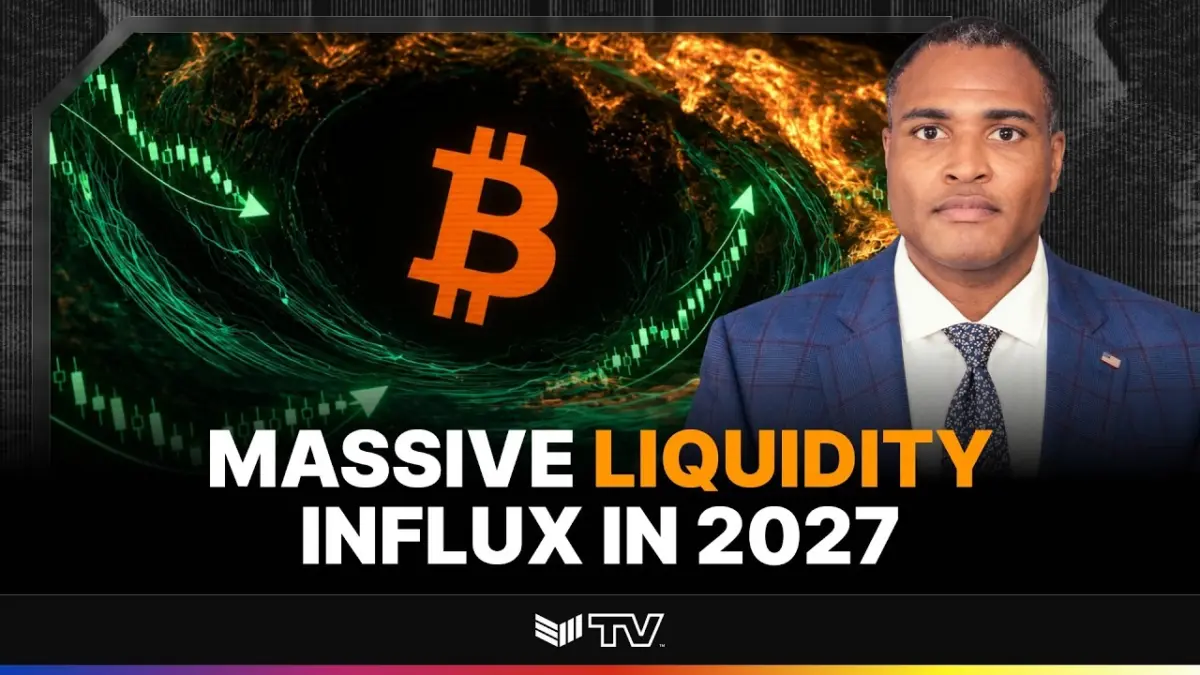
As financial markets navigate an increasingly complex macroeconomic environment, investors are left wondering whether Bitcoin is headed for a prolonged period of choppy price action before making its next major directional move. According to Darius Dale, founder and CEO of macro research firm 42 Macro, a contraction in funding liquidity could introduce significant volatility in the near term. However, Dale suggests that if macroeconomic liquidity conditions reverse and return by 2027—an outcome he views as more likely than not—digital assets could experience a substantial upward resolution over the subsequent 12 to 18 months.
During a recent comprehensive interview, Dale broke down the intricate mechanics driving current global markets, explaining why higher interest rates have yet to inflict widespread damage on the broader economy, how fiscal dominance is reshaping monetary policy, and why Bitcoin warrants a distinct portfolio allocation separate from traditional safe-haven assets like gold and equities.
Navigating Near-Term Chop and the 2027 Liquidity Case
The immediate outlook for Bitcoin, as outlined by Dale, hinges heavily on funding liquidity dynamics. When liquidity tightens within the financial system, risk assets frequently experience consolidation phases or sharp pullbacks as capital costs rise and speculative leverage is flushed out. For Bitcoin traders and long-term holders alike, this implies that the path forward may not be a straight line upward.
Looking past the immediate horizon, however, Dale points to 2027 as a pivotal turning point for macroeconomic liquidity. If liquidity conditions cycle back into positive territory as anticipated, the fundamental backdrop for digital assets is projected to shift dramatically. Under this scenario, a renewed influx of liquidity could fuel a powerful multi-quarter expansion, driving Bitcoin higher over a 12-to-18-month window following the liquidity inflection.
Beyond its cyclical price movements, Dale emphasizes that Bitcoin occupies a unique position in modern portfolio construction. Rather than viewing it as a direct substitute for equities or precious metals, he argues that Bitcoin deserves a dedicated, standalone allocation. Its distinct exposure profile offers investors a decentralized monetary hedge that operates outside traditional sovereign banking channels, setting it apart from both the growth-driven nature of stocks and the traditional store-of-value characteristics of gold.
Macroeconomic Forces: Treasury Yields, the AI Boom, and Fiscal Policy
To understand Dale’s thesis on Bitcoin and liquidity, it is necessary to examine the broader macroeconomic plumbing he analyzed during the discussion. Addressing the question of who ultimately benefits from rising Treasury yields, Dale explored the structural shifts occurring within global debt markets and sovereign borrowing.
A central puzzle for many market participants has been why persistent higher interest rates have failed to trigger an immediate economic downturn or credit crunch. Dale attributes this resilience largely to the artificial intelligence capital expenditure boom. The massive, sustained corporate investments flowing into artificial intelligence infrastructure and technological development have acted as an economic shock absorber, helping to offset the contractionary pressures typically associated with tighter monetary policy.
This intersection of government debt, monetary policy, and technological expansion leads into what Dale describes as "default via debasement" and the prospect of a Fed-Treasury Accord 2.0. As sovereign debt burdens climb to historic highs, governments face a narrow set of viable choices. Analyzing the fiscal landscape, Dale outlines five distinct paths out of the modern debt problem, asserting that only three of those paths are politically and economically acceptable to policymakers. Among the most probable outcomes is financial repression, where central banks and fiscal authorities coordinate to maintain low real interest rates while inflating away the real value of outstanding debt.
Within this environment of aggressive fiscal spending and monetary expansion, traditional fixed-income investments face severe headwinds. Dale shares explicit views on risk management, asset allocation, and the rationale behind completely omitting traditional bonds from a modern portfolio that prioritizes wealth preservation against currency debasement.
Broader Economic Structural Shifts and Politics
The discussion also ventured into the broader socio-economic implications of current policy frameworks, examining what Dale refers to as the "wealth pump" and the growing entanglement of money within modern politics. As asset prices respond to systemic liquidity injections, the wealth gap between asset owners and wage earners widens, creating profound political and structural consequences.
Turning toward the technological sector, Dale addressed the scale of the artificial intelligence boom, evaluating whether the massive capital investments are "too big to fail" and outlining what a potential market bust or valuation reset would realistically look like for the broader economy.
Rounding out the conversation, Dale offered personal and philosophical perspectives on civic engagement, discussing his thoughts on running for office, clarifying his political philosophy by explaining why he does not identify as a socialist, and drawing inspiration from historical figures such as Jackie Robinson.
Disclaimer: The views and opinions expressed in this show are those of the participants and do not necessarily reflect the official policy or position of BTC Inc., Bitcoin Magazine, or any affiliated entities. This content is provided for informational and educational purposes only and should not be construed as investment, legal, tax, or accounting advice. Nothing contained in this show constitutes a solicitation, recommendation, endorsement, or offer to buy or sell any securities or financial instruments. Viewers should consult their own advisors before making financial or business decisions.



Leave a Reply