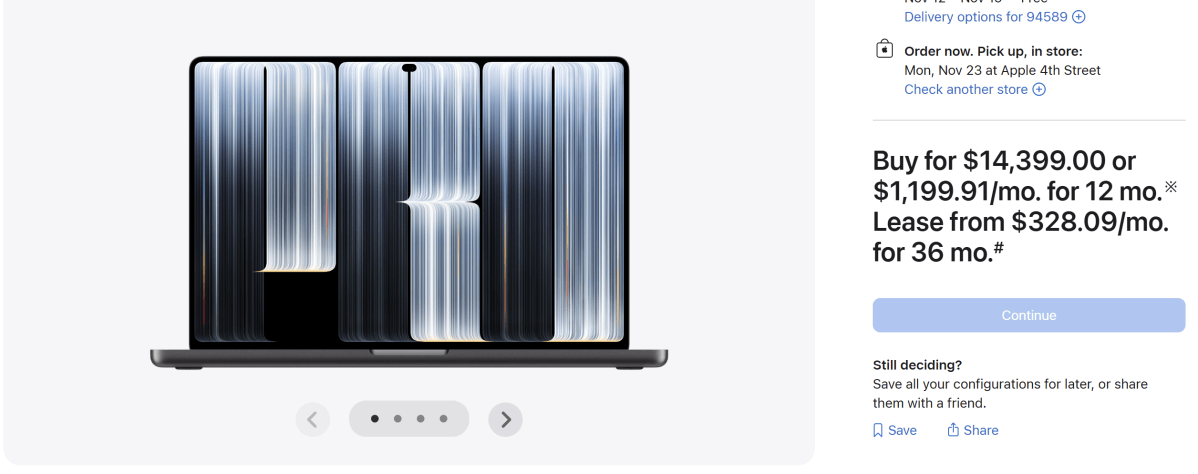
When Apple introduced its newest professional laptop lineup, tech enthusiasts and industry analysts anticipated the usual discourse surrounding incremental performance bumps and premium pricing. However, the top-tier configuration of the new MacBook Pro with the PROLED XDR touchscreen has pushed past conventional boundaries, cresting at an astonishing price tag upwards of $14,500.
For roughly $14,549 plus tax, buyers receive Apple’s long-anticipated entry into laptop touchscreens—a feature heavily reminiscent of the Microsoft Surface Laptop Ultra. Yet, at that exorbitant price point, the touchscreen itself feels almost incidental, fading into the background behind astronomical costs driven by memory and storage upgrades tailored for local artificial intelligence workloads.
The launch serves as a stark reminder of how far premium personal computing has drifted from the financial reality of the average consumer. In an era where flagship Macs command prices comparable to a reliable used automobile, the technology sector’s current trajectory raises urgent questions about who modern computers are actually being designed for.
The Anatomy of a $15,000 Laptop
To understand how a laptop reaches nearly $15,000, one has to look closely at Apple’s pricing structure. The latest generation 14-inch MacBook Pro starts at $2,899, while the larger 16-inch model—where the most advanced specifications become available—starts at $3,399.

Configure that 16-inch machine with 128GB of memory, and the price climbs to $7,399, putting it on par with the highest echelons of the Microsoft Surface Laptop Ultra and competing Nvidia RTX Spark machines. By comparison, a base-tier 15-inch Surface Laptop Ultra starts at $2,599, with higher-end review configurations pushing into territory that already exceeds the premium laptops of just a few years ago.
However, the real financial leaps occur when expanding internal storage. While the base 16-inch model includes a respectable 2TB of storage, upgrading to a massive 16TB SSD commands a staggering $7,000 add-on fee. This immense capacity is marketed largely around the ability to download, store, and run local AI models—a reflection of an industry-wide pivot where generative AI integration dictates hardware requirements. Interestingly, even at this unprecedented price point, the machine operates on an M5 Max or Ultra processor rather than the unreleased M6 chip.
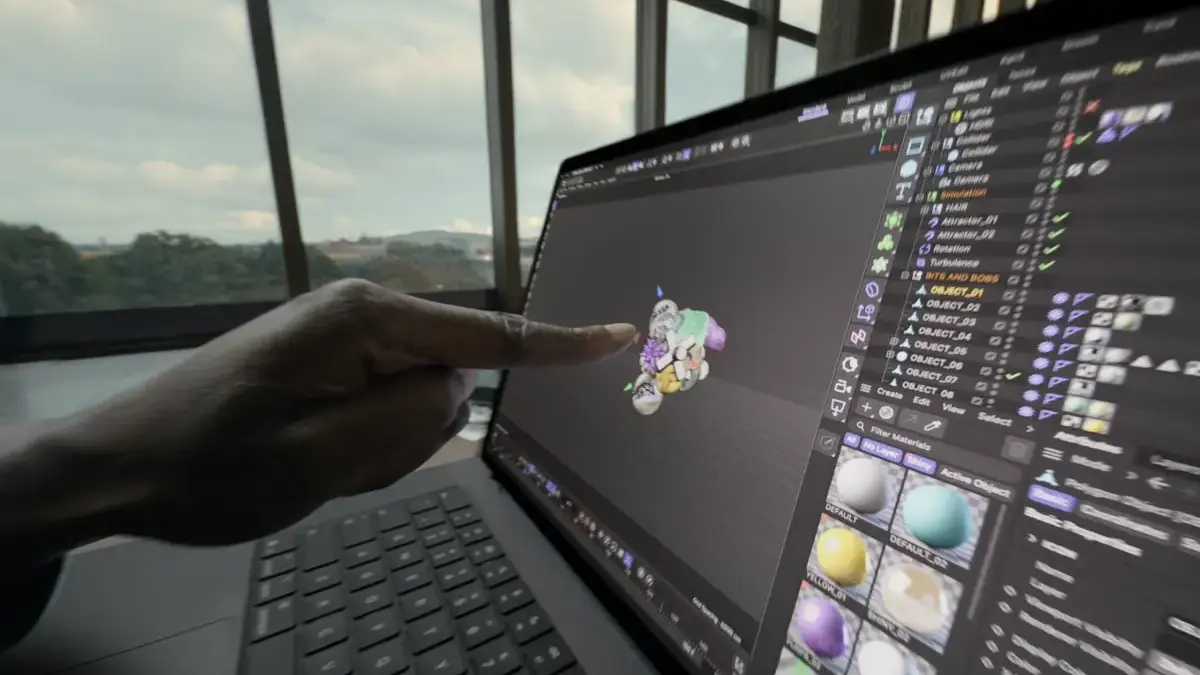
In typical Apple fashion, the company offers little justification for finally crossing the Rubicon into laptop touchscreens. For years, the corporate stance was that vertical touchscreens on traditional laptops were ergonomically flawed. Now, users can touch, swipe, and rotate elements on a PROLED XDR display. While social media influencers and tech reviewers may debate whether this physical interaction method represents a revolutionary shift or a minor novelty, the feature itself risks becoming as culturally notable as the illuminated Apple logo of past generations.
Who Is the New MacBook Pro For?
The debut of such an expensive machine arrives during a period of economic strain for broader consumer demographics. Back in 2020, consumers and tech journalists could engage in spirited debates about the incremental value of laptop features—weighing the cost of a higher-resolution screen, a faster processor, or an extra 32GB of RAM. Because those upgrades remained within reach for a substantial portion of the middle class, those conversations carried practical weight.

Today, however, the financial barrier to entry for top-tier computing is rapidly climbing out of reach. According to recent government data, the median household income sits at $87,460, translating to roughly $7,288 per month before taxes. When measured against the unyielding realities of rent, healthcare, groceries, utilities, and transportation, a high-end personal computer is an immense financial undertaking.
For a typical family in the Midwest or a major metropolitan center, purchasing a flagship laptop requires significant deliberation. At the same time, a distinct demographic views a $14,000 machine not merely as a tool, but as an investment and a status symbol. In certain business circles—particularly those fueled by venture capital seeking seed money for AI ventures—having the most expensive hardware available serves as tangible proof of capability and success.
Touchscreens, AI, and Changing Industry Realities
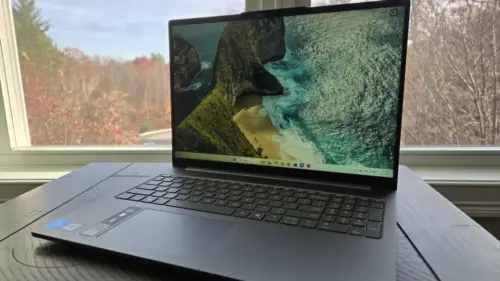
The arrival of Apple’s touchscreen MacBook also unfolds against a complicated macroeconomic and cultural backdrop. Competitors like Nvidia with its RTX Spark machines and Microsoft with its Surface Laptop Ultra have engineered hardware specifically designed to handle intensive local AI compute efficiently. The similarities between the new MacBook Pro PROLED and the Surface Laptop Ultra are striking: both feature dark finishes, touchscreens, comparable Arm-based processors, HDMI ports, and multiple Thunderbolt connections.
Yet, as consumers step away from their desk setups, the wider world presents mounting anxieties surrounding the rapid deployment of artificial intelligence. Reports regularly highlight how generative AI tools are being utilized to flood public spaces with automated content, deepfakes, and questionable advertising campaigns, all while geopolitical tensions and major elections play out globally.
Set against this turbulent environment, the inclusion of a touchscreen on a Mac feels almost secondary. Rumors regarding Apple’s interest in touchscreens have circulated for years, tracing all the way back to the early days of the iPad and Steve Jobs’s presentations.
Reflecting on Apple’s corporate history, Jobs famously told Playboy in 1985 that the company’s goal was to turn computers into accessible appliances for tens of millions of people. Decades later, during a 2008 earnings call, he acknowledged that there were customers Apple chose not to serve because they did not know how to manufacture a $500 computer that was not compromised in quality.
While those foundational philosophies guided Apple for decades, the modern tech landscape operates under different pressures. Driven by market forces, Apple, Microsoft, Google, and other industry leaders continue to chase high-margin sectors and enterprise-level innovations. For everyday users watching from the sidelines, the emergence of a $14,500 laptop serves as a stark illustration of how far the personal computing market has moved away from the mainstream consumer.