As artificial intelligence and advanced cloud computing continue to rapidly reshape the global digital landscape, the Internet community finds itself confronting a profound dual challenge. On one front, digital infrastructure must become significantly faster, smarter, and entirely more autonomous to handle increasingly heavy and complex workloads. On the other front, the diverse group of people, engineers, and organizations tasked with securing and maintaining those networks must forge deeper, more effective collaborations than ever before.
These core themes took center stage at the APNIC 62 Opening Ceremony and Keynotes session, where industry leaders laid out a vision for the next era of the global network. Amajit Gupta, Group CEO and Managing Director of Lightstorm, delivered insights focusing heavily on the evolution and urgent necessity of autonomous networks. Concurrently, Yukako Uchida, Manager of the Global Coordination Division at JPCERT/CC, stepped forward to emphasize the irreplaceable role of trust, culture, and human relationships in driving international cybersecurity collaboration.
Together, their keynote presentations underscored a fundamental truth about the trajectory of the Internet: the upcoming phase of digital development will rely equally on groundbreaking technological innovation and tightly knit, highly cooperative communities.
Networks in the Age of Artificial Intelligence
Kicking off the keynote proceedings, Amajit Gupta suggested that September 2026 may eventually be recognized by historians as a crucial inflection point in the evolution of global network infrastructure. Drawing direct historical parallels to earlier technological revolutions, he compared the current moment to the birth of the commercial Internet during the 1990s and the explosive rise of cloud computing in the mid-2000s—both of which permanently altered how networks function. Today, he argued, artificial intelligence represents an identical turning point.
According to Amajit, the modern telecommunications and enterprise industries are grappling with a paradigm shift where raw compute capacity and raw bandwidth are no longer the primary bottlenecks. Instead, latency has emerged as the most critical and scarce resource in the digital ecosystem.
"The scarce resource is not bandwidth or compute. It is latency," he stated during his presentation.
As AI workloads continue to proliferate across decentralized cloud environments, sprawling data centers, and localized edge computing nodes, contemporary networks are frequently granted only fractions of a second to reroute traffic, react to sudden performance degradation, and sustain high operational standards. Traditional network operating models—which remain heavily reliant on manual intervention, human-driven decision-making, and administrative oversight—struggle intensely to keep pace with these rigorous requirements.
Amajit noted that while enterprise investment can relatively easily expand physical compute capacity, latency lost to structural inefficiencies cannot be recovered. For mission-critical applications such as AI-driven services, high-speed financial transactions, and complex industrial systems, every single millisecond carries immense operational and financial weight. Pointing to India’s fast-growing digital payments ecosystem as a prime real-world example, he underscored the tangible economic consequences of network delays, warning that AI will inevitably amplify the financial cost of latency across diverse applications and services.

Artificial Intelligence is Exposing Deep Network Limitations
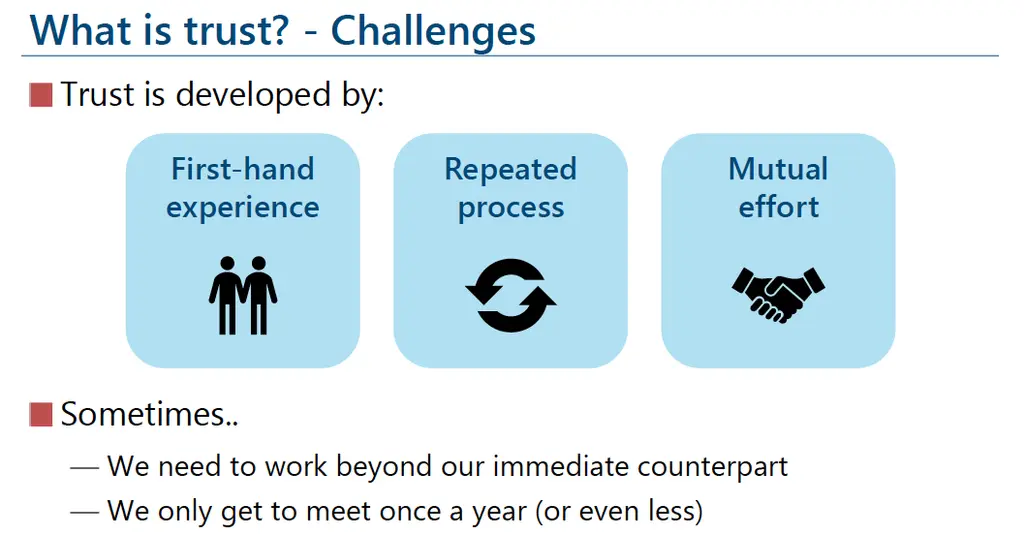
Rather than merely driving an unprecedented demand for sheer bandwidth, Amajit argued that artificial intelligence is aggressively exposing long-standing structural limitations deeply embedded within current network design and operations. He referenced recent industry research demonstrating that enterprises deploying AI workloads at scale are already running into significant networking roadblocks. Among surveyed organizations, workload distribution surfaced as the single most pressing issue, closely followed by WAN-edge latency, sophisticated traffic prioritization, and effective congestion management.
These empirical findings strongly indicate that modern application performance is increasingly dictated by the network’s capacity to make intelligent routing and resource decisions in real time.
"The issue really is not that AI needs faster networks. AI is likely to expose the structural limitations of networks, which largely today are still operated by hand," Amajit explained.
In his view, AI is acting as a powerful accelerator, forcing the industry to adopt a radically new operating model capable of reacting dynamically and instantaneously to shifting demands and volatile infrastructure conditions.
Moving From Traditional Networks to Intelligent Utility Grids
To successfully overcome these structural limitations, Amajit proposed that modern networks should begin operating much more like traditional electricity grids. Power networks are engineered to continuously monitor infrastructure health, dynamically balance complex supply and demand vectors, and automatically reroute electricity resources to preserve system reliability. Internet infrastructure, he argued, must evolve in a strikingly similar direction.
Rather than acting merely as passive conduits for connectivity, future networks must transform into intelligent utility platforms capable of responding in real time to fluctuating environmental conditions and specific application requirements. This ambitious framework forms the foundational concept of what Amajit termed the "autonomous grid." In practical execution, this vision describes a heavily automated, software-defined environment capable of detecting local anomalies, making autonomous decisions, and executing operational responses with minimal human intervention.
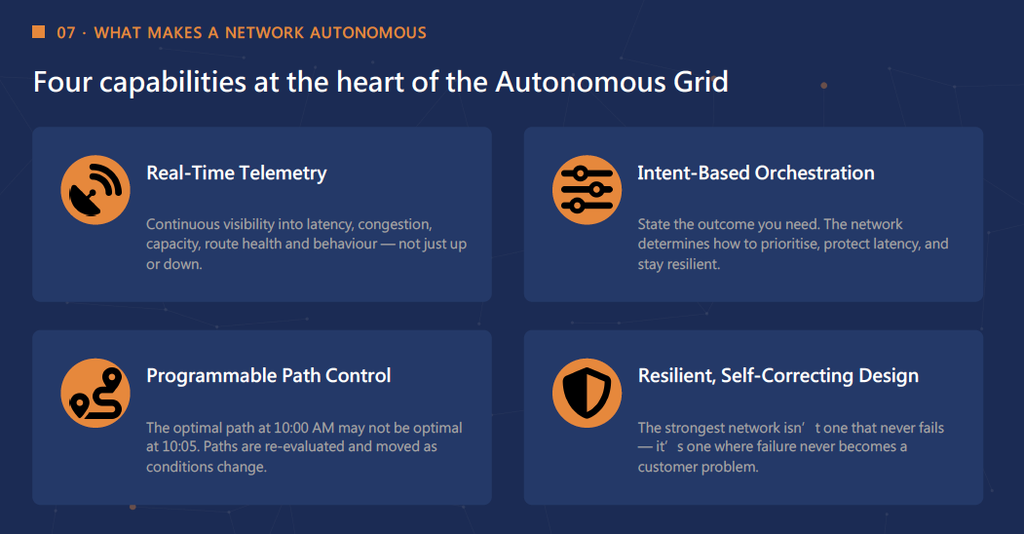
Amajit outlined four essential capabilities required to transition this vision into a reality: automated discovery, predictive analytics, closed-loop orchestration, and self-healing mechanisms. While straightforward to conceptualize on paper, he readily acknowledged that implementing these four pillars presents a formidable challenge for network operators weighed down by legacy infrastructure, entrenched internal processes, and established organizational cultures.
Reimagining the Role of Engineers Beyond Simple Automation
Despite years of continuous industry discourse surrounding the promise of network automation, Amajit pointed out that actual deployment and success rates have remained notably uneven. The overarching ambition has long been crystal clear, but practical implementation continues to test the patience and resources of operators. Effective automation demands not just cutting-edge software and hardware, but a comprehensive cultural shift encompassing organizational structures, operational processes, and workforce skill sets.

Today, countless network operators still depend heavily on human engineers to manually identify network faults, implement configuration changes, and verify performance outcomes. Every single manual intervention introduces unnecessary time, financial cost, and operational complexity. The autonomous grid model aims to replace this cumbersome cycle with a closed-loop system where networks autonomously detect environmental changes, formulate strategic routing decisions, and execute fixes while safely operating within strictly defined human guardrails.
Crucially, Amajit pushed back against the misconception that widespread automation diminishes the value of human personnel. On the contrary, he asserted that automation relieves engineers from repetitive, mundane operational tasks, freeing them to concentrate on higher-value responsibilities such as high-level systems architecture, long-term resilience planning, rigorous governance, and strategic oversight.
Furthermore, he highlighted the undeniable business advantages associated with comprehensive automation, including drastically lower operating costs, accelerated incident response times, minimized troubleshooting workloads, and significantly improved end-user outcomes. From this perspective, autonomous networking is not just a high-tech engineering objective, but a critical operational and financial imperative.
Building a Regional Digital Utility Framework
Looking toward the broader horizon, Amajit proposed an expansive vision for the future of Internet infrastructure across the entire Asia Pacific region. The advanced autonomous capabilities he detailed are equally vital for managing infrastructure operating at a vast regional scale. Returning to the utility grid analogy, he suggested that telecommunications carriers, submarine cable operators, major cloud providers, and localized data centers must increasingly coordinate as parts of a unified, highly integrated ecosystem. This cohesion would rely on shared frameworks for structural resilience, rigorous security protocols, seamless interoperability, and continuous service assurance.
As artificial intelligence and cloud services continue expanding across national boundaries without pause, Amajit warned that the region must transition away from isolated, fragmented interconnections and embrace a more coherent, resilient digital utility model. He summarized this philosophy with a succinct observation: "The best network is actually the one that you never have to manage."
The Human Foundation of Cybersecurity: Cultivating Trust at Global Scale
While Amajit focused intently on the hardware and software evolution of network infrastructure, Yukako Uchida’s keynote turned toward the equally critical, human-centric component of a resilient Internet: trust.
Drawing on more than a decade of specialized experience building and maintaining international relationships for Japan’s national Computer Emergency Response Team, known as JPCERT/CC, Yukako highlighted the irreplaceable human foundations that underpin effective cybersecurity collaboration. CERT organizations play an essential, frontline role in identifying, analyzing, and coordinating defensive responses to sophisticated cybersecurity incidents. Their day-to-day operations routinely demand close, cross-organizational, cross-industry, and cross-border cooperation.
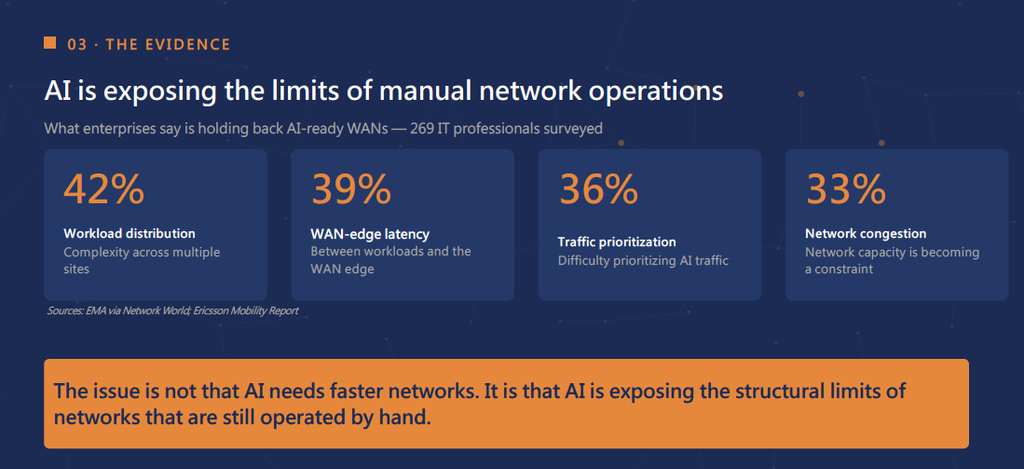
Whether these professionals are sharing sensitive vulnerability intelligence, coordinating joint responses to active cyberattacks, or requesting rapid assistance from external entities, cybersecurity practitioners must possess absolute confidence that their international counterparts will handle shared data responsibly, act with appropriate urgency, and provide reliable information in return. For Yukako, true trust cannot be manufactured through rigid formal agreements or automated technical systems; it must be cultivated through firsthand experience, repeated professional interactions, and genuine personal relationships.
Trust as an Operational Requirement in Modern Incident Response
While trust is frequently discussed in philosophical or abstract terms, Yukako demonstrated that it has evolved into a vital operational requirement for modern cybersecurity defense. During the 2025 calendar year alone, JPCERT/CC coordinated roughly 20,000 distinct cybersecurity incidents, a large portion of which involved targeted organizations spanning multiple international jurisdictions. Over the past twenty years, the organization has received critical incident reports from entities situated in more than 100 economies while issuing vital security notifications to stakeholders located in upwards of 160 economies.
These staggering figures vividly illustrate the deeply interconnected nature of contemporary incident response. Effectively mitigating modern cyber threats requires organizations to effortlessly exchange intelligence across sovereign borders, coordinate defensive actions between disparate industrial sectors, and build rock-solid confidence that sensitive information will be treated with the utmost discretion.
For Yukako, an organization’s capacity to respond decisively to cyber threats depends just as heavily on the quality of the interpersonal relationships established long before an incident occurs as it does on raw technical capabilities.
The Vital Role of Professional Communities
A substantial portion of Yukako’s address focused on the indispensable role that professional communities play in creating and strengthening global trust networks. Established bodies such as APCERT and FIRST offer essential venues where security practitioners can meet face-to-face, exchange practical experiences, participate in simulated exercises, and develop personal bonds that inevitably prove invaluable during real-world crises.
These professional relationships often originate through modest, everyday interactions: sharing a cup of coffee during a conference break, participating in a technical workshop, or engaging in collaborative problem-solving exercises. Over time, these cumulative touchpoints form a reliable, trusted network that underpins effective information sharing and cross-border incident coordination.
Reflecting on her own extensive career, Yukako described spending years traveling across the globe, attending international meetings, actively engaging with local and regional communities, and meticulously maintaining professional relationships. "Trust is built by your own firsthand experience," she emphasized to the audience.
Yukako stressed that trust cannot be delegated to others or created instantly out of thin air. It develops gradually through persistent, repeated interactions and demonstrated mutual confidence between individuals and organizations. Furthermore, the interpersonal trust formed among individual practitioners frequently serves as the bedrock for broader organizational cooperation, particularly during chaotic, high-pressure incidents that demand rapid information sharing and synchronized execution.
Diversity as a Catalyst for Stronger Collaboration
In the final segments of her keynote, Yukako reflected on the profound cultural diversity inherent within the global Internet community. She underscored the critical importance of understanding and respecting subtle differences in communication styles, workplace norms, and cultural expectations across various regions.
Drawing on concrete examples from her career, she illustrated how seemingly minor behavioral nuances can heavily influence professional collaboration. Approaches to asking probing questions, participating actively in panel discussions, managing strict timelines, and conducting routine business interactions vary widely across global cultures.
Recognizing, appreciating, and adapting to these cultural differences helps foster stronger relationships and more streamlined cross-border cooperation. For a technical community operating across sprawling national, linguistic, and cultural boundaries, this adaptability is nothing short of essential. Yukako encouraged all event participants to actively seize the networking opportunities provided by gatherings like APNIC 62.
"Everything you do, every engagement you make during this week is the first step in building trust relationship in this community," she reminded attendees.
She reiterated that professional conferences serve a purpose far beyond traditional presentations and technical workshops; they represent vital opportunities to build lasting relationships that may ultimately prove critical when responding to unexpected security incidents or tackling shared regional challenges.
Two Halves of a Connected Future
Although their specific focal points differed significantly, the two APNIC 62 keynote presentations addressed two deeply intertwined facets of the Internet’s future. Amajit Gupta outlined a forward-looking vision where underlying networks become increasingly autonomous, highly intelligent, and capable of operating at machine speed to sustain demanding AI-driven applications and digital economies. Meanwhile, Yukako Uchida illuminated the intricate human relationships that empower organizations to cooperate seamlessly during cybersecurity incidents, share sensitive intelligence across borders, and respond collectively to emerging global threats.
Both speakers shared the conviction that traditional, legacy approaches will simply not scale indefinitely. Infrastructure networks must become vastly more adaptive and automated, while the broader Internet community must continue investing heavily in the human trust and professional relationships that render cooperation possible in the first place.
One keynote centered its attention on infrastructure engineered to make intelligent decisions independently. The other focused squarely on the people who must continue working together seamlessly whenever those automated systems encounter failures, fall under sophisticated attack, or require complex coordination across diverse organizations and economies.
For the attendees gathered at APNIC 62, the overarching message resonated with exceptional clarity: the future Internet will rely completely on a combination of intelligent, self-managing infrastructure and deeply trusted human communities. While advanced automation will undoubtedly help networks operate at unprecedented scales, the ultimate resilience of the global Internet will continue to rest securely upon the human relationships connecting the professionals behind the screens.