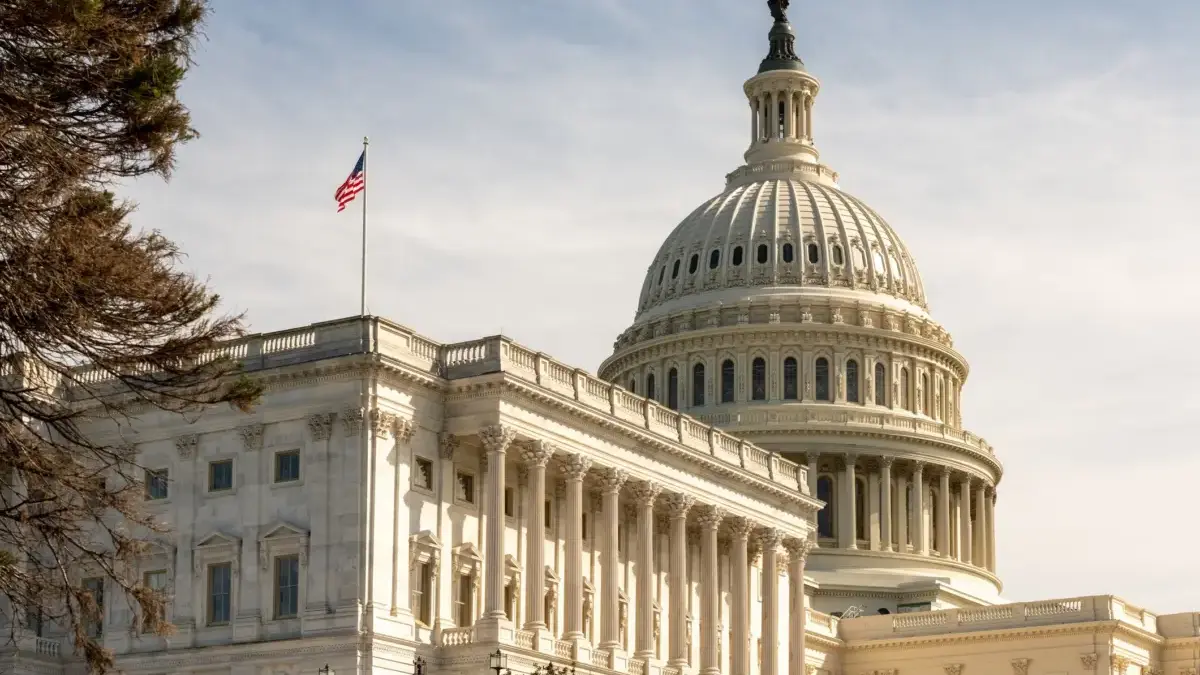
Political action committees on both sides of the artificial intelligence debate poured millions of dollars into Tuesday’s midterm elections, aiming to influence the trajectory of future AI regulation. However, that heavy financial investment produced decidedly mixed results, with several heavily backed candidates ultimately losing their races as broader political currents took center stage.
On the industry side, two prominent AI-focused political action committees—American Mission and Building the Future—collectively spent $4.8 million to support South Carolina Senate candidate Darline Graham, who ultimately lost her bid. American Mission serves as the Republican spending arm of Leading the Future (LTF), a broader political advocacy group backed heavily by venture capital firm Andreessen Horowitz and OpenAI President Greg Brockman.
American Mission also directed more than $500,000 apiece toward supporting Republican House candidates Aaron Flint in Montana and Laurie Buckhout in North Carolina. Both candidates were defeated. Conversely, LTF’s Democratic-focused spending arm, Think Big, experienced better outcomes, successfully backing Florida Representative Jared Moskowitz in his successful reelection campaign.
Groups advocating for tighter AI guardrails and increased consumer protections also encountered mixed electoral fortunes. Public First, an organization backed by Anthropic, utilized an affiliated political action committee to support several Republican candidates who ultimately lost, though it found more favorable results when throwing its weight behind Democratic contenders. Furthermore, Public First contributed $3 million to a political action committee supporting California state Senator Scott Wiener, who was leading his respective race at the time of publication.
Simultaneously, the Guardrails Alliance—a group striving to transform the acceptance of campaign contributions from AI firms into a major political liability—spent more than $1 million apiece opposing two candidates who ultimately lost: California Representative Jimmy Gomez and Montana’s Aaron Flint. The organization additionally invested $300,000 to back Angela Gonzales-Torres, who successfully defeated Gomez.
Disentangling the direct impact of AI-related political spending from the broader political wave that swept through Tuesday’s elections remains a significant challenge. Tech billionaire Elon Musk reportedly funneled half a billion dollars into supporting Republican candidates during the midterms, yet similarly watched many of his favored candidates suffer defeats. Indeed, Leading the Future also backed various candidates whom leadership believed were well-positioned to win, only to watch them fall short against Democratic opponents.
For Leading the Future, however, the general election was never the primary strategic focus. Representatives from the group noted ahead of Election Day that they view primary contests—the individual elections used to determine each political party’s official nominee—as a far more efficient and effective use of financial resources. According to LTF, spending during primary races allows campaigns to build vital name recognition early on and helps prospective lawmakers establish concrete AI policy agendas before reaching the general electorate.
Leading the Future expended $27.38 million during the primary season alone. This figure included a notable $8 million dedicated entirely to opposing New York Assembly member Alex Bores, who ultimately lost his congressional bid back in June. When evaluating whether entering a general election contest is financially and strategically worthwhile, LTF leadership assesses the overall competitiveness of the race, the degree to which financial intervention could shift the outcome, and whether preserving capital for future electoral cycles is the wisest course of action.
Charlie Blaettler, the political director of the Guardrails Alliance, offered a fundamentally different theory regarding why the pro-industry group spent comparatively little money during the general election cycle.
"They don’t want their money to become an issue in these elections," Blaettler remarked. He pointed directly to the Michigan Senate primary election as a cautionary tale, wherein a pro-Israel lobbying group known as AIPAC spent nearly $30 million supporting Democratic candidate Haley Stevens against challenger Abdul El-Sayed. Stevens ultimately conceded that primary to El-Sayed, who went on to secure the Senate seat.
"AIPAC became the story in that race," Blaettler explained. "We know people hate AI billionaires. They hate the people running these companies. They’re very distrustful and disgusted by the political spending and lobbying that the tech industry does. If they spend in a competitive race, they would just empower an enormous liability for their candidates."
At the core of the ongoing conflict between rival AI political action committees—spanning both pro-industry and pro-regulation camps—is a fundamental disagreement over federal policy. The primary legislative battle centers on whether Congress should establish a comprehensive national AI framework capable of overriding state-level legislation, or whether individual states should retain the authority to impose their own unique safeguards and regulations.
Neither side appears willing to back down from the fight. Leading the Future, which advocates strongly for a unified national framework, confirmed its intention to continue spending heavily through the 2028 election cycle. Meanwhile, the Guardrails Alliance affirmed that it remains steadfast in its mission to actively oppose any political candidates backed by the broader artificial intelligence industry.
Blaettler noted that while Leading the Future’s advertising campaigns rarely touch upon artificial intelligence directly—instead preferring to focus on popular, broadly appealing issues for each candidate—Guardrails Alliance advertisements are explicitly designed to highlight which candidates are accepting money from the AI sector.
"Our goal is to make AI money politically toxic," Blaettler said.