
As artificial intelligence continues to evolve beyond simple, isolated prompt responses, industry attention has increasingly turned toward a critical capability known as AI agent reasoning, or agentic reasoning. Published on September 4, 2026, industry insights highlight how this specialized decision-making framework enables AI systems to comprehend high-level objectives, deconstruct them into manageable components, select appropriate software tools, evaluate outcomes dynamically, and adapt their strategies based on incoming information.
While this advanced capability allows software agents to navigate complex, multi-step workflows with remarkable flexibility, experts emphasize that it does not equate to human consciousness or genuine thought. Instead, agentic reasoning operates through a continuous cycle of deciding, acting, reviewing results, and adjusting subsequent actions. By fundamentally altering how AI systems handle open-ended tasks across software development, market research, customer support, and process automation, this technology is redefining the boundaries of modern digital productivity.
What is AI Agent Reasoning?
At its core, AI agent reasoning defines the mechanism through which an autonomous AI agent determines its next course of action while pursuing a specific, overarching goal. Traditional large language models typically operate on a static input-output paradigm, generating a complete response in a single pass based solely on the initial prompt. In contrast, agentic reasoning empowers a system to recognize gaps in its own knowledge, solicit clarification, and modify its trajectory dynamically as a task unfolds.
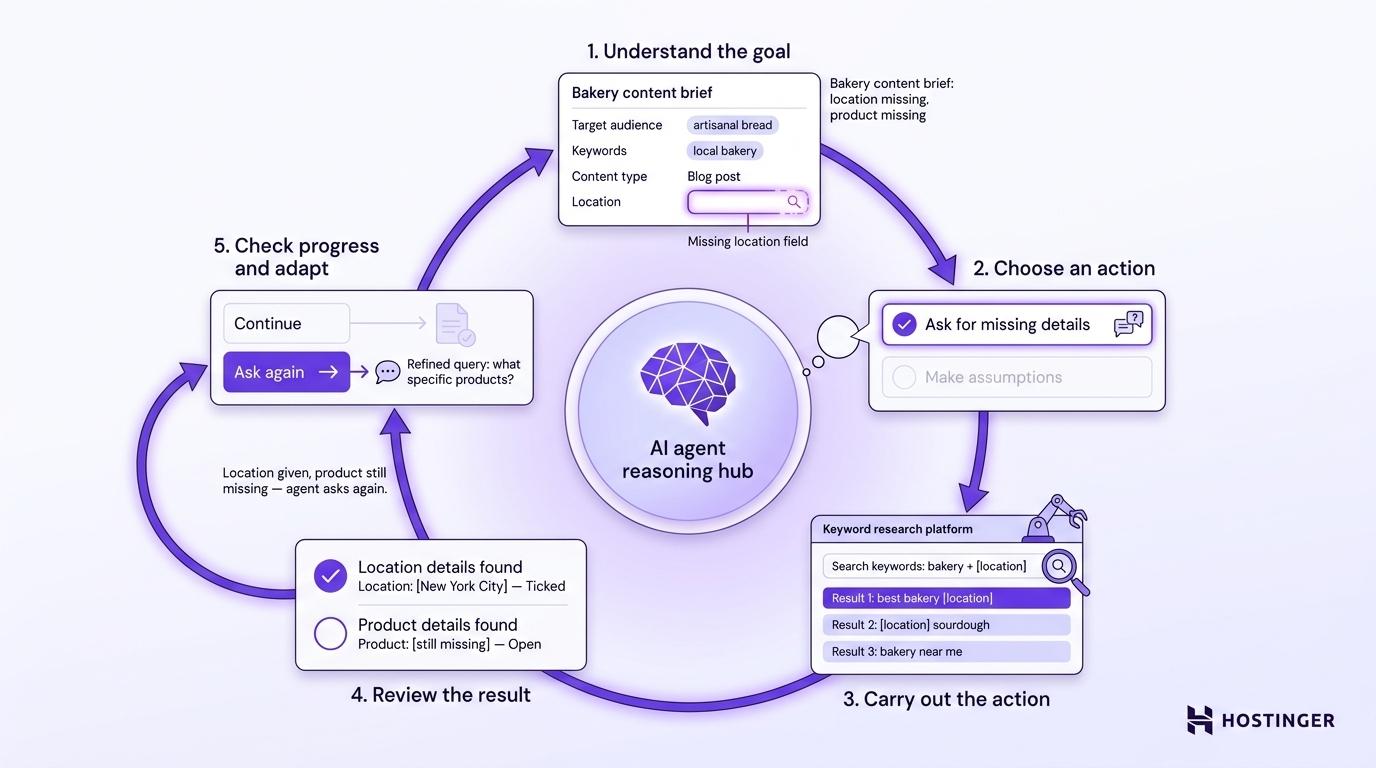
To illustrate this concept, consider a scenario involving a local bakery seeking assistance with digital marketing. When asked by the bakery to generate a comprehensive SEO content plan, an advanced AI agent might recognize that it lacks critical parameters, such as the business’s geographic location or its primary product offerings. Rather than fabricating assumptions, the agent pauses to prompt the bakery for these essential details. Upon learning that the enterprise specializes in artisanal wedding cakes in Chicago, the agent leverages this context to determine its subsequent research steps.
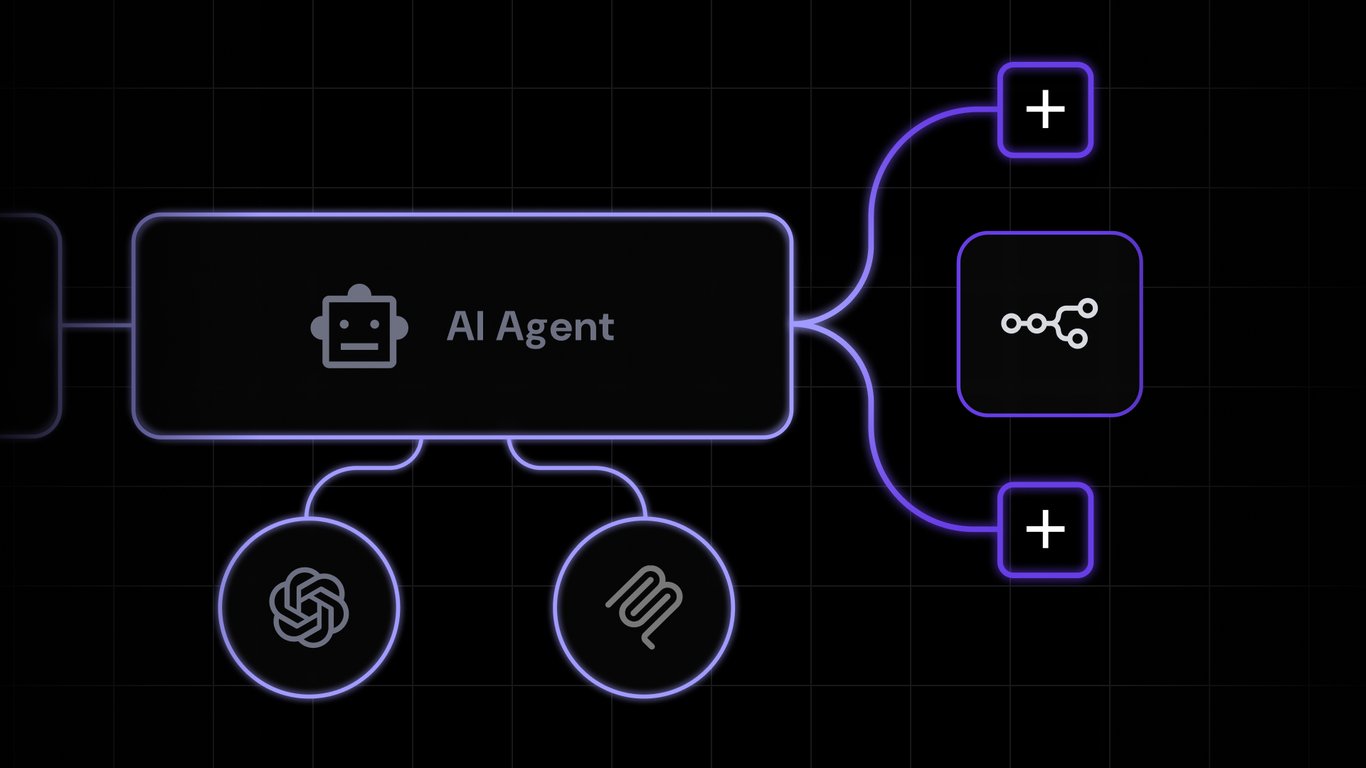
This capability to adapt seamlessly to evolving circumstances represents the fundamental dividing line between basic AI interactions and true agentic reasoning. When integrated with auxiliary software ecosystems, the reasoning engine enables the agent to execute concrete operational tasks. These might include querying search engines for competitor analysis, utilizing specialized keyword data platforms, recording findings in spreadsheets, or drafting comprehensive content strategies in collaborative document editors.
How Does AI Agent Reasoning Work?
The operational architecture of AI agent reasoning functions as a continuous, multi-stage loop wherein the system comprehends the overarching objective, selects and executes a specific action, reviews the resulting output, and leverages that data to inform its next move. Behind the scenes, the underlying machine learning model evaluates a defined set of permitted options to choose the most logical subsequent step.
External software integrations—ranging from search engines to specialized analytical tools—then carry out the designated action and return the raw data to the system. The agent assesses this new information against its primary objective to determine whether to proceed, pivot, or seek further input. Furthermore, predetermined workflow rules and guardrails govern this cycle, establishing operational boundaries that can halt an operation after a specific number of failed queries or mandate human authorization before executing sensitive modifications.
For instance, if the bakery from the previous example provides its geographic location but fails to specify which particular menu items it wishes to prioritize, the reasoning loop prevents the agent from rushing prematurely into keyword research. Instead, the system recognizes the ambiguity and prompts the user to clarify whether the impending campaign should center on wedding cakes, artisan bread, delicate pastries, or another distinct product category.
Main AI Agent Reasoning Patterns
Industry frameworks categorize agentic reasoning into several primary patterns, each tailored to different operational requirements and task structures. These methodologies—namely ReAct, plan-and-execute, reflection and self-correction, and search-based approaches like Tree of Thoughts—differ significantly in how and when the system formulates its strategy, responds to fresh data, and evaluates single versus multiple potential pathways.
The ReAct pattern, which combines reasoning and acting, allows an agent to decide its next move dynamically immediately after observing the outcome of its previous step. This continuous cycle of deciding, acting, and observing proves particularly effective for open-ended tasks where each incremental result directly influences the subsequent direction. However, a primary tradeoff of this approach is that a misinterpretation of early data can misdirect subsequent steps or lead the system into repetitive operational loops.
Conversely, the plan-and-execute pattern requires the agent to formulate an exhaustive, overarching strategy before systematically executing and revising individual steps as conditions evolve. In the bakery scenario, an initial plan might encompass audience analysis, keyword research, topic ideation, and content scheduling. If the agent subsequently discovers that the business exclusively serves local patrons rather than fulfilling nationwide shipping orders, it can recalibrate the research and topic selection stages accordingly. While this structured approach excels in predictable, long-term tasks, a flawed foundational assumption in the initial planning phase can negatively impact multiple subsequent steps before new feedback exposes the error.
Reflection and self-correction introduce a mechanism whereby an agent evaluates an earlier output against objective feedback or explicit target criteria before refining its subsequent attempt. If a generated content plan technically fulfills the requested formatting parameters but fails to drive local inquiries regarding wedding cakes because the topics remain overly broad, the agent can cross-reference the output against its core objective and substitute the generic concepts with targeted local marketing ideas. While external benchmarks such as automated test results, tool outputs, and human evaluations enhance the reliability of this process, relying solely on internal reviews can occasionally cause the model to reiterate existing errors.

Finally, Tree of Thoughts and broader search-based reasoning patterns allow an intelligence model to evaluate several distinct potential pathways simultaneously rather than prematurely committing to a single trajectory. By comparing multiple conceptual directions—such as local event optimization, product-specific spotlights, and general culinary education—the system can systematically discard paths that fail to align with strategic goals while dedicating resources to the most promising options. Although this expansive exploration significantly increases model computational calls, financial costs, and response latencies, it remains invaluable for complex tasks where early missteps carry severe consequences.
How AI Agent Reasoning Differs From Reasoning Models
A persistent point of confusion in contemporary technology discussions involves the distinction between standalone reasoning models and comprehensive AI agent reasoning systems. While a specialized reasoning model is engineered to solve intricate, highly difficult analytical questions or logical problems, AI agent reasoning utilizes a model merely as the central cognitive engine within a much broader architectural framework.
This wider system equips the model with the ability to execute tangible actions, review empirical outcomes, maintain persistent operational progress, and govern multi-step workflows. For example, while a standard reasoning model might successfully deduce which keywords are mathematically relevant to a bakery’s product line, an AI agent takes the process several steps further. The agent actively executes the search queries, reviews the resulting data streams, modifies its parameters dynamically in response to unexpected findings, and continues iterating until the broader assignment reaches completion.
The fundamental differentiator lies within the surrounding software architecture. The underlying model handles cognitive deductions, while the agentic system supplies the necessary software integrations, persistent memory registers, operational constraints, and governance rules required to navigate multi-stage operations successfully. This persistent memory allows agents to retain and apply context from earlier interactions, ensuring continuity across extended operational timelines.

Practical Applications Across Industries
The integration of agentic reasoning has transformed capabilities across a diverse array of professional domains, including comprehensive research, software engineering, customer relationship management, sales and marketing, and general workflow automation. These sectors benefit profoundly from reasoning frameworks because dynamic variables and unexpected obstacles frequently alter the optimal path forward.
In software development, coding agents utilize reasoning patterns to analyze debugging logs, test proposed code patches, and systematically correct errors until an application compiles successfully. In customer support environments, advanced agents can diagnose complex technical issues by querying internal databases, interacting with external troubleshooting utilities, and escalating tickets to human supervisors only when predetermined thresholds or policy limits are breached. Similarly, marketing and sales platforms leverage these systems to autonomously orchestrate lead generation campaigns, analyze engagement metrics, and refine promotional strategies in real-time based on live performance data.
Ready-to-use commercial products increasingly package these advanced capabilities into guided workflows designed for everyday business operations. Specialized enterprise agents are deployed across organizations to streamline administrative burdens, automate routine communications, and manage specialized tasks without requiring extensive custom software development from internal engineering teams.
Limitations and Operational Risks
Despite their transformative potential, AI agent reasoning systems present notable limitations and operational risks that require careful mitigation. Because these systems rely heavily on probabilistic outputs, they can occasionally make critical decisions based on incomplete information, propagate early analytical errors into later operational stages, execute unnecessary loops that inflate computational costs, and misjudge the ultimate quality of their own outputs.
Mitigating these risks typically involves embedding rigorous governance structures around the underlying reasoning loops. Organizations frequently implement strict data validation protocols, establish definitive retry and stop boundaries to prevent infinite operational loops, restrict programmatic access to sensitive enterprise assets, and mandate human-in-the-loop approvals whenever an automated decision carries significant financial or operational impact.
Applying Agentic Workflows in Practice
Deploying AI agent reasoning effectively requires organizations to identify specific decision points within their operations where incoming data should dynamically alter the next operational step. By designing agentic workflows with explicit operational rules, enterprises can define precisely what an agent is permitted to execute, when an ongoing process should automatically terminate, and at what juncture human intervention becomes mandatory.
For example, if an automated agent executes a search query and yields no actionable results, the governing workflow records the attempt as part of a controlled iteration limit, such as the second of three permitted tries, and feeds the error data back into the reasoning engine. This allows the system to determine whether to modify its search parameters and try again. If subsequent attempts fail to produce valid results, the workflow automatically blocks further automated retries, halts the process, and routes the accumulated task history, previous outputs, and error logs directly to a human operator for resolution.
Ultimately, the objective of modern agentic workflows is not to grant artificial intelligence absolute autonomy over complex business processes. Instead, it involves striking a strategic balance—providing intelligent systems with the operational flexibility required to adapt where new information improves outcomes, while maintaining clear, enforceable guardrails around system capabilities and human oversight.
Leave a Reply