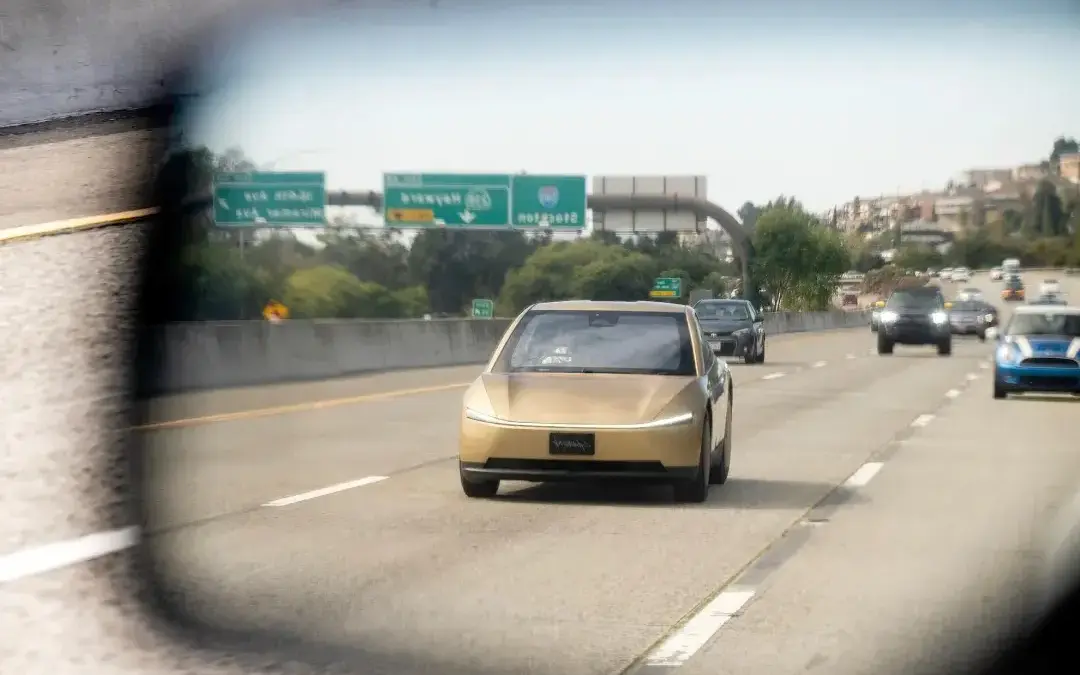
Tesla has officially opened pre-orders for its highly anticipated autonomous, golden Cybercab, allowing a select group of customers the opportunity to purchase the futuristic vehicle for personal use. The announcement, which was shared on the evening of Friday, November 14, 2026, marks another major step forward in the company’s aggressive pivot toward autonomous transportation and robotaxis. However, as initial buyers gained access to the official order page, a clearer picture emerged regarding the practical realities, regional limitations, and recurring costs associated with owning Tesla’s dedicated autonomous vehicle.
The rollout has sparked significant online discussion among technology reviewers and industry observers. Prominent tech reviewer Marques Brownlee took to social media to share early insights from the ordering interface. According to Brownlee’s findings, prospective buyers "must accept delivery" in one of a select handful of designated Texas cities. Furthermore, the Cybercab will not feature open, nationwide point-to-point driving immediately out of the gate; instead, the vehicle will only operate autonomously within strictly defined, geofenced areas. For those willing to meet these initial criteria, Tesla has estimated that vehicle deliveries will begin as early as December 2026.
Beyond the baseline sticker price of $29,990—which positions the vehicle as an affordable entry point into the autonomous future promised by Tesla executives—the order page revealed additional financial commitments required for vehicle operation. Specifically, early documentation indicated that Cybercab owners would need to pay a recurring operational fee of $299 per month to keep the vehicle functioning within its intended autonomous parameters.
The revelation of the $299 monthly operational fee quickly drew public attention and questions from tech commentators. In direct response to Brownlee’s social media post highlighting the fee, Tesla CEO Elon Musk chimed in to clarify the company’s long-term pricing strategy and regulatory roadmap. Musk stated that the Cybercab "will be available nationwide, as we receive regulatory approval," signaling that the current geographic restrictions in Texas are merely an initial phase tied to local regulatory frameworks rather than a permanent hardware limitation.

Furthermore, Musk openly acknowledged that the initially displayed $299 monthly fee was "too high." He suggested that the final recurring cost should align more closely with existing subscription models for Tesla’s advanced driver-assistance systems. According to Musk, the operational cost "should match the cost of Tesla Full Self-Driving and connectivity for other models, which is more like ~$115/month." This potential price correction would significantly lower the ongoing cost of ownership for early adopters hoping to utilize the vehicle for personal transportation needs.
Adding technical clarity to how the personal Cybercabs will function in the real world, Ashok Elluswamy, Tesla’s head of AI software, took to social media to address how the vehicle’s geofencing will operate for individual buyers. Elluswamy explained that the Cybercab will function "unsupervised inside all the same geo locations as @robotaxi, just serving the owners’ needs." This means that personal vehicle owners will benefit from the exact same autonomous infrastructure and mapping data developed for Tesla’s broader commercial robotaxi fleet, allowing the vehicle to navigate complex urban environments without human intervention, provided it remains within the approved operational boundaries.
The launch of personal Cybercab pre-orders comes at a pivotal transitional moment for Tesla’s vehicle manufacturing and product lineup. The company has recently faced shifting market demands and production realities, leading to difficult strategic decisions regarding its broader portfolio. Most notably, after falling far short of projected sales targets for its angular, stainless-steel pickup truck, Tesla recently announced that it will officially cease Cybertruck production next year in 2027. By winding down manufacturing of the Cybertruck, Tesla intends to reallocate and repurpose that additional factory capacity to scale up production of the Cybercab, underscoring the company’s total commitment to an autonomous-first future.
As the December 2026 delivery window approaches, prospective buyers and industry analysts will be watching closely to see how quickly Tesla can secure broader regulatory approvals outside of Texas, whether the monthly operational fee is officially adjusted to the $115 range, and how the transition from factory lines previously dedicated to trucks will accommodate the mass production of the company’s new golden autonomous fleet.