By Keysight Technologies | November 3, 2026
As digital design workflows increasingly center on modern, text-based development environments, engineers expect the same efficiency from design data management as they do from coding tools. Visual Studio Code (VS Code) has become a preferred platform for developing RTL, HDL, scripts, and verification assets, offering a flexible and extensible workspace that streamlines day-to-day engineering tasks. Yet many organizations still rely on disconnected data management processes that require engineers to switch between editors, command-line tools, and separate repositories to manage versions, collaboration, and design history.
The modern semiconductor and electronics industries face unprecedented pressure to accelerate time-to-market while managing escalating complexity in both digital and mixed-signal systems. As design teams grow larger and more geographically distributed, the infrastructure supporting hardware and software co-design must evolve. Traditional hardware description language development has historically relied on fragmented toolchains, where capturing design intent happens in one environment, while tracking revisions, managing design data, and coordinating team access occur across entirely separate, often legacy repositories. This operational friction has long hindered productivity, forcing hardware and verification engineers to constantly context-switch between writing code and managing administrative data workflows.
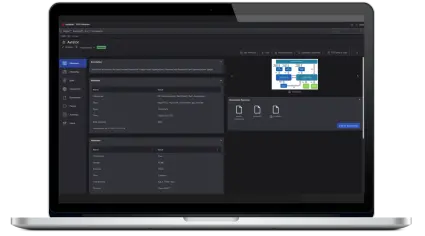
To address this persistent challenge within the developer ecosystem, Keysight Technologies has introduced Keysight SOS for Visual Studio Code. This integration brings advanced design data management directly into the developer workflow, bridging the gap between text-based engineering tools and robust revision control. By embedding these capabilities into VS Code, the environment aims to eliminate the friction caused by disjointed toolsets, allowing design teams to maintain focus on core engineering tasks without sacrificing the traceability, security, and version control demanded by enterprise-grade hardware development.
Visual Studio Code has achieved widespread adoption across software and hardware development sectors alike due to its lightweight architecture, extensive extension marketplace, and robust support for modern programming languages. Hardware engineers working with Register Transfer Level (RTL) descriptions, Hardware Description Languages (HDLs) such as Verilog, SystemVerilog, and VHDL, as well as verification languages and automation scripts, increasingly favor the customization and speed that VS Code provides. The editor allows professionals to build unified workspaces tailored to their specific project requirements, integrating linters, syntax highlighters, and terminal interfaces into a single pane of glass.
Despite these advancements in coding efficiency, design data management for complex digital and mixed-signal chips has remained a notable bottleneck. Unlike standard software development, which typically deals with text files that merge predictably, hardware development involves intricate hierarchies, large binary datasets, intellectual property blocks, and rigorous revision tracking requirements. Consequently, hardware engineers have often had to step outside their primary development environments to invoke command-line utilities, launch dedicated data management clients, or manually synchronize local workspaces with central repositories. Every interruption breaks the developer’s train of thought and introduces potential delays into the verification and release cycle.
Keysight SOS for Visual Studio Code directly tackles this workflow fragmentation by embedding robust design data management functions natively into the editor interface. Engineers no longer need to constantly switch between disparate editors, standalone command-line tools, and separate database repositories to handle day-to-day versioning, collaboration, and design history tracking. By unifying these operations within the familiar interface of VS Code, the integration allows teams to execute common data management tasks seamlessly, maintaining a continuous flow state throughout the design and verification cycle.
The strategic alignment of Keysight SOS with Visual Studio Code reflects a broader industry movement toward developer-centric ecosystems. As systems-on-chip (SoCs) and printed circuit boards grow increasingly sophisticated, combining high-speed digital logic with sensitive analog and mixed-signal components, the volume of design data generated by engineering teams has expanded exponentially. Managing this data efficiently requires tools that scale alongside modern design methodologies without imposing heavy administrative burdens on the engineers themselves.
By bringing advanced design data management directly into the text-based development environments where engineers spend the vast majority of their working hours, Keysight provides a streamlined approach to collaboration and version control. Teams can track design iterations, manage complex hierarchies, and coordinate parallel engineering efforts without leaving their preferred workspace. As organizations continue to modernize their digital and mixed-signal engineering pipelines, solutions that unify coding, verification, and data management under a single interface are set to play a pivotal role in shaping the future of hardware development productivity.