
Every year, the Office of the United States Trade Representative (USTR) issues a call to rightsholders around the globe, asking them to identify and nominate the foreign piracy platforms, services, and online markets that pose the most significant threats to intellectual property. The resulting compilation, traditionally known as the Notorious Markets list, has historically focused heavily on traditional torrent indexers, anonymous cyberlockers, and unauthorized live-streaming portals. In recent years, however, the scope of these submissions has expanded to encompass hosting providers, cloud intermediaries, and other foundational infrastructure elements that enable digital infringement.
In its latest submission to the USTR, the Entertainment Software Association (ESA)—the prominent trade group that represents the interests of the video game industry’s major publishers and developers—has put forward a robust slate of recommendations. While the list includes several familiar targets that have long plagued the sector, it also highlights an emerging vector that fundamentally challenges the traditional definition of a piracy market: an anonymous game cracker operating without a dedicated website, platform, or storefront of their own.
A Game Cracker as a Piracy ‘Market’
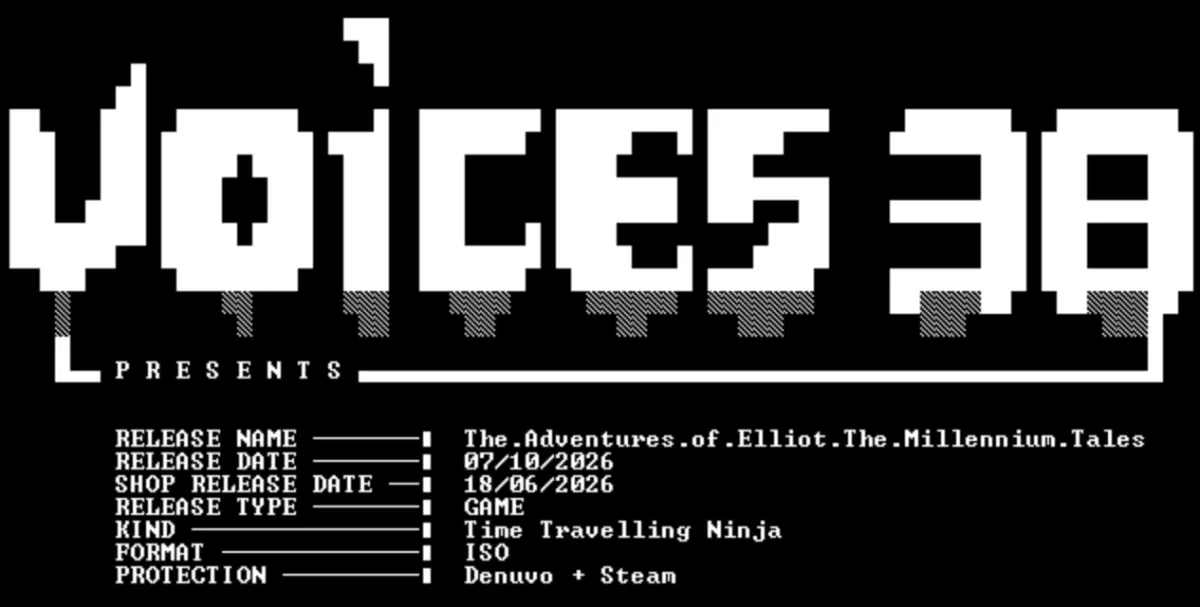
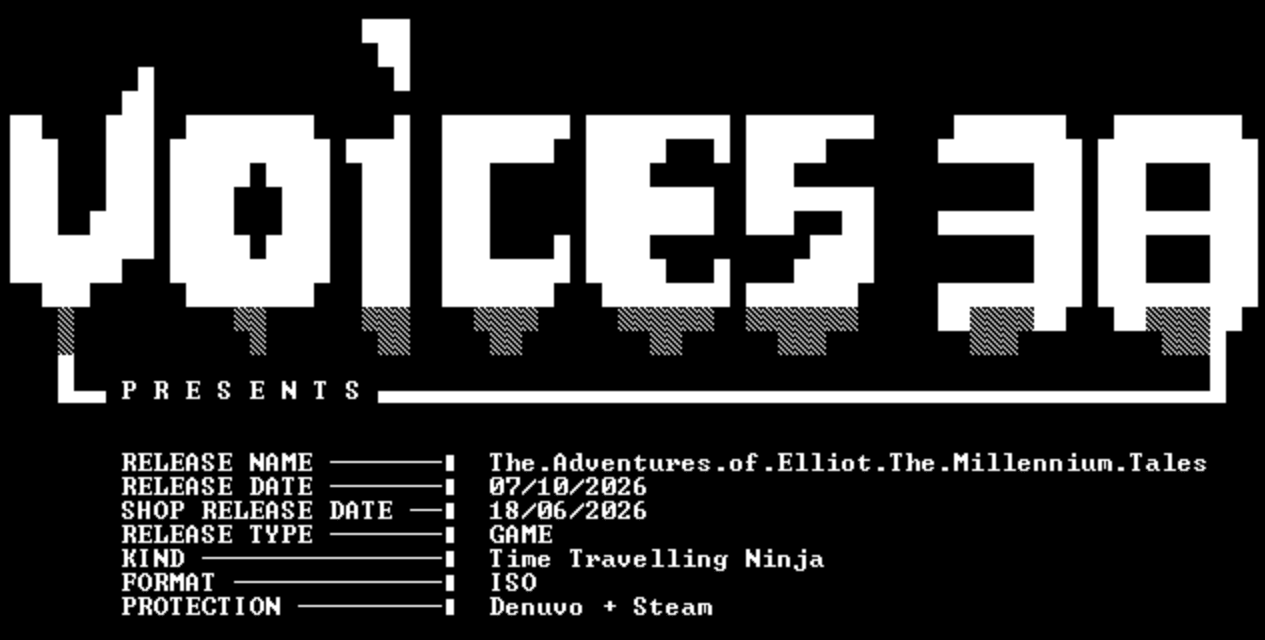
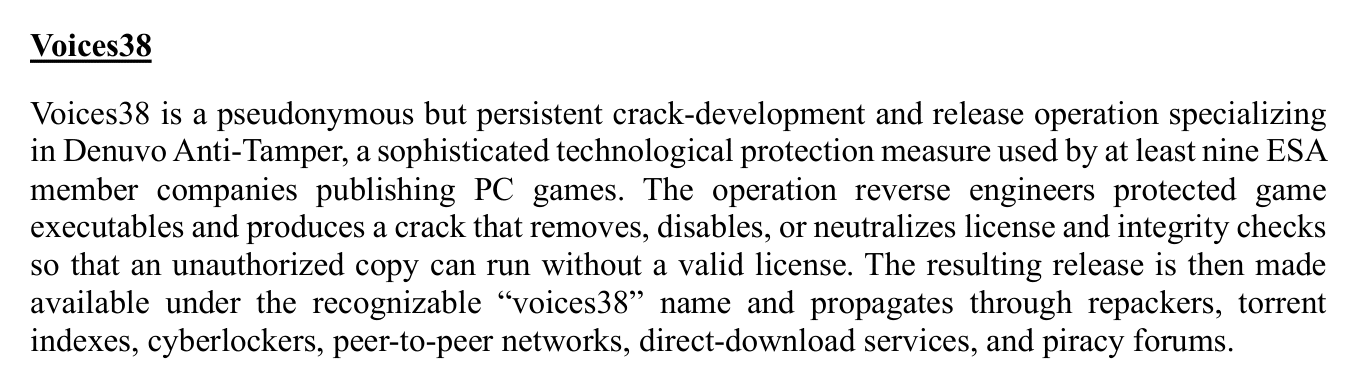
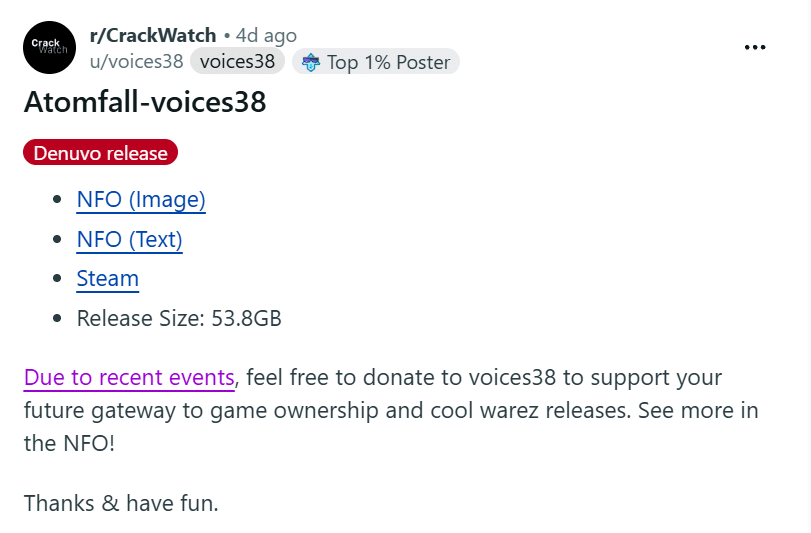
At the center of the ESA’s newest wave of concerns is an anonymous figure or entity known by the handle "voices38." According to the trade group’s submission, this elusive game cracker has established a persistent and highly disruptive operation specializing in defeating Denuvo Anti-Tamper, the sophisticated digital rights management (DRM) and technical protection measure utilized by at least nine major ESA member companies to safeguard their intellectual property upon release.

The ESA notes that indices such as Reddit’s r/CrackWatch community attribute roughly two dozen high-profile cracked or completely bypassed video game releases to the handle. The trade organization emphasizes that this individual or collective occupies a critical upstream position within the broader digital piracy ecosystem. Their releases do not remain isolated; instead, they are rapidly intercepted and amplified by downstream entities, including popular repackers, public and private torrent trackers, cyberlockers, and dedicated piracy discussion forums.
Each individual crack successfully executed by the operator effectively unlocks an entire downstream market for unauthorized digital copies of a given video game title. For major blockbuster releases that no other independent actor has managed to make playable without official authorization, a functioning pirated copy would simply not exist for those downstream markets to distribute were it not for the intervention of voices38.
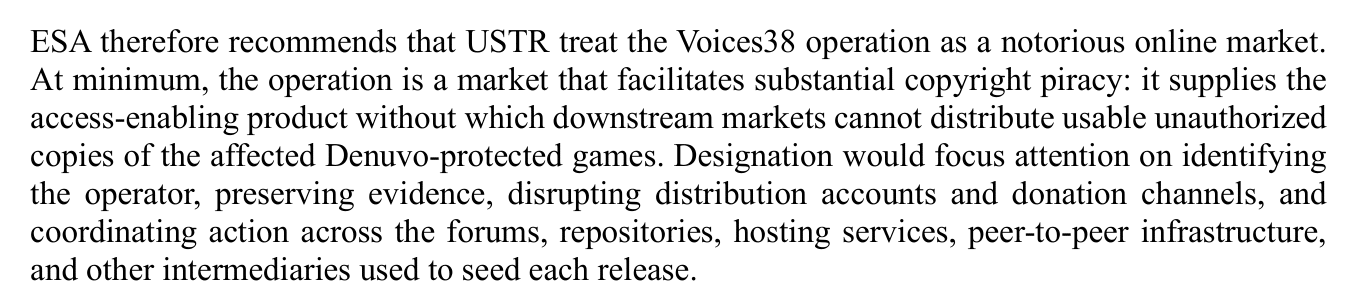
Consequently, the ESA argues that limiting regulatory and enforcement attention strictly to downstream distribution services overlooks the primary upstream catalyst that determines whether heavily protected video game titles can be illicitly offered to the public in the first place. The fact that the operator maintains no public identity, corporate facade, or traditional homepage should not preclude designation on the Notorious Markets list. On the contrary, the trade group asserts that formal governmental designation could serve as a vital catalyst for international rightsholders seeking to crack down on the operation by focusing concentrated investigative attention on unmasking the operator, preserving digital evidence, disrupting distribution accounts, cutting off cryptocurrency donation channels, and coordinating targeted enforcement actions across the diverse array of forums, code repositories, peer-to-peer networks, and internet intermediaries utilized to seed each wave of releases.
Ideally, the ESA aims to unearth the true identities of the individuals orchestrating the handle, mirroring ongoing legal maneuvers within the United States judicial system.
Lawsuits and Persistent Releases
The campaign to unmask the operator extends beyond diplomatic trade submissions. Last month, Denuvo initiated legal proceedings against voices38 in a U.S. federal court located in California, subsequently requesting judicial permission to issue subpoenas directed at major technology platforms, including Discord, Valve, and Reddit, in an effort to trace financial transactions and communication trails. The ESA’s recent U.S. trade submission does not explicitly reference this ongoing federal lawsuit, reflecting parallel tracks of pressure from the software industry.
Despite the mounting legal and regulatory scrutiny, the operational pipeline for the cracker has shown few signs of immediate deceleration. Following a brief period of relative quiet, the handle released unauthorized cracks for several high-profile titles, alongside a technical fix for a major studio remake. These freshly generated releases quickly permeated the standard channels, spreading rapidly across peer-to-peer torrent trackers and cyberlocker services before being integrated into the catalogues of prominent third-party repackers.
The Billion-Dollar Impact of FitGirl
Among those downstream distributors is FitGirl, a prominent figure in the video game repacking community who has once again landed in the crosshairs of the ESA. Having already been featured prominently in the USTR’s Notorious Markets lists for 2024 and 2025, FitGirl has earned a renewed recommendation from the trade group for the upcoming evaluation cycle.
Despite domain-level blocks implemented by internet service providers in major European jurisdictions such as Germany, Italy, and Spain, the ESA notes that these regional enforcement measures have failed to yield meaningful behavioral changes or traffic reductions. The repacking portal continues to attract staggering volumes of internet traffic, recording roughly 41.77 million visits in a single month while persistently hosting and disseminating copyrighted video game titles published by ESA member studios.
The scale of the operation and the persistence of its administration demonstrate that previous regulatory designations and localized ISP blocking orders have not induced any substantive remediation by the operator. Formal Digital Millennium Copyright Act (DMCA) and international takedown notices issued by the ESA are routinely ignored, with the trade group reporting zero voluntary link removals across a twelve-month observation window.
To underscore the economic gravity of the situation, the video game association calculated staggering financial losses attributed to the platform, quantifying the impact down to the exact dollar amount. Between March and August of the review period, the ESA detected more than 15.4 million distinct user participations within peer-to-peer torrent swarms associated with games repacked and distributed by the platform. By applying the standard baseline retail price of $69.99 to each individual user identified within these active swarms, the organization estimated total potential economic losses exceeding one billion dollars.
Other prominent distribution hubs demonstrate a similarly recalcitrant approach to intellectual property enforcement. Platforms like DODI-Repacks complied with only a minor fraction of the infringement notices sent by rightsholders, while the prominent Russian-language torrent indexer RuTracker complied with a minuscule percentage of requests submitted over the past year. To combat these unresponsive networks, the ESA suggests that tracking digital financial flows—particularly cryptocurrency transactions routed through Know Your Customer (KYC)-vetted digital asset platforms such as Binance—represents a promising investigative avenue for law enforcement agencies seeking to pierce the veil of anonymity surrounding these operations.
Handheld Emulation Consoles as ‘Superfakes’
The current USTR review cycle places a distinct and specialized analytical focus on high-quality counterfeit merchandise commonly referred to in intellectual property enforcement circles as "superfakes." Seizing upon this thematic emphasis, the ESA has expanded its traditional digital scope to target physical hardware, drawing a direct parallel between physical counterfeits and handheld emulation consoles that arrive preloaded with extensive libraries of pirated video game software.
In its filing, the trade group specifically nominated the official digital storefront for a widely commercialized line of handheld emulation devices, noting that these systems are routinely shipped alongside internal or external memory cards packed with hundreds or even thousands of unauthorized, copyrighted video games. The submission highlights that these pre-loaded devices are readily accessible to consumers through mainstream e-commerce marketplaces such as Amazon and eBay.
Furthermore, the ESA’s comprehensive wishlist broadens its enforcement scope to encompass digital marketplaces facilitating secondary account trading and virtual asset exchanges—including platforms like G2A, FunPay, and Eldorado.gg—alongside commercialized game modification and cheat distributors such as Cronus Zen. The trade association argues that hardware and software cheat mechanisms legitimately belong on intellectual property infringement watchlists because they fundamentally circumvent and undermine the authorized technological protection measures embedded within modern software titles.
The final determination regarding which of these nominated entities, platforms, and operational models will ultimately be codified into the official Notorious Markets list now rests entirely with the USTR. Given that the preceding edition of the comprehensive review was published in March, stakeholders and industry observers anticipate a protracted evaluation period before the official findings are formally released to the public.

Leave a Reply