
Federal Bureau of Investigation (FBI) agents have arrested a prominent Canadian cybersecurity executive in Pennsylvania, marking a significant escalation in an ongoing, high-stakes investigation into the notorious cybercrime collective known as ShinyHunters. According to multiple sources close to the investigation, the arrest is directly tied to a recent, deeply embarrassing security breach in which the hacking group infiltrated federal systems and relieved the FBI of sensitive, non-public data pertaining to thousands of law enforcement agents.
The high-profile arrest was first reported by The New York Times, which confirmed that federal authorities had taken a Canadian man into custody in Pennsylvania on suspicion of providing illicit assistance to the ShinyHunters organization. While neither The Times nor an official social media statement issued by FBI Director Kash Patel initially named the individual in custody, subsequent investigative reporting and federal court records have illuminated the identity of the suspect and the broader context of the operation.
According to sources familiar with the inquiry, the Canadian national was visiting Pennsylvania to attend a prominent cyber insurance and risk conference when federal agents closed in. The suspect’s professional background is deeply embedded in the specialized niche of ransomware incident response, with a career dedicated to advising corporate clients on how to navigate coercive digital extortion demands. Another source familiar with the case confirmed that operational control and prosecution oversight of the sprawling ShinyHunters investigation have now been centralized at an FBI field office in Texas, signaling the growing federal priority assigned to dismantling the network.
A Conference in Philadelphia and Ties to Specialized Security Firms
Publicly available event registries and online searches indicate that the annual Cyber Risk Summit was held at the Loews Philadelphia Hotel between October 5 and October 7. The multi-day summit attracted a wide array of sponsors from across the cyber insurance and digital risk mitigation sectors. According to the official website of the summit, its largest and most prominent sponsor was Cypfer, a well-known Canadian cybersecurity firm that frequently handles high-stakes ransomware negotiations.
Corporate records and professional networking profiles on LinkedIn reveal that Edward Dubrovsky, a prominent figure in the Canadian cybersecurity community, had previously been associated with Cypfer. His online profile listed him as an "ex-founder" of the firm, though a spokesperson for Cypfer later clarified to reporters that Dubrovsky was never a founder or co-founder of the enterprise. Instead, the company stated that he had served in the capacity of a managing director before ultimately tendering his resignation in November 2025.
Following his departure from Cypfer, Dubrovsky became closely associated with another Canadian security firm and conference sponsor, CyberSteward. Approximately one month prior to the recent events, Dubrovsky published a post on LinkedIn announcing his travel plans to attend the Philadelphia Cyber Risk Summit alongside his colleagues from the CyberSteward team. In his social media posts and professional writings, Dubrovsky frequently championed the intricacies of regulatory-compliant, globally agnostic extortion advisory services, positioning himself as a leading voice in the complex ecosystem of ransomware settlement strategies.

Federal Court Filings and Charges
Federal court records retrieved from the Eastern District of Pennsylvania show that on October 8, an individual named Edward Dobrovsky—with a slight spelling variation in the surname—was taken into federal custody and formally charged with serious cyber extortion and conspiracy offenses. While a substantial portion of the underlying court documentation, including the foundational criminal complaint, has been placed under seal by the court, a handful of essential documents remain accessible through public legal databases such as CourtListener.
The indexed summary of the federal complaint outlines two primary counts against the defendant: conspiracy to threaten to impair the confidentiality of information with the intent to extort money, and interference with commerce by threats. Inmate location records maintained by the U.S. Bureau of Prisons confirmed that a 54-year-old individual matching Dubrovsky’s identity and age was being held at a federal detention facility in Philadelphia following his apprehension.
However, additional court dockets revealed a notice filed on October 9 ordering the immediate transfer of the case to the U.S. District Court for the Eastern District of Texas. Legal observers and investigative sources note that the Eastern District of Texas has effectively become the epicenter and nerve center for the federal government’s comprehensive prosecution strategy against the ShinyHunters syndicate. Representatives for the FBI declined to comment on the specifics of the ongoing judicial proceedings.
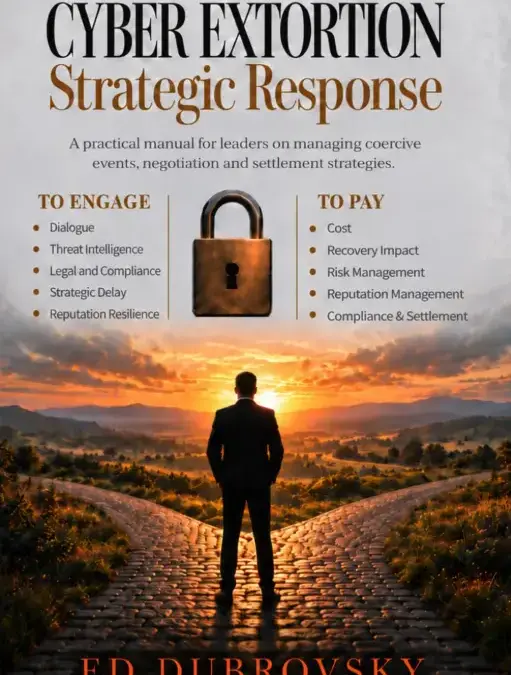
Dubrovsky is also well-known within industry circles as the author of a 252-page professional text titled Cyber Extortion Strategic Response. The book purports to guide corporate leadership teams beyond the standard demands of a ransom note and into the strategic decision-making processes required to survive a major cyber incident. Promotional material for the publication emphasizes a central tenet of modern incident response: that communicating with cybercriminals is fundamentally distinct from negotiating a payment, and that opening channels of dialogue does not constitute an agreement to pay. According to the text’s summaries, strategic engagement can serve alternative defensive objectives, such as validating threat actor claims, gathering vital intelligence, buying operational time, and preserving corporate options while legal and technical teams evaluate their next moves.
At the time of his initial court appearances, available judicial records indicated that Dubrovsky had not yet retained private legal counsel, nor had the court formally appointed a public defender to represent him.
The Anatomy of the ShinyHunters Syndicate
The ShinyHunters hacking collective has established a formidable and destructive reputation within the global cybersecurity landscape by executing sophisticated phishing campaigns and systematically compromising corporate user credentials. The group typically targets software-as-a-service providers and enterprise cloud accounts to siphon proprietary databases, subsequently threatening to leak or sell the pilfered information on underground forums unless extortion demands are satisfied. According to internal estimates and public statements from federal law enforcement, the group has successfully extorted more than $70 million from corporate and organizational victims during the current calendar year alone.

The dragnet catching up to associates of the group has intensified over recent weeks. Sources indicate that federal investigators have spent extensive time poring over digital devices and forensic data seized by European authorities last month. Those seizures followed an operation in which Dutch police arrested Pepijn van der Stap, a reformed hacker with a criminal past, in connection with the escalating ShinyHunters investigation. Law enforcement insiders suggest that the ongoing analysis of these seized assets could lead to additional criminal charges against principals and operatives at other specialized firms that handle ransomware negotiations.
The pressure on the hacking collective has also triggered erratic behavior from its leadership. Immediately following the apprehension of Van der Stap, a prominent faction leader within ShinyHunters operating under the alias "Rey" assumed operational control of the group. In a brazen display of defiance, Rey began publicly taunting federal investigators on social media platforms regarding a particularly sensitive cache of data the group had managed to steal from an online recruitment portal utilized by the FBI itself. The compromised recruitment records reportedly detailed granular personnel information, including agents’ specific units, operational specializations, and confidential medical and psychiatric documentation.
The cyber-taunting proved short-lived. International journalistic investigations and federal intelligence work soon converged on the identity of the elusive figure known as Rey. Media reports identified the individual as a teenager named Saif Al-din Khader, who was subsequently tracked down, detained, and brought into federal custody. Following his apprehension, Khader reportedly began cooperating with FBI investigators. Prior to his arrest, the collective had attempted to launch a high-pressure extortion campaign targeting a specialized digital aviation and navigation unit that had been divested by aerospace giant Boeing in late 2025.
As federal authorities continue to untangle the complex international web connecting independent threat actors, corporate facilitators, and extortion brokers, investigators anticipate further developments in the coming days.



Leave a Reply