

The open-source community is facing a wave of shifting infrastructural landscapes following a quiet decision by cloud provider DigitalOcean to end its support program for long-standing projects. The move has abruptly cut off infrastructure credits for numerous community initiatives, leaving maintainers to seek alternative arrangements. This development coincides with broader structural adjustments across the ecosystem, ranging from copyright challenges and security innovations to hardware integrations and community-driven projects.

While the loss of DigitalOcean’s support program has created immediate hurdles for several independent developers and organizations, the ripple effects are already prompting shifts in how projects sustain themselves. Among those feeling the pinch is Gentoo Linux, which has formally issued a call for new infrastructure sponsors. The distribution is looking to replace several long-term backers who recently withdrew support, welcoming a variety of contributions including donated machines, colocation space, virtual machines, physical servers, and direct financial funding to maintain its core distribution infrastructure.

Regulatory and Security Pressures Mount
Legal and security fronts are also presenting new challenges for open-source maintainers. The international music copyright group IFPI has targeted yt-dlp, a popular general-purpose command-line media downloader, by submitting it to the European Union’s piracy watchlist. By grouping the versatile utility alongside dedicated ripping services, the copyright group has specifically named four maintainers in its claims that the tool actively facilitates copyright infringement.

Meanwhile, Google’s open-source bug bounty program has encountered its own operational hurdles after being overwhelmed by a massive influx of AI-generated spam. The surge in low-quality submissions forced the tech giant to temporarily pause product vulnerability reports, though supply chain vulnerability submissions remain welcome as the company prepares a revamped iteration of the program slated for rollout by the first quarter of 2027.

Corporate stewardship changes have likewise triggered swift community responses. Following Siemens’ quiet deletion of the OpenRadioss repository, the AGPL license successfully protected the project’s foundational code. Capitalizing on the open license, Rocky Linux co-founder Brian Clemens forked the project into OpenCourant within days. The newly established fork is already actively shipping functional binaries for both Linux and Windows platforms.

Innovation in Tooling, Storage, and Privacy
On the software development and security front, Red Hat’s Lightwell project is altering traditional vulnerability management paradigms. Rather than waiting for upstream patches to trickle down through standard channels, Lightwell actively backports security fixes directly into production Java libraries. Having already cleared over 400 vulnerabilities, the initiative is steadily expanding its footprint.

In distribution packaging, Ubuntu is preparing to incorporate Sequoia PGP in version 26.10. The modern, Rust-based OpenPGP implementation will sit alongside the long-standing GnuPG utility. While both tools will coexist during a transition phase, the long-term objective is to eventually phase out GnuPG in favor of the newer Rust-based alternative.
Collaboration and productivity tools are also seeing cross-platform integrations. Tuta Mail has launched a dedicated app in the Nextcloud App Store, accompanied by a companion Nextcloud plugin within Tuta that allows users to seamlessly upload email attachments directly to Nextcloud storage and embed video conferencing links into calendar events.

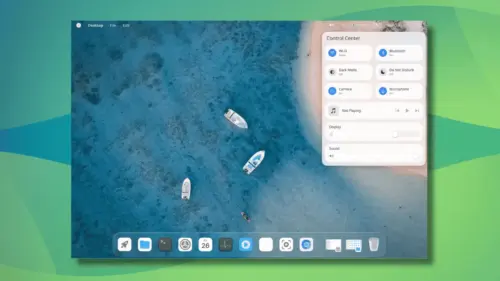
Hardware and homelab enthusiasts have received several notable updates as well. ORICO has introduced its X50 Thunderbolt 5 SSD enclosure, a slim external NVMe storage solution designed to operate out-of-the-box on Linux systems without requiring complex configuration. Additionally, the Raspberry Pi Foundation has released its Debian 13-based Raspberry Pi Desktop, making its tailored desktop environment widely accessible for standard PCs and Macs.

Evolving Ecosystem Dynamics
The intersection of artificial intelligence and software development continues to spark debate and experimentation. Recent efforts by independent developers to use AI to generate functional clones of proprietary applications like Adobe Photoshop highlight the accelerating pace of software prototyping. However, industry observers note that these early-stage projects often lack deep functionality and robust user experiences, raising questions about long-term maintenance in an era where automated tooling makes initiating projects easier than ever.

Infrastructure and security philosophy are also evolving at the individual project level. In recent discussions regarding modern privacy infrastructure, former Bitcoin Core contributor Carl Dong detailed the architectural philosophy behind Obscura, a VPN service designed around zero-trust principles. By decoupling a user’s identity from their browsing traffic across two independent corporate entities—ensuring neither party holds both pieces of data—the project reflects a growing industry sentiment that treats traditional consumer data management practices as fundamentally unsustainable.
As the open-source landscape continues to navigate infrastructural transitions, shifting security mandates, and evolving technological paradigms, community-driven projects and maintainers alike continue to adapt, seeking resilient pathways to sustain independent software development.
Leave a Reply