
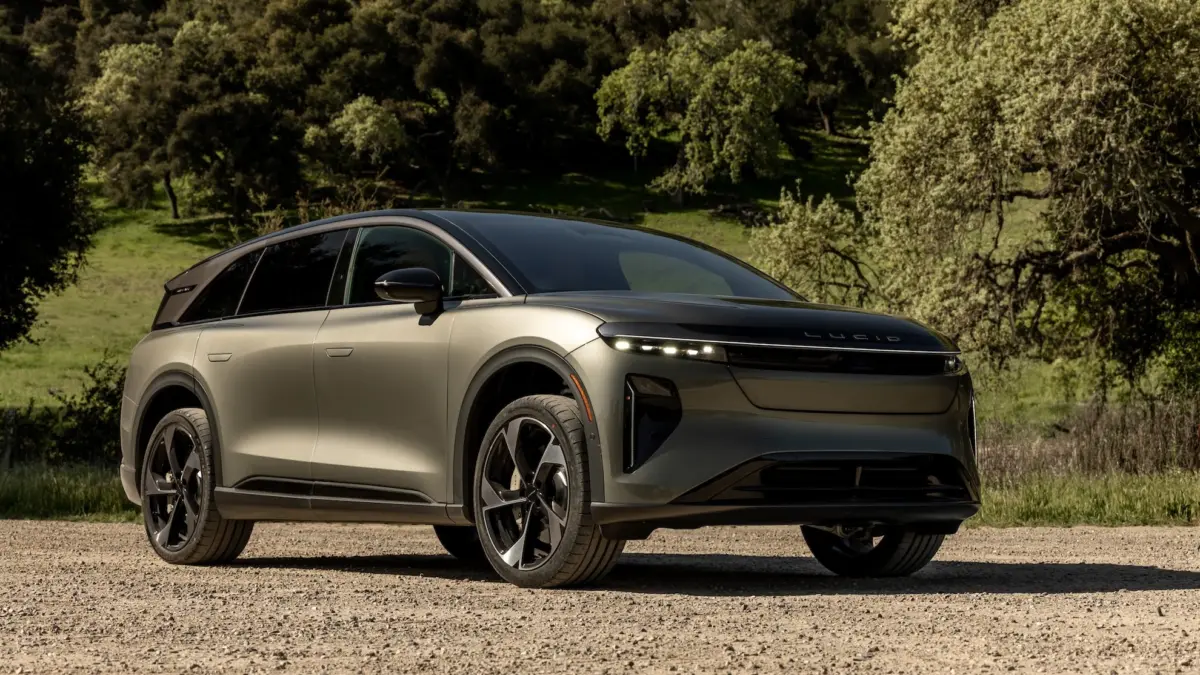
Lucid Motors manufactured 2,954 electric vehicles during the third quarter of this year, representing a sharp 54% decline compared to the same period last year. The reduction is a deliberate move by the luxury EV maker to throttle manufacturing output so that it better aligns with actual consumer demand for its vehicles.
This latest figures mark the third consecutive quarter in which production numbers at Lucid have decreased. Furthermore, it represents the lowest quarterly output the company has posted since the first quarter of 2025, a period that immediately followed Lucid Motors launching production on its second major vehicle offering, the Gravity SUV.
Despite scaling back production, inventory challenges persist. Lucid successfully delivered 3,806 electric vehicles in the third quarter. While this delivery figure remained roughly flat compared to the second quarter of the year, it represents a drop of approximately 200 vehicles when compared against the third quarter of 2025. Throughout its operational history, Lucid has consistently faced hurdles in finding enough buyers for its luxury EV lineup. In five out of the past six quarters, the company has manufactured a higher volume of vehicles than it has ultimately managed to deliver to customers.
The latest quarterly results arrived as Lucid navigates a major structural overhaul under the direction of its new chief executive officer, Silvio Napoli. Over the past several months, Napoli has spearheaded a corporate strategy aimed at simplifying the organization, cutting operational fat, and stabilizing the automaker’s financial footing.
That turnaround initiative has involved sweeping workforce reductions, including laying off roughly 1,500 employees. The company has also streamlined its executive leadership structure and eliminated a second operational shift at its manufacturing facility in Casa Grande, Arizona. These aggressive measures are part of a broader corporate objective to achieve $1.4 billion in cost savings. As part of this strategic reset, Lucid also postponed the official rollout of its third vehicle model, known as the Cosmos. That upcoming vehicle is intended to be a significantly more affordable option, with a targeted starting price below $50,000.
The release of Lucid’s third-quarter production and delivery metrics stands in stark contrast to the performance of its industry peers. Just days prior to Lucid’s announcement, rival EV startup Rivian reported the strongest quarter in its corporate history. Rivian’s record-breaking performance was heavily driven by the market reception of the R2, its new and more affordable SUV. Although Rivian did not break out precise individual delivery statistics specifically for the R2 model, the company shipped nearly 20,000 total vehicles during the third quarter. This marked Rivian’s first full quarter with the R2 actively in production, up significantly from the 12,194 vehicles the company shipped during the second quarter.
Lucid’s ongoing struggle to capture a meaningful share of the broader automotive market looks even more pronounced when measured against the lofty projections the company laid out when it first went public in 2021. During that year, Lucid Motors completed a merger with a special purpose acquisition company, commonly referred to as a SPAC. At the time of the transaction, which successfully raised $4 billion in capital, the company’s executive leadership estimated that it would manufacture and ship as many as 90,000 electric vehicles by the end of 2024 alone.
During Lucid’s second-quarter earnings call held in August, CEO Silvio Napoli addressed shareholders and analysts directly regarding the factors he believes have hindered the company from making a more significant impact in the electric vehicle landscape.
"While there is no question that Lucid brought leading innovations and outstanding products to the market, we have disappointed on several fronts, and for far too long," Napoli stated during the call. "We have not executed consistently. We missed commitments, launched products before they were ready, underinvested in service, responded too slowly to quality issues, and allowed complexity to slow decisions down."
While the eventual introduction of the more accessibly priced Cosmos model could theoretically open the door for Lucid to tap into a much larger consumer demographic, Napoli has urged caution. He explicitly warned shareholders that rushing the development and release of the upcoming vehicle could compound the company’s existing operational difficulties rather than solve them.
"We will not repeat the mistakes of the past by bringing a product to market before it is ready," Napoli emphasized during the earnings call.



Leave a Reply