
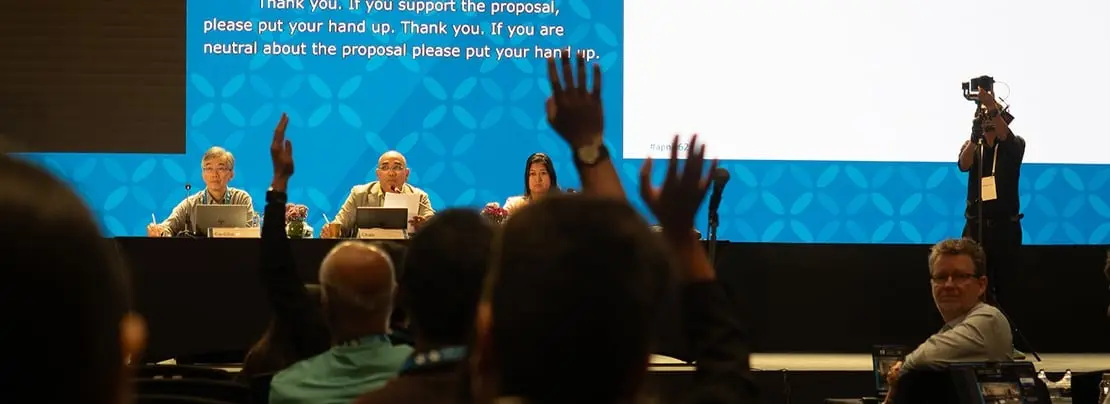
The internet address policy landscape in the Asia-Pacific region is shifting once again following a rigorous, fast-paced series of discussions at the APNIC 62 Open Policy Meeting (OPM). Spanning two packed sessions of debate, network operators, technical experts, and community stakeholders gathered to deliberate on critical issues addressing the ongoing reality of IPv4 exhaustion, the expansion and usability of IPv6 infrastructure, and the operational accountability surrounding IP abuse management.
During the Policy Special Interest Group (SIG) meetings across OPM 1 and OPM 2, participants weighed a total of seven distinct policy proposals. Out of these deliberations, two proposals successfully achieved consensus and are now slated to progress through the established APNIC Policy Development Process (PDP). Meanwhile, three proposals were returned to the community mailing lists for further refinement and discussion, and two remained under active consideration without a formal consensus call being issued by the chairs.
The bi-annual gathering underscored the delicate balancing act facing the Regional Internet Registry (RIR) community: managing dwindling legacy resources, accommodating the needs of new network entrants, streamlining technical practices, and maintaining security accountability across complex routing architectures.
Prop-169 and Prop-170 Secure Community Consensus
The most concrete outcomes of the APNIC 62 policy sessions belonged to Prop-169 and Prop-170, both of which successfully navigated the scrutiny of the Policy SIG to achieve consensus.
Prop-169, titled "Aligning IPv4 LIR needs assessment with current IPv4 delegation policy," tackled a long-standing administrative discrepancy within APNIC’s documentation. Existing policy text had continued to reference justifications tailored specifically around a /23 allocation size, whereas practical operations and current delegation assessments allowed for the evaluation of smaller allocations. By updating the policy language to mirror actual operational processes, the proposal aimed to improve regulatory clarity without altering core allocation principles or modifying eligibility requirements. Given its sensible and clarifying nature, the proposal received broad support from the floor, leading the chairs to confirm that consensus had been reached.
Similarly, Prop-170 ("Nibble-boundary alignment for IPv6 allocations") captured strong community backing by addressing operational efficiencies for network engineers. The proposal introduced an optional mechanism allowing applicants to request IPv6 allocations aligned to nibble boundaries when backed by a valid, demonstrated operational need. Supporters emphasized the tangible technical benefits of such alignments, including vastly improved reverse DNS management, streamlined network planning, better routing aggregation, simplified troubleshooting, and robust support for future network scalability. Crucially, the proposal left APNIC’s needs-based assessment model and minimum allocation sizes untouched, functioning instead as a flexible tool for operators. Following robust discussions highlighting these operational advantages, the chairs declared that consensus had been achieved.
Debating IPv4 Conservation, Transition Needs, and Resource Lifespan
While two proposals moved forward, several other high-profile submissions addressing IPv4 address space met with more divided opinions, reflecting the high stakes surrounding the exhaustion of legacy resources.
Prop-168 ("Increase to maximum IPv4 delegations") generated substantial debate by proposing an increase to the maximum amount of IPv4 address space available from APNIC’s remaining pool, shifting the limit from a /23 to a /22. The text also incorporated a provision for a reserved pool explicitly aimed at supporting new market entrants deploying IPv6 transition technologies, such as NAT64 and DNS64. Proponents argued that smaller and growing operators still face legitimate operational requirements for additional IPv4 blocks, and raising the delegation cap would reduce their heavy reliance on secondary transfer markets and leasing arrangements.
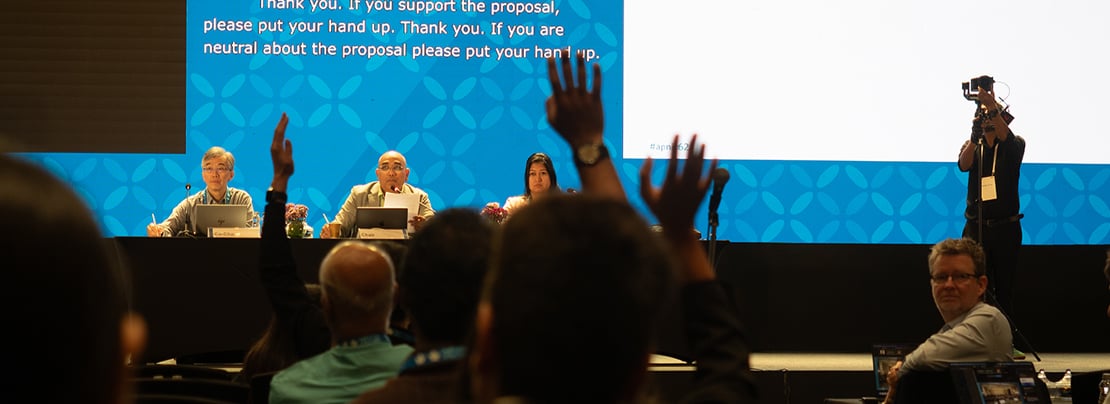
However, cautious voices raised alarms that larger individual delegations could dangerously accelerate the depletion and shorten the lifespan of APNIC’s critically limited remaining IPv4 reserves. After weighing the immediate operational needs of growing networks against long-term resource conservation goals, the chairs concluded that consensus was absent and returned Prop-168 to the mailing list for additional development.
A parallel discussion centered on Prop-165, titled "Provision of IPv4 address space to IPv6-only networks for transitional purpose." This proposal sought to permit IPv6-only networks to acquire a limited quantity of IPv4 space—specifically a single /24 block—to run critical transitional infrastructure. Eligible organizations would utilize the space for essential services such as DNS resolvers, mail gateways, monitoring systems, logging infrastructure, and maintaining connectivity to legacy IPv4-only networks. While supporters argued that the policy would remove practical roadblocks standing in the way of full IPv6-only deployments while maintaining strict conservation principles, implementation complexities remained a hurdle. Because a revised iteration of the proposal was submitted shortly before the conference began, requiring additional technical review, the Policy SIG chairs opted not to issue a consensus call.
Refining IPv6 Allocation Sizes and Internet Abuse Frameworks
Proposals targeting IPv6 allocation frameworks and the operational management of abuse contacts also sparked extensive technical debate without reaching an immediate final verdict.
Prop-164 ("Allocations of IPv6 resources longer than a /32 with a nibble boundary alignment") proposed giving APNIC the authority to issue IPv6 allocations smaller than the traditional /32 baseline down to a /40, provided they maintained nibble-boundary alignment. Proponents suggested the change would create a closer match between allocations and real-world operational footprints, minimize over-allocation, and sharpen resource registration accuracy. Yet, deep-seated concerns lingered regarding whether the measure addressed a sufficiently widespread operational demand, how it might alter internal APNIC registry systems, and whether altering allocation sizes could unintentionally skew member decision-making. The chairs determined that consensus had not been reached, sending Prop-164 back to the mailing lists for further community dialogue.
On the security and accountability front, Prop-171 ("Operational accountability for abuse contacts in sub-allocated address space") tackled the persistent challenge of ensuring that abuse reports actually reach the administrative entities capable of investigating them. The proposal sought to bridge a gap where reports frequently land with upstream resource holders without successfully routing to the downstream operators directly managing the affected networks. Although participants universally praised the underlying objective of tightening abuse handling, opinions diverged sharply on the best policy mechanisms to enforce it without imposing excessive operational overhead or implementation complexity. Consequently, the proposal fell short of consensus and was returned to the mailing list for continued refinement.
Rounding out the agenda, Prop-172 ("Defining Internet abuse through IP addresses") introduced an exploratory dialogue on whether APNIC should establish a formal, registry-wide definition of Internet abuse tied specifically to number resources. The discussion grappled with complex technical evidence thresholds, international jurisdictional differences, the proper institutional scope of a Regional Internet Registry, and the boundaries of registrar intervention. Given the exploratory nature of the topic, the chairs deferred a consensus call, leaving the community to ponder the role of RIRs in addressing abuse-related phenomena.
Path Forward Toward APRICOT 2027
The outcomes of the APNIC 62 Open Policy Meeting highlight an active community continuously adapting to technical realities. With Prop-169 and Prop-170 successfully moving forward through the Policy Development Process, and five other proposals returning to the mailing lists for deeper evaluation, the groundwork has been laid for ongoing community stewardship.
Discussions on the remaining items will continue online via the Policy SIG mailing lists in the months ahead, setting the stage for subsequent policy showdowns and community consensus-building as stakeholders look toward the upcoming APRICOT 2027 and APNIC 63 conferences.


Leave a Reply