
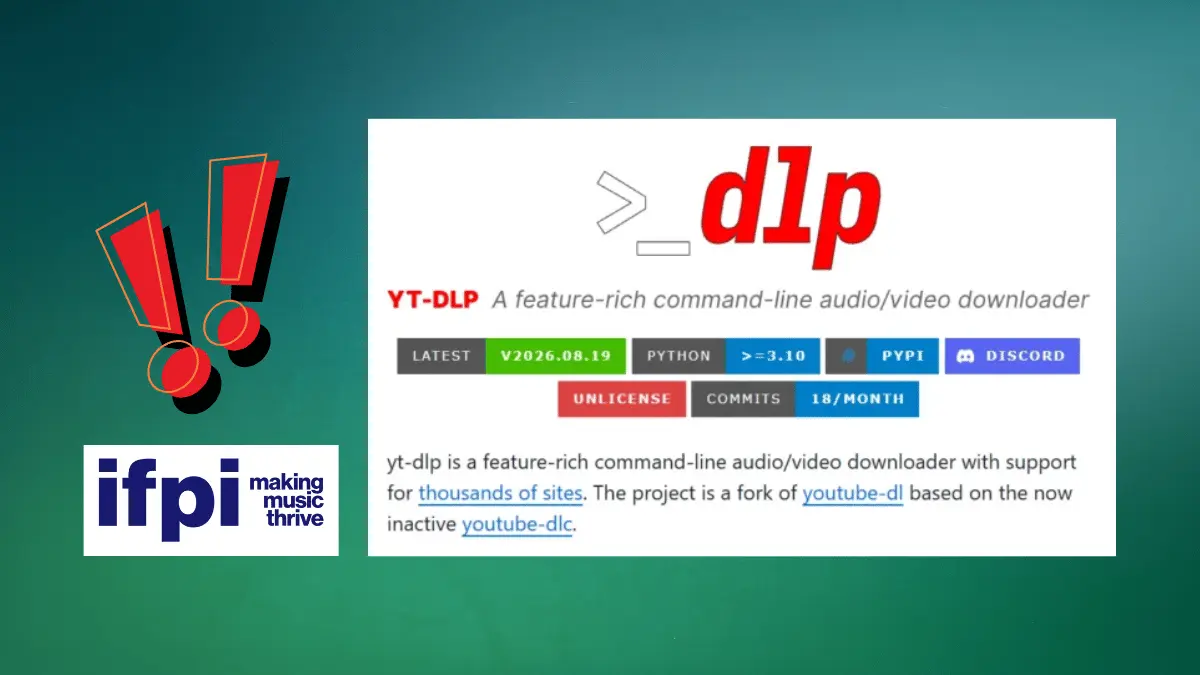
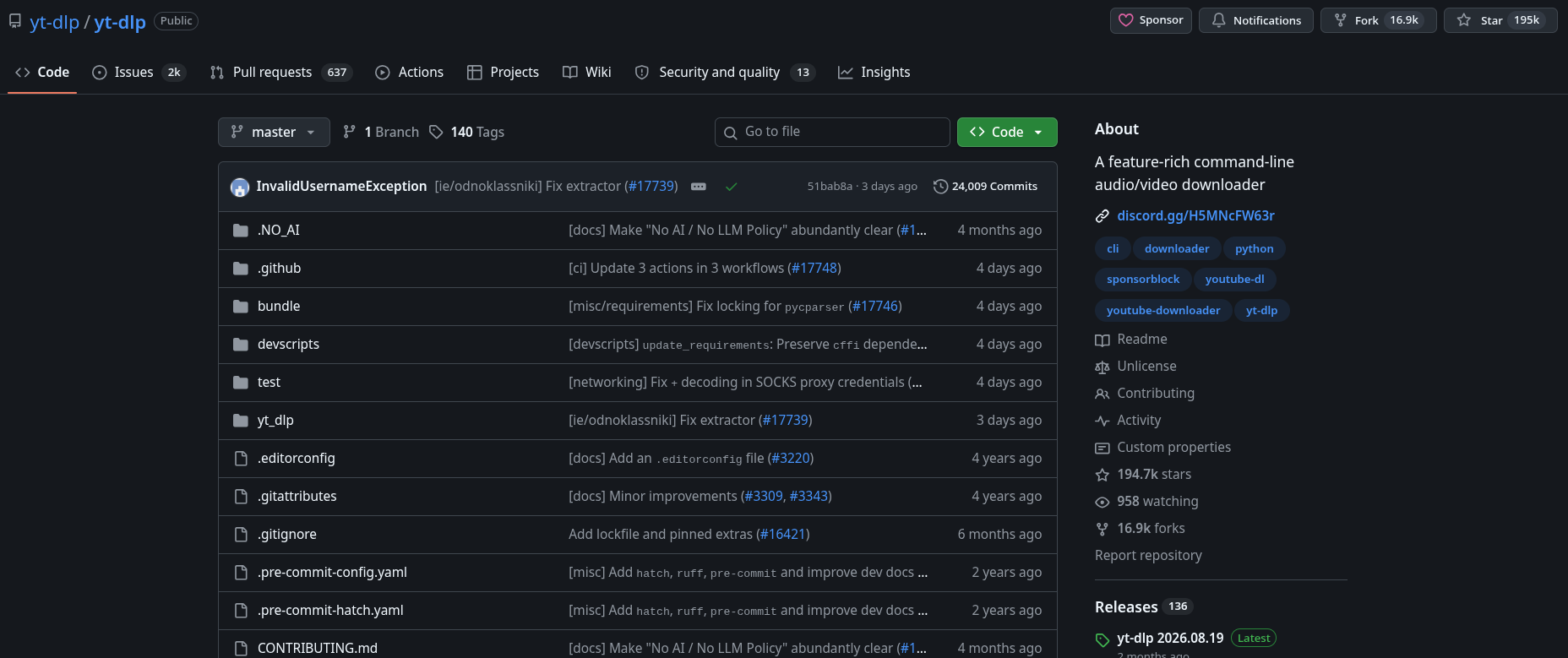
The popular open-source command-line tool yt-dlp has found itself in the crosshairs of the global music industry. With over 195,000 stars on GitHub, support for thousands of web platforms, and continuous maintenance provided by a distributed global community of developers, the utility is widely recognized by tech enthusiasts and developers alike. However, the International Federation of the Phonographic Industry (IFPI) views the project through an entirely different lens and is actively lobbying to have it placed on the European Union’s official piracy watchlist.
The IFPI represents approximately 8,000 music production and distribution labels operating across 70 countries worldwide. In its formal submission to the European Commission’s ongoing public consultation for the Counterfeit and Piracy Watch List, the major trade organization labeled yt-dlp as a significant operational challenge for the contemporary music sector. Going beyond the software itself, the organization’s submission explicitly names four prominent maintainers of the project by their GitHub handles, signaling a direct focus on the individuals behind the collaborative repository.
Understanding the EU Counterfeit and Piracy Watch List
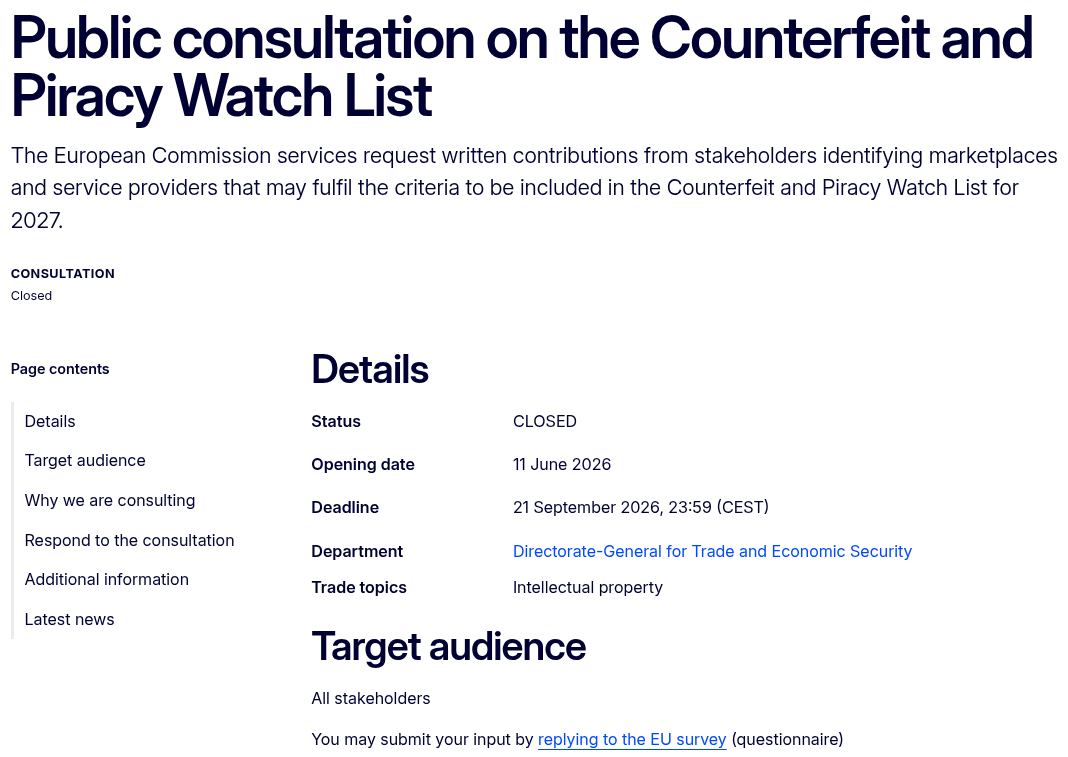
Operated under the oversight of the European Commission’s Directorate-General for Trade and Economic Security, the Counterfeit and Piracy Watch List serves as an administrative inventory. Its primary purpose is to identify online services and physical marketplaces situated outside the borders of the European Union that are reported to engage in or facilitate widespread copyright infringement.
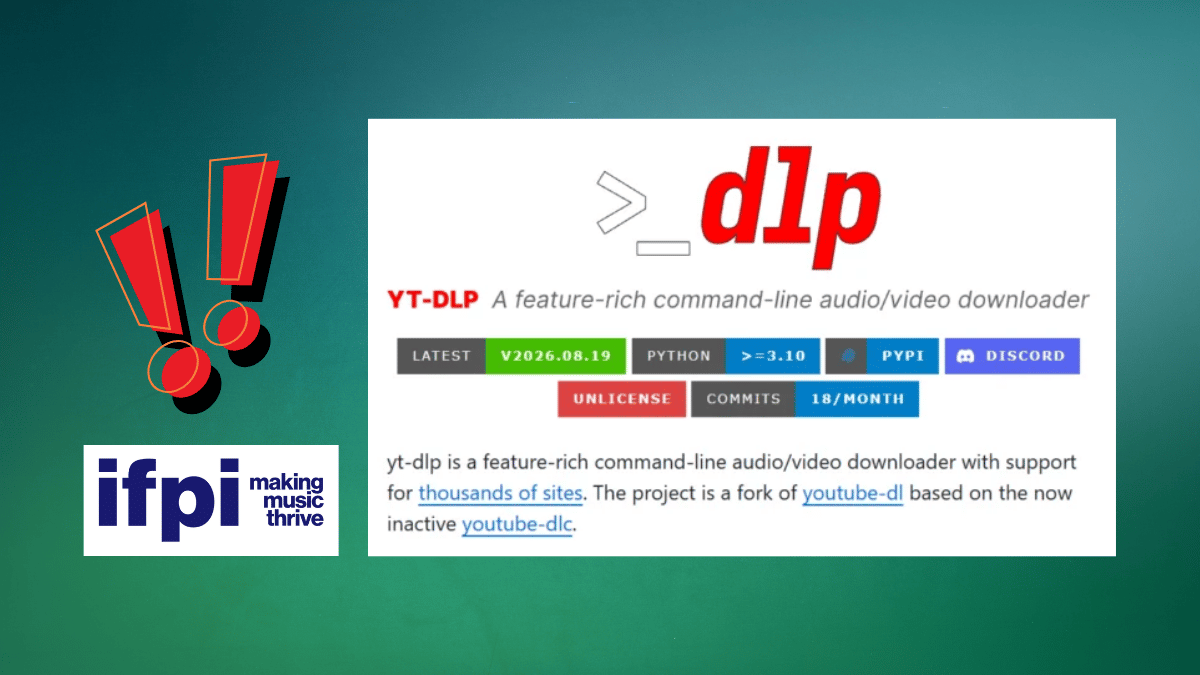
Although the initiative carries a serious title, the administrative undertaking does not function as a formal legal tribunal, nor does it issue binding legal findings or mandate direct punitive enforcement actions. Instead, the watchlist operates primarily as a public naming exercise. Its design is intended to exert diplomatic and economic pressure on commercial operators and foreign governments outside the EU, encouraging them to address and curb the activities of the identified services.
The compilation process for the upcoming edition relies heavily on public and stakeholder submissions gathered over a multi-month period, with the final published list anticipated in the second quarter of the year.
What the IFPI Submission Claims
The extensive submission filed by the IFPI addresses a wide array of perceived threats and enforcement challenges facing the copyright landscape. These range from emerging technologies like artificial intelligence music generators and cloud-based storage services known as cyberlockers to commercial streaming fraud operations and domain name registrars. Within this broad spectrum of concerns, yt-dlp is categorized under the heading of "stream ripping," where it is grouped alongside dedicated commercial stream-ripping websites such as Y2mate and Savefrom.

According to the IFPI’s description in the document, the application functions by retrieving digital media content through the parsing of web page data and interacting directly with platform playback endpoints. The submission points to GitHub as the primary distribution channel for the project, noting that the platform hosts the complete source code, pre-compiled binary executables, and detailed installation instructions for users.
Among the specific details included in the filing, the IFPI highlights four key maintainers associated with the project repository by their public GitHub handles. This includes pukkandan, who originally founded the project and led development between 2021 and 2024, alongside several core maintainers identified in the repository’s official documentation file, such as coletdjnz, bashonly, and Grub4K. In the same document, the industry group also flags mainstream digital platforms like X, Discord, Telegram, and Vimeo, alleging that they similarly facilitate copyright infringement at a massive scale.
The Structural Mismatch of Open-Source Software
The foundational framework of the European Union’s Watch List explicitly targets online service providers and physical marketplaces located outside the bloc. However, yt-dlp fits neither of these structural descriptions in any conventional sense.
The IFPI explicitly acknowledges this operational reality within its own submission, noting that the project’s decentralized, open-source nature, its distribution under the permissive Unlicense, and the involvement of an extensive international developer community make the utility exceptionally difficult to contain or remove. From the perspective of rights holders, the architecture of the project presents unique enforcement hurdles. There is no central corporate domain to block, no corporate payment processor to cut off, and no single commercial hosting provider that can be easily coerced into complying with a traditional administrative takedown request.
The underlying source code is distributed globally across independent mirrors and local machines, allowing anyone with the necessary technical skills to compile and run it independently. Yet, critics and open-source advocates point out that the decentralized availability of source code does not automatically transform a general-purpose utility into a dedicated piracy platform.
yt-dlp functions fundamentally as a command-line tool designed for downloading audio and video content from various web sources. Legal and technical analysts note that categorizing a general utility alongside commercial websites whose primary business model relies on unauthorized copying conflates multipurpose software with dedicated copyright infringement services.
Broader Enforcement Context and Precedents
The EU Watch List has previously been utilized in conjunction with broader international enforcement actions directed against commercial stream-ripping operations. For instance, Y2mate.com and eleven other prominent stream-ripping sites were shut down in Vietnam following landmark legal actions, with Y2mate having previously featured on the EU’s advisory watchlist.
Earlier legal actions in Europe have also targeted infrastructure associated with predecessor projects. A German court held a hosting provider liable in connection with facilitating the circumvention of technical protection measures for the related youtube-dl project. These historical precedents illustrate that while commercial ripping services face direct regulatory and judicial pressure, the inclusion of an open-source command-line tool in the same policy discourse remains a subject of intense debate regarding the boundaries of software liability and copyright enforcement.
Leave a Reply